



A lot of people are doing it AI VideoAt the time, the images were becoming more and more real, and the person's face, clothes, environment, and light were all real. But the problem often arises after the person talks。
As soon as the picture opens, the real sense drops。
It's either the wrong mouth or the flat tone; it's either the undifferentiated sound or every character sounds like the same person. It is a picture of a young general, a young conspirator, a calm mistress, a grumpy rebel, but without any age, character or emotional difference。
WHAT THIS LESSON IS ABOUT IS THE AI ROLE VOICE CONTROL。
MANY PEOPLE THINK THAT THE CONTROL OF THE VOICE IS THE WRITING OF AN “AGGRESSIVE SAYING” “SORTLY SAYING” “EXCITED SHOUTING”. BUT THIS WRITING IS VERY WEAK FOR AI BECAUSE IT ONLY DESCRIBES EMOTIONAL OUTCOMES AND DOES NOT DESCRIBE SOUND PROCESSES. IT IS EASIER TO UNDERSTAND STRUCTURES, RHYTHMS, PAUSES, SOUND AND SPEECH HABITS。
SO WE'RE GOING TO LEARN TO CHANGE THE WORD "EMOTIONAL" TO "SOUND STRUCTURE," SO THAT AI KNOWS EXACTLY WHAT TO SAY ABOUT THIS ROLE。
I mean, why is the picture real and the person is lying
WHEN AI GENERATED THE VIDEO, THE IMAGE AND THE SOUND WERE ACTUALLY TWO DIFFERENT CONTROL LOGICS。
Images can be controlled by information such as scenes, light, lenses, person action, clothing, depth, image, etc., so, as long as the hints are written sufficiently clearly, they are usually close to the real picture。

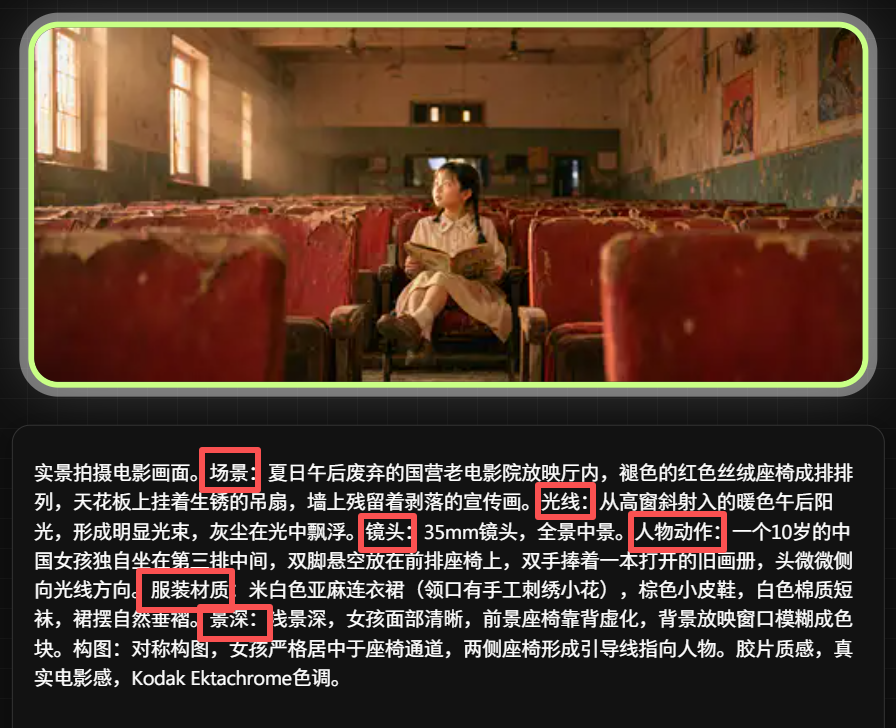
But the voices are different。
It's not just "happiness" or "grumpy" or "sorrow." When a real person speaks, it contains a lot of information: a sense of age, a sense of texture, speed of speech, pause, breath, emotional background, acoustic habits, acoustic position, and even the psychological state of speech。
Like the same sentence, "You're finally here."
A young general said that it was possible to hold on to anger, to speak fast and to have short tails。
An old man said it could be a low voice, slow speech and a pause between words and words。
A calm hostess said it might be a stable breath and a low volume, but every word was clear。
SO WE CAN'T JUST TELL AI, "THIS GUY IS ANGRY."
WE'RE GOING TO TELL AI, "HOW DID THIS GUY SAY HE WAS ANGRY?"
THAT'S WHAT CONTROLS THE CORE OF AI'S VOICE。
II. Controlling the sound: not just character identity, but voice characteristics
A lot of people write character tips:
"A young general speaks."
"A cold princess speaks."
"An anti-deficit division laughs."
THIS TYPE OF WRITING ONLY TELLS AI WHO THE CHARACTER IS, BUT NOT WHAT THE VOICE OF AI THE ROLE IS. AI MAY MAKE SOME GENERAL JUDGEMENTS BASED ON THE TERMS “GENERAL” AND “PRINCESS” “REBEL”, BUT THE RESULTS ARE VERY VOLATILE。
A better way to write is to use a sound formula:
Age + Sound Quality + Speed + Emotional + Sound habits
This formula can help us to write role voices more specifically。
Example 1
Don't write:
"A man of age says seriously."
May be replaced by:
The voice of the mid-60s was low and dumb, with a clear sense of experience and pressure on the courtyard. The overall speech is slow and hastily slow, with a natural pause between each sentence. The emotional background is a sense of calm, restraint, arrogance and censorship. It's not very loud, but it's clear, it's a little down, it's like a reminder, it's like a warning. The line reads: “Your Highness, there are some truths that must be good things if they are not known now.”
It gives the voice a greater sense of age and authority。
Example 2
And like the role of the hostess。
Don't write:
"The hostess is sad to say."
May be replaced by:
Quiet, 25-year-old female, soft and low lines, slow speed of speech, indulging in speech, a sense of loss, stable breath but gradually lightening of the second half of the sentence, clear-wording, light-tailing, like a strong mood。
"You didn't believe me from the beginning."
This hint is more effective than “sorture to say” because it breaks it down into a process of voice change。
III. Controlling tone: Emotional words are outcomes, not processes
I. Emotional words are the result, not the process
IN THE HINTS, WE OFTEN SEE EMOTIONAL WORDS SUCH AS “ANGER,” “SORTLY,” WHICH ONLY CONVEY THE EMOTIONAL STATE OF THE PERSON, BUT DO NOT TELL AI HOW TO EXPRESS THOSE EMOTIONS THROUGH THE VOICE. IN ORDER FOR AI TO MORE ACCURATELY SIMULATE A PERSON'S EMOTIONS, WE NEED TO DESCRIBE THE PROCESS OF SPEAKING, I.E., THE EXPRESSION OF A PERSON'S EMOTIONS THROUGH DETAILS SUCH AS SPEED, VOLUME, PAUSE, ETC。
II. How to control tone
1. Sound structure describing emotions
Emotional expression is not just an emotional description, but also a change of voice. For example:
Angry: volume up, speed up, end up tight。
Sadness: reduced volume, slow speech, light breath。
Calm down: speech speed is stable, tone is smooth, words are clear。
2. Writing the introduction through emotional change
DEPENDING ON THE EMOTIONAL MOVEMENTS OF THE PERSON, THE SPEED, VOLUME AND PAUSE OF THE LINE IS ADJUSTED TO ENSURE THAT AI ACCURATELY REFLECTS EMOTIONAL CHANGES。
III. Presentation of cases
1. Anti-rebel divisions: from calm to oppression
Error:
"You think you won?" He said, "No! You just walked into my trap!"
It's too emotional
Correct:
The voice of the anti-war teacher, a 35-year-old male, is low, calm, with a bit of sand, slow to speak, emotional background is a sense of control, coldness, sarcasm and danger, a low volume but a strong sense of oppression, clear words, a slight increase in the focus, a pause in the sentence, a slump in the tailings, and a more threatening sense of calm。
The line says, "You think you won? No, you just walked into the game I was ready for you."
Language level:
The first half of the sentence was ironic and showed a sense of calm and control; the second part gradually showed a sense of threat and oppression through speed of speech and the sinking of the tails。
Emotional change:
When the word “no” was increased, the mood shifted from calm to strong, reflecting a gradual transition from calm to threatening。
Stopping and tailings:
Stagnation and tailings make the lines more oppressive and enhance the sense of risk for the role。
2. Classic beauty
Error:
Her voice is sad and slow. The line says, "Why didn't you come back to see me? Did I do something wrong?"
Correct:
Twenty-year-old women have a soft voice, a soft voice, a moderate voice, and a gentle mood with a slight anxiety. The words “Why are you late” are flat, the tails are slightly up, and the words “What was wrong with me” are beginning to have a slight tremor, with long tails, and a sense of inner anxiety and hope. The line says, "Why didn't you come? Did I do something wrong?"
1. Language and emotional expression
First sentence: “Why are you so late”: a smooth tone, a slight rise in tails, an indignant expectation and a slight incomprehension。
The second sentence: “What did I do wrong”: the tone began to have a slight tremor, with long tails and a sense of inner anxiety and hope。
2. Emotional level
The first is to show what people are waiting for, what they are waiting for, what they are talking about, and what they are feeling about。
The second part shows a growing sense of anxiety and self-responsibility。
IV. Controlling multi-word lines: speaking of voice changes in chronological order
How to control sound changes in multiple lines
In long conversations, the emotions of the role tend to evolve, and the expression of the voice must evolve as the mood changes. From the initial calm to the outbreak of emotions, to the decomposition of emotions, fluctuations in the sound add a sense of hierarchy and make the role more real. Through time-series control, the voice and emotion of the role deepens, so that each line accurately reflects the person ' s inner world。
How to control sound changes in multiple lines
1. Progressive changes in sound
The emotions in many lines are usually gradual, and the mood of the role varies from the initial calm, hesitation, to the subsequent anger, anxiety or relief, and the sound changes as the emotions fluctuate。
2. Speed and emotional co-operation
At the beginning, the role may be slow, with a reflection or hesitation component
As emotions get warmer, speed of speech may accelerate and even erupt
Finally, the tone of the role may become calm or emancipated, with the speed of speech again slowing down, indicating emotional discomfort。
Case Studies
Classic scene: dialogue between father and daughter
The scene set:
In an ancient library, the father (a 60-year-old general) and the daughter (a 20-year-old royal lady) are engaged in a dialogue about the future. The light in the study room was spilled through the windows, the table was stacked with books and scrolls, and the wall was marked by an ancient flag of war and family portrait, and the atmosphere was heavy and solemn。
The father's hair was white, serious and steadfast, and his face covered with the marks of years. He was wearing a heavy black armor with an old book in his hand. The daughter was standing opposite her father, wearing a long dress of light purple, with a certain amount of anxiety and hesitation in her face, and a desire for support from her father。
Two people in the scene spoke to each other before each other. The father told her about her future in a gentle but powerful tone. The daughter expresses her doubts and desires before the father's will。
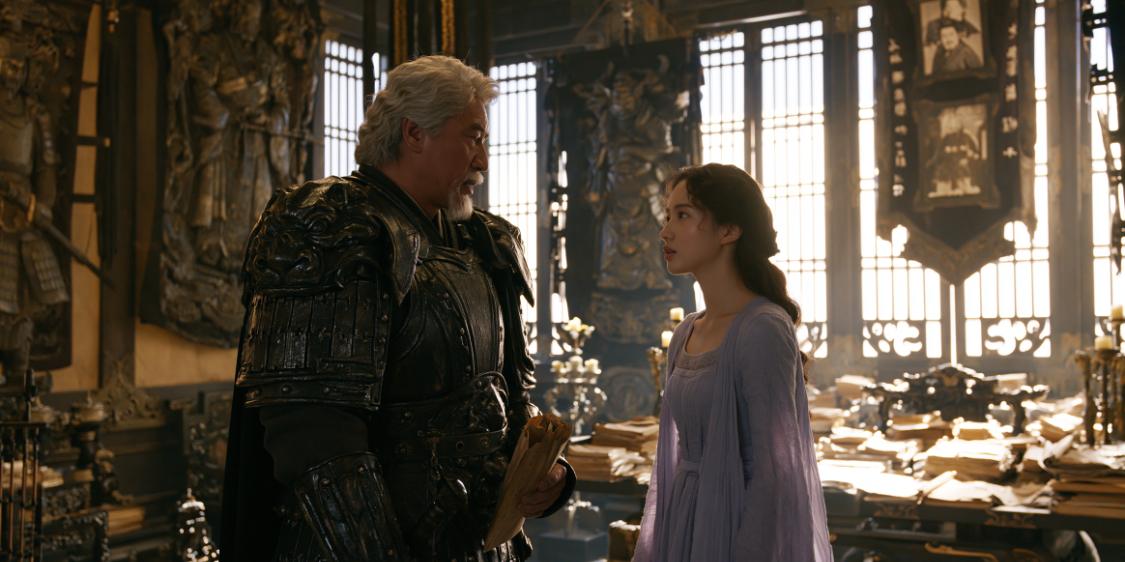
Video Cue Words:
Father: At around 60 years of age, with a low voice and a high level of age, moderate speech, emotional stability, from concern to persuasion. The change in tone is more evident in the father's deep-seated consideration of the future of his daughter。
Daughters: Around 20 years old, with a clear and soft voice, faster speech, anxiety and doubt. Her emotional changes were more evident, from expectations to unease, and her voices were growing stronger, expressing her deep struggle and frustration。
Father: "You've grown up, you can't always rely on me, you'll have to go on your own."
“You have grown up”: words are smooth, words that convey father's understanding and impotence, and words are very quick。
“No one can always rely on me”: the tone is growing, the tone is slowing slightly, and the father's concerns and cautions are conveyed。
“The way forward is by itself”: the tail is down, the tone is slow and firm, and the father's resolve and sense of responsibility is demonstrated。
Daughter: "But, Father, I'm not going to leave, it's too sudden for me..."
“But”: the light tone, the hesitation, showed her incomprehension with her father's decision。
“Father, I am not prepared to leave”: the tone is growing, the speed of speech is accelerating, and she is showing anxiety and struggle。
“It's all too sudden for me ...”: “Slow down, long tails, showing her unstinting and lost。
Father: "I know you don't want to, but this is what you should do."
"I know you don't want it": it's the temperature and the speed of it, with compassion and understanding。
“But this is what you should do”: more rhetoric, faster speech, more decisive tails, and the persistence and determination of the father。
V. Control of speech speeds: Punctuation is the rhythm
Punctuation to Speed
Punctuations are not only used in line words to divide sentences, but they also significantly influence the speed and emotional expression of lines. By using the symbol correctly, the emotional level of the role can be enriched, and the rhythm and emotional changes in the lines can be more subtle and real。
How to control the speed of speech through the symbol
Punctuations are essentially sound rhythms。
Comma, means a slight slowdown. Period, complete pause. The ellipses indicate a halt. Exclamation mark, expression of emotion. line, indicates that the paragraph is suspended. Short sentences, which indicate an accelerated rhythm. A long sentence, a sign of emotion。
Comma(,) – indicates a short pause to slow down
Comma are used to make a short pause in the sentence, which slows down the speed of the speech and makes the lines more natural and hierarchical。
Example:
"I understand you have your reasons, but I still disagree."
Comma helps to express the conflicting feelings of the person and makes the line more thoughtful。
Period (.) – indicates end of pause and normal speed of speech
The period is used for the complete end of the statement, which is normally the normal speed。
Example:
"We made it clear."
Words are smooth and signal the determination of the role and the end。
The ellipses () – indicating that the pause has been prolonged and the speed of speech has slowed, with hesitation or reflection
The ellipses are used to express the role ' s hesitation or reflection, to slow down the speech and to bring words that are not finished。
Example:
"Do you ... just leave?"
The ellipsis has led to hesitation and hesitation, slowing down and deepening emotions。
Exclamation mark (! ) – Expressing emotion, speed, emotion
Exclamation marks are used to express strong emotions, to speed up speech, and to make it quick and emotional。
Example:
"How can you do this to me!"
The use of exclamation signs, speech outbreaks, emotions, role anger and shock。
Case Studies
An ancient scene: dialogue in the palace
The scene set:
In the palace, the Queen and the Prince are talking in a palace, a gentle and dignified atmosphere. The Queen looked very strong, but he was a little tired. The prince, who stood opposite her, looked handsome, but had a tight eyebrow and seemed a little anxious and confused. The sun runs through the pane, forming a beam of light。

Sound alert:
Queen: At around 50 years of age, the voice is low and powerful, the tone is moderate and the mood is firm and unsatisfied. Her tone is fast, but at the end of each sentence there will be a marked pause, demonstrating her sense of control over the authority. Queen: "The Prince, you already know that this decision cannot be changed."
Prince: Around 30 years old, with a clear voice and a little anxiety, a little speed of speech, an emotional background of unease and frustration. Words are rushing, procrastination and expression of inner struggle and confusion. Prince: "Mother, I understand, but is such a decision really good for the country?"
VI. SOUND TRANSITIONS
Here's a template for sound tips that you can use directly。
Single Word Template
Role Sound Settings
[Age] + [Gender or sound type] + [Audience] + [Voice speed] + [Feed] + [Acoustic habits]
Word expression:
When he said that, [sound state], [suspension mode], [heavy position], [end of sentence]。
Example:
“The voices of women around the age of 25 are cold, slow to speak, emotionally tempered by restraint and disappointment, and their breath is stable when they speak, but the latter half of the voice becomes lighter. When she said that, the word " never" was increased, and the end of the sentence was softly contained, not crying, just calmly saying, "I never believed you."
copy
Multiword Template
Role voice set:
[Age sense]
Line rhythm:
First sentence: [State of sound]
Second sentence:
Third sentence:
Fourth sentence:
Example:
“The male voice around the age of 30 is low, the speed of speech slows down and the mood gradually shifts from restraint to anger。
The first sentence, "You're finally telling the truth," is low volume, slow-talking and downsonic。
The second sentence, "All these years, you've been lying to me," speeded up, "all the time" and "lies to me" increased。
The third sentence, "What the hell do you think I am?", is that the volume is increasing and the breath is getting heavy。
And the fourth sentence, "Answer me," was short and strong, there was no extra tail, and there was a complete burst of emotion."
SUMMARY: AT THE HEART OF AI ' S VOICE CONTROL IS NOT EMOTION, BUT STRUCTURE
The most important conclusions of this section are:
DON'T JUST TELL AI WHO THE CHARACTER IS。
TO TELL THE AI CHARACTER HOW TO TALK。
Don't just write about anger, sadness, excitement。
To write volume, speed, pause, breath, accent, tail。
Don't just write an entire set of emotions。
More lines are to be split in chronological order so that the sound changes with the mood。
CONTROL OF THE AI SOUND, WHICH IS NOT A MULTIPLICITY OF ADJECTIVES IN ESSENCE, IS THE CONSTRUCTION OF THE SOUND STRUCTURE。
These are three ways to remember:
First, use sound formula to control the sound:
Age sense + wiring sense + speech speed + emotional background + sound habits。
Second, use sound process to control tone:
Replace the words “he is angry” with the words “he speaks with a higher volume, heavy biting and short end”。
Third, control the speed of speech with the symbol:
Comma deceleration, ellipsis pause, exclamation break, line-to-line paragraph pause。
AND WHEN YOU LEARN THESE THREE WAYS, AI'S ROLE IS NO LONGER JUST "IMAGES LIKE REAL PEOPLE," BUT EVEN TALKING IS MORE LIKE A REAL PERSON。