



The hint describes what it wants and the condition map defines how the picture must be generated. Learn depth maps, grammatical charts and dynamic contours, and a single picture can also extend space, personal details and product animation。
MANY PEOPLE USE AI TO GENERATE PICTURES OR VIDEOS, STILL FOCUSING THEIR MAIN EFFORTS ON HINTS: CONSTANTLY SUPPLEMENTING SCENERY, LIGHT, LENS, MATERIAL AND ACTION, HOPING THAT THE MODEL WILL FULLY UNDERSTAND ITS INTENTIONS。
However, when the task involves recalculation, change of location, maintenance of a person ' s structure or transformation of a product, text alone is often insufficient. Words are good at describing content, but they are not good at specifying exactly where each region should be located, and it is difficult to keep the same subject's structure in multiple images。
At this point, the really effective method is not to continue stacking adjectives, but to add a more direct visual condition to the model。
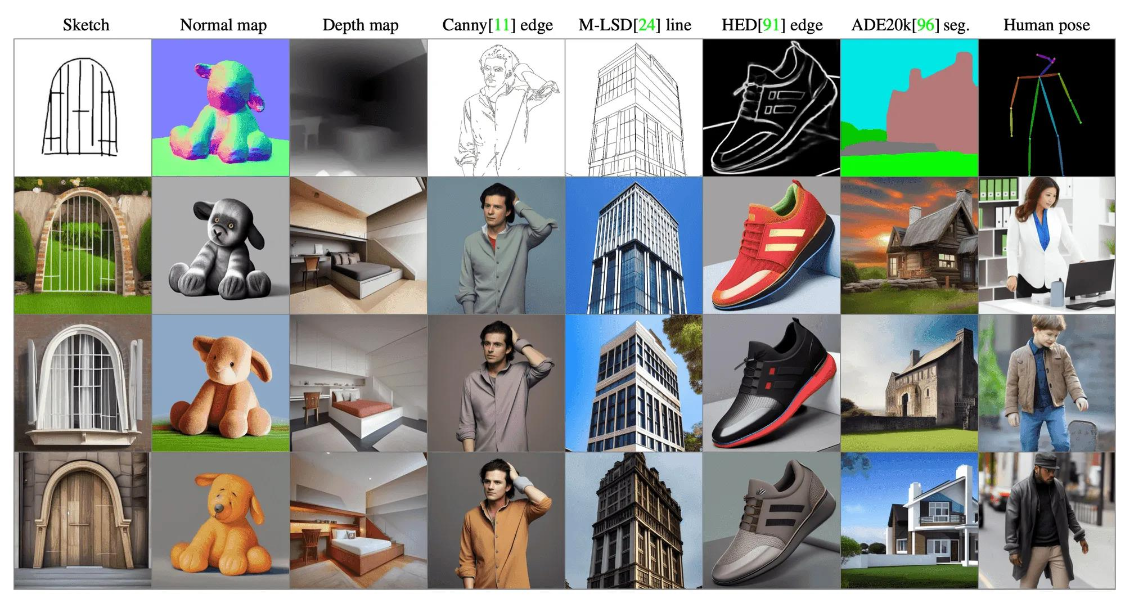
The Depth Chart tells the model about the distance, the method-line Chart tells the model surface to go, and the contours tells the model about the outer boundary. They are not final images, but “structural notes” between reference and outcome maps。
The methodology is derived from early proliferation models and control ideas in three-dimensional production, but can still solve many new problems by being placed in current image models, video models and code tools。
Because today's models are better at supplementing material, light and real details, we do not have to leave the condition map to take on the full generation, but only to make it responsible for the most vulnerable parts: space, surface and shape。
I. UNDERSTAND WHAT THE CONDITIONS ARE IN CONTROL
The usual hint is "what's in the picture."。
For example:
A woman in a black long skirt was standing on the grass, low-altitude shooting, bad weather, movie sense。
The model determines the distance of the person, his/her body, his/her clothes wrinkles and the background level according to the text. These decisions are likely to change each time they are generated。
The conditionalities are “the structure in which these elements must appear”。
The Depth Chart separates the area close to the lens from the area far away; the graph will record the direction of the surface in different colours; the contours will only keep the main edge, allowing the model to specify where the outer shape begins and ends。
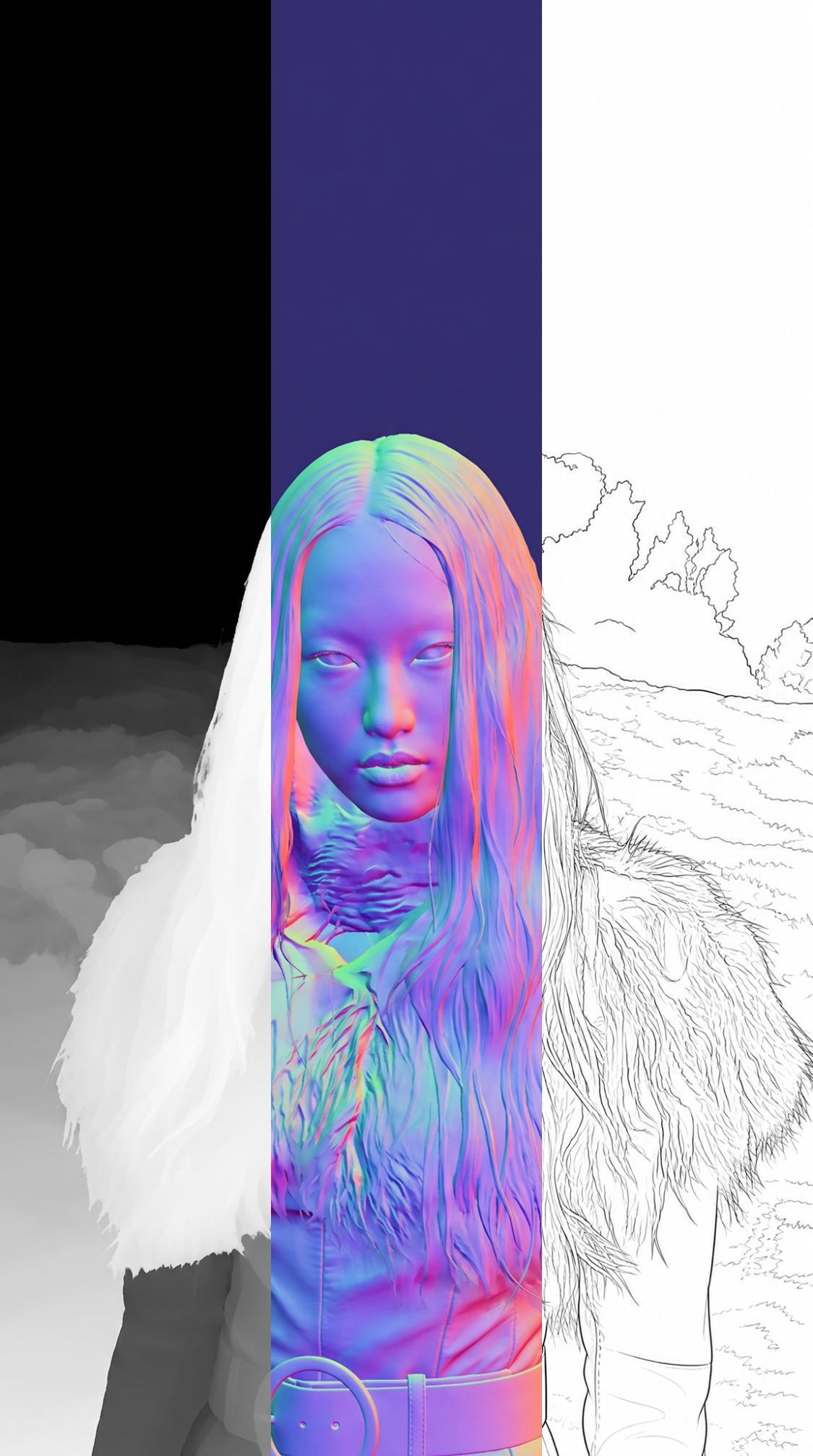
Therefore, the hint and the condition map are not a substitute。
Phrasing control subject matter, style, material and atmosphere, and condition maps control space, structure and change path. A truly stable flow of work is usually done together by “text description + visual condition + main asset”, rather than relying on a single one-size-fits-all。
II. Depth chart: transforming the picture into a space where the view can be retrieved
The depth map is a grey map。
The parts that are usually closer to the lens are brighter, the more distant parts are dark, and reverse rules can be applied, the key being to keep the whole picture uniform. It does not record what the object is, but only how far each area is from the camera。
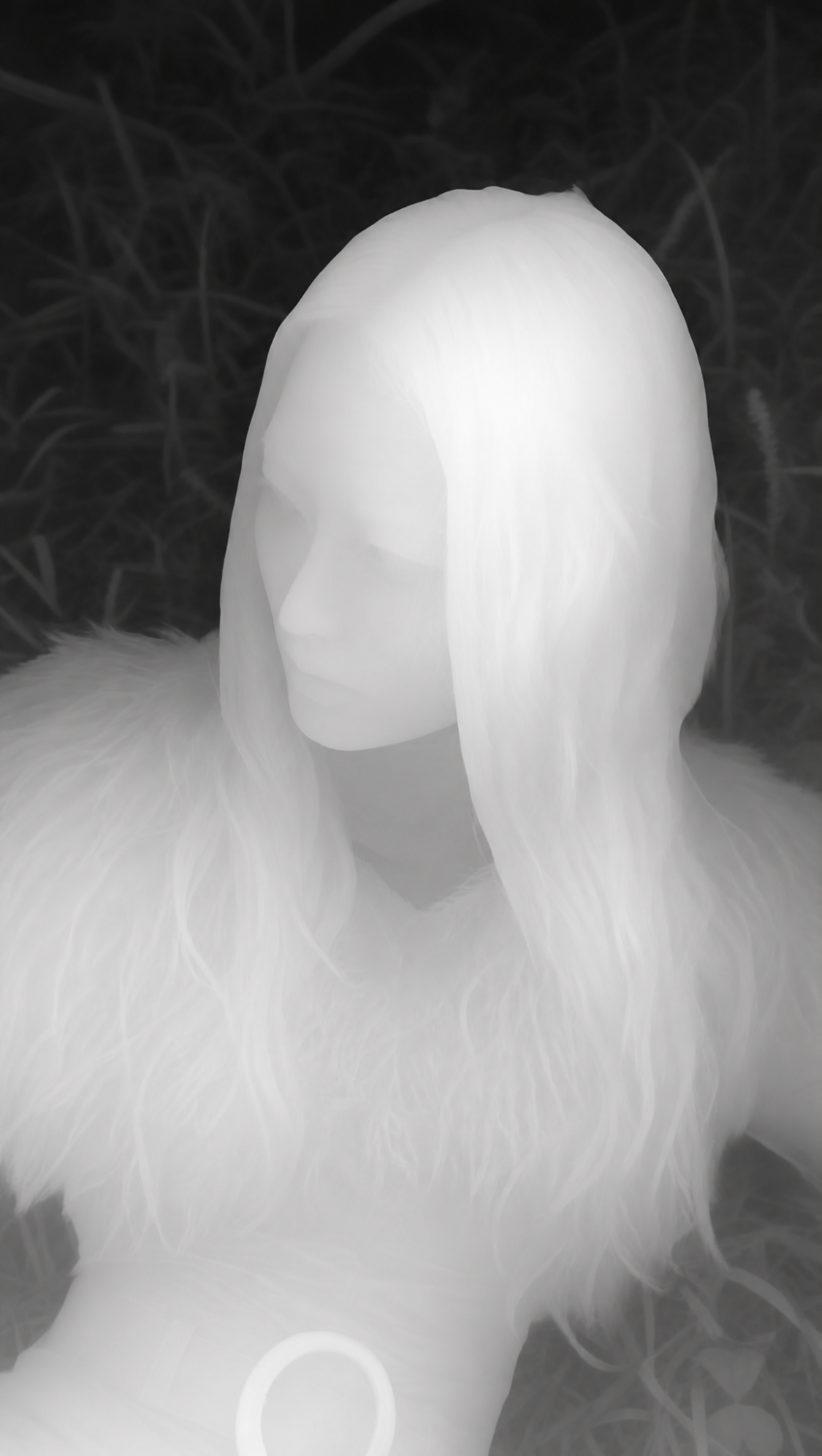
Many people use depth maps only for movement migration, for example, to extract the body depth of the reference person and to allow new roles to be generated in the same manner。
IN FACT, IT IS MORE VALUABLE TO CONVERT A SINGLE PICTURE INTO A 2-DIMENSIONAL AND A HALF-SPACE THAT LOOKS LIKE A MOVING SLOT, THAT'S WHAT'S OFTEN CALLED A 2.5-D SCENE。
It needs to be made clear that a single depth map cannot restore the back of the thing that has been blocked, nor can it be truly restored to a complete three-dimensional world. It's more like pulling the original picture in a deep direction, forming a set of back-to-back surfaces。
As long as the space movement is moderate, a new perspective that is more stable than the one that directly allows the model to be “inverted”。
Step 1: Select a suitable original map
The subject needs to have a clear back-to-back relationship to the background, the profile of the person cannot be overshadowed by a large number of objects, and the picture does not contain too much transparent glass, mirror reflection, smoke or dense hair。
The mid-end view of the frontal or light side is usually more accessible to clean depths than those of extreme insight, complex crowds and heavily concealed images。
Step 2: Extracting depth
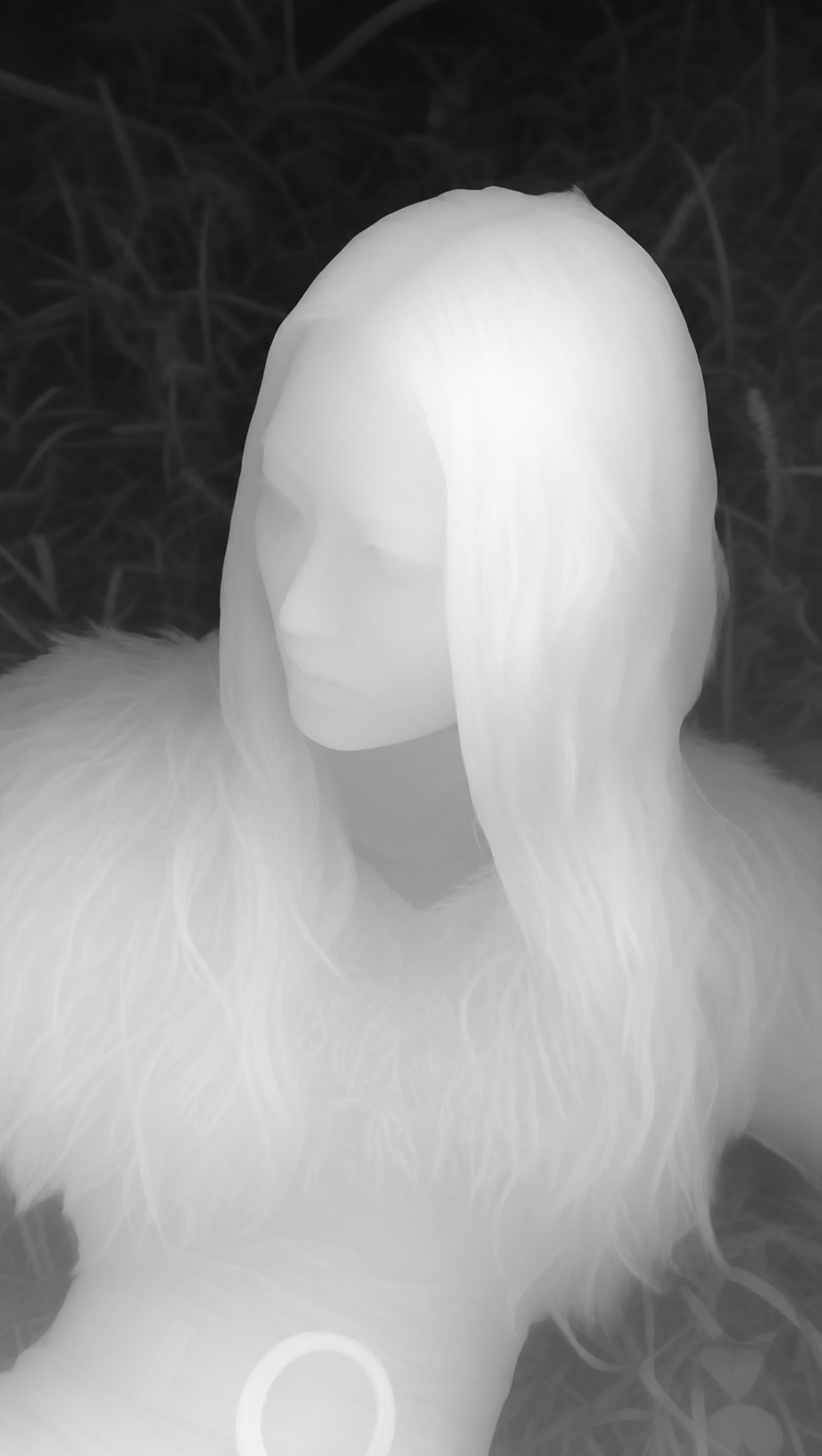
You can give the original image to Image2.0 so that it can only output the grey depth relationship and not retain the original colour and texture。
Depthchart extractt:
Converts the input images into a single-column relative depth map to be used as space structure control for subsequent image generation。
The size of the original drawing, the image, the lens perspective, the main position and scale, the position of the person, the contours of the object, the relationship between the front and behind and the background space structure must be maintained。
Depth rule: Displays white in close proximity, black in long distances, with continuous grey steps in the middle distance; smooth depth transitions on the same continuous surface and clear boundaries of objects。
Prohibition: Re-engineering of the drawings, moving, adding or removing persons and objects, changing positions, replicating new details, retaining original drawings of colour, text, text, material and photostyle。
Output: Only one greyscale depth map, corresponding to the size of the original map, is produced, and no border, description text, colour drawings or decorations are added。
Step 3: Constructing depth maps into visible space
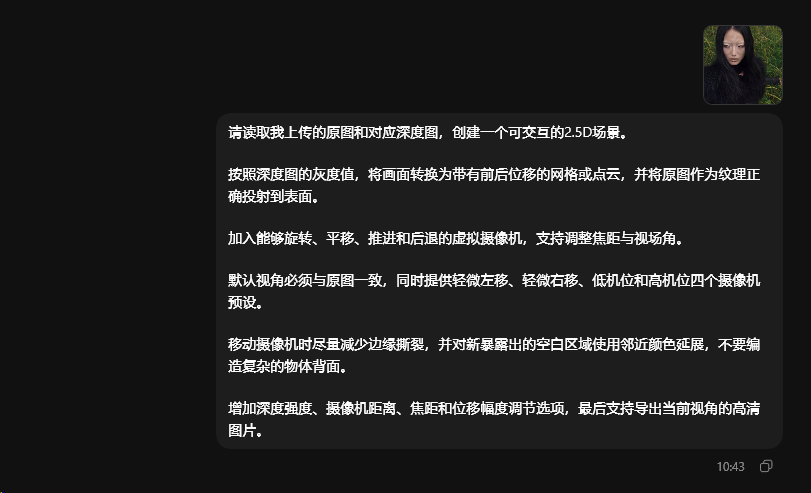
This allows Codex to prepare a simple Python, Three.js or Blender script that converts the grey-scale value into a vertigo, puts the original map back to the surface as a texture and adds a virtual camera that can rotate, smooth and adjust the focal length。
Task alert for Codex:
READ MY UPLOADED ORIGINAL AND CORRESPONDING DEPTH MAPS TO CREATE AN INTERACTIVE 2.5D SCENE。
Converts the image to a grid or a dot cloud with a back-and-back shift, using the greyscale value of the depth map, and correctly projectes the original map to the surface as texture。
Add virtual cameras capable of rotation, smoothing, propulsion and backsliding to support the alignment of focal and visual angles。
The default perspective must be consistent with the original map, with the provision of four camera presets for minor left, minor right, low and high。
The moving camera minimizes the ripping of the edges and uses a close colour extension for newly exposed blank areas and does not create the back of a complex object。
Increase depth intensity, camera distance, focal length and shift range adjustment options, and eventually support the export of high-resolution images from the current perspective。
It is important to pay particular attention here to the goal not to model a picture into a complete person, but to obtain a space reference that can slightly adjust the perspective。
The more the space moves, the more the information not contained in the original map is exposed, the more visible the image will be。
Step four: Move a virtual camera, export a new perspective
The most important is not how far it moves, but within the depth map。
It is usually possible to try:
The camera moves slightly left or right
A slight increase or decrease in the altitude
(b) Keep its position unchanged and change its focal length only
(b) Minor advance, with enhanced horizon and background distance
A slight retreat to add space around the person。
Don't just go around the back of the person or move a big angle at a time. A single picture does not record the back of the person and the area covered, and excessive movement only exposes blanks, stretch textures and repeat edges。
The role of the new perspective is not to become a final film, but rather to provide a clearer conceptual reference for image models。
Step five: Regeneration with personal assets
I WANT NEW PERSPECTIVES, PERSONAL ASSETS AND FINAL IMAGES TO BE SHARED WITH AI。
New perspectives are responsible for space and movement, personal assets are responsible for face, clothing and character identity, and hints are responsible for environment, light and ultimate quality。
New perspective generation of hints:
Using the new reference map as the main frame and action basis, the physical posture of the person, the direction of the limbs, the height of the lens, the perceiving relationship and the position of the subject in the picture are strictly maintained. (c) Control of face, five officials, hair, clothing, accessories and body ratios with personal asset maps. Regeneration of a complete picture, repairing of the blanks, damaged edges and repeat textures resulting from the depth stretch, allowing the person to contact the ground with nature, a continuous background structure and a unified light direction. No person may change his or her behaviour, no medium view may be transformed into a body, no other person may be added, and no person may change his or her clothing or major accessories。
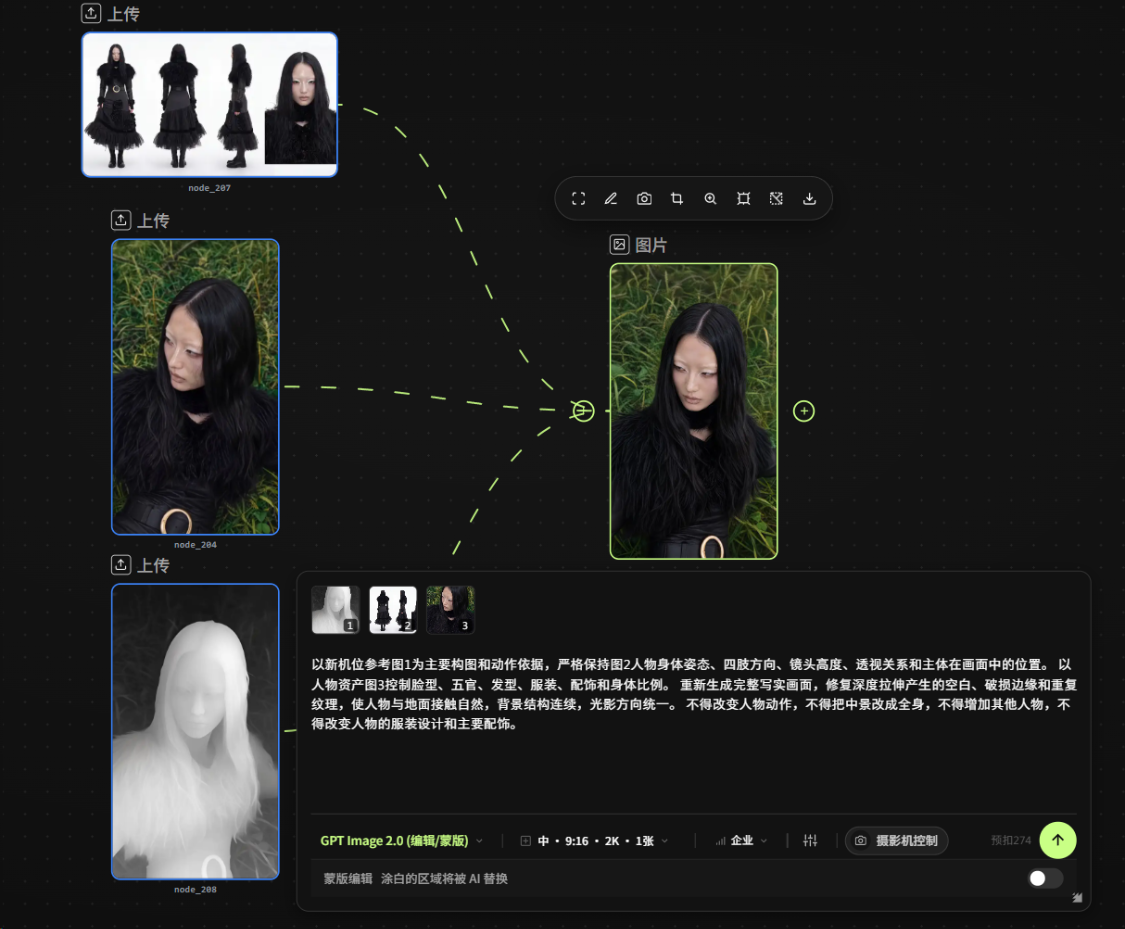
In this step, the responsibilities of each reference map must be clearly stated。
Not just "Reference pictures to generate similar images", but be clear:
New perspective map control maps and postures
(b) Personal assets control identity and clothing
Text controls scenery, light and sense of quality。
Legal chart: no structural change and re-control of the face of a person
It is also a structure, but it records not distance, but surface direction。
COMMON-LAW LINE MAPS DISPLAY BLUE, PURPLE, BLUE, RED, ETC., AND DIFFERENT COLOURS REPRESENT A DIFFERENT DIRECTION OF THE SURFACE. THE THREE-DIMENSIONAL MODELLING OFTEN USES METHOD-LINED INFORMATION TO DISPLAY CONCUSSIONS AND SURFACE DETAILS, WHILE IN THE PRODUCTION OF AI CHARACTERS IT HELPS THE MODEL TO UNDERSTAND FACE TURNS, MUSCLE RISES, CLOTHES WRINKLES AND JEWELLERY SCULPTURES。
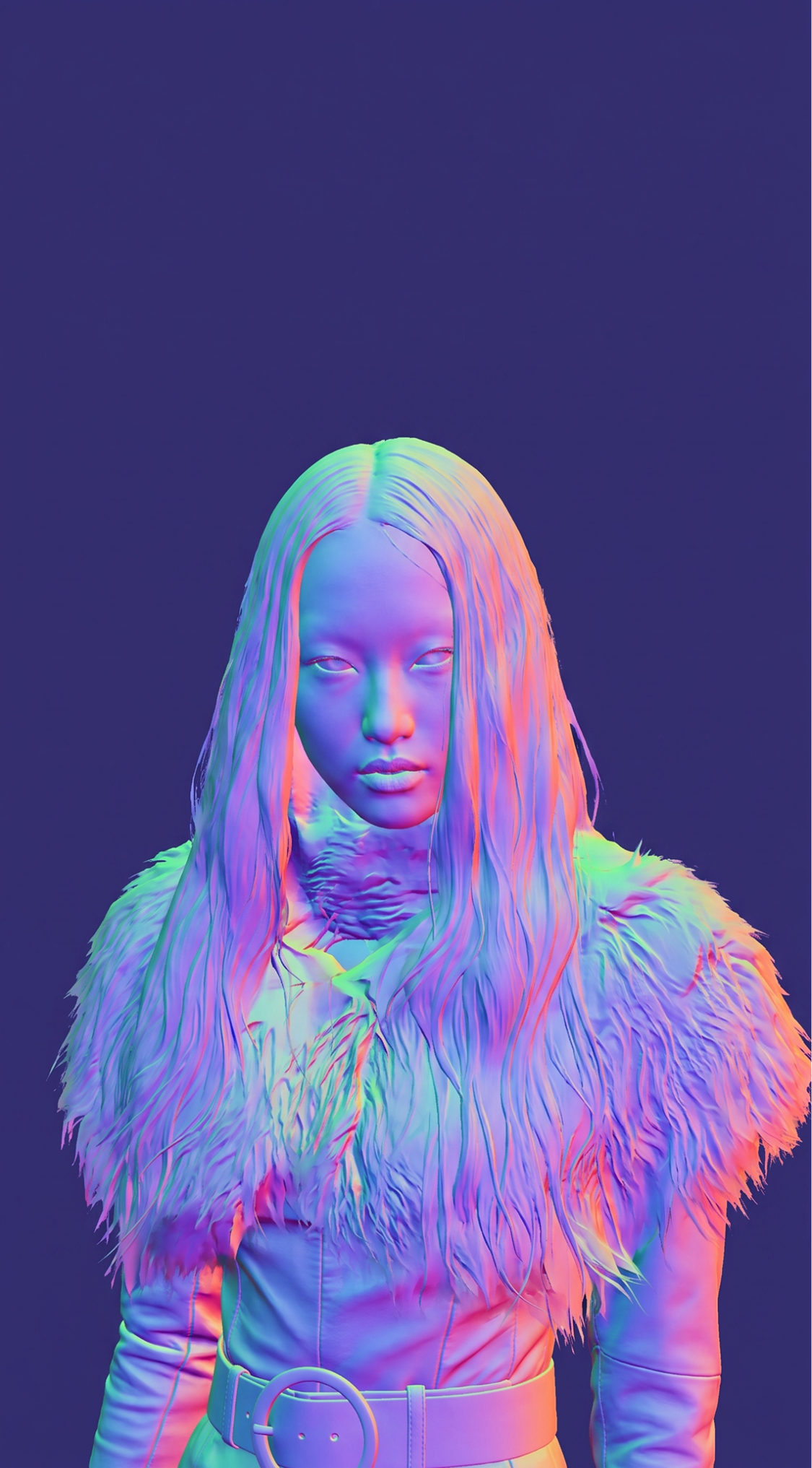
Directly requiring models “to make their skin clearer and clothing more detailed” often results in excessive perusalization, pores and dirty texture。
The advantage of the diagram is that it retains the surface structure and allows the model to cover the material again。
This is not random noise, but light and texture that follow the face and body form。
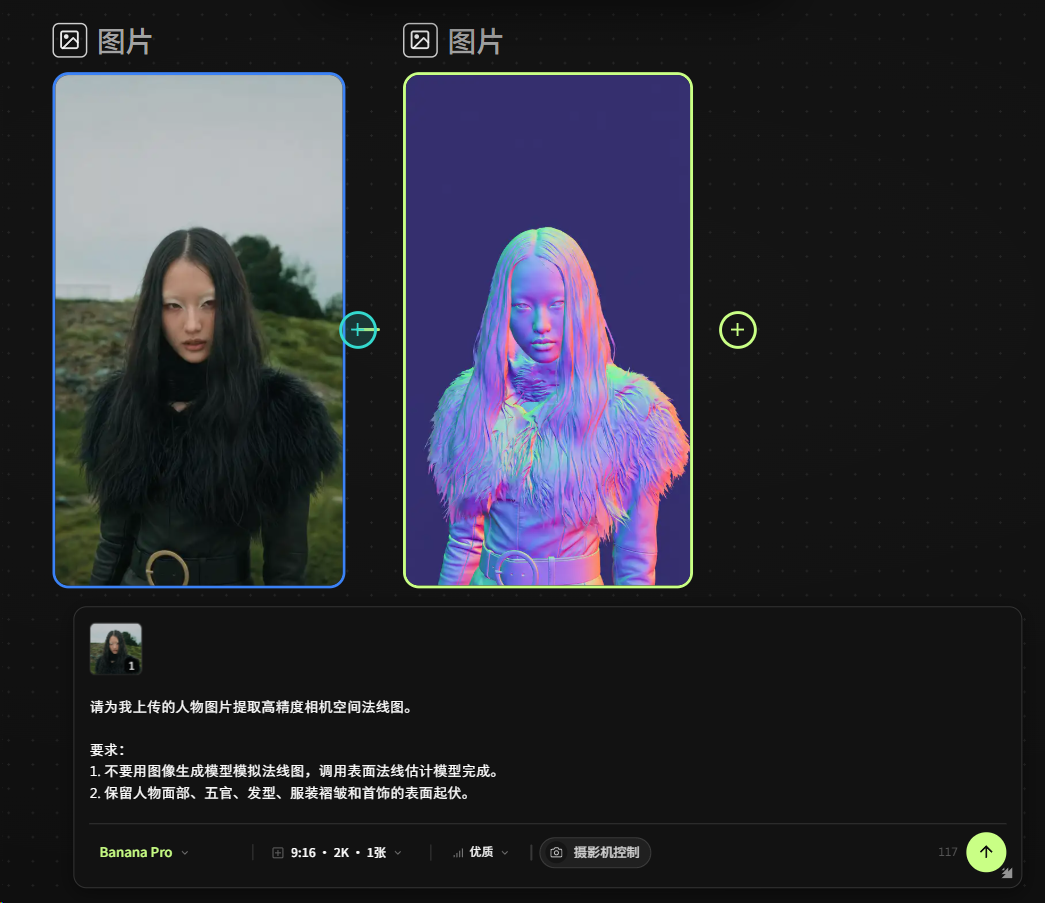
First step: extracting a map of the person's method
Reference maps should preferably have clear contours and stable light, and the face should not be completely overshadowed by strong shadows。
The hint needs to emphasize the maintenance of a five-office structure, rather than the processing of images into a regular blue purple effect。
Phrase extract:
Please extract a high-precision camera space law line for my uploaded image of the person。
Require:
1. Do not use images to generate model analogue line maps and call surface method estimate models. 2. Retention of face, five officials, hair, clothing wrinkles and jewellery。
Step 2: Regeneration of skin, clothing and accessories
The original map, the graph and the personal identity reference are entered together in the production model。
The original map provides the overall picture, the French line map provides a surface turn and the identity map prevents face change. At this point, the hints do not continue to pile words such as “extremely detailed” “super-clear pores”, but rather indicate how the material should respond to the structure of the person。
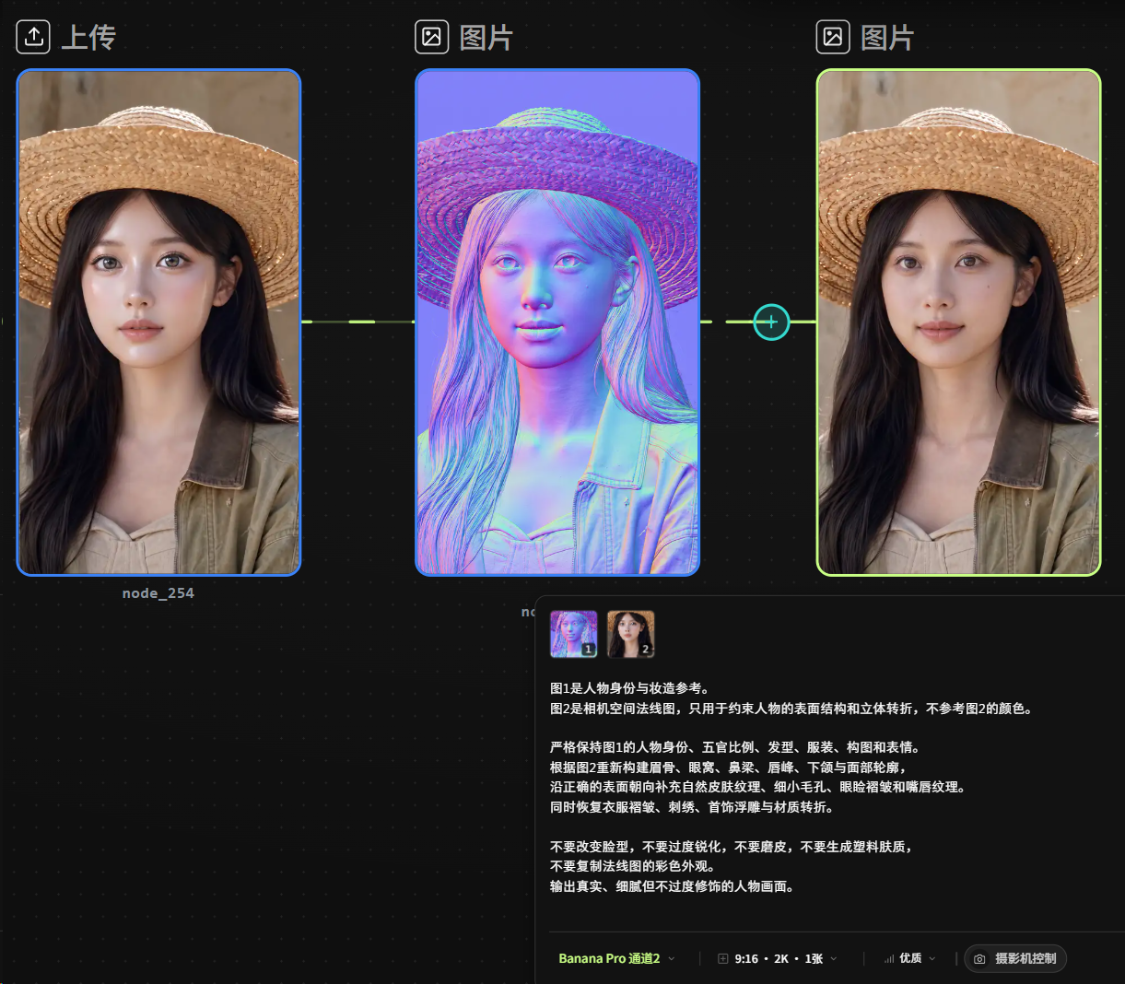
The man controlled by the legal line redraws the hint:
Figure 1 refers to the identity and makeup of the person. Figure 2 shows the camera space law line, which is used only to restrain the surface structure and stereo turns of the person, without reference to the colour of figure 2。
The identity of the person in figure 1, the ratio of five officials, the hair, the dress, the image and the expression are strictly maintained. Reconstruct the eyebrow, eyebrow, nostrils, lips peaks, jaws and facial contours along the right surface to supplement natural skin textures, small hair holes, eye wrinkles and lips. It also restores wrinkled clothes, embroidery, embroidery and material。
Don't change the face, don't overdo it, don't grind it, don't create plastic skin, don't copy the colored look of the graph. It's not like we're going to be able to get a picture of people who are real, delicate, but not overdoed。
Dynamic contours: providing an enforceable path for product change
The most common problem with product animation is that the starting point and end point appear to be correct, while the intermediate process is out of control。
FOR EXAMPLE, BY TURNING A LOGO INTO A MOBILE PHONE, THE MODEL MAY DISSOLVE THE LOGO AND THEN SUDDENLY APPEAR AN APPROXIMATION PHONE; OR THE MOBILE PHONE CHANGES THE NUMBER, BORDER RATIO AND BRANDING OF THE CAMERA AS IT IS DEFORMED。
THE REASON IS THAT THE TEXT ONLY TELLS THE MODEL “FROM A TO B” AND DOES NOT EXPLAIN HOW EACH STEP SHOULD CHANGE。
The function of the dynamic contours is to break the process of change into a continuum。
THE FIRST IS THE LOGO CONTOURS, THE LAST IS THE PRODUCT CONTOURS, WITH THE MESO FRAMES GRADUALLY COMPLETING THE AREA EXPANSION, THE MOVEMENT OF EDGES, THE CHANGE OF HOLES AND THE SEPARATION OF COMPONENTS。
Video models no longer need to speculate on their own shape paths, but only to supplement materials, light and special effects on the given contours。
Step 1: Prepare starting and end assets
IT WOULD BE PREFERABLE FOR LOGO TO USE A TRANSPARENT BACKGROUND OR A PURE COLOUR BACKGROUND, WITH THE PRODUCT MAP AS FAR AS POSSIBLE USING A POSITIVE, SIDE-SIDED OR THREE-QUARTERS ANGLE, WITH A COMPLETE CONTOURS AND NOT COVERED BY HAND AND PROP。
The ratio of the starting point to the end point, the main centre and the direction should be as uniform as possible。
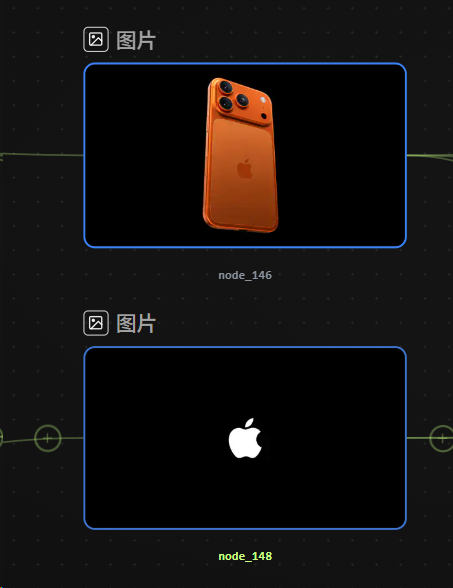
Step 2: Let Codex produce the middle outline
A more stable method than simply reducing the transparency of the two images and superimping them is to convert them to a binary mask and then to generate a continuous sequence by matching contour points, distance field interpolation or morphological changes。
A dynamic contour job alert for Codex:
READ THE ENTRY POINT OF THE LOGO PICTURE AND THE END PRODUCT PICTURE, REMOVING THE BACKGROUND AND EXTRACTING THE MAIN TWO-VALUE CONTOUR, RESPECTIVELY。
(c) To harmonize the size of the canvas, the main centre, the direction and the proportion of the picture。
Generates a set of intermediate frames from the LoGO contours to the product contours, and recommends the output of 24 PNG images in a video of 4s。
Change must be continuous and not simply cross-declining. The outer edge of the main subject should move from frame to frame, and the internal emptiness and product components should appear in stages。
All pictures use a pure black background and a pure white subject, while exporting a transparent background version。
Step three: Completing video models with materials and effects
Hand over the contours, product assets together to the video model。
The contours are responsible for the path, the product map is responsible for the real look and the hint is responsible for explaining the deformation mechanism。
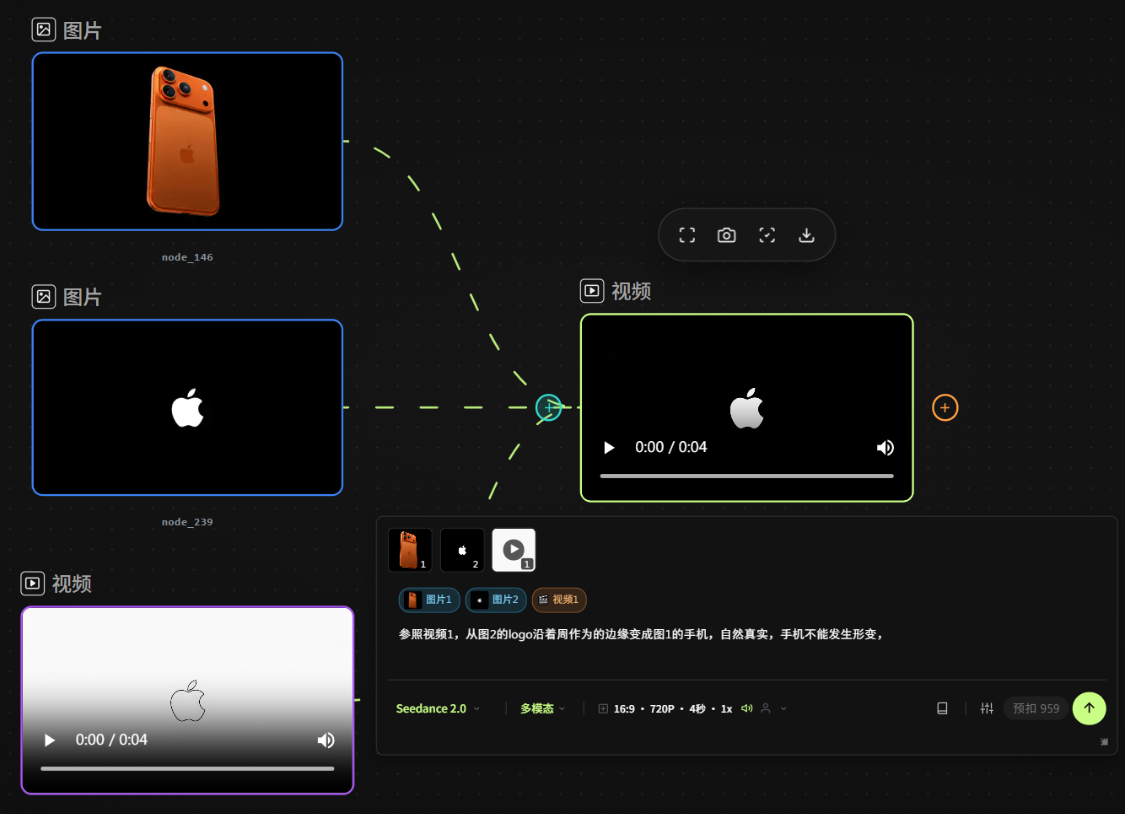
Video generation of hints:
cf. 1, from the logo in figure 2, on the edge of the week, to the cell phone in figure 1, it's natural, it can't change
V. When to use a map
When the problem occurs mainly in lenses, lenses, actions and back-to-back relationships, priority is given to the use of depth maps。
It is suitable for character retweeting, single-map repositioning, space re-engineering, giant oppression and microcosm of the world。
When problems occur mainly in the face, in light of skin, in wrinkles, in carvings and makeup, priority is given to the use of graphs。
It is suitable for character redrawing, role upgrading, makeup replacement and three-dimensional enhancement。
PRIORITY IS GIVEN TO THE USE OF DYNAMIC CONTOURS WHEN THE PROBLEM OCCURS MAINLY IN THE PRODUCT ' S SHAPE, IN THE TRANSFORMATION OF THE LOGO, IN THE DISMANTLING OF COMPONENTS AND IN THE CONSISTENCY OF THE INTERMEDIATE PROCESS。
It is suitable for the opening of brands, the publication of animated products, the packaging roll-out and the structural demonstration。
If there are multiple problems at the same time in a task, do not insert all the conditions at once。
First, we solve the biggest out-of-control points, then we increase the level of control。
For example, a Depth Chart will be used to determine the new position and then to repair the surface of the person; a contours sequence will be used to determine the transformation of the product and the material will be supplemented by a product reference Chart。
Phased generation is usually more stable than one completion and easier to locate。
Conclusion
AI GENERATION IS BECOMING SIMPLER AND MANY OF THE METHODS THAT IN THE PAST HAD TO RELY ON COMPLEX NODES AND PARAMETERS MAY BE DIRECTLY COMPLETED BY MODELS IN THE FUTURE。
But this does not mean that there is no value in understanding depth, surface and contours。
On the contrary, the stronger the model, the more the creator needs to know where the problem lies in order to choose the least but most effective control。
When images fail to change angles, do not continue to add “sides, low slots, wide angles”; do not continue to pile “exhaustible, extreme details” when people become greasy; and do not write “sliding field” when products are out of control。
It is the space, surface or shape that is missing in the model that is selected for the corresponding condition map。
The introduction is for creative expression, the condition map is for fixed rules and the asset is for identity。
BY COMBINING THESE THREE COMPONENTS, AI GENERATION WILL BE ABLE TO EXTRACT RESULTS FROM TIME TO TIME AND GRADUALLY BECOME A PRODUCTION PROCESS THAT CAN BE REUSED, CHECKED AND ADJUSTED。