



Make a nice oneAI ImageIt's not that hard to create a good five-second shot, and it's getting easier。
The real difficulty is whether the picture remains stable when a person needs a dozen shots in succession, when the story goes from inside to outside, when the person begins to change clothes, get injured, speak and interact with other actors。
Many of these problems have been encountered, and the first reaction has been to continue to modify the hints。
When people change their faces, they add more physical descriptions; when the scene changes, the environment is written in more detail; when the sound is unstable, the reference audio is uploaded。
But the longer the project, the more you find:
THE LONGER THE HINT DOES NOT MEAN THAT AI UNDERSTANDS IT MORE ACCURATELY。
A truly effective method would be to dismantle a complex video project into a number of assets that could be repeatedly called, and then to place the call and control of those assets under the trigger。
And this section we're going to make this whole thing clear from the four parts of people, voices, scenes and hints。
I. PERSONAL UNITY: NOT JUST A THREE PERSPECTIVE
produceAI VideoAt times, people are almost the easiest to change。
In particular, when entering the medium view, the panorama or multiple lenses, there are frequent face changes, five drifters, changes in body mass ratios and loss of clothing details。
A lot of people would think that the three views were not sufficiently detailed。
So it started to grow in the same picture:
Face, side, back, face, face, dress details, props..
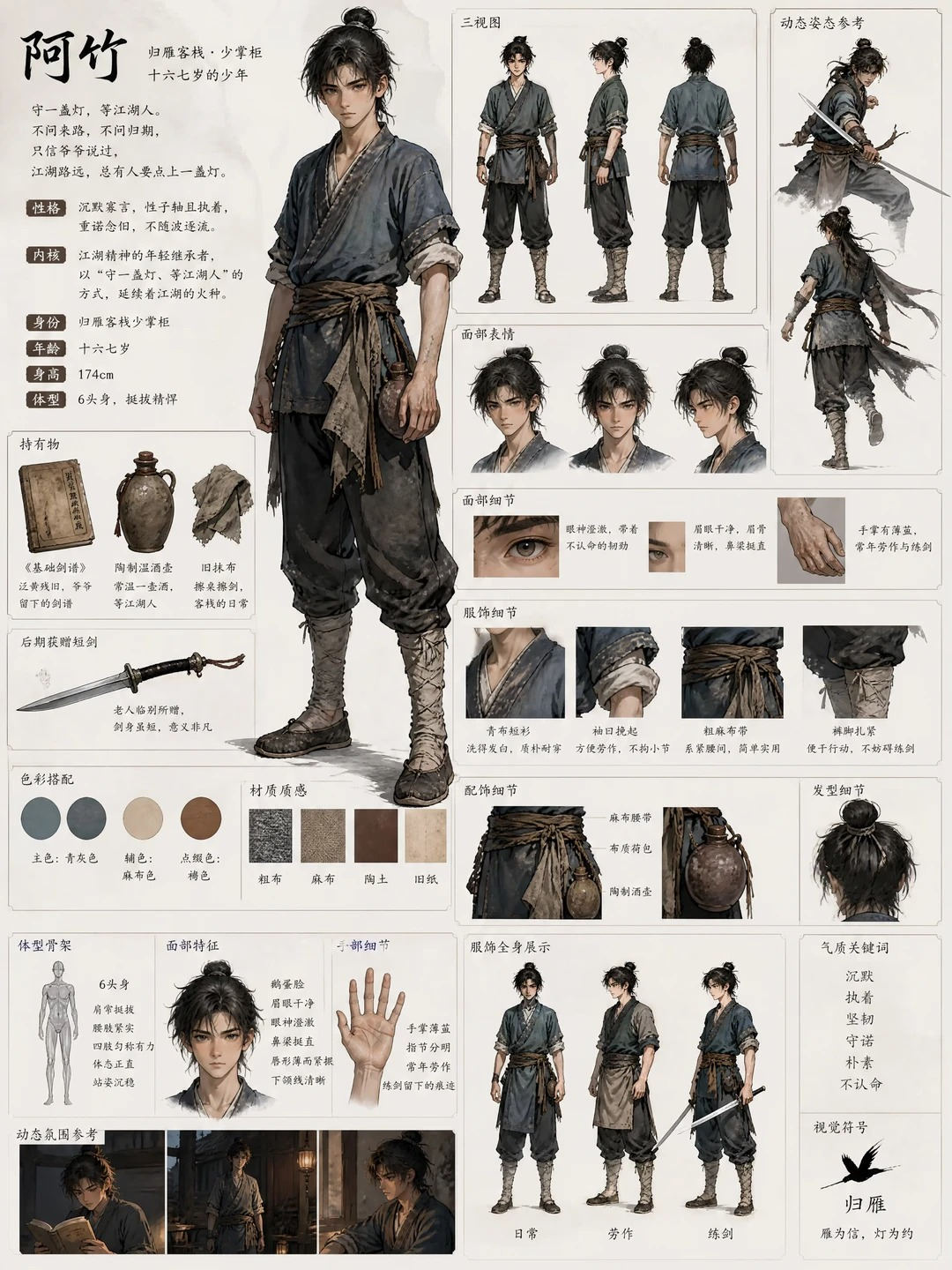
It's a very complicated figure
IT SEEMS THAT MORE AND MORE INFORMATION IS AVAILABLE, BUT IT IS NOT NECESSARILY EASY FOR AI TO READ。
Because the size of a reference map is limited。
If the view of all three figures were to be contained in one picture, each face would have a very small proportion in the entire reference map。
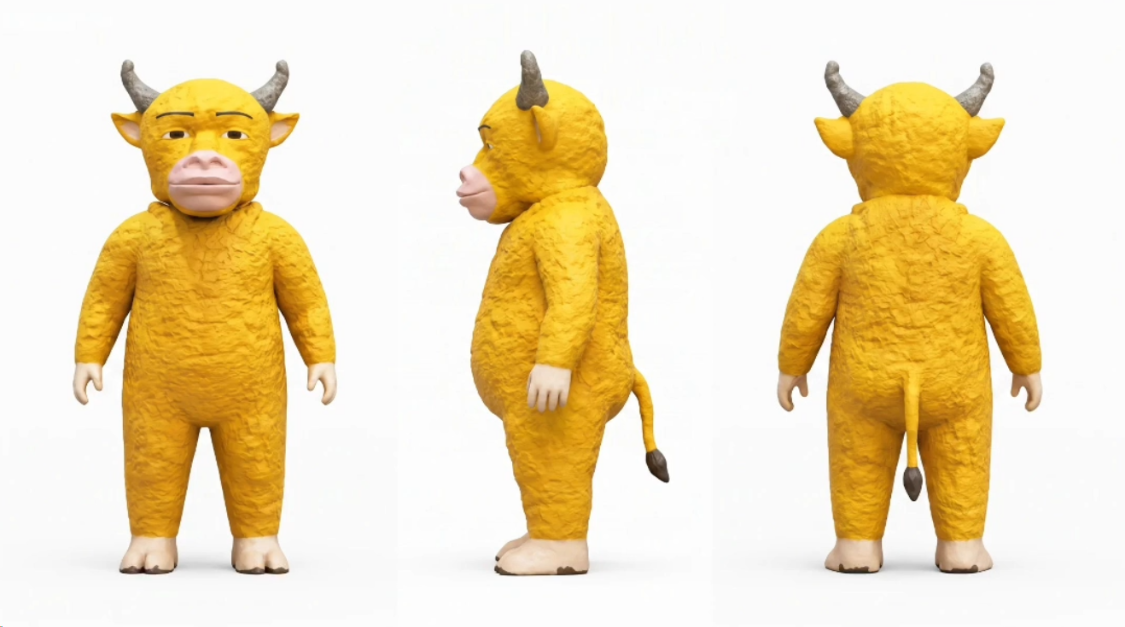
THE PROBLEM MAY NOT BE APPARENT AT THE TIME THE VIEW IS GENERATED, BUT ONCE IT ENTERS THE LANDSCAPE OR THE COMPLEX LENS, THE ACCURATE FACIAL INFORMATION AVAILABLE TO AI DECREASES AND CAN ONLY BE SUPPLEMENTED BY ITSELF。
People are naturally easier to change。
The more stable way is to separate the face from the body
Personal assets can be simply understood as two parts。
The first part is about what people look like。
A clear facial reference is prepared to allow for a sufficiently large face to be present in the picture, with a focus on face shape, five percentages, eyes, nose, mouth, colour, hair and hairline。
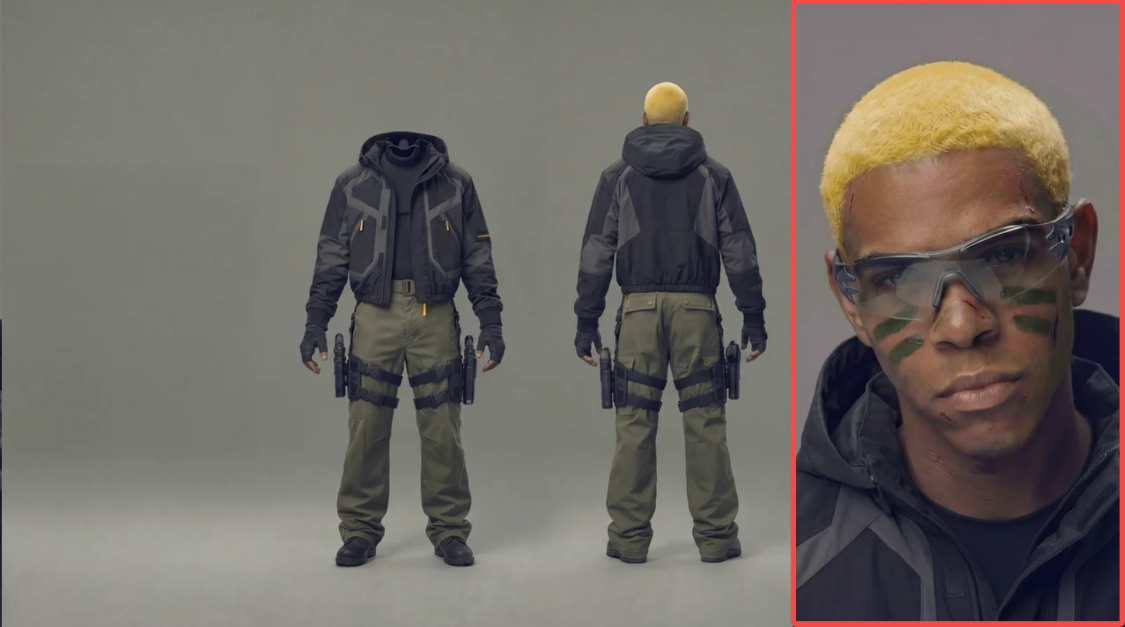
based on facial references in higgsfield personal reference maps
The second part deals with the body and clothing of the person。
Prepare a single full body reference, focusing on the height, shoulder width, waist, limb ratio, clothing profile, shoes and pre- and post-dress structure。
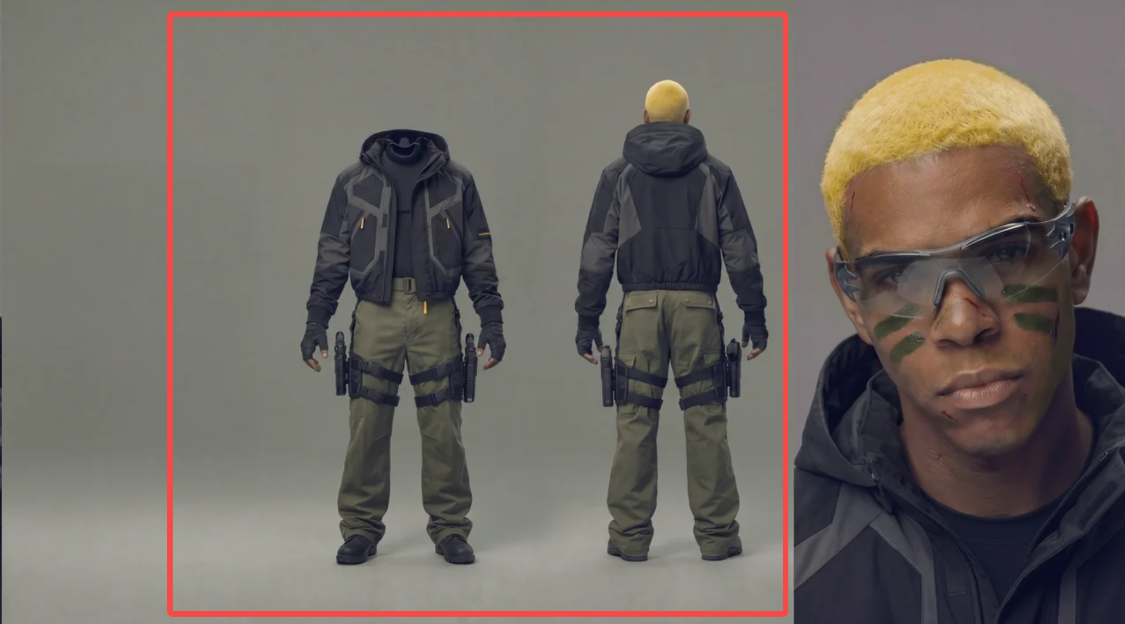
from the full body reference in the higgsfield character reference map
IT IS EASIER FOR AI TO UNDERSTAND A REFERENCE THAT IS ONLY ONE OF ITS MAIN TASKS。
THIS IS ALSO A VERY IMPORTANT INPUT FOR THE VIDEO:
Not as many reference maps as possible, but as clearly as possible。
The same character. We have to prepare for different scenarios
People's assets can't be confined to Standard Three。
Because when a person actually enters the scene, it is rarely possible to keep exactly the same from beginning to end。
For example, an act could have been:
Normal state of clothing ash and facial injury and broken clothes。
Or there are changes in costumes, showers, ageing, fighting, transformations, etc。
IF YOU TELL AI AT EACH GENERATION:
"Keep this character the same, but now he's hurt."
The model would have to re-introduce what this person would look like if he were injured。
The more the generation, the more random。
So the more sound way is to pre-empt the critical state of affairs into the assets of independent individuals。
For example:
ROLE A IS NORMAL
Standard hair, standard clothing, clean face。
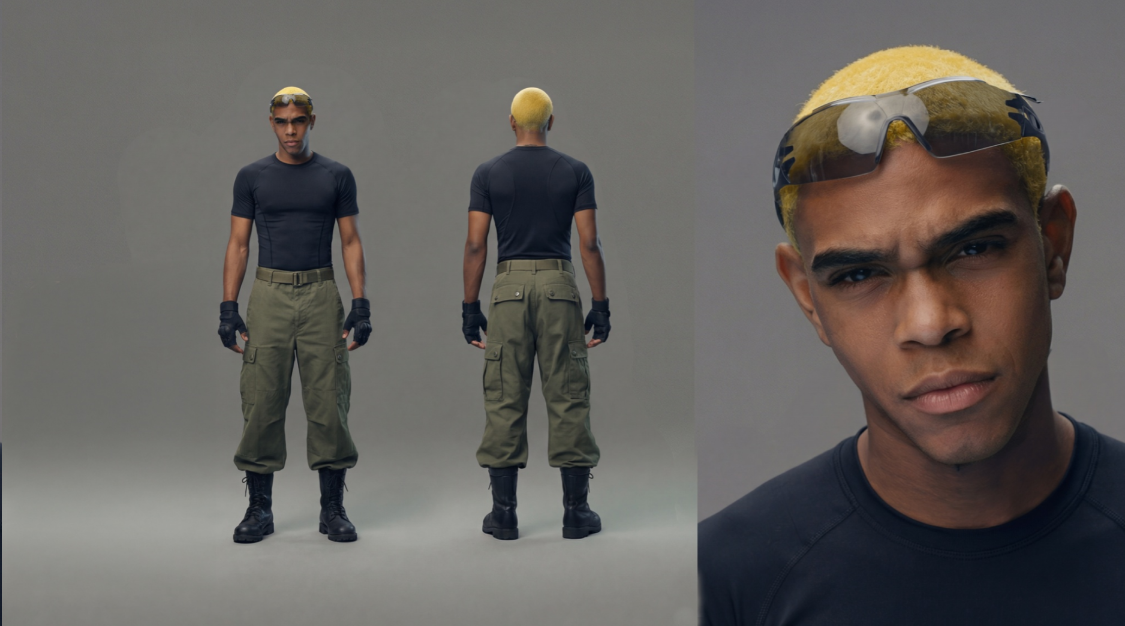
from higgsfield
HE'S IN SERIOUS CONDITION
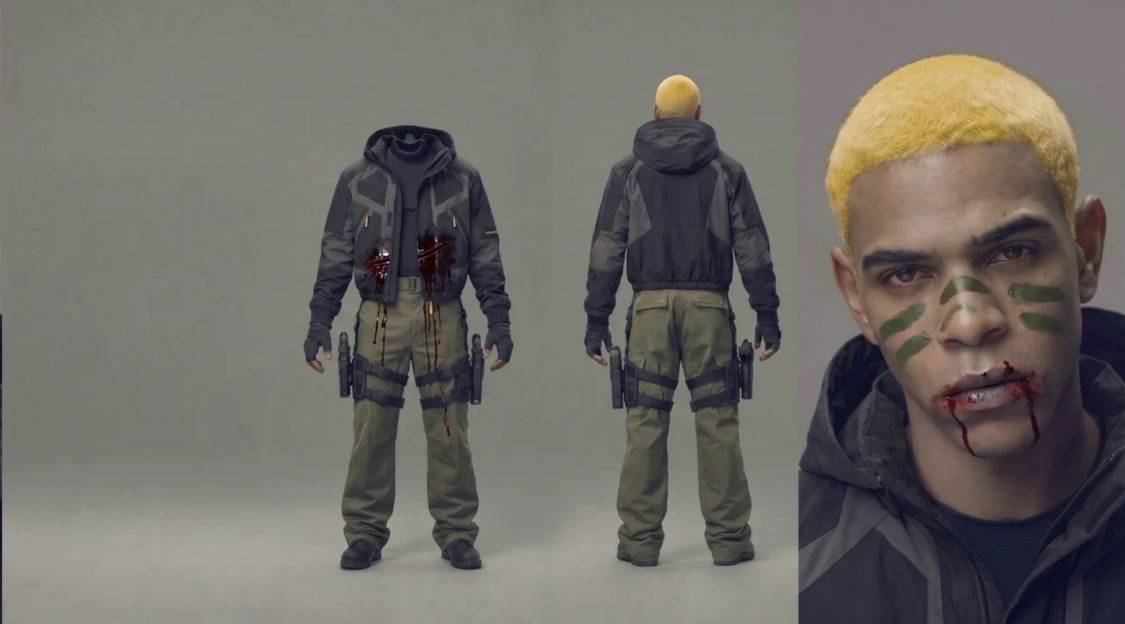
from higgsfield
ROLE A, CHANGE STATE
The face, hair and body ratio of the person remains the same, replacing only the costumes in the drama。
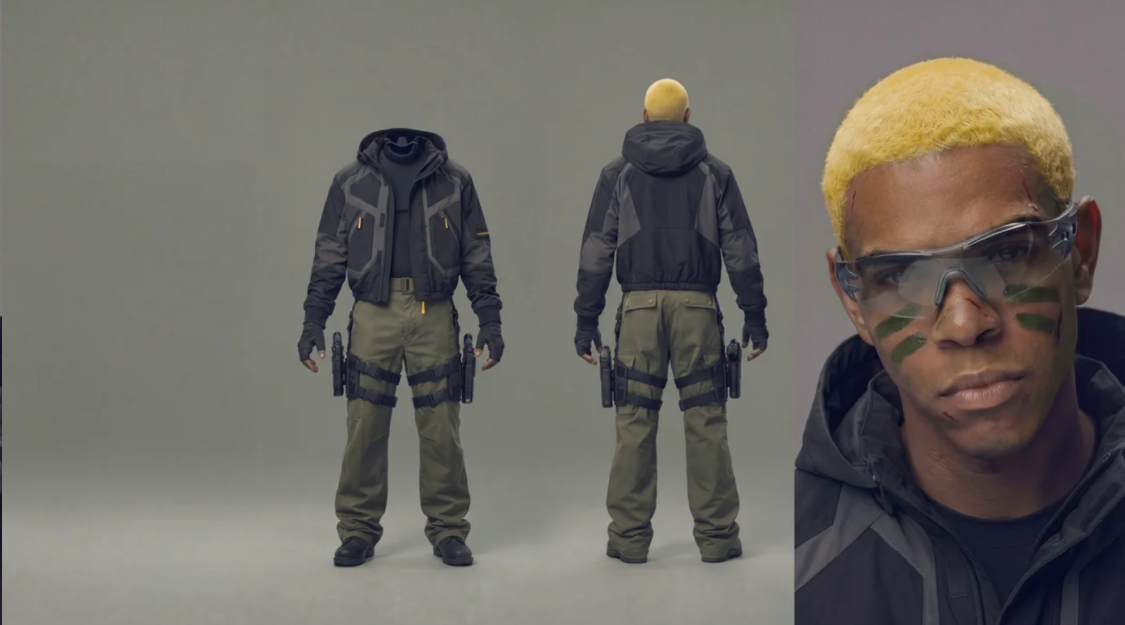
from higgsfield
, then call the corresponding state directly when the specific lens is generated。
BY DOING SO, IT IS IN ESSENCE A MATTER THAT WOULD HAVE REQUIRED AN ON-SITE ASSESSMENT BY AI TO BE PRE-DETERMINED。
The key to the unity of character is not to describe a role longer and longer, but to tear it down in advance。
Sound Consistency: not just the sound, but also the "how to talk"
The second one that can change after the figure is the voice。
A lot of people are now playing role voices and are preparing a reference audio。
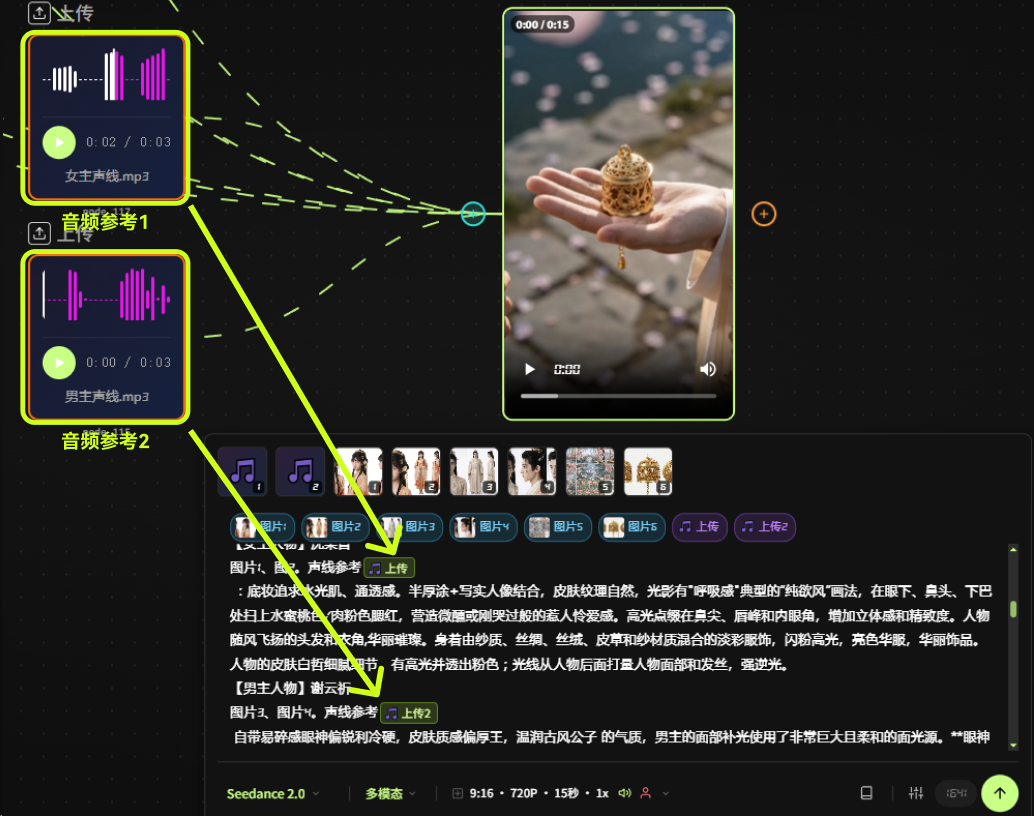
It does bring the sound from different lenses close。
But if it's a series, you'll slowly find:
The same person may speak differently, even though it sounds like that。
The reason is:
The sound is only part of the sound consistency。
A truly complete role voice should include, at least:
High voice, speed of speech, pause habits, emotional changes, speech strength, accent and language habits。
Thus, when important roles are produced, a text description can be fixed in addition to a reference sound。
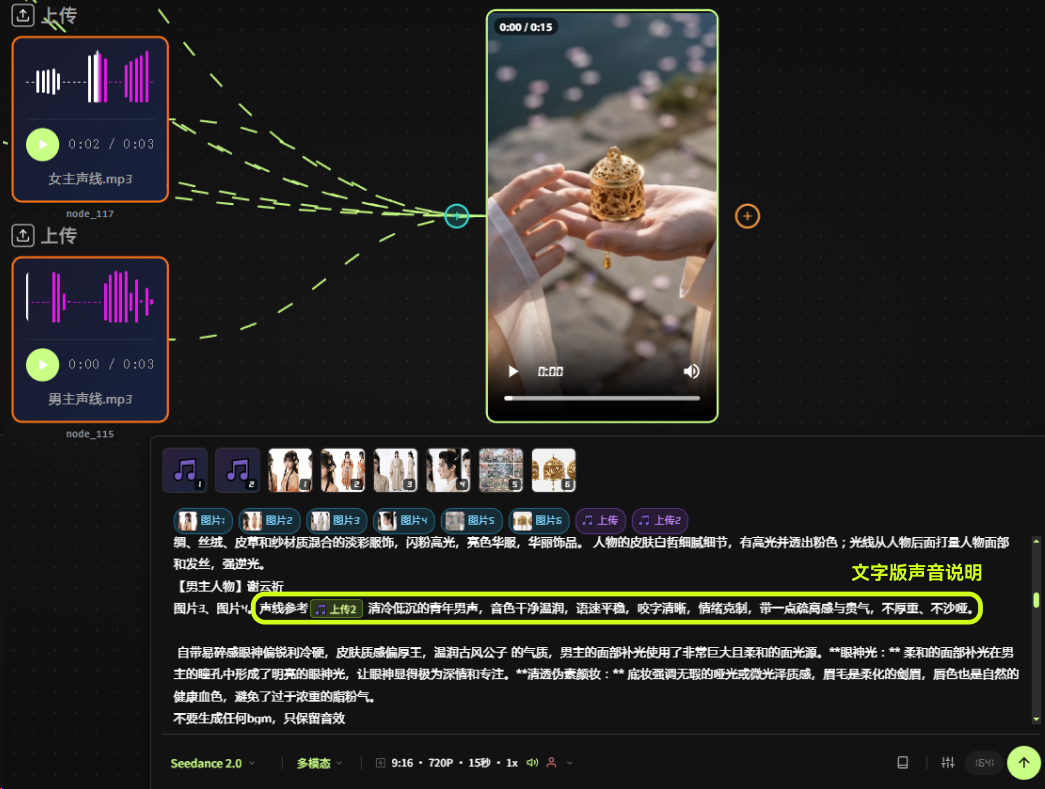
For example:
The sound of young men is cold and low, the sound is clean and warm, the speech is smooth, the words are clear, the emotions are restrained, the sense of alienation and valor is brought with it, and it is not heavy and dumb。
copy
Note that there is no specific line here。
The description is:
What does this character say。
Whatever the characters say, they can continue to call this set of sound settings。
Sound assets need to be tested in advance
Once the sound is set, it is not recommended to start generating the whole video immediately。
A few different types of test lines could be prepared first。
III. SPECIFIC CONTACT: LET AI UNDERSTAND THE SPACE BEFORE PUTTING PEOPLE ON THE STAGE
The problem of unity of scenes is very similar to people。
The first requirement is usually:
"I want a nice movie scene."
BUT FOR AN AI VIDEO, A GOOD PICTURE IS NOT NECESSARILY A GOOD REFERENCE。
Because there's another very important task for the scene:
TELL AI WHAT STRUCTURE THIS SPACE IS。
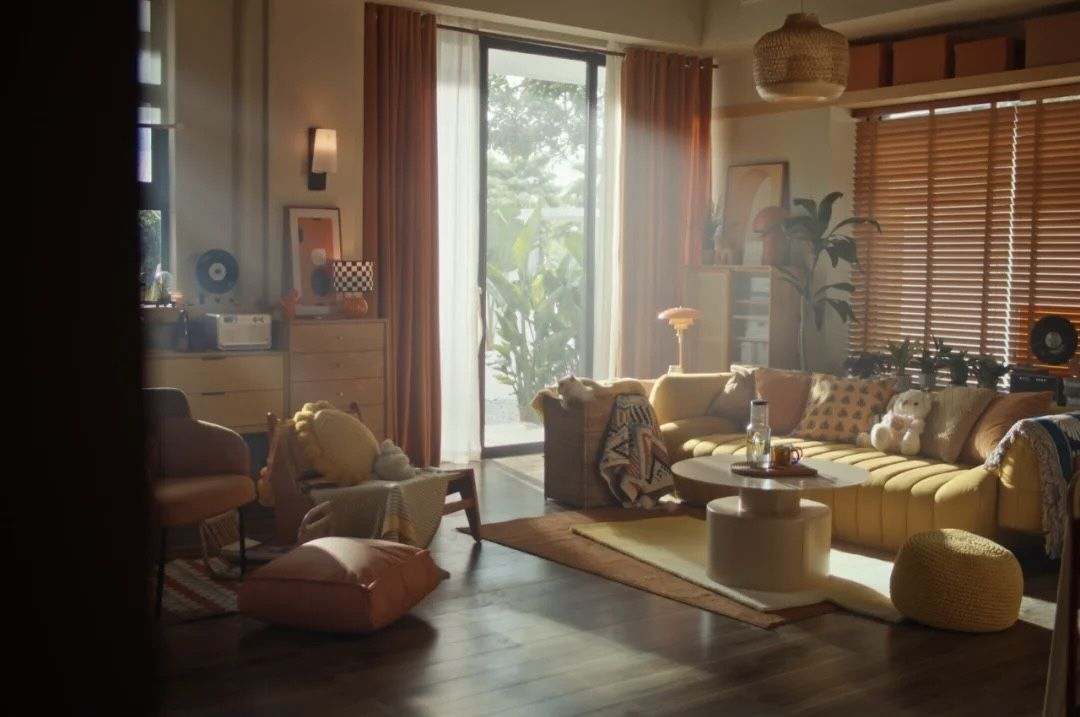
For example, it's also a living room。
IF IT'S TAKEN IN FULL FRONT, IT'S PROBABLY A VERY GOOD PICTURE, BUT AI CAN ONLY SEE A WALL。
What's on the left, what's on the right, what's the distance from the couch, is not clear。
The situation would be completely different if the three-quarter angle was used on a slight side。
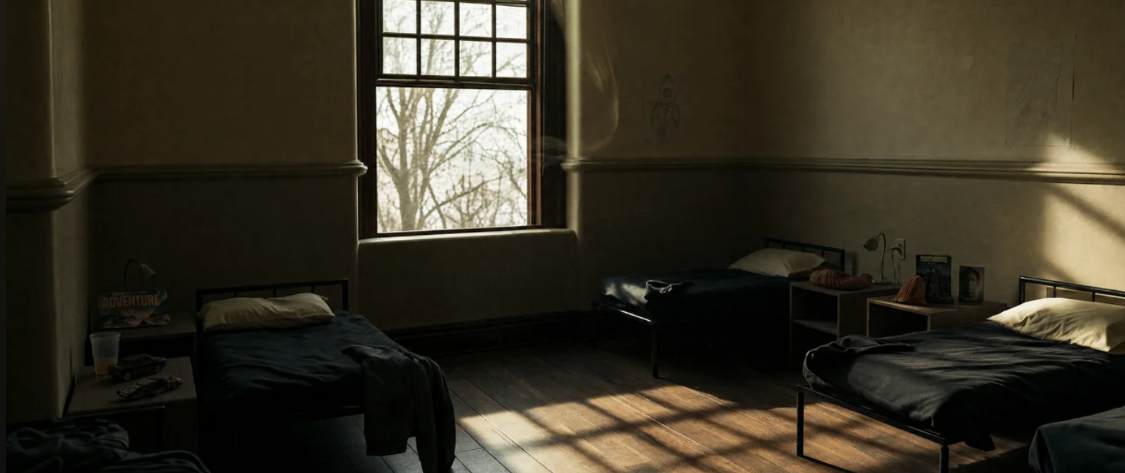
The image may also see:
Left window, bed. Two beds on the right。
Both the depth of space and the location of the object are more evident。
IT'S EASIER FOR AI TO JUDGE WHERE A PERSON SHOULD STAND。
So when you're doing this, don't just think about it:
This one looks good。
There is also a need to consider:
THIS ONE CAN'T LET AI UNDERSTAND THE WHOLE SPACE。
SET A FIXED REFERENCE FOR AI WHEN THE SCENE IS COMPLICATED
In addition to the scenery angle, there is a very good method:
Find a visible fixed object in the scene。
For example:
A pillar。
A yellow couch。
A landing light。
A long table。
A big tree。
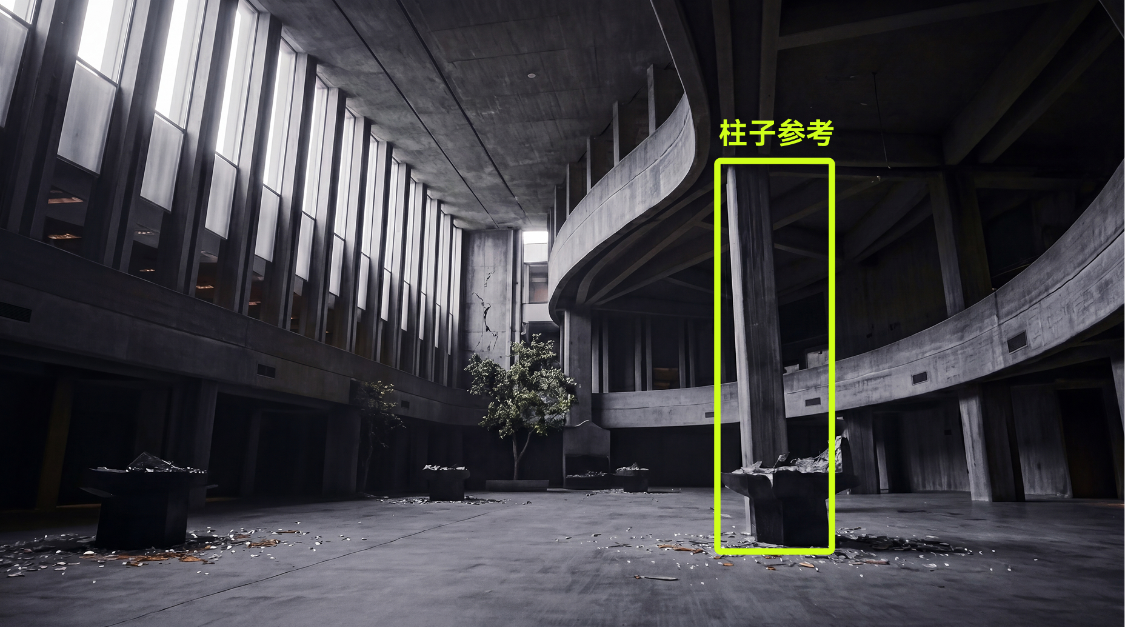
The more abstract term “left, right, centre of the room” is not always used when writing the position of the person。
Suppose there's a yellow couch in the room。
The first mirror can read:
The character is standing one step to the left of the yellow couch。

Next shot:
The person moved to the right from the left side of the yellow couch and passed by in front of the couch。
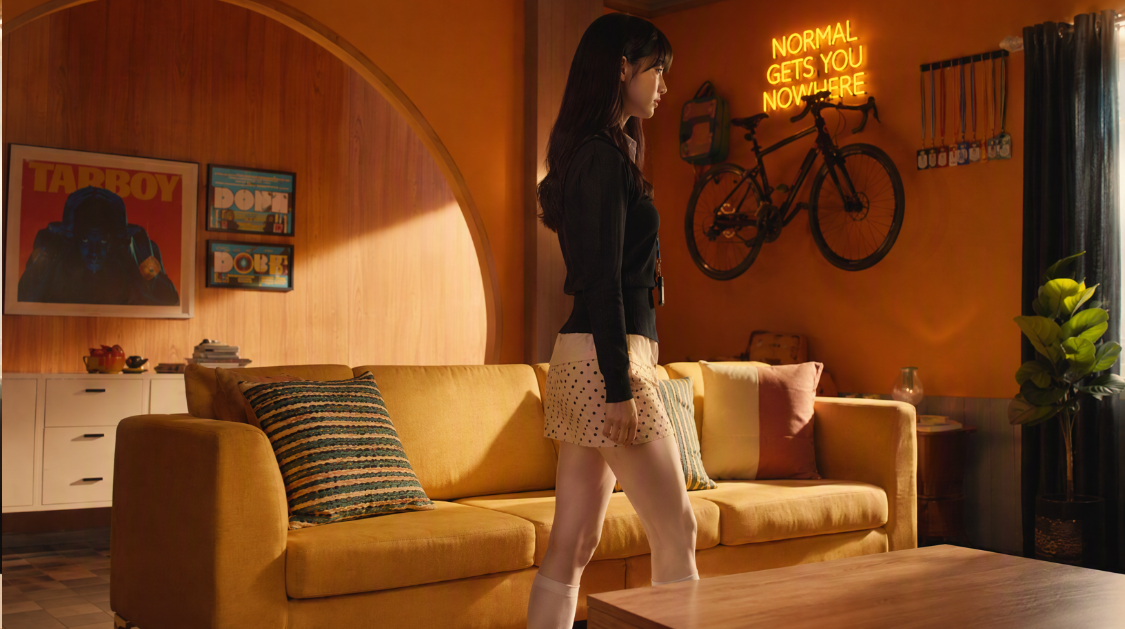
Next shot:
The character stopped on the right side of the yellow couch and turned to another character。
So all three of them go around the same fixed reference。
This couch actually became a "coordinate" in this scene。
AI DOESN'T NEED TO RE-JUDGE WHERE THE PERSON IS。
Multiple scenes, add a space map
When there is only one person in a scene, there is no need to be particularly complicated。
But if three or four people appear at the same time, just say:
"Some people stand in the room and talk."
Stations change easily。
At this point, a simple space description can be written at the top of the hint。
For example:
THE CENTER OF THE PICTURE IS FOLLOWED BY A LARGE GLASS DOOR THAT LEADS TO THE OUTSIDE, WITH ORANGE BROWN CURTAINS ON BOTH SIDES; THE AREA ON THE RIGHT BY A GROUP OF YELLOW L COUCHES WITH ROUND TEAS IN FRONT OF THE SOFA AND A WHOLE WOODEN WINDOW IN THE BACK OF THE RIGHT; AND ON THE LEFT BY A SINGLE CHAIR AND A SHORT CABINET WITH A CUSHION AND A SMALL BENCH。
copy
This is the simplest textual spatial map。
When you're done with your location, write the specific footage:
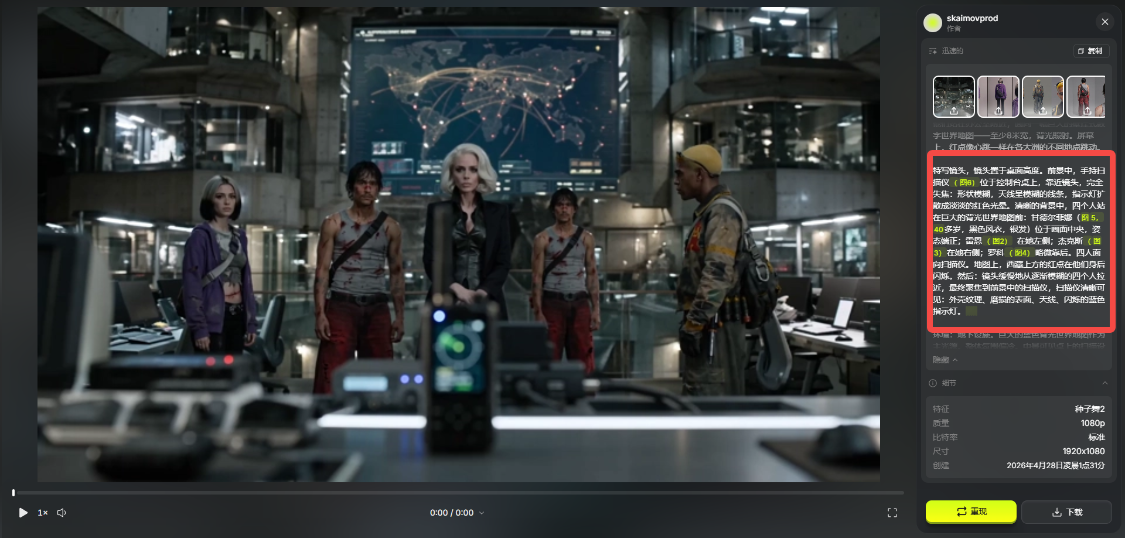
higgsfield's tip
ROLE A STANDS ON THE LEFT SIDE OF THE YELLOW SOFA, CLOSE TO THE GLASS DOOR; ROLE B SITS ON THE RIGHT SIDE OF THE YELLOW SOFA; ROLE C STANDS NEAR THE SINGLE CHAIR ON THE LEFT. THE ROUND TEA TABLE REMAINS IN FRONT OF THE SOFA AS A FIXED REFERENCE IN THE CENTRE OF THE LIVING ROOM。
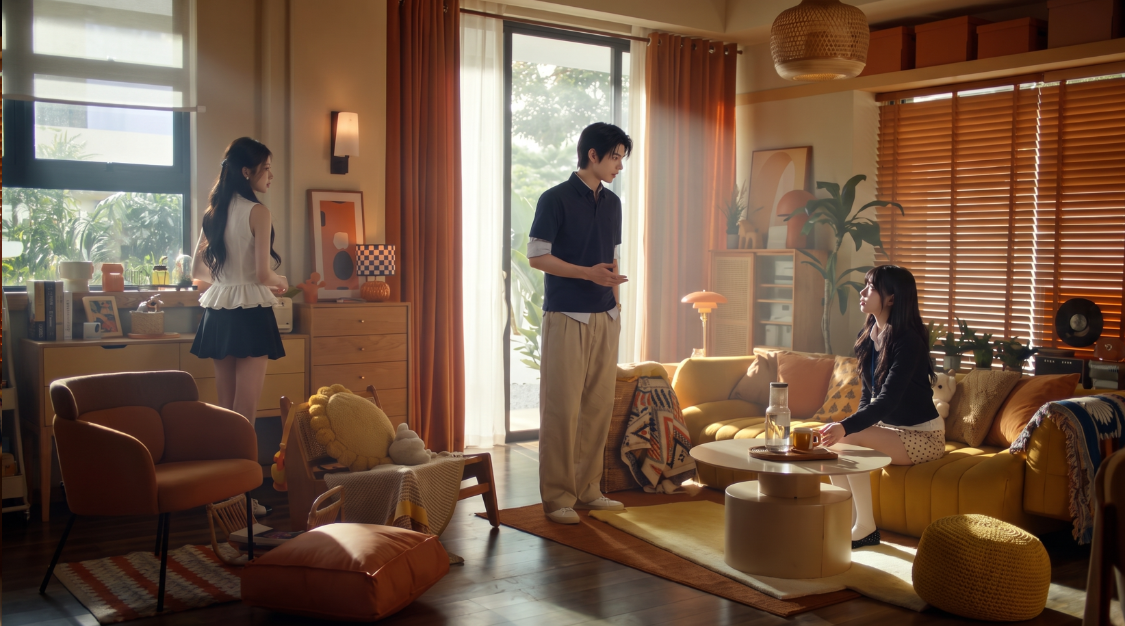
People don't float in an abstract space。
If they are larger, they can also give a very short picture before they enter the scenery。
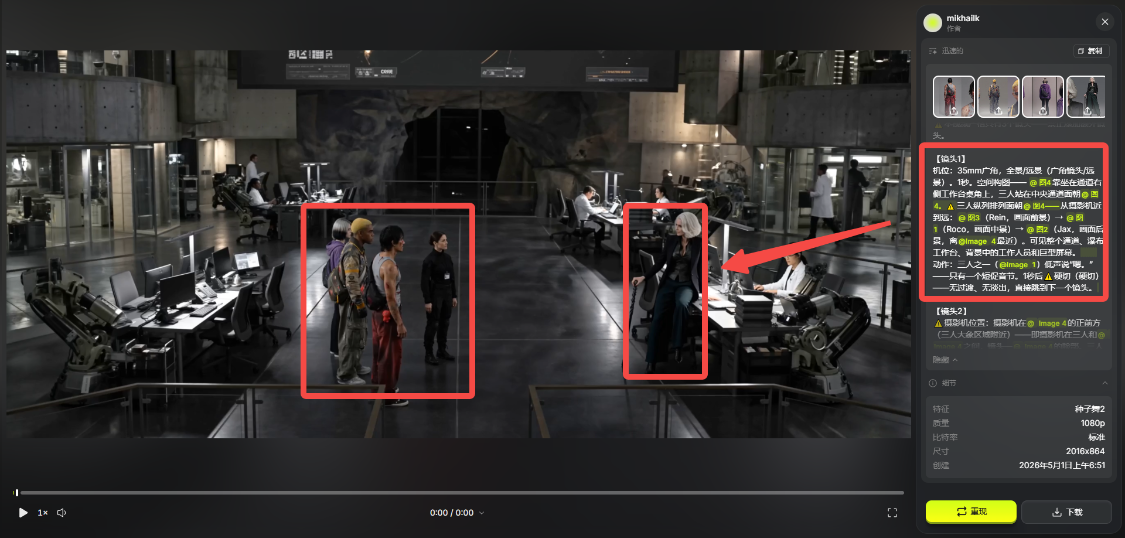
It won't take long, about a second。
LET THE AUDIENCE AND AI SEE FIRST:
Who's on the left. Who's on the right. Who's sitting. Who's standing。
Then we go into the view, the middle view and the shoulder lens。
The space relationship behind this would be much more stable。
So this is a very simple sequence to remember:
Create space first, find a fixed reference, determine the position of the person, and then design the lens。
IV. How to write a hint: less abstract adjectives and more visible relationships
After the characters, voices and scenes are ready to be completed, the words are finally actually entered。
And the easiest mistake here is to think:
The longer the hint, the more adjectives, the better the effect。
For example, to act as a giant monster, many people would write:
“An extremely large, very tall monster with a strong sense of oppression, shock and ambition.”
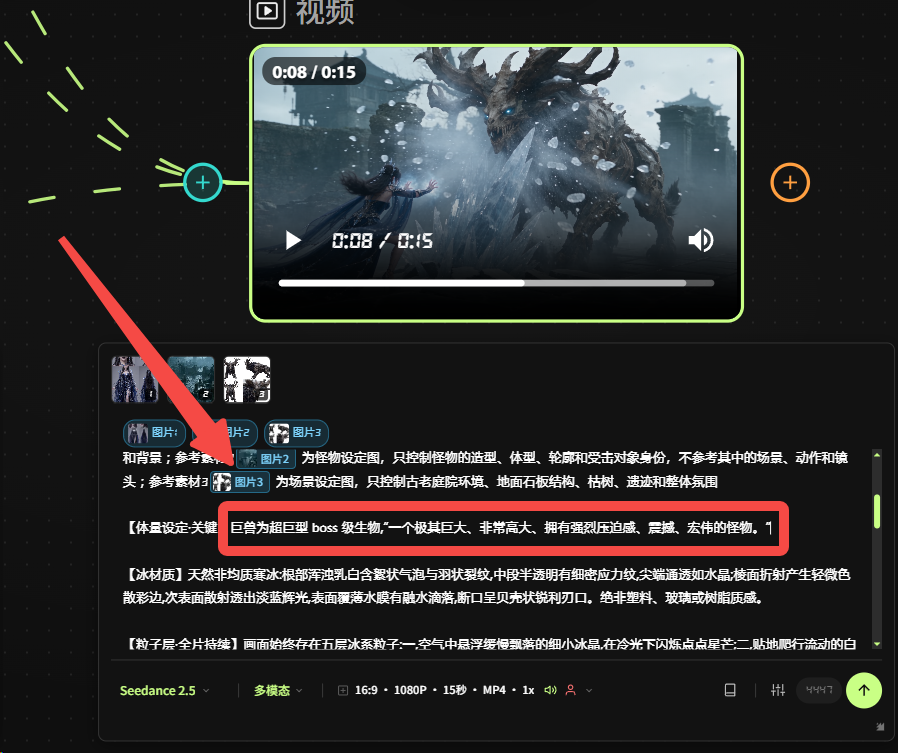
Looks like a lot of description。
BUT THERE'S ONLY ONE THING THAT CAN REALLY TELL THE SIZE OF AN AI MONSTER:
Great。
The question is, how much is “large”
AI DOESN'T KNOW。
So models tend to understand specific relationships more easily than abstract adjectives。
For example:
The hostess stood up to the size of his claws, and the width of the monster's sole toe was close to the person's height。
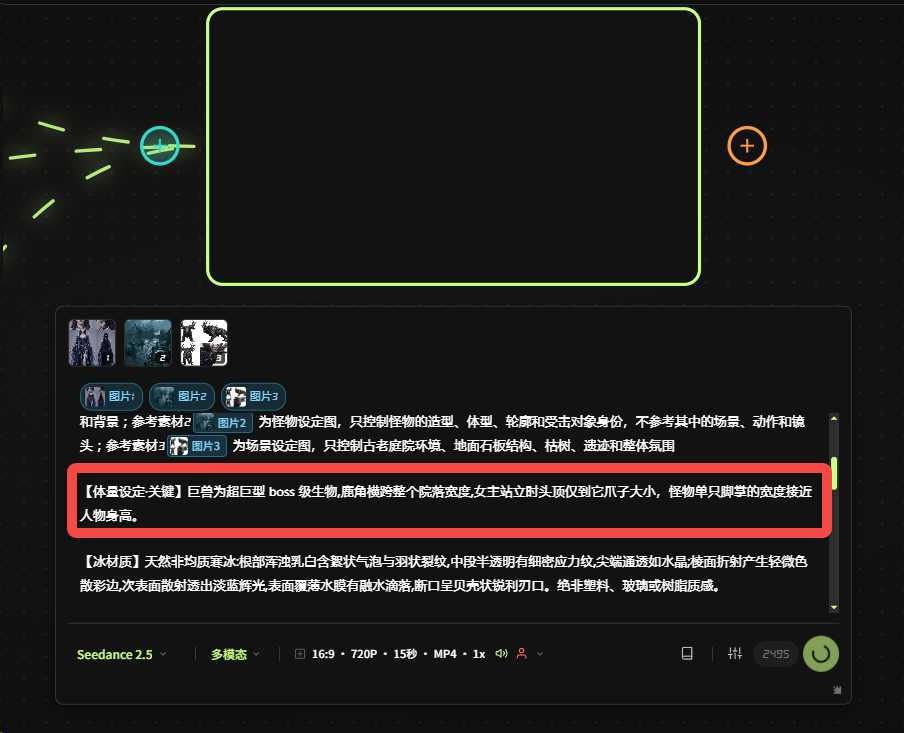
At this point, we did not always emphasize “great”。
But the audience must feel great。
Because there's a clear ratio in the picture。
It can be used in many places。
Don't just write:
Two people are far away。
You can write:
The two people were separated by a long table。
Don't just write:
The door is narrow。
You can write:
The person has to be sided to pass, and his shoulder is close to both sides of the door。
Don't just write:
People are very tired。
You can write:
The person stopped and held his hands on his knees, with a visible forwarding of the upper half, a continuous quick breath and a slow head start。
IT IS EASIER FOR AI TO UNDERSTAND:
You can draw things directly。
The same is true
Many of the hints are increasing in order to increase the sense of truth:
True. Super real. Film level. Photo level. Write a sense of substance。
These words certainly work, but what really determines whether an object looks real is often whether it follows the physical laws of reality。
For example, we need slime on people。
Common:
The character is covered with very real slime。
Models know there's slime。
But this slime may be like a piece of plastic on the person。
If replaced by:
Semi-transparent slime is attached to the face of the person ' s cheeks and neck, and the liquid is slowly moving downwards due to gravity, with larger drops coming down along the edge of the chin. Some of the slime touched the collar, leaving even more humid traces of the fabric on its surface. When the person turns his head, the small filament on the surface is stretched briefly because of inertia and is subsequently broken。
Here's the real truth:
Gravity, weight, exposure, inertia, shape and outcome。
Same thing happens。
Don't just write:
The character ran fast and suddenly stopped。
You can write:
The character ran fast forward and stopped immediately after the discovery of a forward anomaly. Due to inertia, the body continues to lean forward, with the right foot moving forward half-step to support the centre of gravity, and the lower coat continues to swing forward and then gradually falls。
The whole move is still just:
Run! Stop。
But it's natural to produce a lot of body feedback by adding to the action。
SO WRITE AN AI VIDEO MESSAGE LATER, AND TRY TO THINK IN THAT ORDER:
What happened is why what happened was affecting what happened was what came back and what ended up staying in what state。
This is more effective than a mere pile of words such as "film, truth, shock, advanced."。
Summary: What really needs to be built is not a panacea, but a generation system
In doing so, it turns out that the person, the voice, the scene and the hint appear to be four problems and that the same thing is essentially resolved:
REDUCING AI REQUIRES INFORMATION THAT YOU SPECULATE ABOUT。
PERSONAL ASSETS TELL AI WHO THE CHARACTER IS IN ADVANCE。
THE VOICE ASSET TELLS THE AI CHARACTER HOW TO SPEAK。
THE SCENE ASSET TOLD AI IN ADVANCE WHERE。
LAST WORDS, JUST TELL AI:
What exactly happened with this mirror
SO THE REALLY STABLE AI VIDEO WORKFLOW ISN'T EVERY SHOT GENERATED, REWRITTEN FROM SCRATCH。
It's about fixing all the information that can be used again。
The character is clear。
Sound down。
Scene relationship determined。
Finally, specific actions, proportional relationships and physical feedback are used to control the lens。
The longer the project, the more obvious the advantages of this approach。
Because what really determines long video stability is never just how well a hint is written。
IT'S WHETHER YOU DECIDED ON WHAT AI HAD TO GUESS BEFORE THE CLICK WAS GENERATED。
The real almighty is not a hint, but a stream of work that can be repeated。