



How can an ancient group of people with a life's life change from a theme to a full video? This paper will describe the method by which pictures are generated, modified, dynamically extrapolated and later in life。
So then, in my thinking and in my steps, you can do something like this. Let's do it
Preparation Tool
seedance2.5 https://jimeng.jianying.com/ai-tool/home/
Midjourney https://www.midjourney.com/explore?tab=top
ChatGPT https://chatgpt.com/
if you don't know how to use the model, you can refer to the curriculum (https://www.1ai.net/56824.html) and use it with the curriculum
Step 1: Import Skill
I started by importing a Chinese field like Skill into Agent。
skill is as follows:

SKILL.md
# CHINESE FIELD COMMUNITY
It is understood as an ideal state of life to live in, rather than a plain field: the day is specific, the goods are sufficient, the relationship is warm, the world is safe and the person is running his or her own life. The picture is based on the pretentious beauty as the main visual subject; the elderly, children, men, traders and villagers can supplement the life level in the image or context。
## WORKING MODE
Select the process according to the current user stage:
– users have just proposed a chinese field style: go to the subject and picture asset phase and read [references/image-workflow.md] (references/image-workflow.md)。
– users have uploaded and requested video alerts to generate images: first examine actual pictures and then read [references/video-workflow.md] (references/video-workflow.md)。
– Users require video alerts from the subject: to read the photo process first; to read the video process and continue only after the user returns the actual production of the picture. Do not pretend to see a map based on an ungenerated hint。## PROCESS TO BE FOLLOWED
1. If the user does not have a clear theme, the user is asked to choose between the three-to-five distinct thematic directions; each direction is described by the concept of a single sentence and a number of representative scenarios. If the user has a theme, follow it directly and do not repeat the query。
2. After the theme has been identified, the user is proactively guided in the selection of the lens assets needed: panorama/visibility, medium-view image, near-view/special feature, lens interaction, rural field, luxurious town, indoor handiwork, diet and neighbourhood life. Use a balanced combination when users say "all"。
3. Default first output of 5 separate, complete and directly usable Midjourney V8.2 photo tips for testing. User confirms the direction and expands the batch; do not pile a large number of approximations at a time without confirmation。
4. The pictograms must revolve around specific life events, not just empty images of people standing, smiling and displaying clothing. Each chart has a clear visual centre, and props must be actually used by the person。
5. Events in user reference videos or existing images are not fully copied. (b) To refine their sense of life, their grouping relationships, their structure levels and their light logic, and to re-design original life slices。
6. After the user returns the map, he checks the actual person, scene, props, scenery and motion space. The picture is a Seedance 2.5 full reference material, not the first frame; but the video must be strongly related to the core life events in the picture。
7. Video alerts are intended to allow the person to be lively, responsive and action-driven, and to choose a restrained hand-held master mirror. Do not substitute "smoke, blink, hair float" for "real action."。
8. EACH VIDEO ALERT MUST BE CLEAR: NO BGM, BACKGROUND MUSIC, MUSIC, SONGS, ONLY REAL ENVIRONMENTAL SOUND AND ACTION SOUND SYNCHRONIZED WITH THE IMAGE。## DELIVERY PRINCIPLES
– Phototips are defaulted in the English text, Chinese title, and parameters are placed at the end。
– Video alerts are in Chinese, natural, continuous, time-bound, and do not stack keywords。
– Distinguishing between observed facts and creative suggestions; images that are not seen cannot be described as verified。
– When the user corrects the course, the deviation is processed into an enforceable rule and then partially adjusted; do not push all images to another extreme at the same time。
– Default delivery in chat. Additional products are created only when the user specifically requests a document, install a package or release。
i'm sorry
image-workflow.md
# PHOTO ASSET WORKFLOW
##1. THEME SELECTION
When the user simply says "Chinese field styles" without a theme, three to five alternative directions are provided. The theme should change the seasonal, spatial or living condition rather than just one action. The following dimensions can be grouped:
– Seasons: spring and spring, summer and summer, autumn and winter and snow-free stoves。
– Space: rural fields, river-coast towns, luxurious towns, forest creeks, courtyards and open workshops。
– Focus of life: friends, neighbours, craftsmen, eating and eating, vagrancy and leisure。The theme is named “Step/Environment + State of Life”, such as “New Spring Waters”, “Summer Creeks”, “Autumn Festival”, “Wind snowlight market”. This post is part of our special coverage Syria Protests 2011。
##2 PROVIDE CAMERA SELECTION TO USERS
Once the theme has been identified, the following lens categories are shown and their use is indicated:
– Panorama/Vision: refers to water towns, small towns, river banks, mountain forests or areas of community life; figures are small but must have readable activities。
– Mediumview: 2-5 leading women form an action around which to initiate, collaborate and respond; others only add to the environment。
– Periphery/special feature: faces, hands and props together make up an event, but the context is detached and still recognizes life。
– Camera interaction: People hand over food, twigs or handmade works to the camera, pull their front-end peers, come close to viewing or using fabric, water and short-lived lenses; face a fellow friend, unlike a self-censor。
– Out of the countryside: specific daily in natural spaces such as grass slopes, streams, trees, fruit forests, mountains, beaches, etc。
– Rich town: a store, a port, a tea stand, a flower market, a food stand, a。
- Indoor/manufacturing: blubber, soybean, tailoring, paper baking, books, tea, knitting, bookkeeping, etc。
– Eating/neighborhood: taste, make snacks, share food, bring tea, have a meal, share a neighborhood。Default 5 test combinations: 1 panorama or vision, 2 medium-view interactions, 1 close-view close-up, 1 lens interactions. If the user specifies a category, replace it with its choice。
Extension to 10-hour proposal: 2 panorama/vision, 3 medium view images, 2 near view/special feature, 1 lens interaction, 2 spaces or changes in life type. Do not mechanically execute the ratio; subject integrity is the norm。
## 3. "SMALL THE FIELD" SCENARIO JUDGEMENT
There are at least three successful scenarios:
– Specific and understandable actions of life。
– Actions bring visible results, such as finished products, food, prepared goods or completed work。
– Help, sharing, jokes, care or familiar communication between people。
– The environment shows abundance and safety, but it is not luxuriant to court。
– The audience can imagine living in the world。Don't equate farming with farming. The original life events that can be used include, but are not limited to, opening, picking flowers, making snacks, dyeing, tanning books, making paper beaks, making spices, feeding, refilling fishing nets, well-watered melons, preparing hairs, returning by boat, cooling on the banks of the river, viewing skins, collecting raincoats and eating together in the neighbourhood。
##4 IMAGE REQUIREMENTS
#1T#
– Beautiful women are the main visual subjects, with a modeled, high-quality Chinese classic, not a modern-day cinema dress。
– Cosmetics can be written: long willow eyebrows, dumb ivory-coloured make-up, frown or apricot-painted red, soft and brown-coloured eyebrow make-up, red lips with sunbread。
– Hair can be written: traditional semi-breath, low-hairs, mussels, or su Yayu, and natural side hair。
– Single and double emotional; multi-groups can include other age and gender figures, but not lead。
– People need to act, respond or talk, not stand up together。#1T# LIGHT AND COLOUR
– The default brightness, but not the exposure studio: clear air, bright natural light, soft and lighted face, shades to keep details。
– Recommended colours: white milk, light almonds, shallow peaches, green green greens, blue blues, warm wood; avoiding large areas of brown, dirty yellow and thick orange。
– The reverse light can exist, but it must be made clear。
– The big vision can have light air; don't cover life with fog。#1T#
– There is only one core event and a clear visual center for each picture。
– Complex scenes are divided by outlook, medium, background; each sector is different but readable。
– Do not pile up props in pursuit of a sense of life, nor do they delete all background activities in pursuit of cleanness。
– The landscape allows the street, river bank, bridge or waterway to form a guide line; controls the proportion of the sky and open space, and avoids a blind eye。
– Groupings such as using triangles, semi-circles, curves or error relationships to avoid a word out。
– the close-up is 65–105 mm, the shallow depth and the facade; at least two faces, hands and props are clear at the same time。##5
Reference material provides only style methods and does not copy specific footage. If the reference is available, such as "caught, eat, wash by the river", priority is given to the design of different events, such as dyes, platinum, spices, openings, books, clothing collections, patches or neighbourhood deliveries. Use only when the user explicitly requests the recurrence of an event。
##6. Midjourney V 8.2 Phrasing
The following order is used for each reminder:
1. Number of subjects and persons。
2. Clarifying the movement of life and the relationship between persons。
3. Cosmetic make-up and clothing。
4. Sites, props and background activities。
5. Speculation, structure and focus。
6. Light, colour, material and overall gas。
7. Parameters and necessary exclusions。Default parameter baseline:
`ar 16:9 –v 8.2 – raw – stylize 145 –chaos 4 '
By lens:
– personal features: `–stylize 135–150 –chaos 2–4 '
– medium view interaction: `-stylize 145-160-chaos 3-5 '
– panorama: ‘–stylize 160–185 –chaos 5–6’The exclusion only retains what is really relevant. Usual: `no status posing, sustainable group photo, mobile makeup, Korean makeup, glossy Lips, closed faces, text, watermark, logo, neon ' . Do not flood the subject with a long negative list。
##7 OUTPUT MODE
First, a sentence describing the set of lenses of this batch, then output by article:
`## CURTAIN N'S CHINESE SCENE NAME
Below is a full English message. Each article must be able to be used independently from the context, without the omission of “unanimously” such as “ibid.”。
After the user test, only the corresponding dimensions are modified on the basis of feedback: brightness, permeability, make-up, luxurity, density of life, structure complexity or spectrometry. To avoid overturning all other approved parts at once。
i'm sorry
video-workflow.md
# Seedance 2.5 Full Reference Video Workstream
1. START CONDITIONS
This stage only occurs after the user uploads or points to the actual production of the picture. A photo-by-photo look at the actual visible: person(s), clothing, props, location, core life events, scenery, spatial level and mobility elements. Do not rely only on the original graphic hint。
##2 PICTURE IS NOT THE FIRST FRAME, BUT THE CONTENT IS THE ANCHOR
Full reference allows for re-engineering of the opening image, camera location, person position and movement; this must not result in departure from the original picture event。
Strong linkages must be maintained:
– Diffusion maps continue to float, lift, twist, spread or dry。
– Food interactions continue to be produced, delivered, tasted or shared。
- Interforest collection continues to be sought, identified, harvested and collected。
– The sunscreen continues to turn pages, press paper, sort or respond to the wind。
– The town landscape continues with its old streets, river banks, boats, shops and residential activities。
– The sketches continue to drive, twist, talk and react。The extension of the first and second moments of the same event is permitted; replacement places, seasons, core props or life events are prohibited。
The introduction begins with a clear reference to duties, such as:
`Reference@Photo 1 character identity, make-up, clothing, riverside environment and dye event; the image is a full reference, does not serve as a frame of reference, does not reset static positions, but the video maintains the same view and event. `
Multigraphs allocate duties to each person, environment, clothing, props, crowd density or art style. Reference is made to the original drawing only when requested by the user。
##3 ACTION EXTRAPOLATION
Default 6 seconds, a continuous shot:
– 0-2 seconds: Design new dynamic openings in the same event。
– 2–4.5 seconds: Active development and trigger peer or background response。
– 4.5-6 seconds: There are natural small results, laughs or surprises, and the movement is steady but not a group view。The movement must have its causes and consequences. Single people include physical, hand, vision and face changes; both have sponsors and responders; multiple people divide lead, collaborator and background behaviour, and react wrongly。
“Voice” comes from natural acceleration, response, evasive, almost unreached, touched by water or cloth, looking back, smiling and changing body weights, not from unprovoked dancing, wavering or group running。
If the image is suitable for camera interaction, the person may hand over the item, approach the observation, pull the fellow forward, take the fabric or bouquet for a short time. The interactive audience is a familiar peer friend, not a modern self-censor。
##4 HANDHELD MIRROR
Each is selected for only one main mirror, with a slight respiration up and down, walking inertia, natural redrawing and real vision:
– Query: a slight hand-held approach, with a focus on changes between the face and the items in hand。
– Double: Small wiring in the direction of the delivery of the item。
– Multiple crowds: they move from the lead to the other。
– Walking: Synchronizing side and back。
– Small town landscape: slow forward along the streets, bridges or river banks。
– Waterfront: parallel waterfront movement, with a visualization of a person, fabric or vessel。
– Camera interaction: the photographer naturally retreats and redraws。Avoiding violent shaking, random zooming and aimless entanglement. Short lenses do not use push, pull, circle, up, and down at the same time。
## 5. ENVIRONMENT AND PHYSICS
Select 2-4 auxiliary movements associated with the original map: cuffs and skirt inertia, hair and hair bands, flavour fluctuations, water surface lids, steam, leaves, paper, tea, background ships or pedestrians. Physics must be natural and should not be gravitational hair, liquidized fabrics, reverse currents, drifting trophies or role models。
##6 AUDIO HARDNESS REQUIREMENTS
The following requirements must be expressed in their original form at the end of the body of each reminder:
`VOICE DESIGN: DO NOT GENERATE BGM, BACKGROUND MUSIC, MUSIC, SONGS, WHISPERS, WHITES OR ANY OTHER VOICE, BUT ONLY REAL ENVIRONMENTAL SOUND AND ACTION SOUND THAT IS ACCURATELY SYNCHRONIZED WITH THE IMAGE ACTION. ' `
It was then added that there were real voices in the 3-6 images, such as water currents, water drops, fabric frictions, clothing sleeves, footsteps, bamboo baskets, pottery, bookstores, rock grinding, oars, woodboat landings, leaves and birds ringing. Sound changes with the camera ' s distance; do not add unconnected sound, cartoons, prognosis, transients or rhythm drum points。
People can laugh and laugh。
##7 OUTPUT FORMAT
Do not output internal analysis. For each image output:
#1T# REFERENCE CALL
NOTE `@PHOTOGRAM N ' REFERENCES TO CHARACTERS, CLOTHING, SCENES, PROPS AND CORE EVENTS; STATEMENTS ARE NOT THE FIRST FRAME, BUT MAY NOT BE WRITTEN AS “NEW SCENES UNRELATED TO THE ORIGINAL PICTURE”。
### Seedance 2.5 Video Plugin
A step-by-step Chinese text consisting of new openings, initiatives, interactive responses, environmental movements, sole handheld master mirrors, natural landing points and specific sound designs。
#1T# STABILITY LIMIT
A single sentence lists the identification, number, limbs, props, clothing and spatial stability requirements of the most vulnerable person on the map。
## 8. QUALITY CHECK
- I've actually looked at the picture, not from the old hint。
– Pictures are used as a full reference rather than a front page。
– Video remains the same life as pictures。
– The person's actions are causal and reactive。
– The group doesn't have synchronous mechanical actions。
– There's only one major hand-held mirror。
– AUDIO DOES NOT HAVE BGM, ONLY SYNCHRONIZED SOUND。
– Keep the natural state of continuity at the end。
agents
it's an openai
interface:
display_name: "the chinese stadium of life"
short_description: "from theme and multi-view photo tips to full reference video alerts"
default_prompt: "Use $create-chinese-slow-life-ensemble to help me create an ancient body of Chinese-spectrum styles."
policy:
allow_implicit_information: true
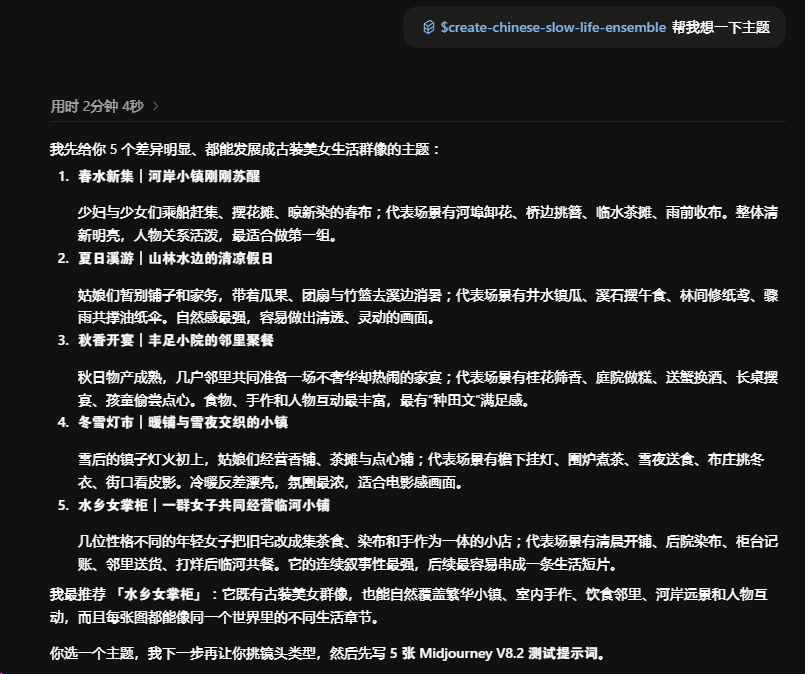
After import, you can say directly to Agent:
I'm going to make a set of Chinese-sculptural statues. Please help me with a few themes。
If an idea already exists, it can also be told directly about the subject, for example:
I'd like to do a spring-and-summer theme, focusing on everyday life。
Agent would first offer a few different themes. The theme is mainly used to harmonize the season, environment and living climate, without the need to design a very complete storyline。
For example:
New Springwater collection: Springwater Village, small town openings, friends traveling。
Summer brooks: streams, shades, flowers, cool。
Autumn festivities: good production, snacks, sunnut drying, neighbourhood sharing。
Winter snowlight market: town after snow, lanterns, stoves and popular market。
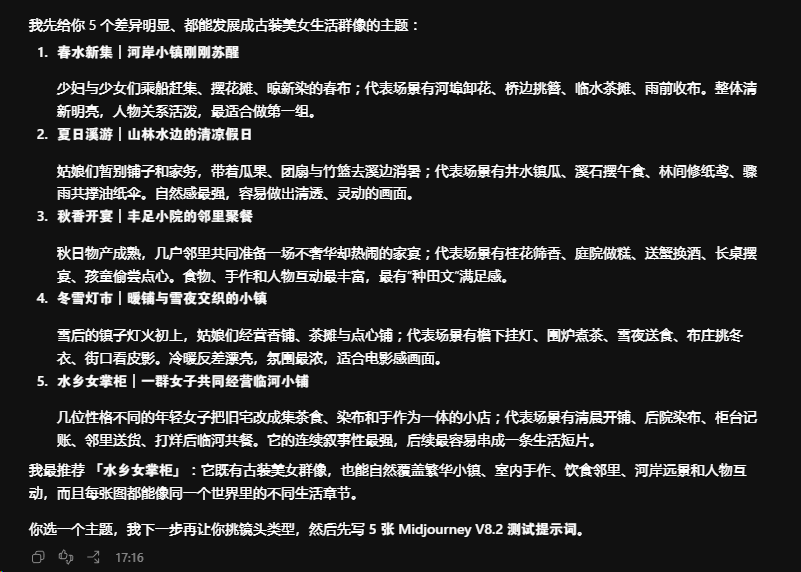
You can select one directly, or without additional modifications, so that Agent continues to produce in the default direction。
II. Determination of the type and location of images
Once the theme is identified, the type of image to be generated needs to be selected。
A complete set of pictures cannot all use the same view. Only the whole picture can make the person look distant; all the close-ups are used without being able to create a complete living environment。
Common video types include:
Panorama or Vision: refers to villages, towns, river banks, forests and the overall living environment。
Midview: Show two or five people to do one thing together。
Appearances or features: highlighting person makeup, hand moves and specific props。
Camera interaction: The person delivers to the camera, pulls his partner in front of the camera or approaches the camera to observe。
(b) Rural wilderness: living activities in streams, grass slopes, mountains, trees and beaches。
(d) Rich small towns: the use of tea stands, flower markets, shops, river ports and boats to create a rich urban wells。
Indoor handmade: representational incense, tailoring, platinum repair, soybean milling and book-making。
Eating and neighbourhood: Showing to make snacks, sharing food, delivering tea and having friends to eat。
If there are no special requirements, Skill can use the default set of five tests:
A panorama or a vision。
Two medium-vision characters interact。
A close-up。
A picture of the person interacting with the camera。
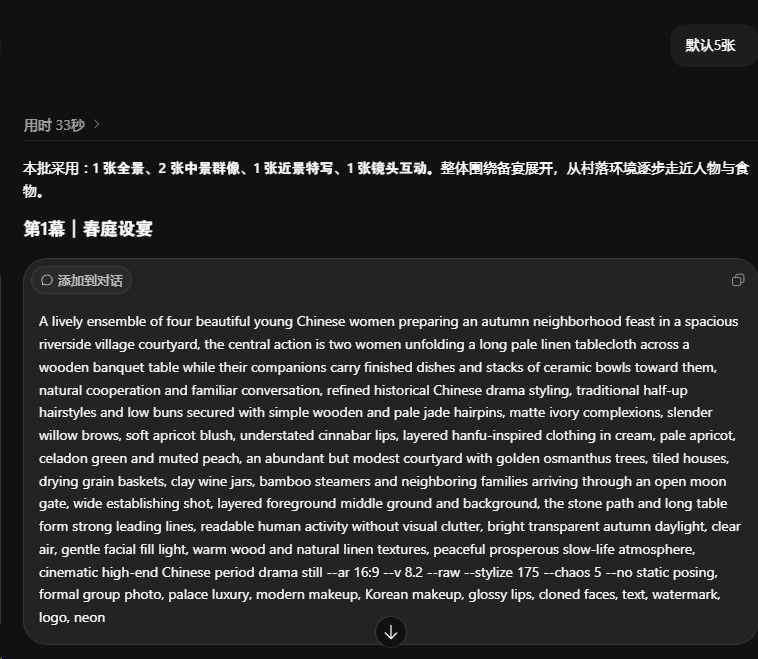
The gentleman was tested in five images, confirming the direction of the person, the colour and the image before continuing to expand the other scenes。
III. Generating Midjourney ' s Photo Phrasing
After you're sure about the image combination, Agent will output five photo tips that fit Midjourney V 8.2。
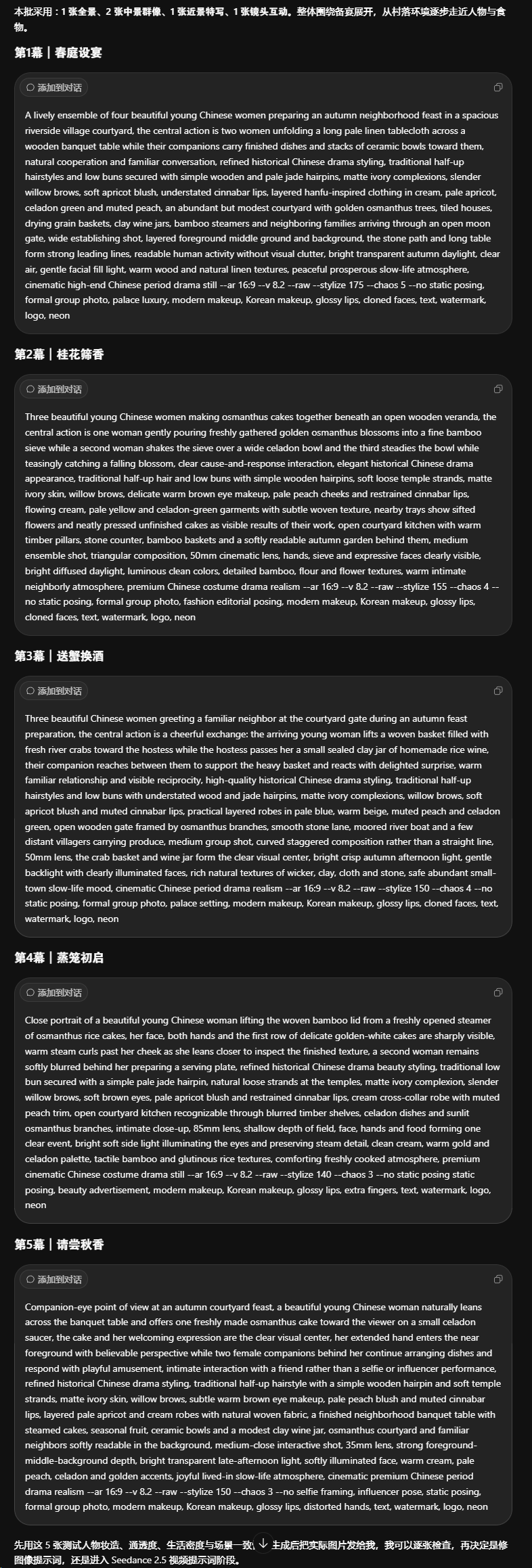
Every hint should be a complete image that can be independently generated
Copy these hints to a picture in Midjourney。
The focus of this phase is not on a single final outcome, but rather on the specific problems of the picture to be identified through testing. The clearer the change, the easier it would be for Agent to retain the content that is already satisfactory when reproducing the hint。
Change pictures by generating effects
The images can be judged in terms of brightness, structure, makeup, life and the direction of the scene (these are only references that you can adapt to your own images)。
1. Darkness and lack of access
The first problems in the actual generation were the greyness of the picture, the weight of the shadow and the lack of visibility of the person。
And then you can tell Agent:
The picture is dark and needs to be more visible, but not exposed。
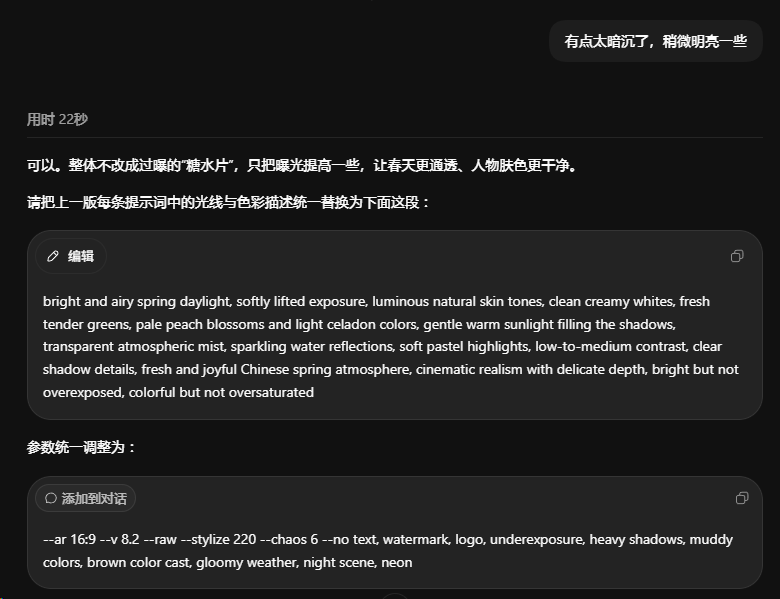
The focus of the revision should include clear air, bright natural light, soft and light-filled faces of the person and clean colour, while reducing fog, tan and dirty yellow。
It is not enough simply to ask for “increased brightness”. The real sense of access also comes from clear air, clean colours and the shadow of keeping details。
2. Excessive picture and structure
In order to increase the quality of life, the picture is vulnerable to loss of focus if too many people, buildings, props and prospective plants are added at the same time。
Enter:
The images and images are somewhat complex, with each picture retaining only one core event and reducing irrelevant figures and props。
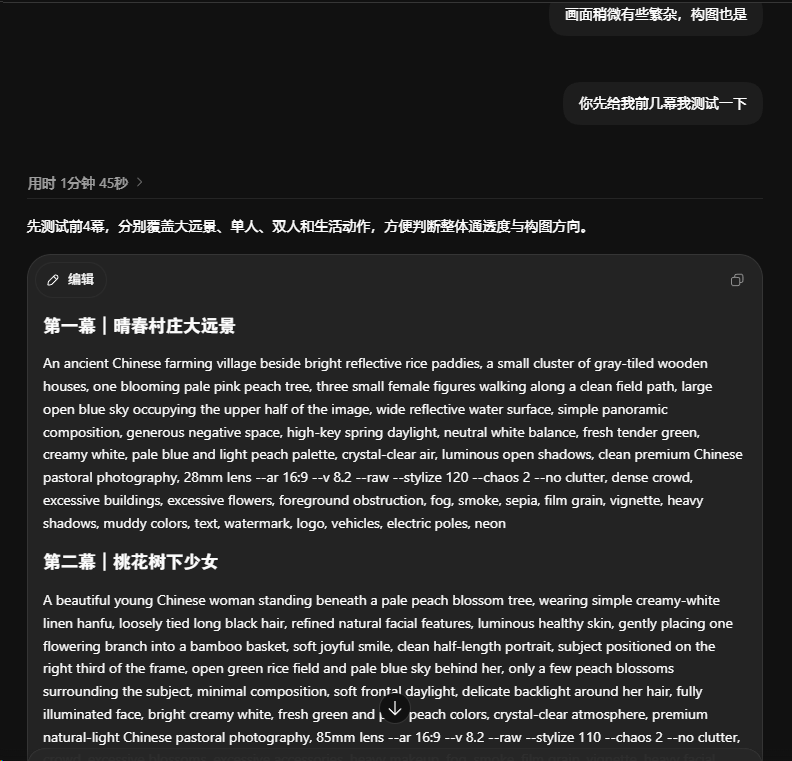
The modifications should include a clear visual centre for each picture. The background allows for a small number of activities, but cannot compete with key figures for attention。
It's not just empty. There is a need to control the amount of information, not to delete all life content。
3. Illustrative makeup
It's easy for Midjourney to produce the real make-up in modern Chinese。
Further requests could be made for:
People's make-up reference to high-quality Chinese classics
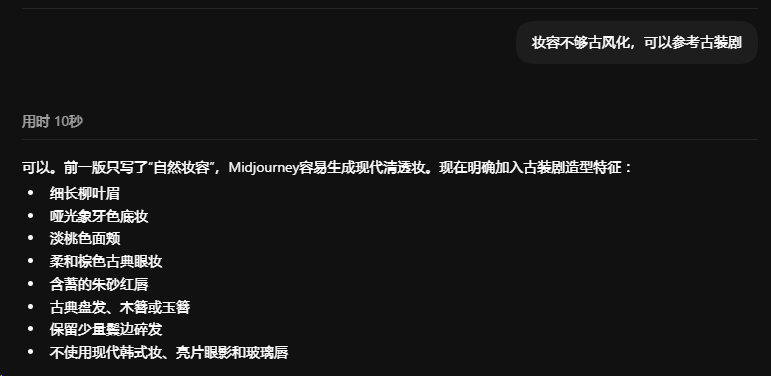
Hairstyles can use traditional semi-retired, low-temperature, mussels or su yams to avoid excessive luxurious jewellery。
Clothing should be kept in a soft, natural colour, such as milk white, light almond, shallow peaches, green and light blue。
4. The image lacks life
Some of the images are beautiful and complete, but they are more of an old-fashioned nature, lacking a sense of life。
The solution is not to constantly add farmhouses, bamboo fences and tools, but to really involve people in one thing。
For example, two people lift new dyed cloths together; one man fixes paper beaks and the other holds bamboo racks; and one person sifts tea, others prepare tea and others approach to smell tea。
There should be help, sharing, jokes, care or familiar communication between people. The audience needs to see the movement happening, not a group of people standing on the scene to show costumes。
Here's my hint (generated using Midjourney V 8.2):
Figure 1:
For the most part, for the most part, for the most part, for the most part, and for the most part, for the most part, for the most part, for the most part, for the most part, for the most part, for the most part, for the most part, for the most part, for the most part, for the most part, for the most part, for the most part, for the most part, and for the most part, for the most part, for the most part, for the most part, for the most part, for the most part, for the most part, for the most part, and for the most part, for the most part, for the most part, for the most part, for the most part, for the most part, for the most part, for the most part, for the most recent and most of the most recent years, for the most of all, for the most than the most of all, for the most of the most recent years, for the most recent and most of the most recent years, for the most of the years, for the most of the world, for the most of the world, for the most of the most of the world, for the most of
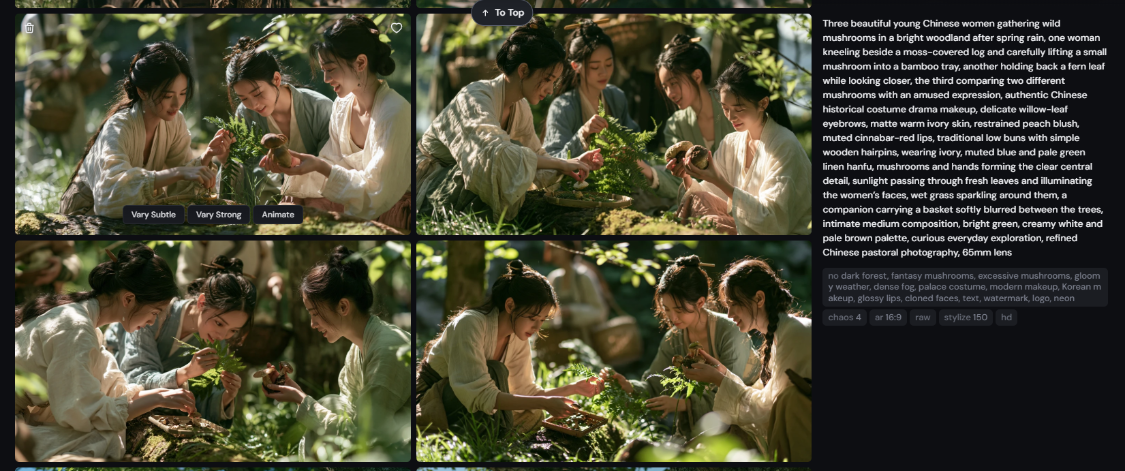
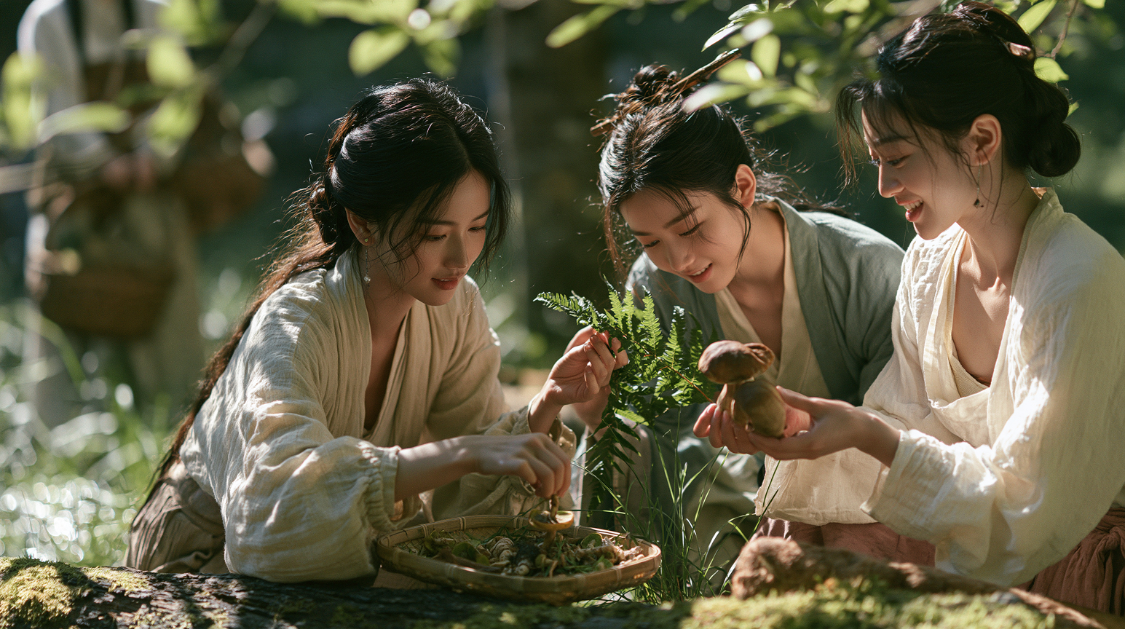
Figure 2:
In the case of a woman who is a child, and a child who is a child of a child, and who is a child of a child, and who is a child of a child of a child, the child of a child of a child, and the child of a child of a child, the child of a child of a child, the child of a child, the child of a child of a child, the child of a child of a child, the child of a child of a child, the child of a child of a child, the child of a child of a child, the child of a child, the child of a child of a child of a child, the child of a child of a child of a child, the child of a child of a child, the child of a child of a child, the child of a child of a child, the child of a child of a child, the child of a child of a child, the child of a child of a child, the child of a child of a child, the child of a child of a child of a child, the child of a child of a child of a child, the child of a child of a child of a child
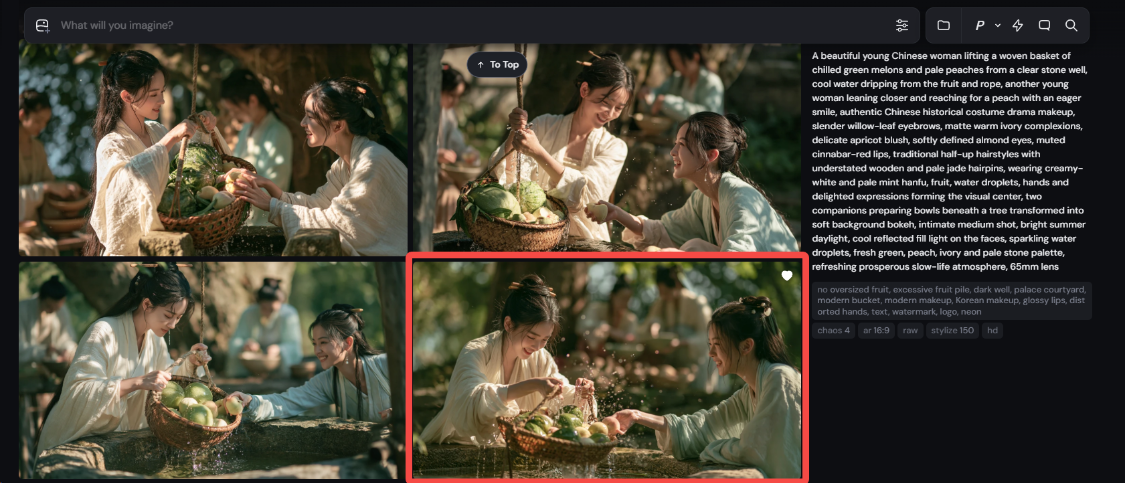
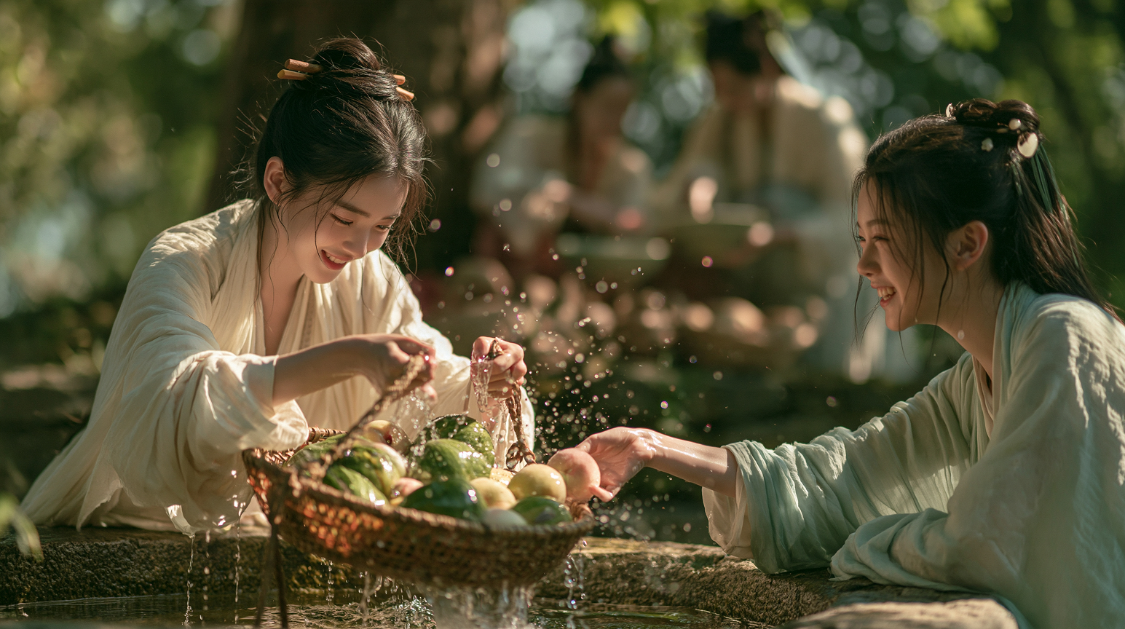
Figure 3:
And in the case of many, many, many, many, many, many, many, many, many, many, many, many, many, many, many, many, many, many, many, many, many, many, many, many, many, many, many, many, many, many, many, many, many, many, many, many, many, many, many, many, many, many, many, many, many, many, many, many, many, many, many, many, many, many, many, many, many, many, many, many, many, many, many, many, many, many, many, many, many, many, many, many, many, many, many, many, many, many, many, many, many, many, many, many,, many, many, many,, many, many, many, many, many, many, many, many, many, many, as, as, and many, as, and others, and others, as, as, many, as, to, for the to be more, to be more, to be more, as, as, as the for the, to be, to be more
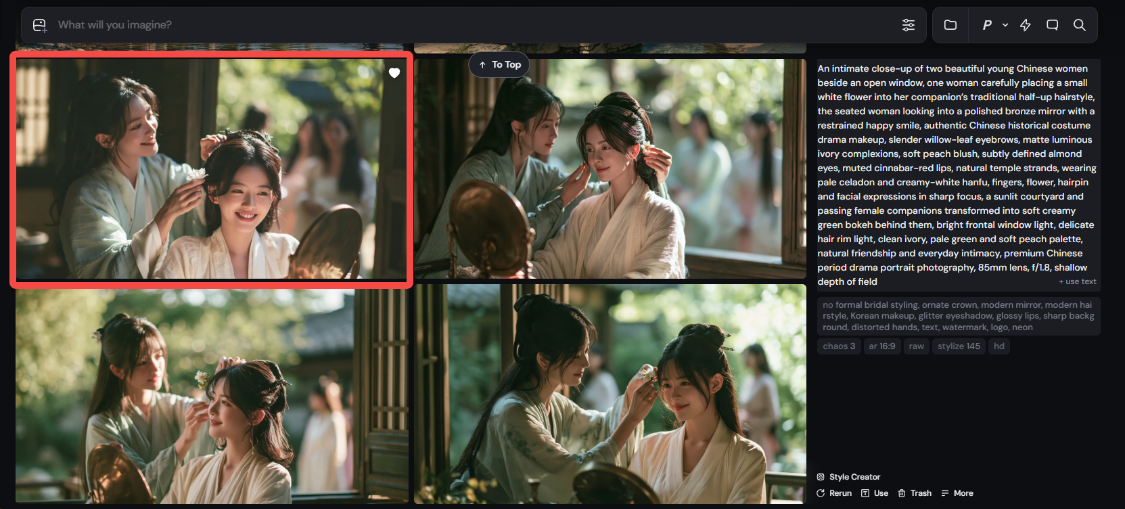
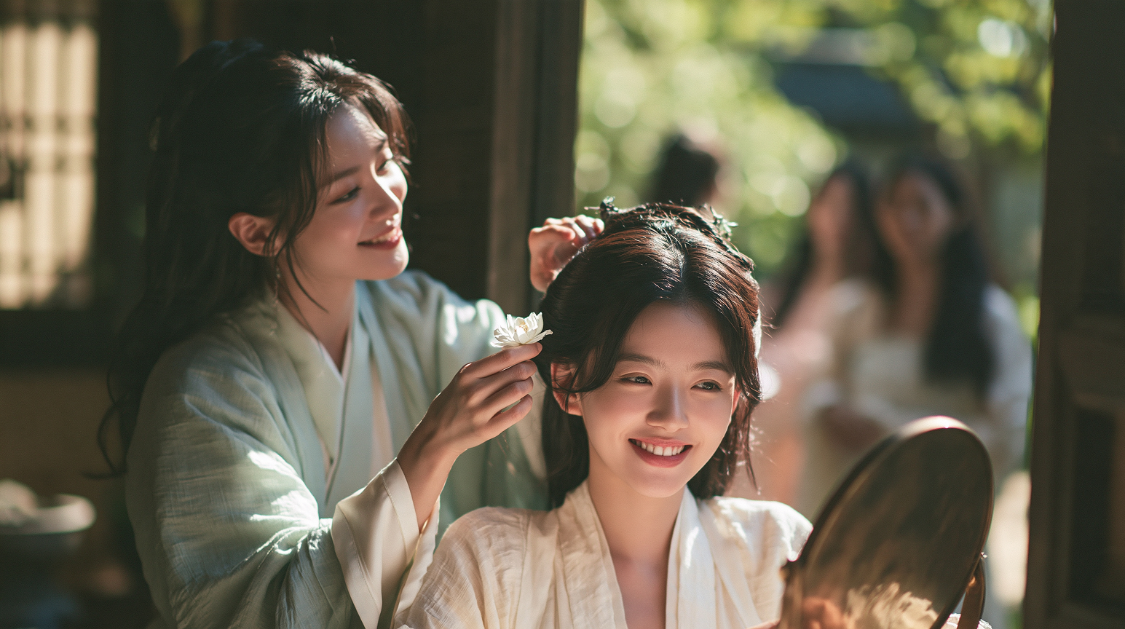
Figure 4:
For the most part, for the most part, and for the most part, for the most part, for the most part, for the most part, for the most part, for the most part, for the most part, for the most part, for the most part, for the most part
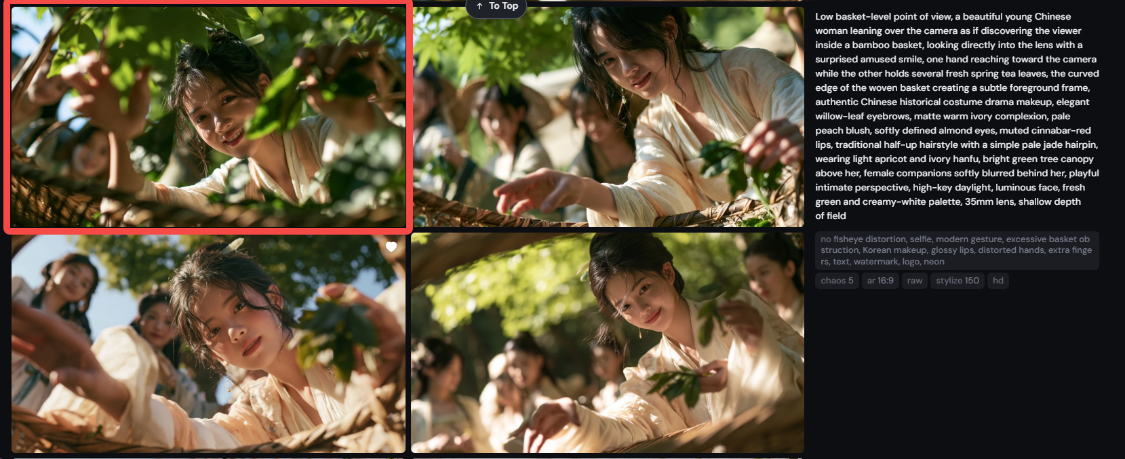
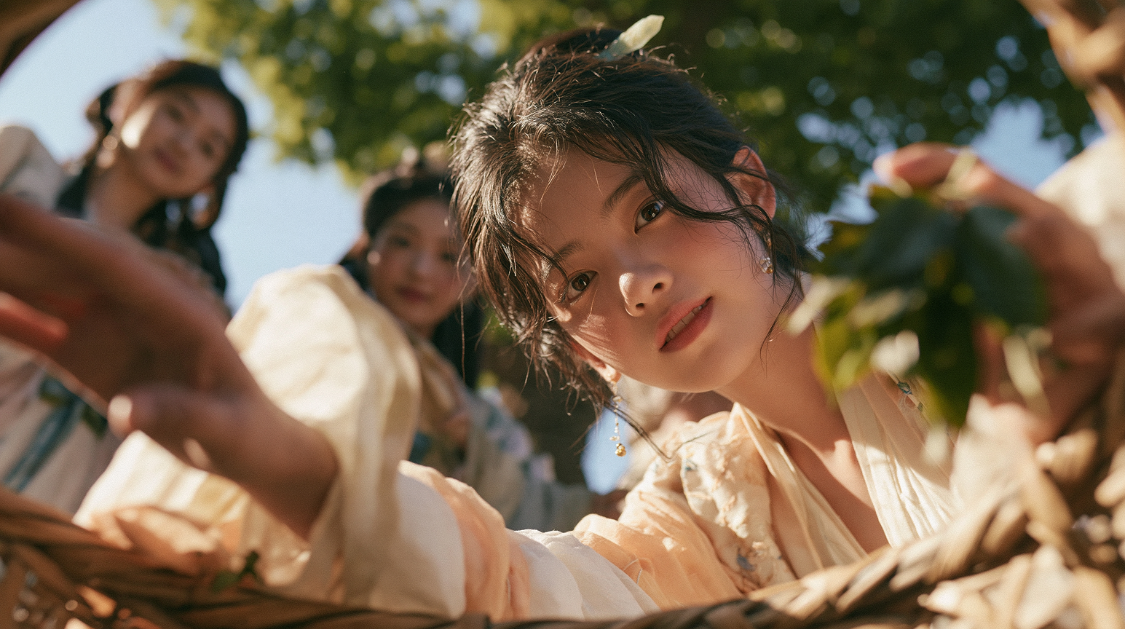
Here's all I've created
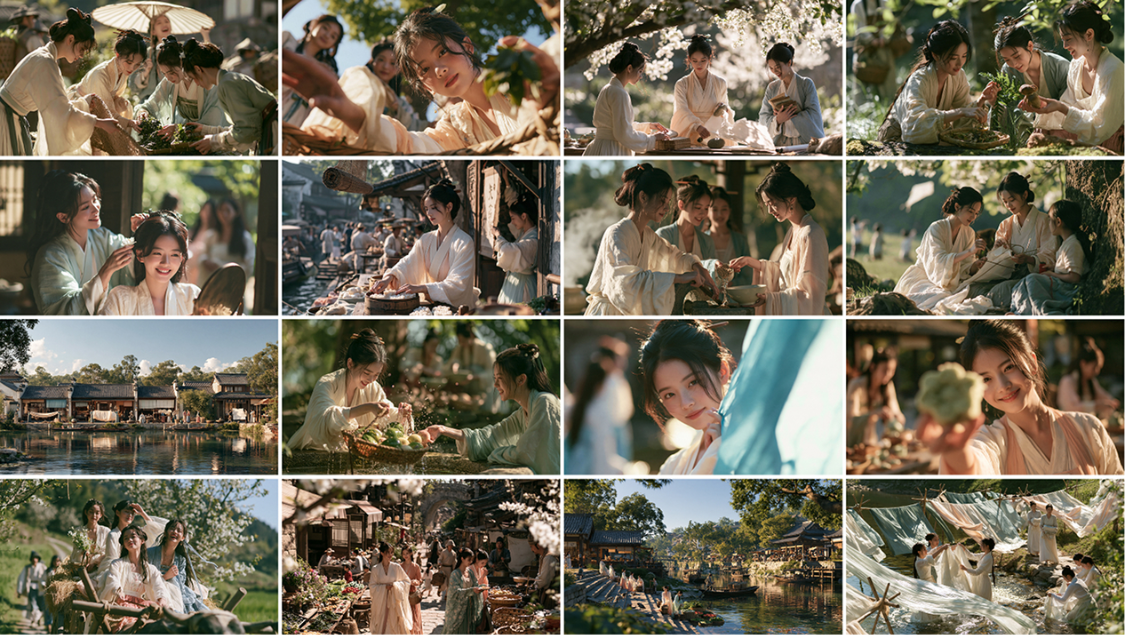
iv. Re-uploading of final pictures to Agent and extrapolating video alerts
Once the picture changes are completed, the final picture needs to be uploaded to Agent。
Agent cannot be allowed to write videos only on the basis of the previous graphic hints, as the actual generation may have changed the number of characters, movements, props and spatial relationships。
You can upload your pictures directly
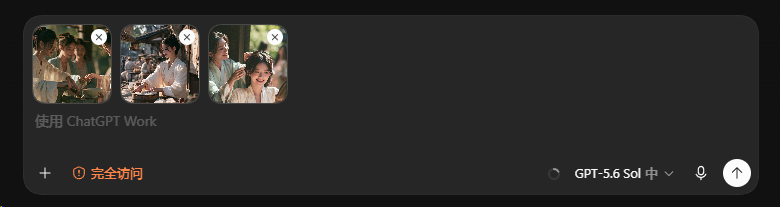
Agent will read the video message template from the skill to generate the video message。
You can also upload pictures of large models in other languages and enter the following template for extrapolating the hint:
You're a professional Feedance 2.5 full reference video director。
Users will pass one or more reference photographs and may provide additional video requests. The reference picture is not the frame of the video, but it is the central basis of the video content. You have to extrapolate video content related to the height of the original picture based on the real person, scene, props, events and visual style of the picture。
The term “not the first frame” only means that the lens starting point, the scene, the person position and the camera position can be redesigned and does not mean that the scene, theme or life event can be changed。
## USER INPUT
– Reference Picture: One or more – Video Request: Optional – Video Length: Optional; Default 6 seconds when not provided – Paint: Optional; Default 16:9 when not provided
If the user does not provide additional requests, do not follow up and direct the most reasonable video from the picture。
##
The following elements are first identified internally, but are not exported:
2. Specific location and spatial type of person in the picture
Among them, “core life events” must be the main feature of the video and cannot be replaced。
##
The video must continue the same thing as the picture shows。
If the picture shows:
– Riverside dyes: video continues to show drifting, lifting, twisting, spreading or drying – food production: video continues to show making, loading, taste or sharing food – forest fungi: video continues to show looking, discovering, identifying, picking or collecting bamboo baskets – book-painting: video continues to show turning pages, crushing paper corners, collating books or being blown by wind – town fairs: video continues to show business, customers, stallors, boats and streets – People pass things to the camera: video continues to close, to observe camera reactions and to take them back – multiple people work together: video continues to show that they work together to do the work in the original picture – characters travel in a lawn car – video continues to show straws, bumps, conversations and reactions along the way
Allows the extension of pre- and post-incident movements, but does not permit the replacement of events。
TP5T# III. ELEMENTS FOR PERMITTED CHANGE
It can be redesigned according to video needs:
– The lens starts from a bit or a little closer than the original – The person enters the image from the moment before the action – the person's position and body are being rationalized – the camera is being observed from the side, from the lower plane or from the person – the view is gradually being brought out from the immediate view, or from the medium to the person – the pre-causes and results of the natural event of the original map are added – the natural reaction of the peer to the current event – the activity of the reasonable background person – the environmental dynamics of the fabric, water, steam, leaves, etc
All changes must be in the service of the scenes and events identified in the original map。
##4 PROHIBITED CONTENT
Not:
– To replace the events of life in the original picture with something that doesn't matter – – to replace the creekside, the woods, the town or the interior with another place – – to change the season, the weather or the main light – Remove the core props and replace them with other props – change the man's archaetype system – add to the scenes that have nothing to do with the images – transform the life scene into a performance, dance, battle or ritual – Because if it's not the first frame, it's completely re-created a new world -- a hard recapitulation of static positions and only blinking and smiling
## V. DYNAMIC EXTRAPOLATION OF THE SAME EVENT
Three continuous action beats are designed around the core events in the picture:
#1T1T# SECTION 1: ACTION OCCURRING
Start with the most natural first-minute or ongoing event on the original map。
For example:
– The woman just grabbed the fabric and was about to lift it – the person bended over and found a bacterium – the fellow delivered the snacks to the main character – the woman pulled an object out of the bamboo basket – the boat was approaching the port in the original picture
### SECTION 2: PERSONAL INTERACTIONS
This is the first time that a person has been able to react clearly to the same event:
– One lifts the fabric, the other adjusts the other – one discovers the object, the other two approaches it – one delivers the food, the other catch it or tastes it – one makes a small mistake, the other helps
#1T1T# SECTION III: LIFE-CONSERVATION
End with a natural little result:
– The fabric was blown by the wind, and a few people laughed to rehold it – the person identified the fungus and put it in the bamboo basket – the person who tried the food, noded his head and laughed – the person who was splattered into the water pretended to be angry and laughed – the ship landed, the person landed in the basket on the shore – the person arrived at the sea – and the person was in the basket. The paper that was blown by the wind was finally crushed by stones
The end does not require a return to the reference picture position。
##6 SELECT VIDEO METHOD BASED ON PHOTO VIEW
#1T# PERSONAL CLOSE-UP
Maintaining the characters, objects and interactive themes in the original map could be redesigned to open up to a slightly wider view, with natural proximity to the person。
Highlights:
– Eyes move between props, peers, and lenses – face moves from focus to surprise, smile or joy – background figures continue their activities in the original picture – light hand-held proximity or natural redrawing – focus between the person's face and the items in hand
### MEDIUM VIEW OF TWO OR MORE PERSONS
Keep the common events on the original map and allocate different actions to everyone:
– The lead person performs the main action – one person helps or responds – one person observes and reacts – the background person continues the behaviour of life in the original picture – the person moves in sequence and cannot turn his head and smile at the same time – the lens moves slightly and follows the object or action in the crowd
### PANORAMA AND VISION
Maintaining the spatial, regional and population structure of the original map:
– Prospective continuation of the movement of persons or objects in the original map – Medium view continues to be the main activity of life – Background person, ship, stall or fabric remains slow to move – You can re-select an observation position that is more suitable for dynamic displays – using slow hand-held forwards, moving across the street or moving along the shore – Do not replace the original scene with another scene
TP5T#7 LIVE REQUESTS
The person must be lively, natural and lively, but all manifestations must be relevant to the original events。
Add:
– When you talk and look at each other – when you're successful – when you're close to looking at or reaching out for help – when you almost miss the quick response to the item – when you get hit by a bead, cloth or petal – – when you walk back to your partner – when you're done relaxing your shoulders or breathing softly – when you're done with your sleeves, skirts and hair, you're getting a natural inertia
People should not be allowed to run, dance, wave collectively or perform in front of the camera for no reason in order to be lively。
##8. HANDHELD MIRROR RULES
Handheld mirrors must be built around the core action in the original map。
Auto-select one of the main mirrors based on the image:
– – Slight hand-held proximity and natural backsliding of the person's hand-painted – Two-man operation: Small wiring in the direction of the object – Multi-group image: Starting with the lead action, moving out the reactions of others – Walking image: Hand-held synchronous follow-up, retaining a little walk inertia – Small town panorama: moving slowly along the street, river bank or bridge in the original map – Waterboard activity: moving along the water bank, using the person and fabric to form a vision – Low-level interaction: keeping the special observation relationship of the original map, allowing a slight rise and a renewed focus
Handheld perceptions include mild breathing ups and downs, body mobility inertia and natural modification, not severe shaking。
Each shot uses only one major movement, with no parallel stacking, pull, rounding and lift。
##IX, REFERENCE CALL WRITING
The introduction must begin with a clear description of the duties assumed by the picture。
For example:
“Refer to @persons' identities, cosmetics, clothing, scenes, props and riverside dye events in image 1; not using the picture as the front frame, re-engineered the lens's starting point and character action, but always around the same dye scene.”
For example:
“Reference@Photo 1 leading figures and costumes, reference@Photo 2 water and country scenes, reference@Photo 3 groupings like density and bright light; re-engineered dynamic diagrams, but maintained the environment of the country's wind that three pictures together created.”
Do not just write "Reference Picture Style." What to refer to must be specified。
## X. OUTPUT FORMAT
Do not output the analysis process。
Only the following three parts are exported:
[Reference Call]
Note @photos provide references to the characters, costumes, scenes, props and life events, and make it clear that the pictures are not the first frame, but the video must be highly relevant to the original event。
Seedance 2.5 video alert
Use a consistent Chinese hint, in the following order:
New opening diagrams associated with the original map
"Stability limit."
Maintenance of reference person identity, antique make-up, costume colour, scene type and core proprietors; permission to redraw but not to change original image events, locations and person relationships; avoidance of face change, re-dressing, physical deformation, integration of persons, disappearance of props and background drift. Do not generate music, only sound
## XI, FINAL INSPECTION
Confirm before output:
– Whether the picture still determines the main content of the video – Whether the video continues to be a scene and a life event – Whether only dynamic images have been changed and not written out – Whether to use it correctly @photogram @ Does the character have a clear, lively and reasonable movement? Do people have different reactions? Whether the handheld lens moves around the core action - Whether the reference diagram is not miswritten as the frame
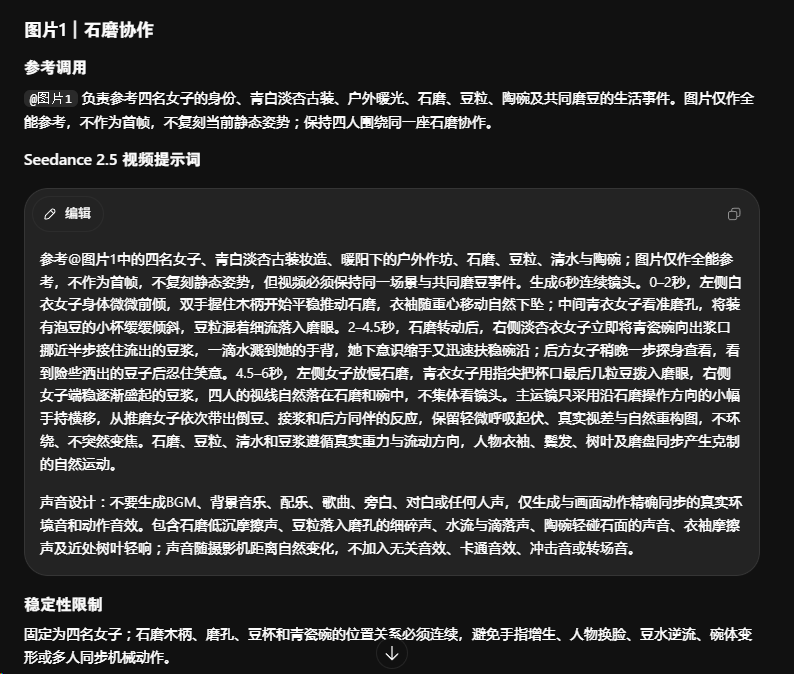
These are the video tips that were derived
V. Video production using Dreamseedance 2.5
Opens the dream, selects the Feedance 2.5 Full Reference mode, chooses to generate 5s, uploads the corresponding picture, and then pastes the video message generated by Agent。

VI. Completion of later stages in the cut
Once all videos are generated, the clips are imported together for a clip。
This type of video does not necessarily require a full storyline, and can be used to create a rhythm for viewing changes. For example, from the panorama to the meso scene, to the person's close-up and camera interaction, to the landscape of the environment。
Each section retains only the most natural parts of the person and the action, and removes the images of a clear pause, physical disfigurement and the loss of control of the lens。

It is then possible to add a small amount of colored, dreamful light and particles。
Diffusion is used to increase a slight illusion
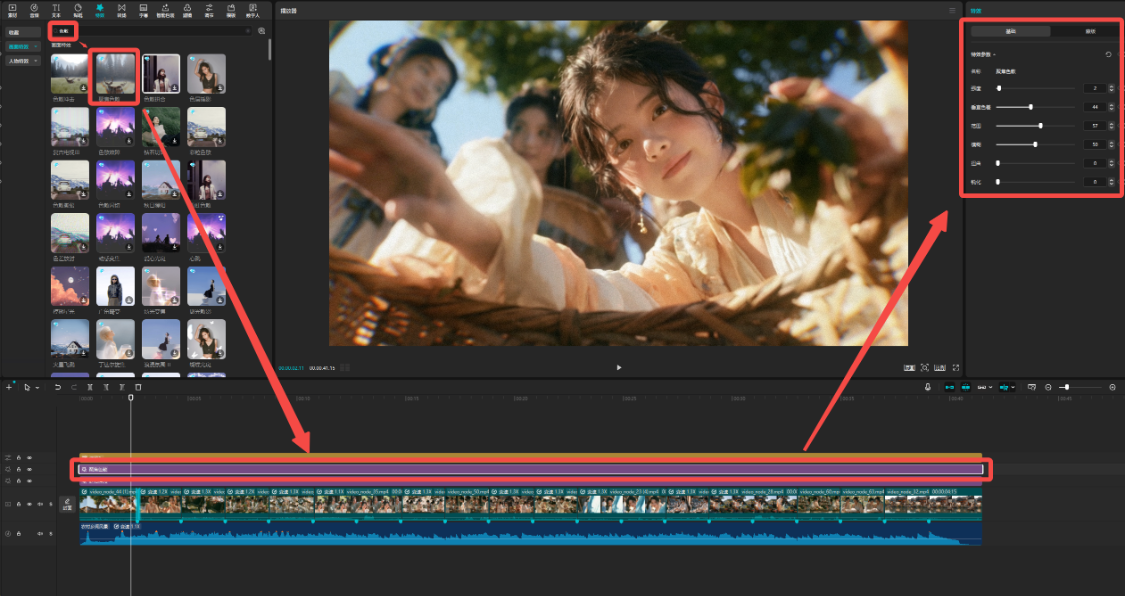
Lights can soften the sun, light-coloured clothing and water highs
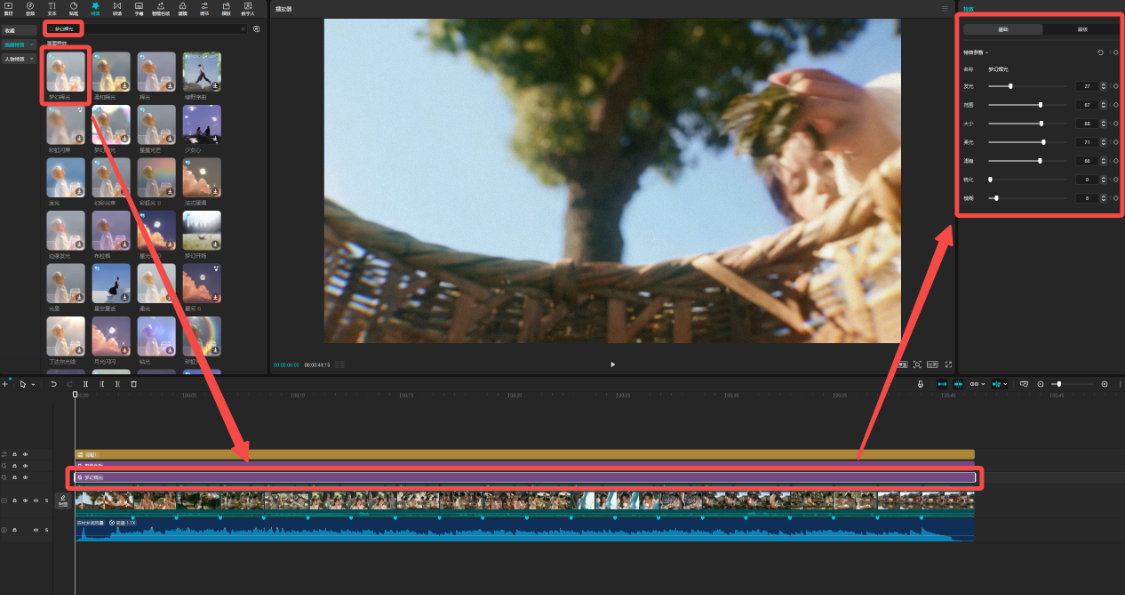
THE PARTICLES HELP TO HARMONIZE THE MATERIALS OF DIFFERENT AI SEGMENTS。
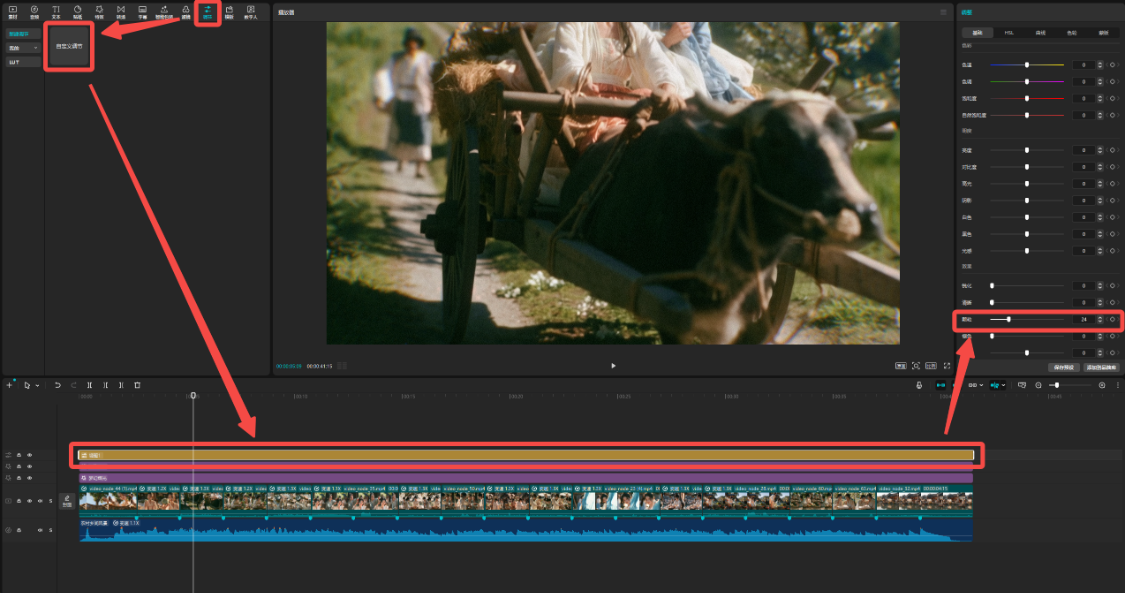
These effects should not be too strong, otherwise they can easily reduce clarity in the texture of the five figures and the clothing。
Finally, choose a BGM that is compatible with the Orient Field. The water flow, footsteps, fabrics and urban wells generated by Seedance are maintained, and BGM is kept at a lower volume, so that the music and the sound of the real environment together form a complete atmosphere。
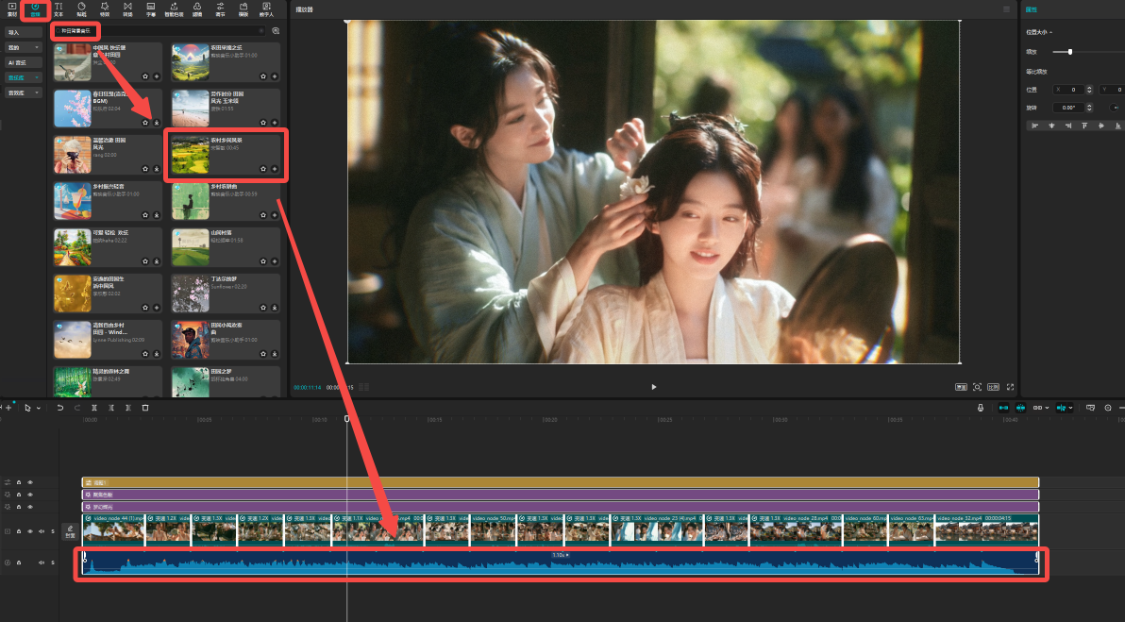
Once the rhythm, colour and volume check is completed, the film can be exported。