



The news of October 4thOpenAI IN OCTOBER 2ND, A BOOK WAS PUBLISHED, WHICH SHARED A GPT6 SERIES OF MODEL GUIDES, DESCRIBING MANY OF THE TECHNIQUES USEDALLOW USERS TO USE THE GPT6 SERIES WHILE CONTROLLING TIME AND COST AI ModelsCapacity。
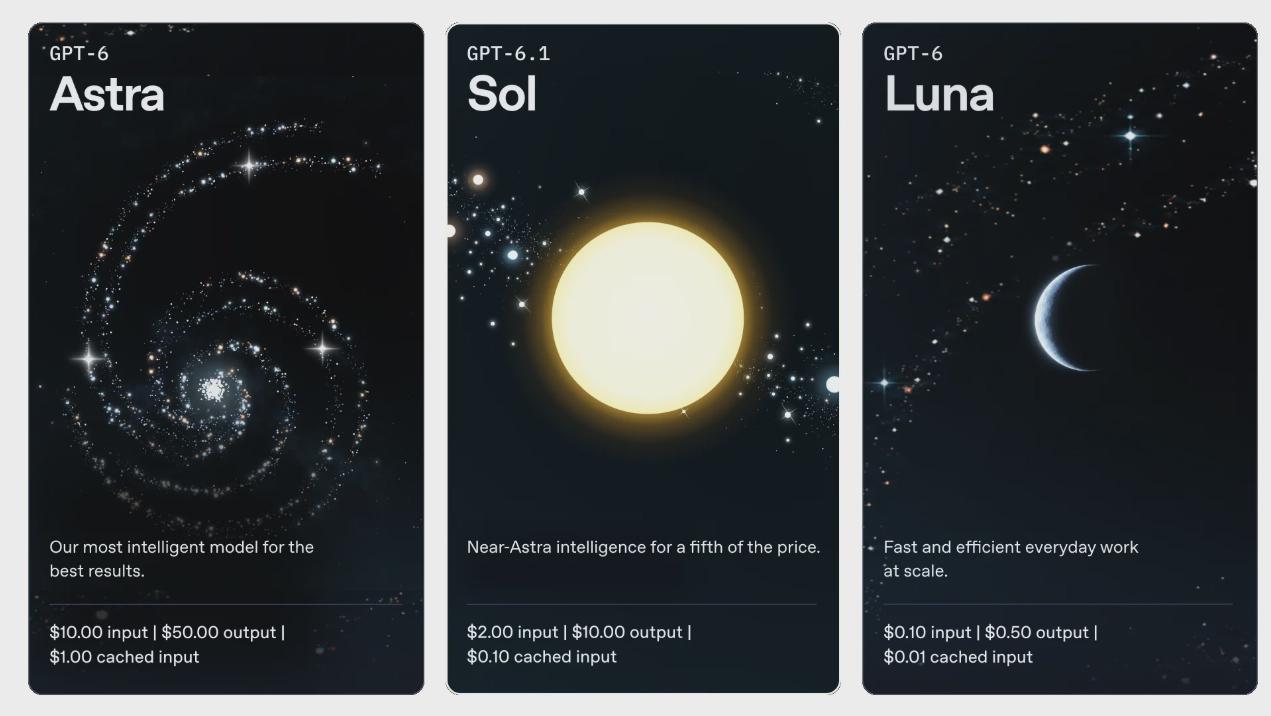
According to the official presentation:
- GPT-6 IS OUR MOST ADVANCED MODEL SERIES TO DATE, PROVIDING YOU WITH MULTIPLE MODELS FOR YOUR CHOICE TO ADAPT TO DIFFERENT TYPES OF WORK。
- WHETHER YOU CONVERT IDEAS INTO OPERATIONAL PROTOTYPES, DEVELOP AND TEST FUNCTIONALITY, OR ORGANIZE MULTI-STEP WORKFLOWS ACROSS CODE WAREHOUSES, DATABASES AND EXTERNAL API, THE GUIDE DESCRIBES HOW TO SELECT THE GPT6 MODEL, GIVE THEM EFFECTIVE INSTRUCTIONS, MANAGE LONG-DURATION TASKS AND PREPARE THEM FOR PRODUCTION。
In terms of model selection, OpenAI suggests that users select models based on the work load without defaulting to use the "most powerful" model; simple task light models are usually faster and cheaper:
- GPT –6 Astra suits the most difficult reasoning that requires the highest level of intelligence。
- GPT – 6.1 Sol suitable for complex programming, research and computer use tasks。
- GPT(6 Luna) is suitable for large-scale processing of specific tasks, as well as for targeted, day-to-day and repetitive work, such as extracting invoice fields, classifying requests or generating structured summaries。
With regard to the optimization of the hints, OpenAI believes that users should say “what I want, who I want and what I can't change” instead of writing lengthy steps。
OpenAI recommends that users, when entering a hint, identify the target, audience, relevant context, limitations and “what is done”; indicate what the model can decide for itself and when you need to be consulted。
In terms of the intensity of reasoning, OpenAI believes that users do not have to pursue the highest level of reasoning in their daily questions and answers; only complex analysis, debugging or in-depth research are worthy of upgrading。
1AI ATTACH REFERENCE ADDRESS