



June 26 - U.S. Federal Judge Vince Chhabria announced on Wednesday that he was upholding a lawsuit filed by 13 authors (including Sarah Silverman) in a lawsuit filed by Meta. The writers accuse Meta of illegally using theircopyrightThe work was used to train an AI model, but Judge Chhabria ruled on summary judgment that Meta's actions were "fair use" under copyright law and therefore legal.
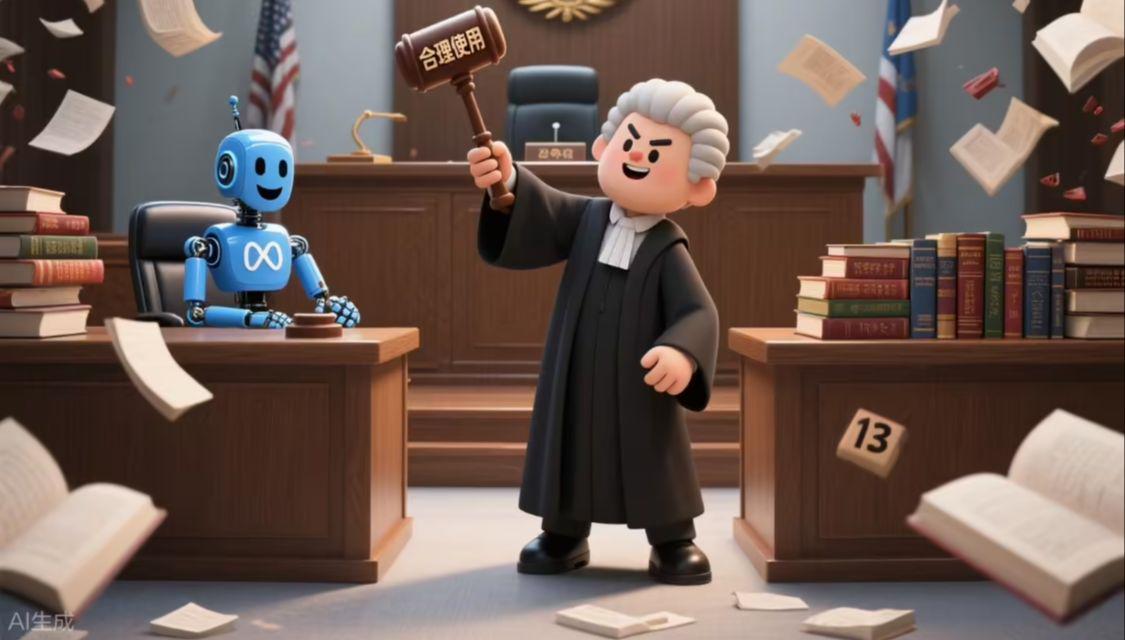
1AINote that this ruling comes just days after a federal judge ruled in favor of artificial intelligence company Anthropic in a similar lawsuit. Both cases appear to be victories for the tech industry, which has been in a legal battle with media companies for years, arguing that the use of copyrighted works to train AI models is "fair use".
However, the rulings were not the sweeping victories that some companies had hoped for -- both judges noted the limited scope of the cases before them. Judge Chabria made it clear thatThis ruling does not mean that all use of copyrighted works to train AI models is legalRather, the plaintiffs "made the wrong argument" and failed to provide sufficient evidentiary support for the right argument.
“This ruling doesn't mean it's legal for Meta to use copyrighted material to train its language models," Judge Chhabria noted in his ruling. He further stated that "plaintiffs tend to prevail in cases involving uses like Meta, at least in those where the market impact of the defendant's use is more fully documented."
Judge Chhabria found that Meta's use of the copyrighted work in this case was "transformative," meaning that the company's AI model was not simply a copy of the author's book. In addition.The plaintiffs failed to convince the judge that Meta's copying of the books harmed the market for those authors, which is one of the key factors in determining whether copyright law is infringed.
"Plaintiffs have offered no meaningful evidence of market dilution," Judge Chabria noted.
The Anthropic and Meta wins both involve the use of books to train AI models, but there are also multiple lawsuits currently underway against tech companies that involve the use of other copyrighted works to train AI models. For example, The New York Times is suing OpenAI and Microsoft for using news articles to train AI models, while Disney and Universal are suing Midjourney for using movies and TV shows to train AI models.
In his ruling, Judge Chabria noted that the "fair use" defense depends heavily on the specifics of the case and that certain industries may have stronger "fair use" arguments than others.
"For markets for certain types of works, such as news articles, they appear to be more susceptible to indirect competition from AI output," Judge Chhabria said.