



July 31, 2010 - Meta CEO MarkZuckerbergRe-emphasizing on the company's Q2 earnings call that he believes eyewear will be the primary way people interact with artificial intelligence (AI) in the future, he boldly predicted that not wearing AI glassesThe people who are at a disadvantage will be at a disadvantage. This statement is consistent with his earlier blog post on superintelligence.
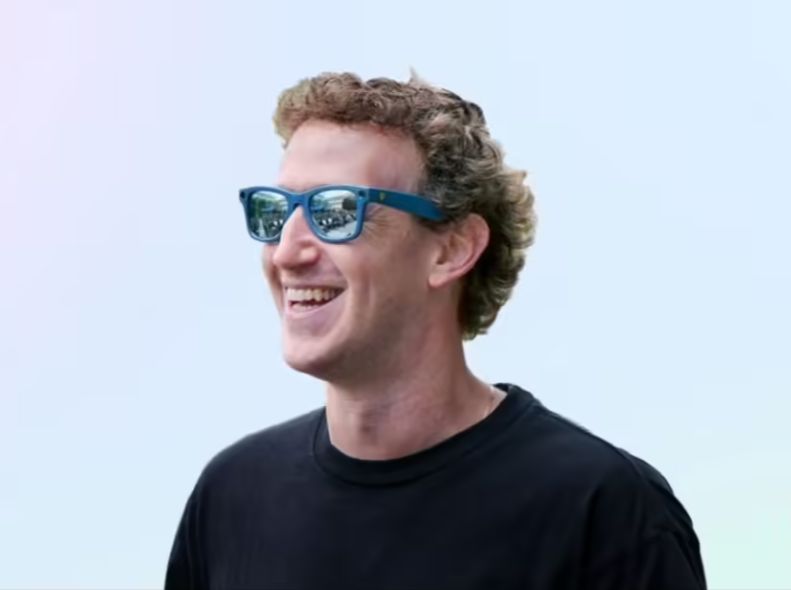
Zuckerberg told investors at the earnings conference, "I've always thought that eyewear is basically the ideal form of AI because you can have AI see what you see, hear what you hear, and be able to have conversations with you all day long." He added that the value of eyewear would be further unlocked by adding display capabilities to it, whether it's the wider holographic field of view that Meta's next-generation Orion Augmented Reality (AR) glasses can provide, or the small screens on everyday AI glasses.
Zuckerberg also predicted, "I think in the future, if you don't have a pair of AI glasses or some sort of way to interact with AI, you could be at a pretty big cognitive disadvantage compared to other people."
Meta has been investing heavily in smart eyewear with the Ray-Ban Meta and the recently released Oakley Meta glasses. The glasses allow users to listen to music, take photos, record videos, and ask the Meta AI questions, including about what they're seeing. According to eyewear giant Essilor Luxottica, sales of Ray-Ban Meta glasses have more than tripled year-over-year, making them an unexpected "hit" product for Meta.
Still, Zuckerberg believes there's a lot of work to be done on display technology. He said that this is exactly what Meta's "Reality Labs" (Reality Labs) division has been working on for the past five to ten years.
However, the Reality Labs division has long been a money-spinner for Meta. In the second quarter alone, the division posted an operating loss of $4.53 billion. Since 2020, the division has accumulated nearly $70 billion in losses (note: 503,789 million yuan at current exchange rates).
As of right now, eyewear seems to be one of the most logical forms for an AI device, as many people wear glasses themselves and its more socially acceptable. However, just as people didn't know they needed a smartphone until it was introduced, the next disruptive AI device may be one we can't imagine just yet.
Despite this, Zuckerberg remains convinced that glasses will be the ultimate form of AI. According to him, "Another great thing about glasses is that they will be the ideal way to merge the physical and digital worlds. As a result, the whole meta-universe vision will ultimately become critical, and AI will accelerate that process."