



October 29th. Last night OpenAI It was announced that the company had completed its reorganization and that the non-profit organization part was now known as the OpenAI Foundation, holding a profit-making entity share, currently valued at approximately $130 billion, making it one of the most resourceful charities in history。
OpenAI indicated that the Foundation would initially focus on two areas (health and disease treatment, technical solutions for artificially intelligent elasticity) and committed $25 billion。
Subsequently, OpenAI CEO Sam Altman and the Chief Scientist of OpenAI, Jakub Pachocki, made public a specific timetable within OpenAI for the realization of super-smart, AGI and other technologies。
On the AGI side, Jakub believes that the arrival of AGI would be a transition process lasting several years, not a single point of time. And OpenAI is currently developing a personal AGI。
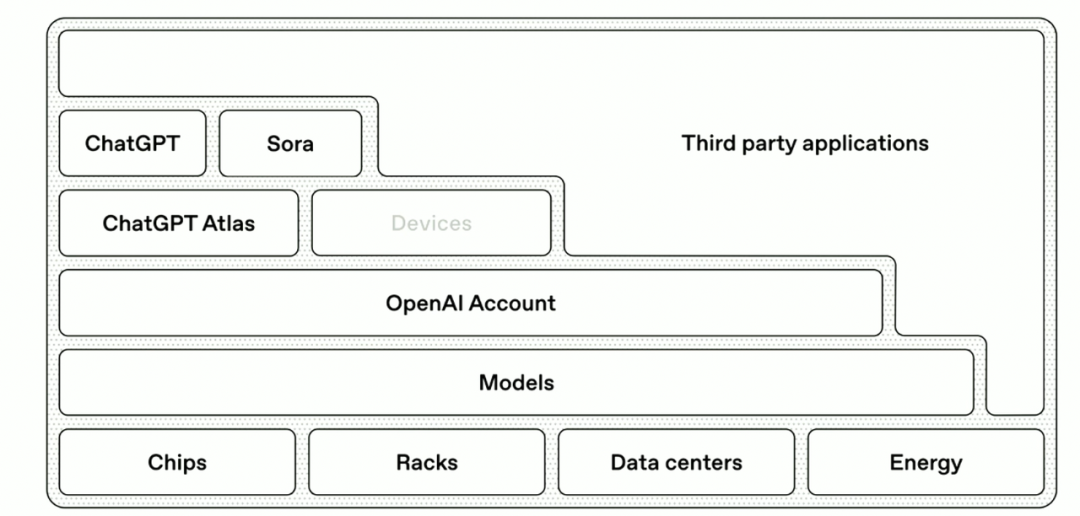
OpenAI seems to have to build a strong and easy-to-use platform where AI capabilities can be widely applied, so it also plans to launch AI hardware in the coming years。
In response to this goal, OpenAI will work on "Research, Product, Infrastructure"。
Of these, OpenAI has set a target and will develop an AI research intern with sufficient capacity by September next year. For further goals, by March 2028, an AI researcher was developed that was able to complete a large research project on its own initiative and achieve full automation。
At the same time, it is believed within OpenAI that the distance of an in-depth learning system to super intelligence — a system that is smarter than all humans in many critical dimensions — may be less than a decade。
In addition, OpenAI did not give a specific time for publication of GPT-6, and both indicated that the pace of product release would no longer be strictly tied to the research programme. It is worth noting that there may be significant leaps in modelling capacity over the next six months。