



December 11th, AliThousand Questions on Tongyirelease Qwen3-TTSIt's a multi-sonic, multilingual and multi-speakerSpeech Synthesis AI model, currently accessible through Qwen API。
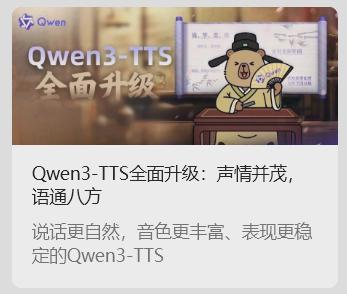
1AI with Qwen3-TTS The main improvements are as follows:
- Fuller Sound Support: Qwen3-TTS provides more than 49 types of sound, covering different genders, age, geographical characteristics and role-setting, including such roles as ecstasy-mikes, panda-to-pooh-to-poohs, curry-to-be-to-be-to-be-to-be-to-be-to-be-to-be-to-be-to-be-to-be-to-to-be-to-be-to-to-be-to-be-to-to-be-to-to-be-to-to-be-to-to-be-to-to-be-to-to-be-to-to-be-to-to-to-be-to-be-to-be-to-to-be-to-be-to-to-be-to-be-to-be-to-to-to-be-to-to-do-to-do-to-to-do-to-to-do-to-do-to-to-to-to-do-to-to-do-to。
- Continuing multilingual development: Qwen3-TTS supports Chinese, English, German, Italian, Portuguese, Spanish, Japanese, Korean, French, Russian and other main languages. In MiniMax TTS multilingual test set, the average word error rate (WER) is better than MiniMax, ElevenLabs and GPT-4o-Audio-Preview; it supports the creation of more sound dialects, including Mandarin, Bangnan, Wu, Yi, Sichuan, Beijing, Nanjing, Tianjin and Shuxi, and the resonance of local accents with linguistic aesthetics。
- Rhythm / Speed is more natural and human: Compared to the previous version, the ability of Qwen3-TTS to adapt to the speed and rhythm of the text has increased considerably, with the official claim that the humanisation is approaching the real person。
statement:The content of the source of public various media platforms, if the inclusion of the content violates your rights and interests, please contact the mailbox, this site will be the first time to deal with.