



last issue i shared with you my contacts and attempts to use the ai video to gain insight into the industry of the ai short play. i spent three monthsI FINALLY FIGURED OUT HOW TO MAKE MONEY WITH THE AI SHORTS.
DURING THIS PERIOD, THE AI VIDEO TOOL IS PARTICULARLY DYNAMIC, FROM A SINGLE GENERATION PLATFORM TO A SMART BODY PLATFORM THAT RUNS THROUGH THE WHOLE PROCESS. BUT THE CORE LOGIC HAS NOT CHANGED: TOOLS ARE JUST AIDS, FINDING THE RIGHT WAY, LESS BENDING, AND ORDINARY PEOPLE CAN DO IT。
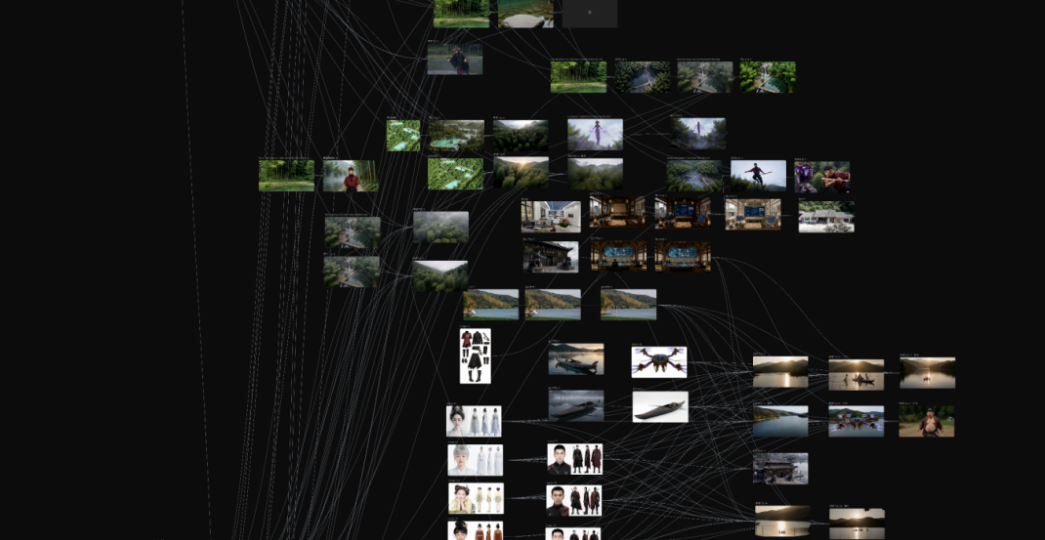
In the recent past, the A side was given a Western Traveler's play, which produced two days of high-intensity images, costing approximately $1,500, using the LibTV and Running Hub platforms. And I'm going to share with you, without reservation, the whole process of making a short video, the kind that new hands can try。
The article contains the following sections:
1. What is the total number of intelligent creative platforms? Which platform is best chosen? Which big model works better
how's the full operation of the 2-ai clip
how do you write the hint of a video generated by 3ai? how do you adjust if you're not satisfied
4. Mine sites requiring attention and small-scale sharing of pit avoidance
1. WHAT IS THE CHOICE OF THE MAIN AI SMART CREATIVE PLATFORM
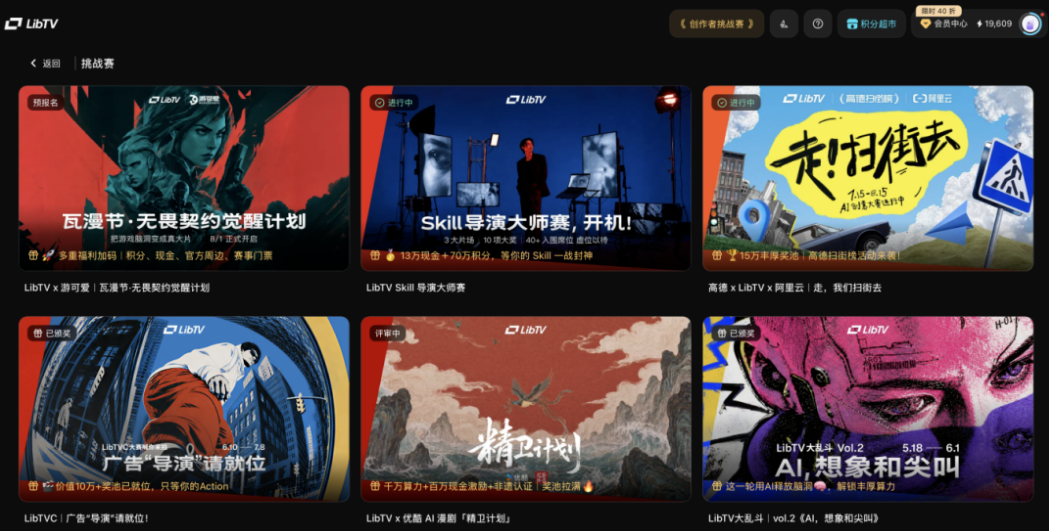
Now there are a lot of smart platforms on the market that can do the whole process AI shorts, and the main ones are LibTV, Running Hub, Tapnow, Shotlab. Their bottom logic is that of nodal canvas creation, where one learns to move quickly to another, with core differences in prices, model blood levels, functional focus, and responsiveness to different budgets and needs。
Horizontal comparison of the four core platforms
LibTV:It's a platform under Liblibai's banner, with a high value for money, a relatively cost-effective score, and a friendly starter. The self-hatting of 3D directorships allows for the repositioning of person positions and slots in virtual spaces, which can, to some extent, alleviate the problems of imbalance in the proportion of person and confusion in space relations, and can be used for multi-person dialogue and sport. The platform has a number of off-the-shelf work streams shared by creators, suitable for new, low-cost water-testing friends。
Running hub:HAVING A CERTAIN BASIS, IT IS SUITABLE FOR A CREATOR OR SMALL TEAM WHO IS FAMILIAR WITH THE WORKFLOW AND WITH CUSTOMIZED NEEDS. SUPPORTING API CALLS ALLOWS FOR THE DEPLOYMENT OF THEIR CALIBRATED WORKFLOWS TO SUB-CONSUMPTION POINTS, WITHOUT THE NEED TO HANG UP, ETC. THE SPEED OF UPDATING IS FASTER, SUPPORTS A BETTER QUALITY OUTPUT, AND ALLOWS FOR THE DOCKING OF DESIGN TOOLS SUCH AS PS, WHICH ARE MORE EFFICIENT WHEN COMMERCIALLY CUSTOMIZED, HIGH-QUALITY SHORT FILMS ARE MADE. LIKE SOME HARD SHOT IS BETTER AT IT。
Tapnow:A platform for making nodal canvass earlier in the industry, designed specifically for film creators, is fully functional and functioning. There are plenty of ready-made workstream templates in the community for role players and costumes, so that the replacement material can be scaled up. The disadvantage is that members and points are overpriced and the points are consumed faster if fresh water is tested. It also has a weaker sense of three-dimensional space and complex multi-person lenses, requiring several additional references。
Shotlab:The main advantage of the AI creation platform, launched under the new floor, is that it is built on the creative ecology of the new scene for more than a decade, combining, on the one hand, mainstream models such as Seedance, Clink, Midjourney, and, on the other hand, there is a large number of open canvassing streams of mature creators in the platform community, which can be consulted directly for re-use and start quickly. In addition, it supports multi-person online collaboration, is friendly to small teams and allows direct synchronization to new set communities and has access to individual business resources. The disadvantage is that the content of a real person is subject to compliance review and that the freedom to write a true person's subject matter is somewhat lower。
What about the big model
The current mainstream video-generation models are focused and do not have an all-powerful “best solution” that can be matched by lens types that can guarantee effectiveness and control costs。
- I.e., dreams:Spectrum-type person action is natural, face-to-face details are good, mouth-to-mouth match is relatively high and co-ordinates environmental sound. The availability of more drama-type, person-to-person conversations can be higher and is currently the dominant model for short drama。
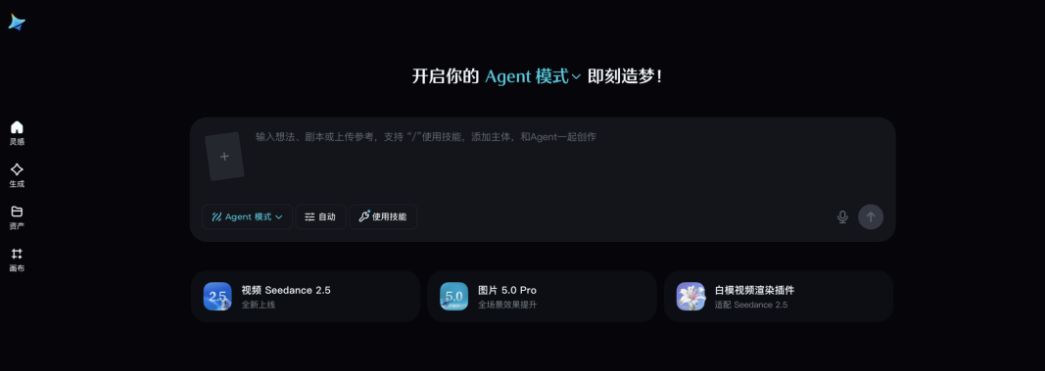
- Veo3:High-quality business lists, film-sensitization models launched by Google DeepMind, have the greatest advantage of being close to the broadcast level, of a visual sense, of a professional optic colour that is consistent with physical logic, of a high degree of synchronization of protophony, of a dialogue, of an environmental sound that can be generated one step at a time, and of supporting a native high resolution output. It is suitable for a commercial customized film with high quality and high sense of quality, and a short concept film. The disadvantage is to generate high costs, a single consumption score, suitable for the key lens that is finalized, and inappropriate for mass error。
- Can be spiritual:The most significant advantage of the national production model, which is developed by the high-coherence first hand, is that it is highly consistent, that after uploading multiple-angle reference maps, people and scenes have a high degree of stability between the different lenses, and that photo-level writing has an excellent sense of substance. It's a good-fit, good-priced paragraph for real-life style, continuous drama, and it's a very practical option in the current national production model。
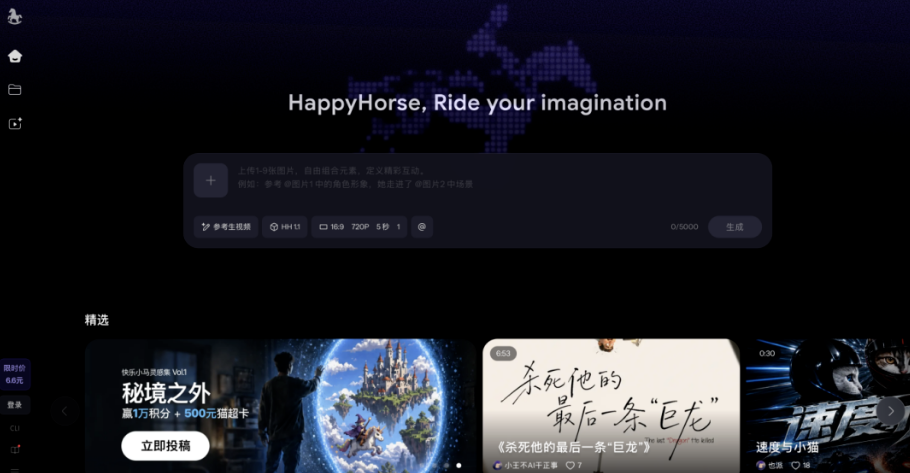
- Happy House:Empty mirrors, big scenes are good for the selected environment and for the light. They have a strong sense of substance and are suitable for view lenses and scenes. The disadvantage is that the profile of the person is average, that the original sound is weak, that it is low-cost, and that the value of the performance is high。
How do you choose the specifications
A lot of rookies came up with 1080 pp, and the result was the score, and it wasn't really working. At present, the most stable response to hints, with the lowest error rate, is 720 p, with a clear image and profile of the person, with only a slightly softer detail; 1080 p does feel a better quality, but points consumption is multiplying, and can easily collapse. A more efficient approach would be to generate a shot with a 720p mass, select a satisfactory piece and then zoom in to 4K with a tool like Topaz. In addition, as far as possible, it is produced by placing "the camera group" and not by single-scenario single-scenes creation, which reduces the problem of incoherence and saves a lot of points。
2. AI COMPLETE PRODUCTION PROCESS FOR SHORT FILMS:
A LOT OF STARTERS DO AN AI VIDEO, AND THEY COME UP HERE AND THEY JUST DROP THE TEXT, AND THEY TURN IT AROUND. THE CORRECT PROCESS IS TO PREDETERMINE ASSETS AND THEN MAKE VIDEO, AND THE MORE THE FRONT-LINE IS, THE LESS THE BACK-TO-BACK。
01.Inspired and story-building
first, the core elements are all finalized: character-setting, scene style, drama, core lines, none of which can be ambiguous. write as much as possible in the logic of the lenses, so as to clarify which scenes have happened, what people have appeared and what lines have been spoken. when the video is generated in the back, it can be used directly, saving time for a second compilation. there's really no inspiration to communicate directly with the ai's assistant on the platform, so that it can help to write the story and fine-tune it, and perhaps inspire it in the process of communication
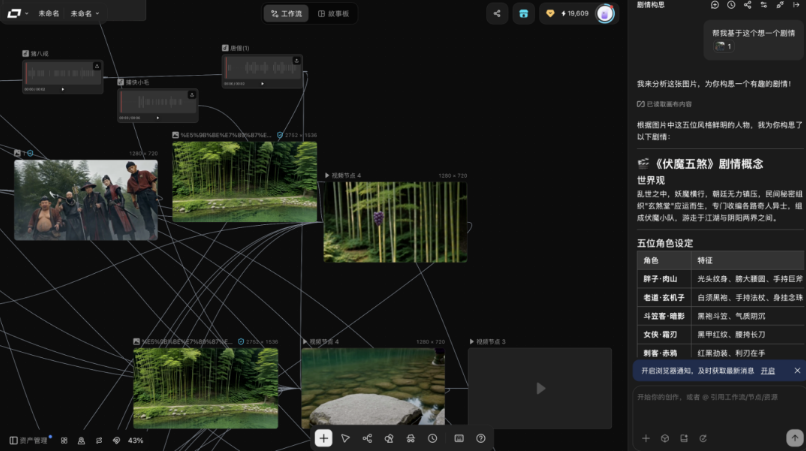
THE LOWER LIMIT OF AI'S CREATION IS THE TOOL, AND THE UPPER LIMIT IS ALWAYS THE STORY ITSELF. DON'T FOCUS ALL YOUR ENERGY ON RESEARCH TOOLS, AND KEEP THE DRAMA AND LOGIC IN ORDER FOR THE FILM TO LOOK GOOD。
02.Split camera script
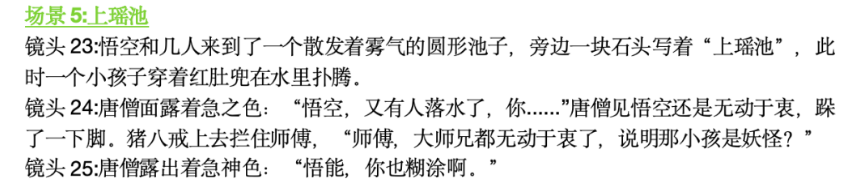
IF IT'S A FULL PLAY, IT CAN BE BROKEN DOWN INTO "THE CAMERA GROUP". THE SCENES THAT OCCURRED IN THE SAME SCENE WERE GROUPED INTO A GROUP, WITH A CLEAR INDICATION OF THE SCENES, THE MOVEMENT OF THE PERSON AND THE CONTENT OF THE LINE. THIS IS THE CENTRAL BASIS FOR GENERATING VIDEOS LATER. A LOT OF PEOPLE SPEND A LOT OF TIME MAKING FANCY SPECTROSCOPY PANELS, WITH MIRROR CURVES, WITH PROFESSIONAL LABELS, AND THEN THROW IT INTO AI, AND IT'S COMPLETELY UNNECESSARY。
Noted mine sites and small-scale sharing of pits, spectroscopy
This is the most crucial step to ensure that the video is consistent
Textures, figures: this can be optimized by feeding reference maps or hint description, and the resulting picture can be refined to the final effect as far as possible
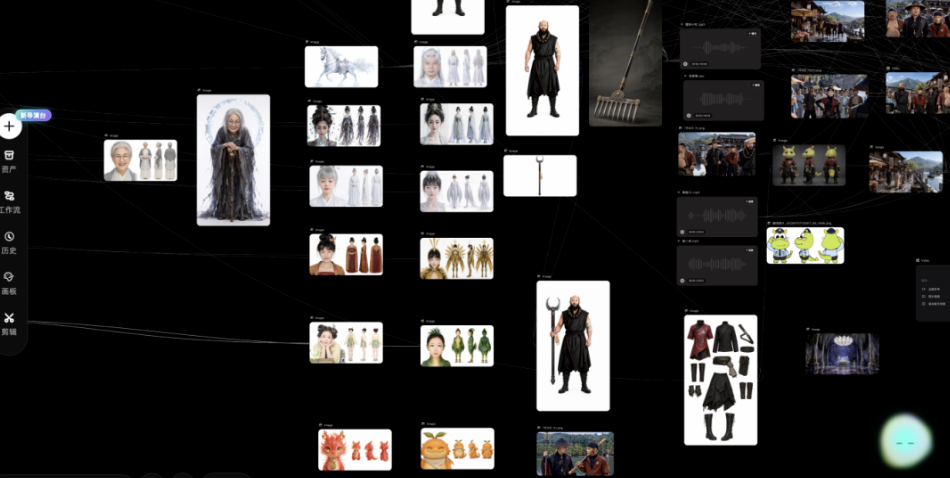
Tools: Mj, nanobanara, image
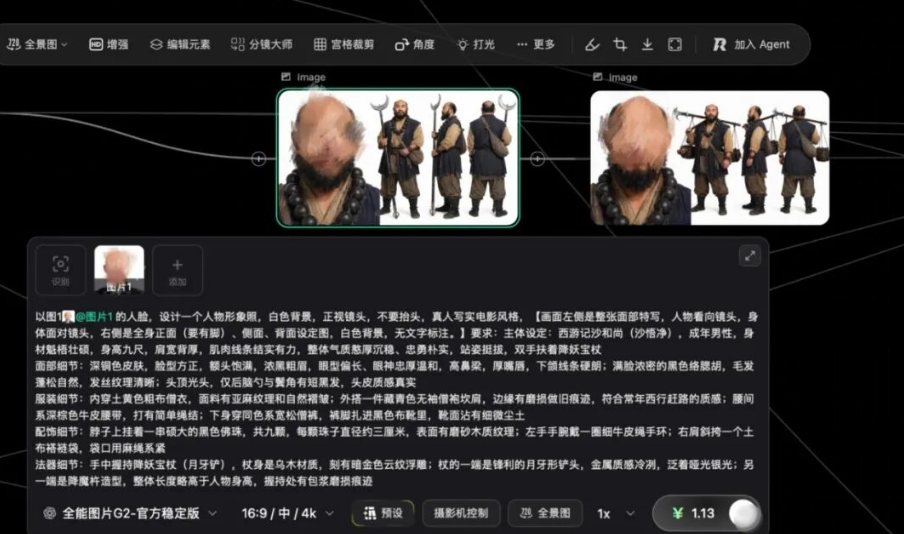
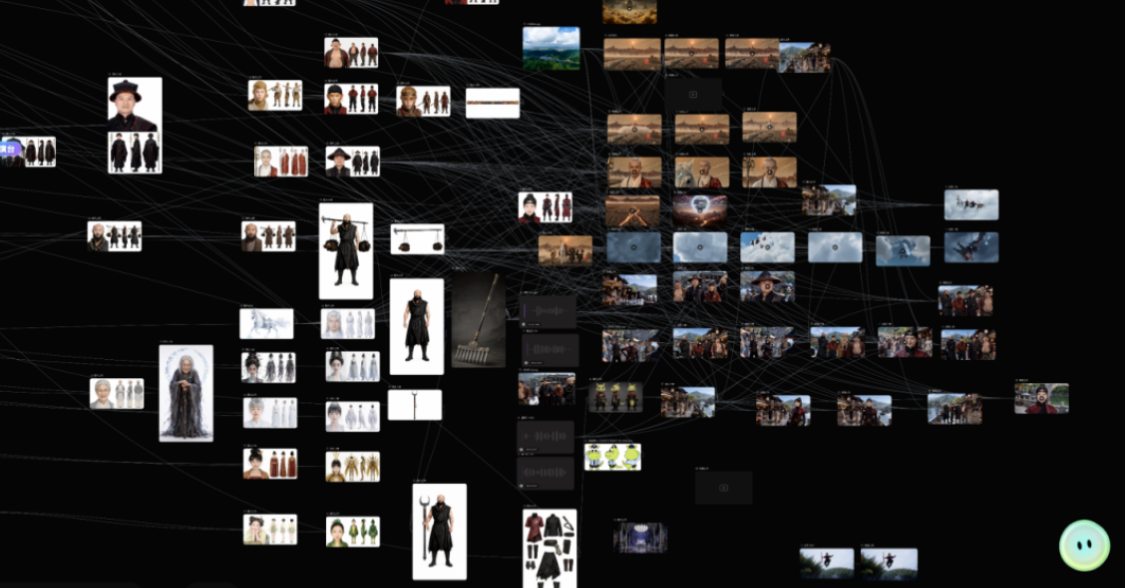
- Character role charts: The person's body is defined in as complete a manner as possible, the description of the person, the description of the person, the description of the person, the clothing, the props, etc. Generates a face close-up + face / side / back of three views of the whole body. The image of a good person is fixed, followed by a direct video @reference, which maximizes the risk of a face change and a dress suit. By the way, the creation of figures from such intelligent platforms can lead to greater freedom by bypassing platforms such as the immaculate dream, the filament, etc。
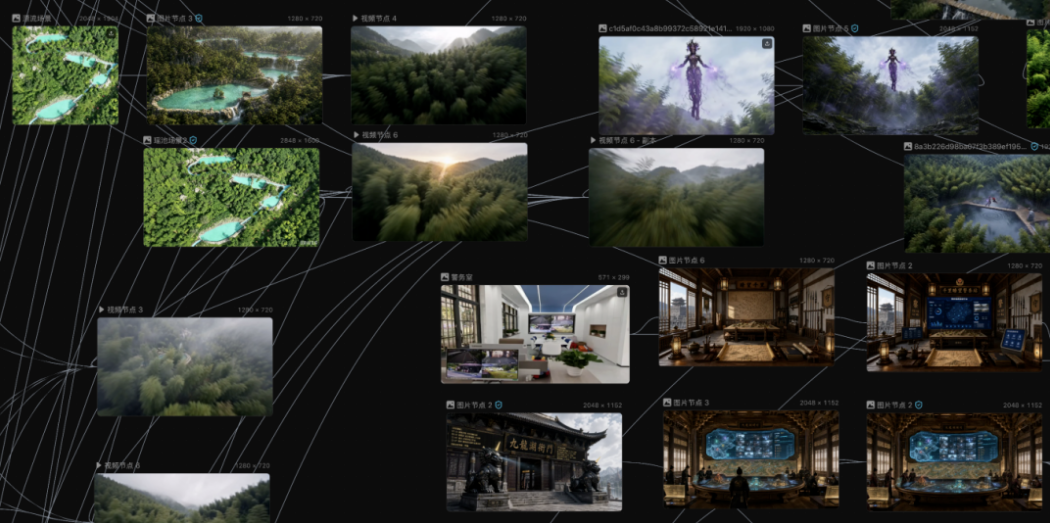
2. Four-scenes view: it is best to generate four-span views with additional local details to fix the overall style and layout of a good scene. If a person ' s position is needed, a map of the scene with the person can also be created to pre-position the person and the environment in order to avoid the creation of a small person。

3. Mirror reference diagrams: The key lens can be a mirror frame of the man ' s composition, the image, the light, the position of the person is adjusted to its optimal state and the video is generated, and the success rate is much higher。
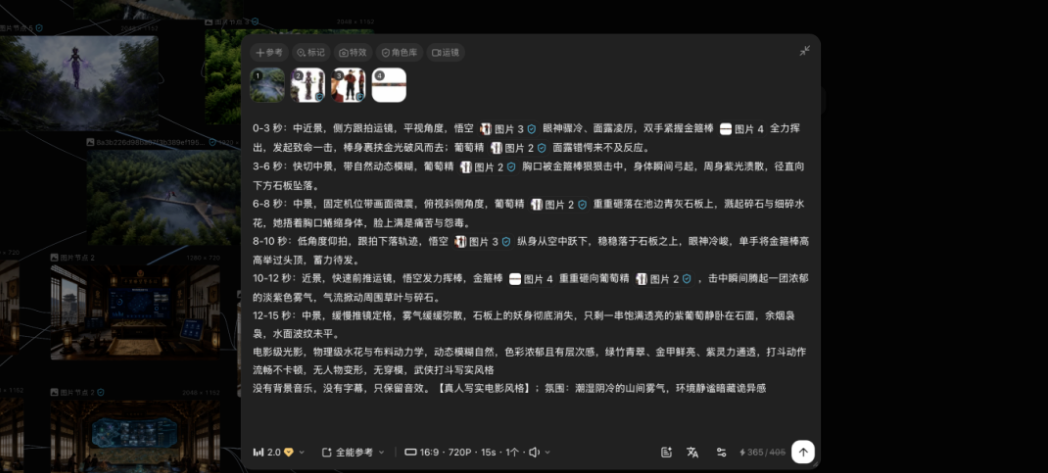
Video generation
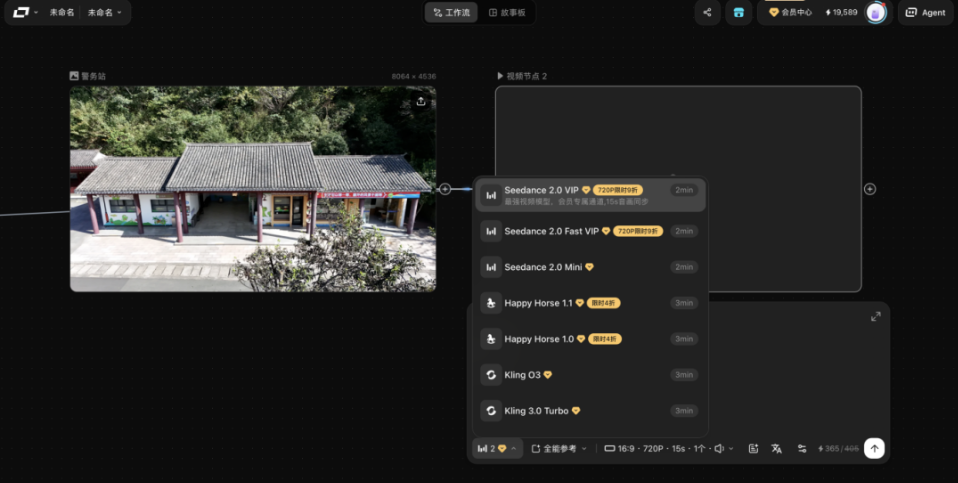
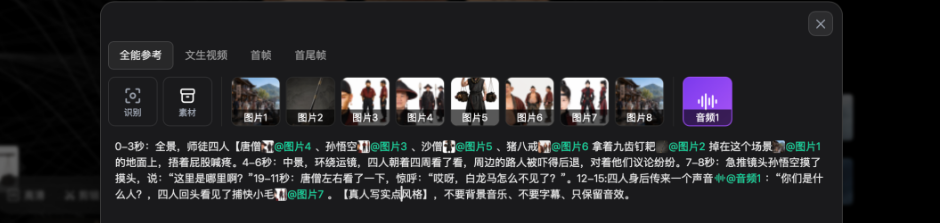
The material is ready to enter the core video generation. Instead of writing long speeches, the core grabs five elements, and a precise description is sufficient:
- Subject: Direct @Package prepared in advance, no more text recapitulation
- Scene: @scene reference map, which needs to be clearly positioned with a character
- (a) Cameras: Write a clear view (characterized / medium / panorama), the angles, the way the mirrors are transported, and the specific actions and lines that occur in the images
- STYLE: TO CLARIFY THE OVERALL STYLE OF THE VIDEO (2D ANIMATION/3D/STAND ANIMATION/CG/TACT FILM) TO COMPLEMENT THE MOVIE MACHINE, THE PHOTOSTYLE, THE COLOR REFERENCES
- REQUEST: MAKE SURE TO ADD "NO BACKGROUND MUSIC, ONLY SOUND" AI'S OWN BGM WOULD SERIOUSLY INTERFERE WITH LATE-CUT MUSIC AND MUST AVOID IT EARLIER. IT IS RECOMMENDED THAT THE SAME AI SOUND BE PRODUCED IN ADVANCE, OR THAT THE FAXER BE TRANSCRIBED, SO AS TO AVOID INCONSISTENCIES IN THE SOUND。

5. Spacing card optimization
There are few perfect cases of one generation at a time, and dissatisfaction is normal. There are three practical techniques for adjusting:
- (a) If the effect is less, directly copy the nodes, finely fine-tune the hints (e.g., additional action details, adjustment of the velocity of the mirror), and regenerate
- (a) To optimize the spectroscopy reference map in a retrospect, with a more precise spectroscopy guide
- THE SHORT STORY GIVES PRIORITY TO THE GENERATION OF A 15-SECOND CAMERA SET, GIVING AI MORE SPACE, AND CONSISTENCY IS BETTER THAN A SINGLE SHOT。
6. Slicing into film
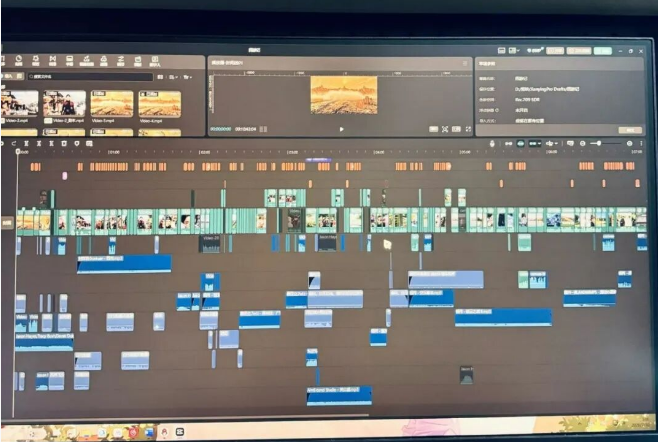
Export all the resulting lens materials, cut them in the sequence of the scenes, with a single voice, BGM and subtitles, make a simple transition, and complete an AI clip. The ai shorts require a higher level of music and sound, and at the rhythm, there is also a need for ups and downs。
3. Mine sites of attention and small-scale sharing of pit avoidance
There's no need to make a fine spectroscopy
A LOT OF PEOPLE SPEND 10 MINUTES MAKING GORGEOUS STORYBOARDS WITH MIRROR CURVES AND PROFESSIONAL LABELS, THINKING THAT THE MORE DETAILED AI IS, THE BETTER IT IS, THE OPPOSITE. OVER-COMPLICATED LABELS WOULD INTERFERE WITH AI'S JUDGMENT AND WOULD BE MISSED. THE SPECTROSCOPE IS ENOUGH TO MAKE CLEAR THE FOUR MESSAGES OF "SCENES, CHARACTERS, MOVEMENTS, SCENES" AND THE SIMPLER IT TAKES, THE MORE EFFICIENT IT IS。
It's not as long as it takes
DON'T USE AI TO GENERATE A WHOLE BUNCH OF FANCY HINTS, FULL OF EMOTIONAL RENDERINGS AND REDUNDANT DESCRIPTIONS. NOW THAT THE MAIN SUBJECT AND SCENE REFERENCE MAPS HAVE BEEN UPLOADED, THERE IS NO NEED TO REPEAT THE FACE AND ENVIRONMENT IN WORDS, JUST DIRECT @IMAGE. THE MORE PRECISE THE HINT, THE MORE FOCUSED THE ACTION AND THE LENS, THE BETTER THE AI PERFORMANCE. LESS IS MORE, ALWAYS SET IN THE AI HINT。
Don't switch models too often
Same shot. Don't try it over and over again. The style and tone of the different models vary widely, and the final cut will be very fragmented. It's more important to stay together and keep the whole style together than to pursue a single shot。
Write at the end:
Before, a short film was made, with scripts, actors, materials, later stages, starting in a few weeks; now two people in a few days will be able to produce a complete piece. Tools are iterative, and the threshold for creation is lower, but what really determines is that the content is good and bad is still thought and aesthetic。
IF YOU'RE INTERESTED IN AN AI SHORT FILM, FIND A SIMPLE LITTLE STORY AND TRY TO DO THE FIRST ONE IN THE PROCESS. EVEN FOR A DOZEN SECONDS, IT STARTED FROM ZERO TO ONE。