



IT'S 2026, AND IT'S NO LONGER THE "PRIMITIVE AGE" IN WHICH THE IMAGES ARE FLASHING AND THE CHARACTERS FLY. HOWEVER, ON ALL MAJOR COMMUNITIES AND CREATIVE PLATFORMS, I STILL FIND AN ALARMING PHENOMENON: THE CREATORS OF 90% CONTINUE TO FOLLOW THE OLD LOGIC OF TWO YEARS IN DEALING WITH THE UNITY OF CHARACTER。
Their usual practice is to:
Open MJ or Nano banana pro, produce a nice figure。
Throw this image into a video model (e.g., Violin, or Dream or Midjourney) as a "prior frame reference" or "play reference"。
WRITES A HINT, CLICKS TO GENERATE, AND PRAYS THAT AI CAN READ THE MAP。
I can tell you responsibly that this is totally wrong。
EVEN THE STATE-OF-THE-ART PROLIFERATION MODEL OF 2026, WHEN YOU PROVIDE ONLY A STATIC MAP AS A REFERENCE, IT IS SEEN IN THE MODEL'S SUBSPACE ONLY AS A “WEAK CONSTRAINT OF STYLE AND STRUCTURE”. IT IS NOT A 3D ASSET THAT HAS BEEN BOUND, BUT A CLOUD OF POSSIBILITY。
ONCE THE VIDEO BEGINS TO BE GENERATED, PIXELS START TO FLOW, AI TRIES TO REINTERPRET THE CHARACTER ON EVERY FRAME. AS LONG AS THERE IS A SLIGHT CHANGE IN LIGHT, ANGLE OR MOVEMENT, AI WILL “FORGOTTEN” THE CHARACTERISTICS OF THE ORIGINAL MAP, WHICH MAKES YOUR CHARACTER ANOTHER PERSON IN THE THIRD SECOND。
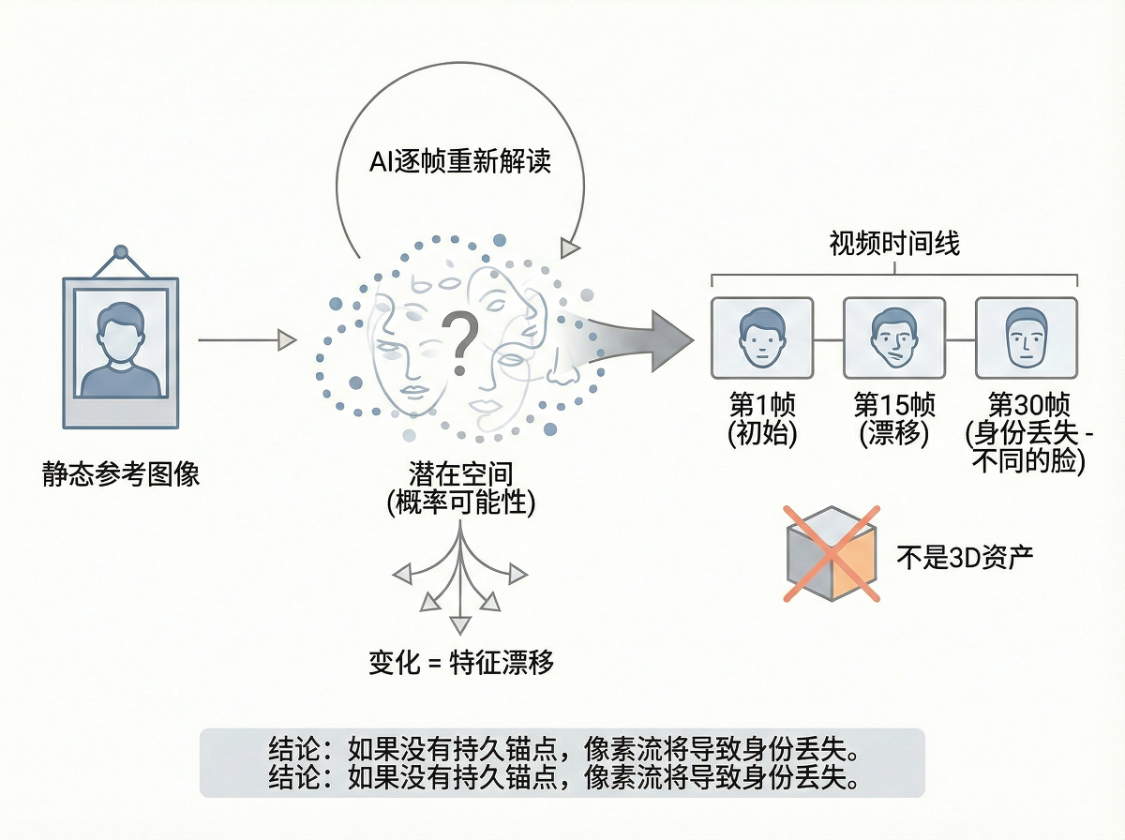
Today, we're going to teach you to use three core dimensions of "dismantling" to use tools to truly master the industrial levelAI VideoPeople are consistent. It's not a science, but a science stream based on model principles。
Method I: Dismantling of the asset dimension - Establishment of a “neurological anchor”
Many people, when they produce the initial material, prefer “one step at a time”, which is covered in the hint: “In the early morning courtyard, a black-haired girl wearing a white linen dress is looking back”。
This practice of “persons + scenes + actions” is responsible for the collapse of coherence。
Rationale analysis:
DURING THE VIDEO GENERATION PROCESS, CHARACTERS AND SCENES WERE INVOLVED IN THE “NOISE” PROCESS. IN THE EVENT OF A CHANGE IN THE LIGHT OF THE SCENE (E.G., A SPOT OF PIXELS UNDER THE LEAVES), THESE CHANGES WILL PENETRATE INTO THE PIXEL CHARACTERISTICS OF THE PERSON. FOR AI, THE PERSON IS NO LONGER AN INDEPENDENT ENTITY BUT PART OF THE PICTURE. ONCE THE SCENE IS CHANGED, THE PERSON IS “REDRAWN” AS BACKGROUND NOISE。
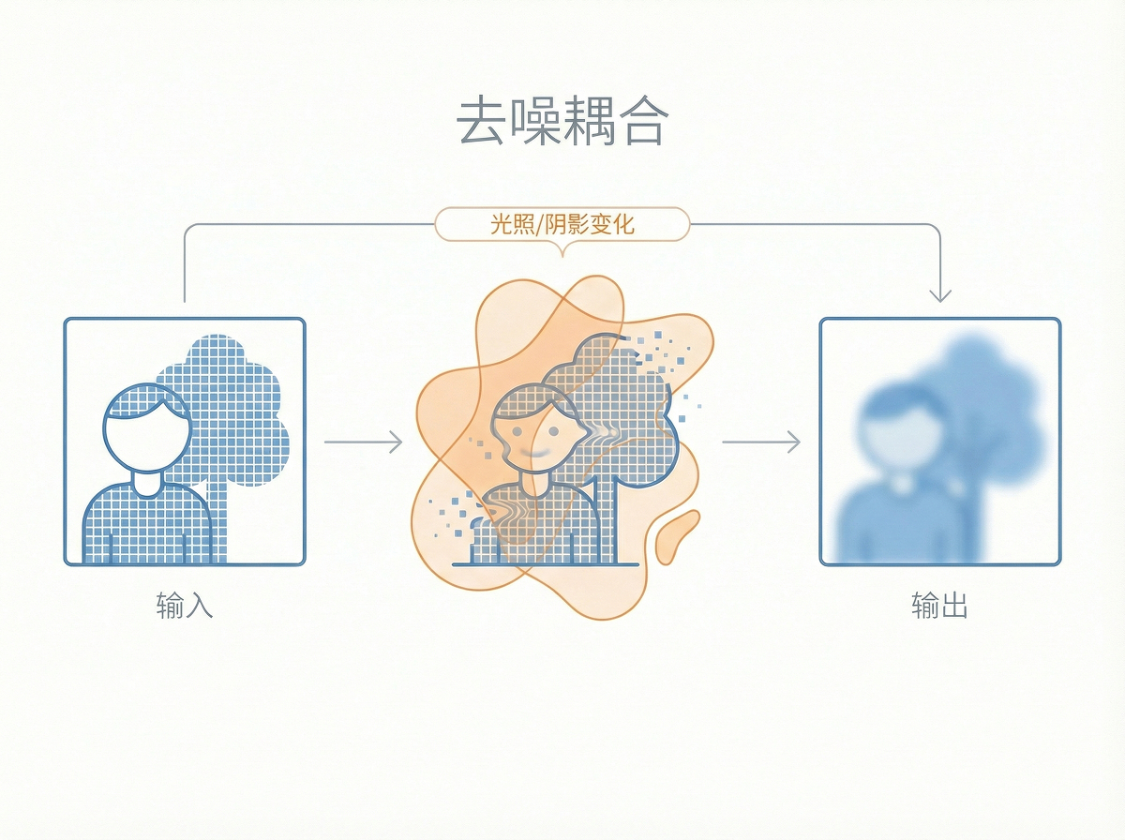
Standardized workflow:
What we need to do is to strip people from their environment and first create a high-precision, multi-dimensional “role asset pack”。
Step 1: Generate a positive view
Don't just produce a map. You need to use the Nano banana pro to create a three-view of the person (head, side, back)。
Phrasing techniques:
Use tipwords: character referenceSheet (role setting), model Sheet (modulation), three-view turnaround, full body shot (circle lens), front view, side view, back view (front, side, back), standing side-by-side in T-pose / A-pose
The gentleman forms a game map and then uses the above-mentioned hint to generate three views。
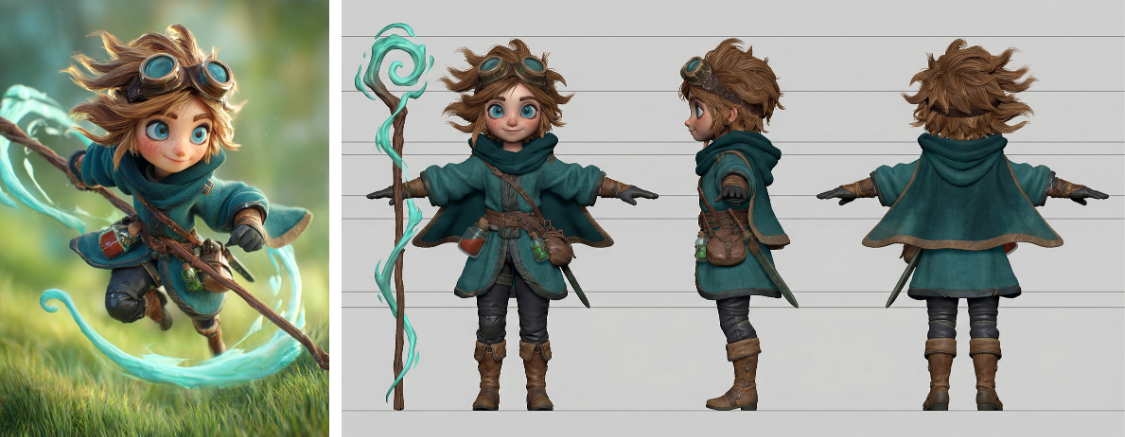
PURPOSE: LET AI NOT JUST SEE THE CHARACTER'S "ONE FACE" BUT UNDERSTAND THE ROLE'S STEREOTONIC STRUCTURE. THIS WAS REFERRED TO IN THE 2026 MODEL AS THE ESTABLISHMENT OF A NEUROLOGICAL ANCHOR。
Step 2: Enable Role characterization locking
most of the current video models have asset learning or more advanced “subject” features. (put up three views directly in nano banana to generate scenes, too
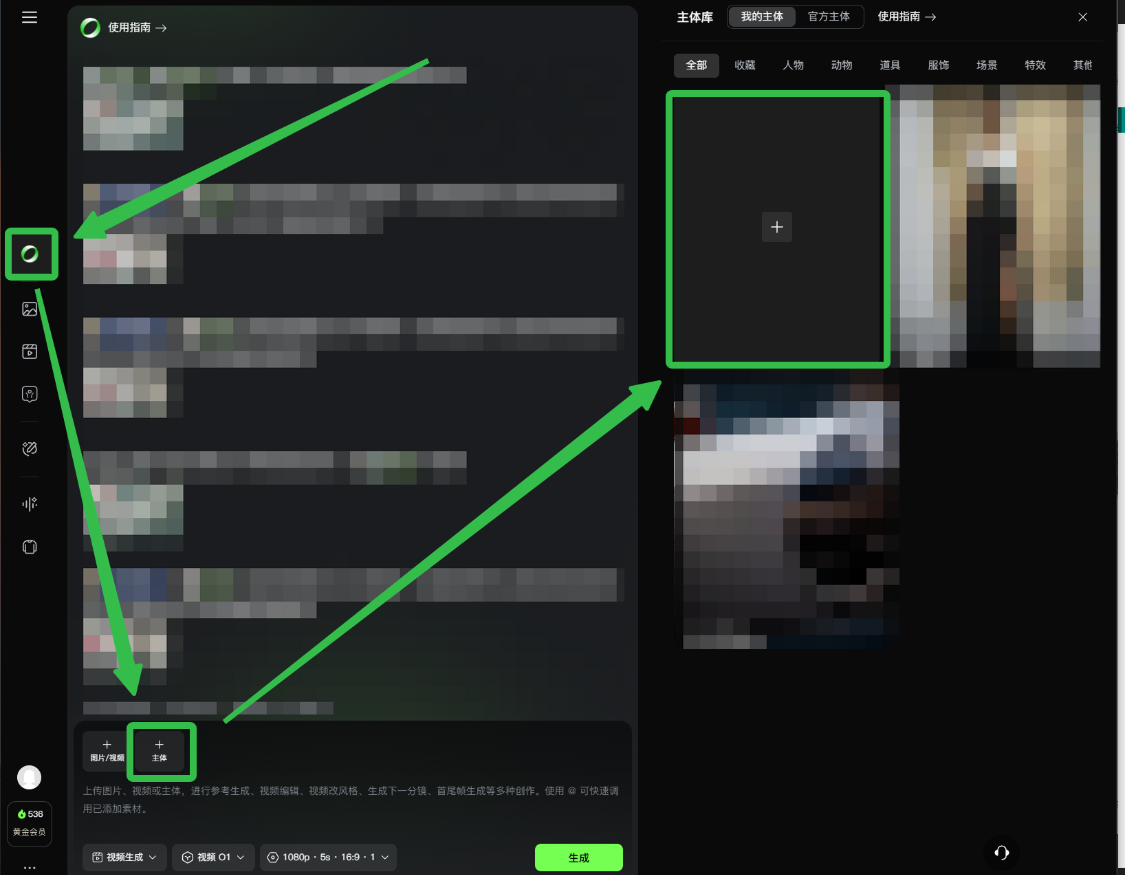
And here I'm going to do a demonstration using the nectar function。
Do not upload a map directly。
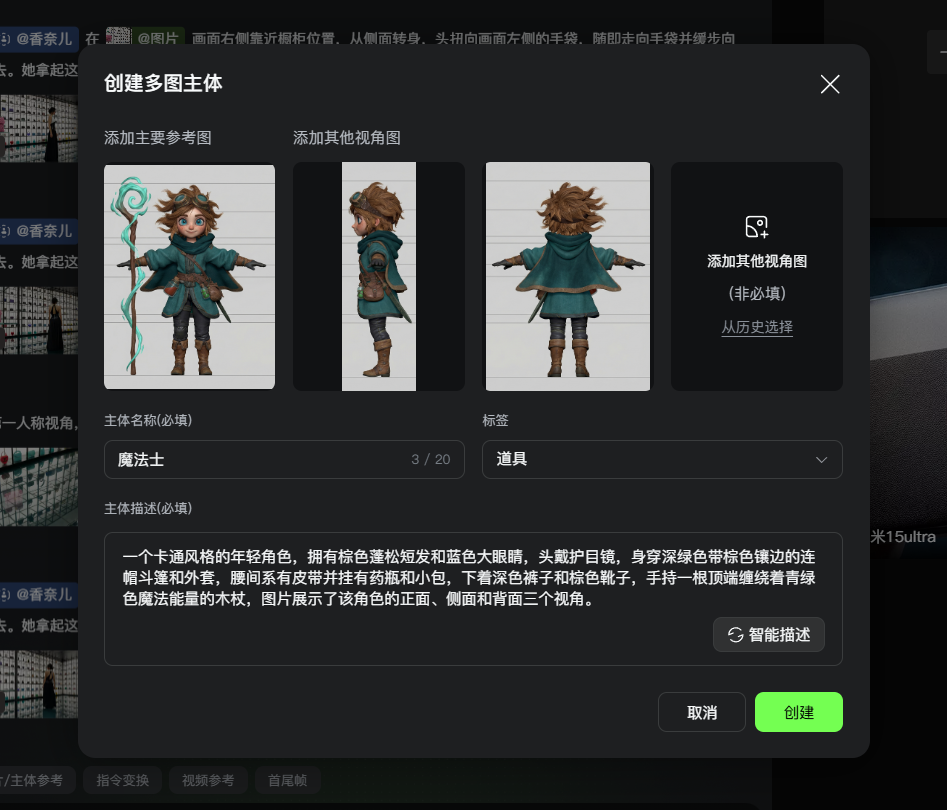
Dismantling your three views, uploading the main view, side view, back view together, and then suggesting that you create
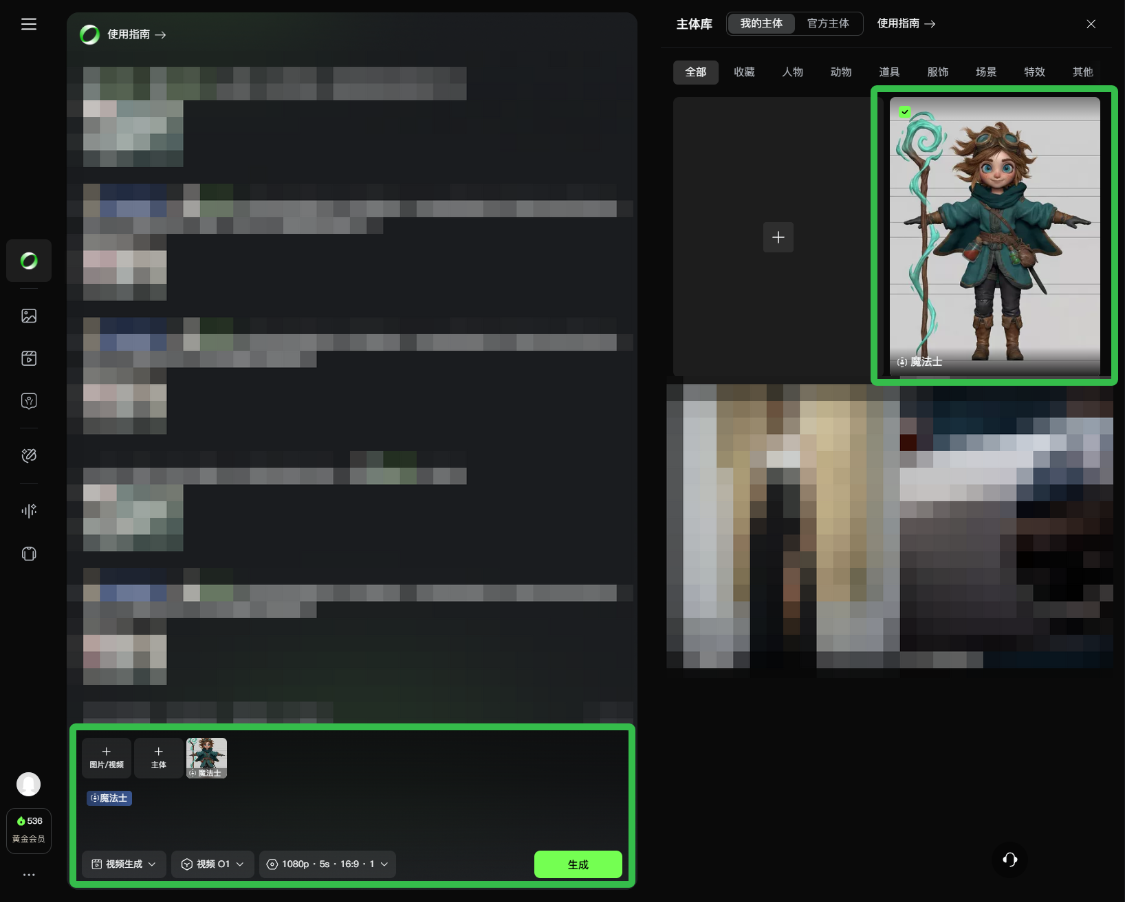
It can be used directly。
here are
KEY POINT: AT THIS POINT YOU GET NOT A PICTURE, BUT A ROLE ID THAT YOU CAN USE AGAIN IN THE PROJECT。
By doing so, your character has changed from a “one picture” to a “stable, reusable object”. Whether you then let her go to a café or a beach, the object's data characteristics have been locked to death by a model and no longer fluctuate with the environment。
Method II: Dismantling of spatial dimensions - static stereotyping, dynamic evolution
This may be the most critical watershed in the current distinction between “lovers” and “professionals”。
MANY NEWCOMERS PREFER TO ENTER THE COMMAND DIRECTLY TO GENERATE A VIDEO: “GIRLS RUNNING IN CROWDED SUBWAY STATIONS”. RESULT: THIS STEP IS THE EASIEST TO COLLAPSE. BECAUSE AI NEEDS TO CALCULATE BOTH “PERSON LOOK”, “ENVIRONMENTAL LIGHT” AND “PHYSICAL EXERCISE” WITHIN SECONDS. THESE THREE VARIABLES ARE CHANGING AT THE SAME TIME, AND THE ABILITY TO CALCULATE IS EASY, CAUSING THE PERSON TO LOSE HIS FACE IN THE SECOND AND CHANGE HIS CLOTHES IN THE NEXT SECOND。
Correct logic: Before video is generated, the static frame must be perfected. Don't let video models "design" images, just "drive" images。
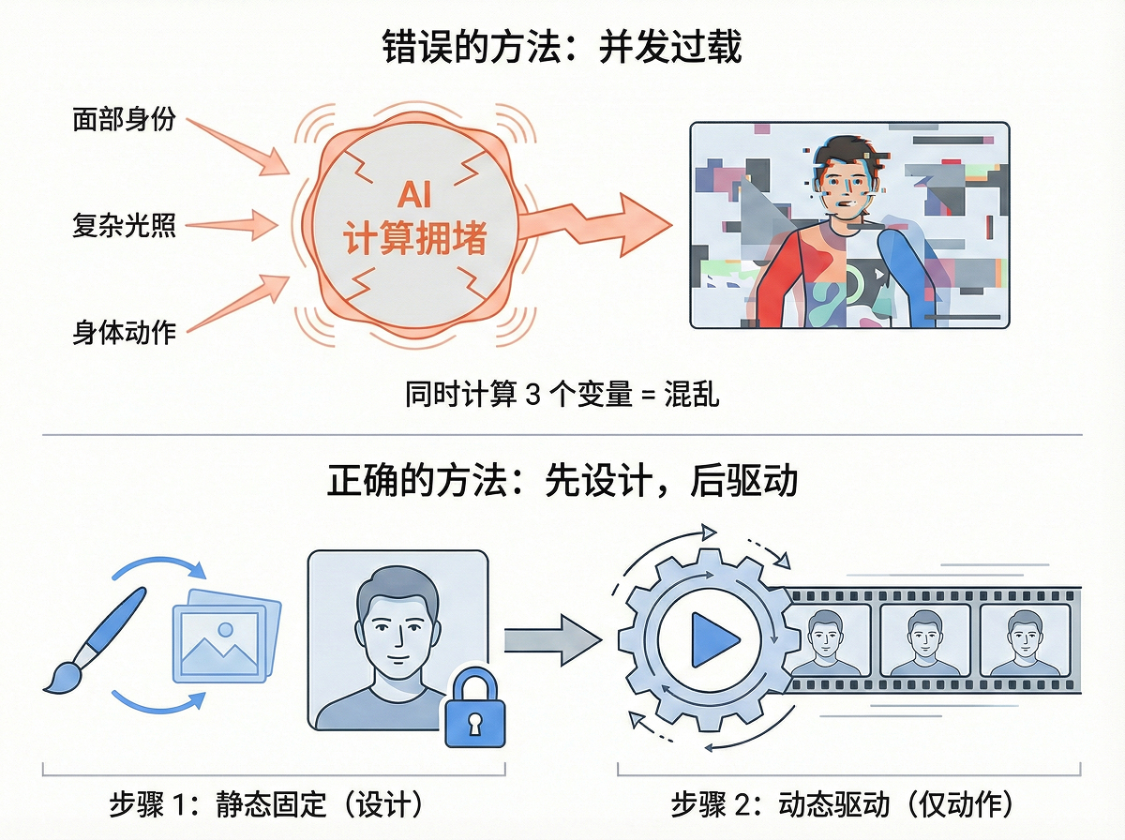
Standardized workflow:
STEP 1: GENERATE PURE ACTION ASSETS (PHOTO PHASE), FIRST, CREATE HIGH-LEVEL STATIC IMAGES OF THE PERSON IN A SPECIFIC ACTION IN A MAPPING TOOL, USING OUR LOCKED ROLE ID。
Operation: Use a simple white or grey base。
Example of command:
Side view of a 3D stylized age running, full body program shot. Mid-stream action
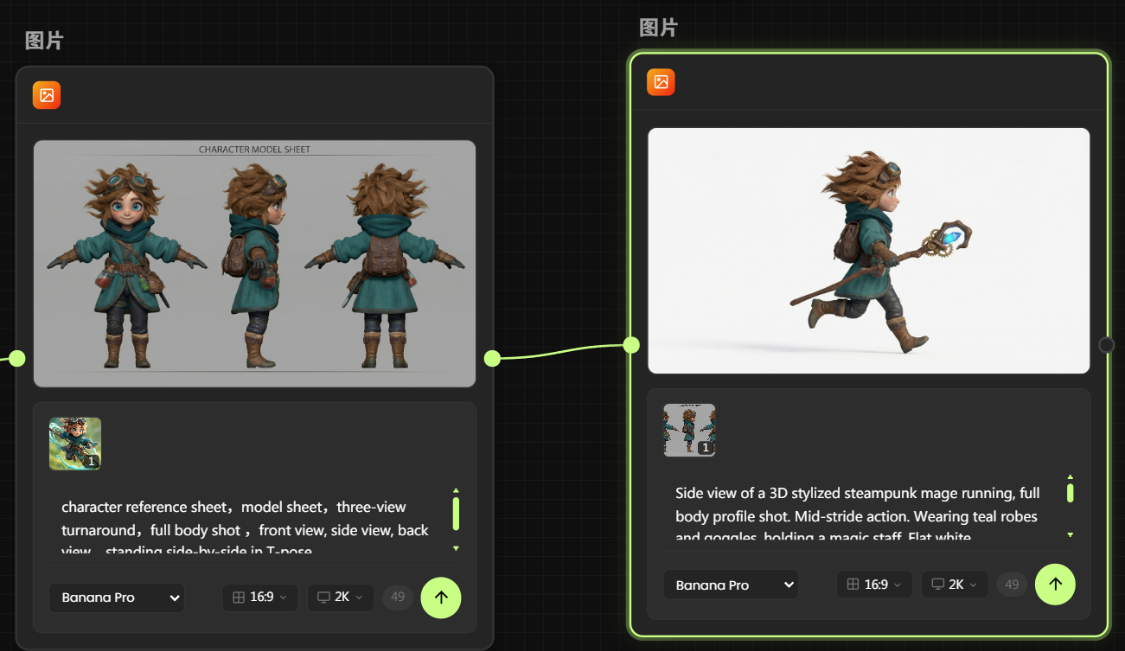
PURPOSE: AT THIS STAGE, WE FOCUS ONLY ON THE ACCURACY OF THE BONE STRUCTURE, MUSCLE TENSION AND CLOTHING OF THE PERSON. BECAUSE THE BACKGROUND IS EMPTY, ALL OF AI'S CALCULATIONS ARE USED TO DRAW PEOPLE EXTREMELY WELL。
Step 2: The integration of scenes and photo redrawing (phase of photo synthesis) is the most important step. Puts the "Personal Action Chart" in the "Backchart" you prepared。
Use Nano banana pro for synthesis。
Put people in the scene
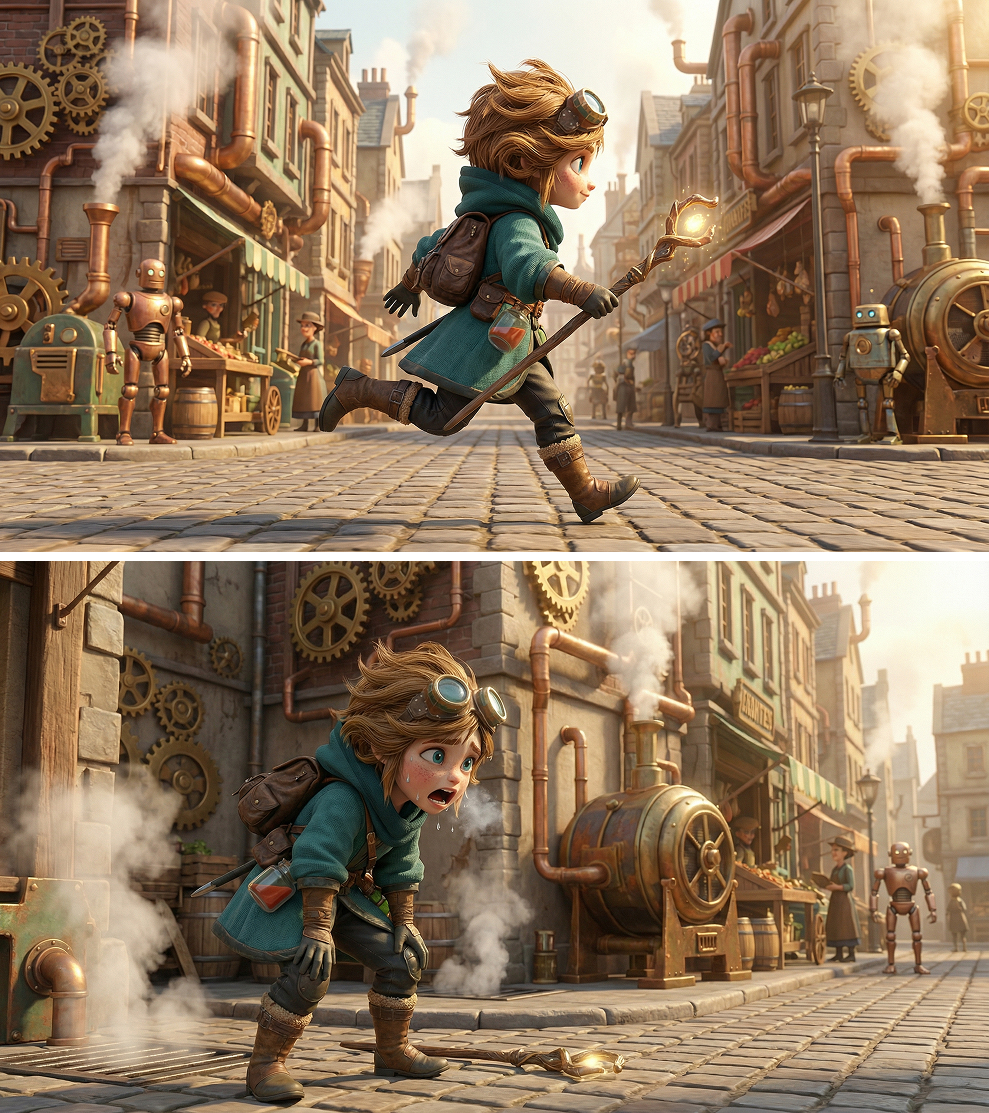
Step 3: Tusheng Video (Video Generation Phase) and finally, it's the video model。
A perfect static map of step 2 as the " Start Frame " 。
Another synthesizing image of the end of the action as End Frame。
Core advantages: At this point, video models don't need to go to "imagine" people's clothes, background, because they just need to calculate the pixel shift based on the pixels you provide。
Results: This "photographic-> video-driven" process ensures 100 per cent consistency and photo-accuracy。
Method III: Dismantling of the time dimension - shredding of the lens against drift
It's about "director thinking."。
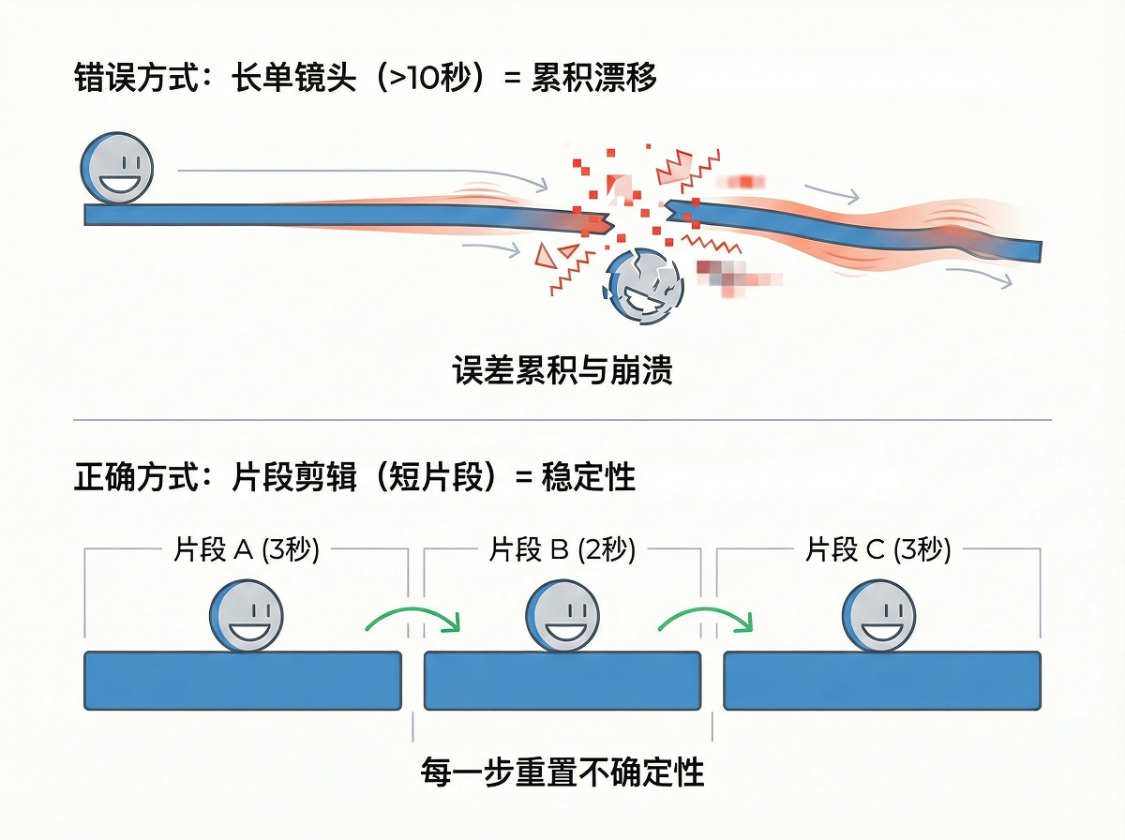
Core pain: The hardest thing to do is to be consistent, never a static moment, but a continuous flow of time. Current proliferation models are inherently based on probabilistic predictions. The possibility of “pixel deviation” is created one more time each time a frame is pushed forward. This shift accumulates, with a small error of the first second, which may have led to a new face. This is called Temporal Drift。
So, in a long shot, the more complex the movement, the longer it takes, the more exponential the probability of a person falling apart。
Standardized workflow:
Step 1: Reject the desire to “one shot at the end” and do not attempt to directly generate complex performances of more than 10 seconds。
Policy: Break the time. Disassembly a complete action into multiple spectroscopes。
Step 2: Atomized camera production
Principle: A video clip carries only one core action。
For example, "Turn around and read a book":
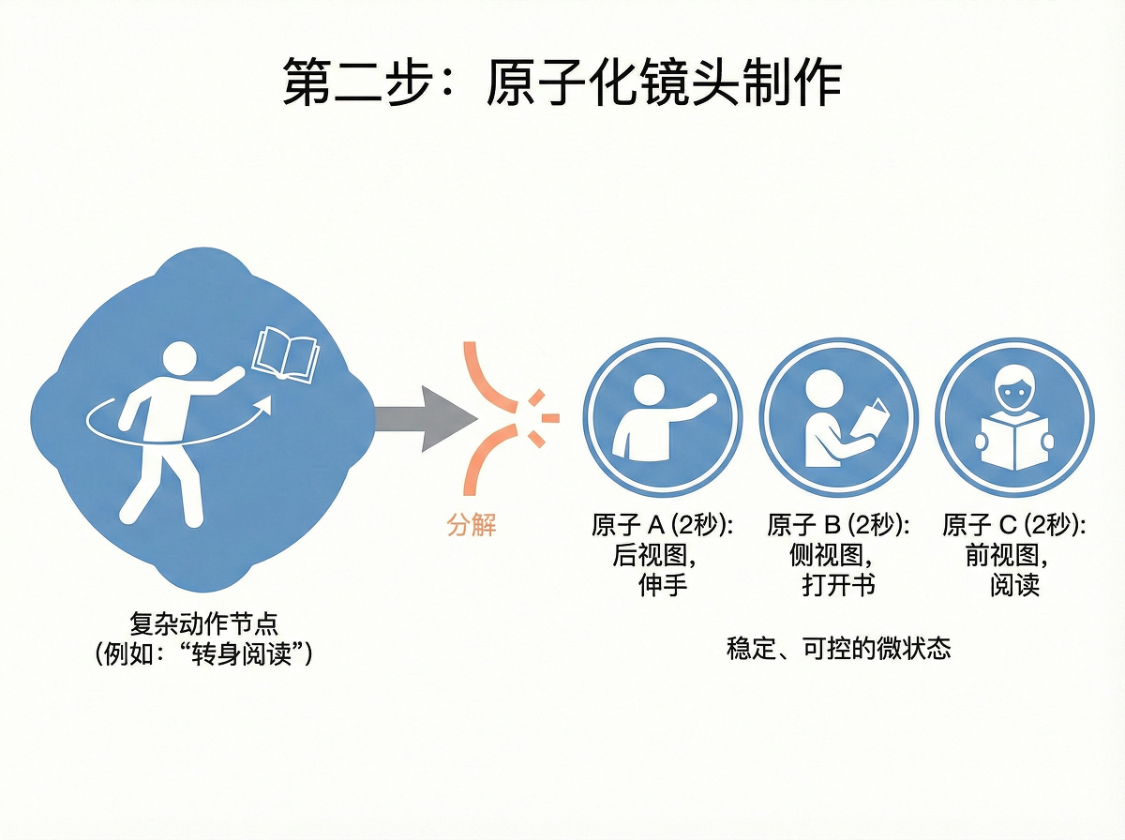
CAMERA A (2 SECONDS): BACKSHADE, REACH OUT TO THE BOOKCASE TO GET THE BOOK。

CAMERA B (2 SECONDS): SIDE-FACED, TURN TO THE PAGE。

CAMERA C (2 SECONDS): FACE CLOSE-UP, HEAD DOWN, LIGHT ON YOUR FACE。

BY SPLITTING THE LENS, WE CONTROL EACH SEGMENT IN THE "HIGH-PANTS SWEET ZONE" (USUALLY 2-4 SECONDS) GENERATED BY AI. OVER THIS TIME, AI CAN MAINTAIN A VERY HIGH DEGREE OF CONSISTENCY。
Step 3: Clip-suture using video-clip software to connect these short shots。
THIS APPROACH NOT ONLY REDUCES THE UNCERTAINTY OF THE TIME DIMENSION, BUT ALSO MAKES YOUR VIDEO TEMPO FEEL BETTER, MORE LIKE THE WORK OF HUMAN DIRECTORS, RATHER THAN THE FLOW BOOKS PRODUCED BY AI。
Wrap-up: evolution from a “ticker” to a “director”
Looking back at these three ways, you find a common logic: control the variables。
Split assets: Lock visual variables。
Split space: Lock environment variables。
Split time: Locks random variables。
EVERY FRAME IN THE AI VIDEO IS A SMALL WORLD THAT IS BEING BUILT FOR MODELS. IF YOU DON'T TAKE THE INITIATIVE TO SPLIT, GUIDE, CONTROL, IT'S ALWAYS JUST A BUNCH OF FLOATING, UNCERTAIN BEAUTIFUL IMAGES。
WHEN YOU LEARN THESE THREE WAYS, YOU'RE NO LONGER A “TICKER” WAITING FOR AI TO SURPRISE YOU, BUT A “DIRECTOR” WHO KNOWS HOW TO MOVE LIGHT, SPACE AND TIME. IT'S NOT JUST VIDEO TECHNOLOGY, IT'S THE BOTTOM LINE OF THINKING THAT YOU DO IN THE AI ERA。
Now, go try. Save your characters from the chaos of pixels and give them their true souls。