



BY 2026, THE AI MAPPING TOOL HAD ALREADY GONE BEYOND THE INITIAL STAGES OF “BREATHING” AND “FLIPING”. CURRENT MODELS CAN EASILY GENERATE PHOTO-LEVEL SKIN TEXTURE AND PERFECT HUMAN STRUCTURE. BUT EVEN SO, WHY DO WE KNOW AT ONCE THAT SOME OF THE IMAGES WERE CREATED BY AI
The lingering “plastic senses” and “mixed senses” are often no longer derived from the person's body, but from the environment。
In the subconscious of many creators, the environment is just a background board and is designed to match the role's “green leaves”. But in real photography and film logic, the environment determines the spatial sense of the picture and the physical laws of the world. An environment without logic and without layers is like a wallpaper in a vacuum, no matter how sophisticated a person may be, which is not convincing。
THE CURRICULUM WILL BE BASED ON THE LATEST AI-GENERATED LOGIC, DEEP-SEPARATING THE THREE CORE APPROACHES, AND WILL TEACH YOU HOW TO COMPLETELY RECREATE THE REALITY OF AI THROUGH ENVIRONMENTAL CONTROL。
Method I: Rejection of the “general” description and construction of the spatial level
1. ABERRATION OF AI ' S UNDERSTANDING OF THE ENVIRONMENT
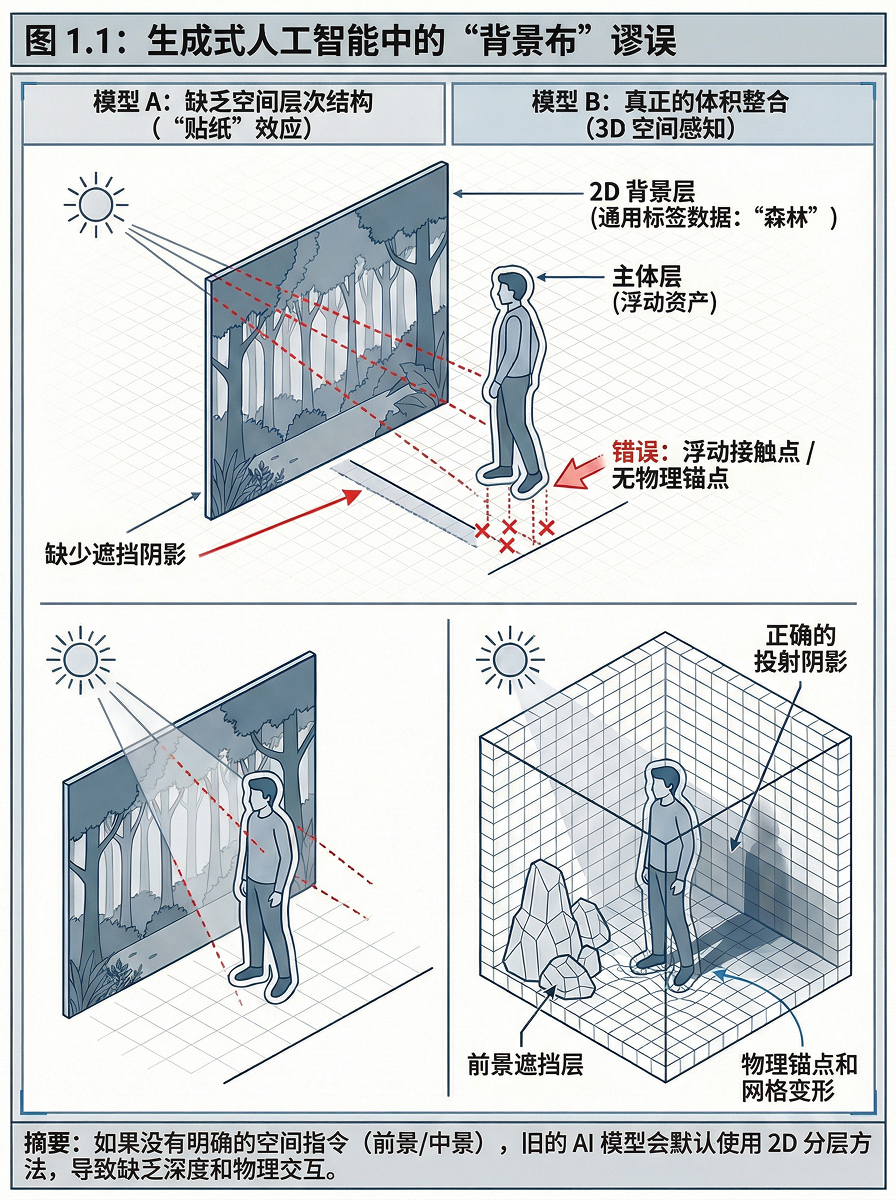
Most people are accustomed to generalizing the term in a holistic way when they are preparing environmental indicators. For example, input: “A big street” or “a forest”。
IN AI MODEL UNDERSTANDING, THIS "LABELLING" CAN LEAD TO SIGNIFICANT LOSS OF INFORMATION. WHEN THE MODEL RECEIVES A SINGLE ENVIRONMENTAL LABEL, IT TENDS TO CALL ON THE MOST GENERAL DATA IN TRAINING — I.E., A FLAT, FUZZY “BACKGROUND SHEET”. IT “POSTS” THE PERSON IN FRONT OF THIS CONTEXT, LEADING TO THE FRAGMENTATION OF THE PERSON'S EDGE FROM THE LIGHT OF THE ENVIRONMENT AND A LACK OF DEEP INTERACTION。
2. Good practice: tearing down space
To break this sense of plane, it is necessary to learn to think like a photographer and to break space into a future, a Midground, and a Background. You need to tell AI clearly, "How the picture was seen."。
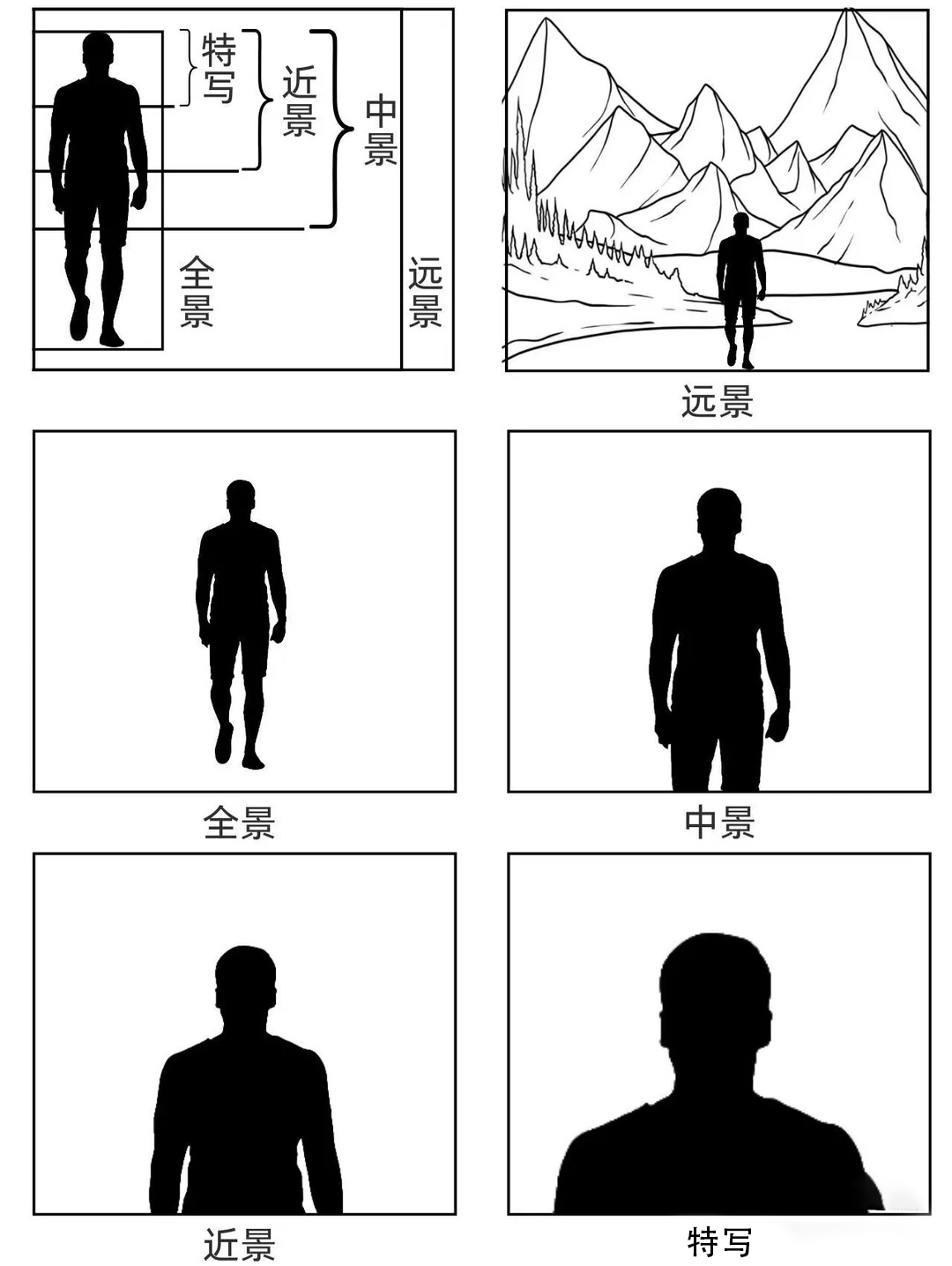
Operational skills:
Foreground (covering and peeking):
The outlook is the first line of defence to build a sense of truth. It is responsible for breaking the integrity of the picture and creating a sense of “attendance”。
Setting in a future
Stepwise:
Brured fern leaves in the immediate foreground, Out of fucus ray leaves on the Lens。

Prompt: The view is partly integrated by an extreme close-up of blacked, light-sooked fronds and large, out-of-focus water drops bringing to the camera, creating a great atmosheric habitat.
Motivation: Forced to replay Deep of Field, allowing the sight to see through the object, adding a three-dimensional sense of size。
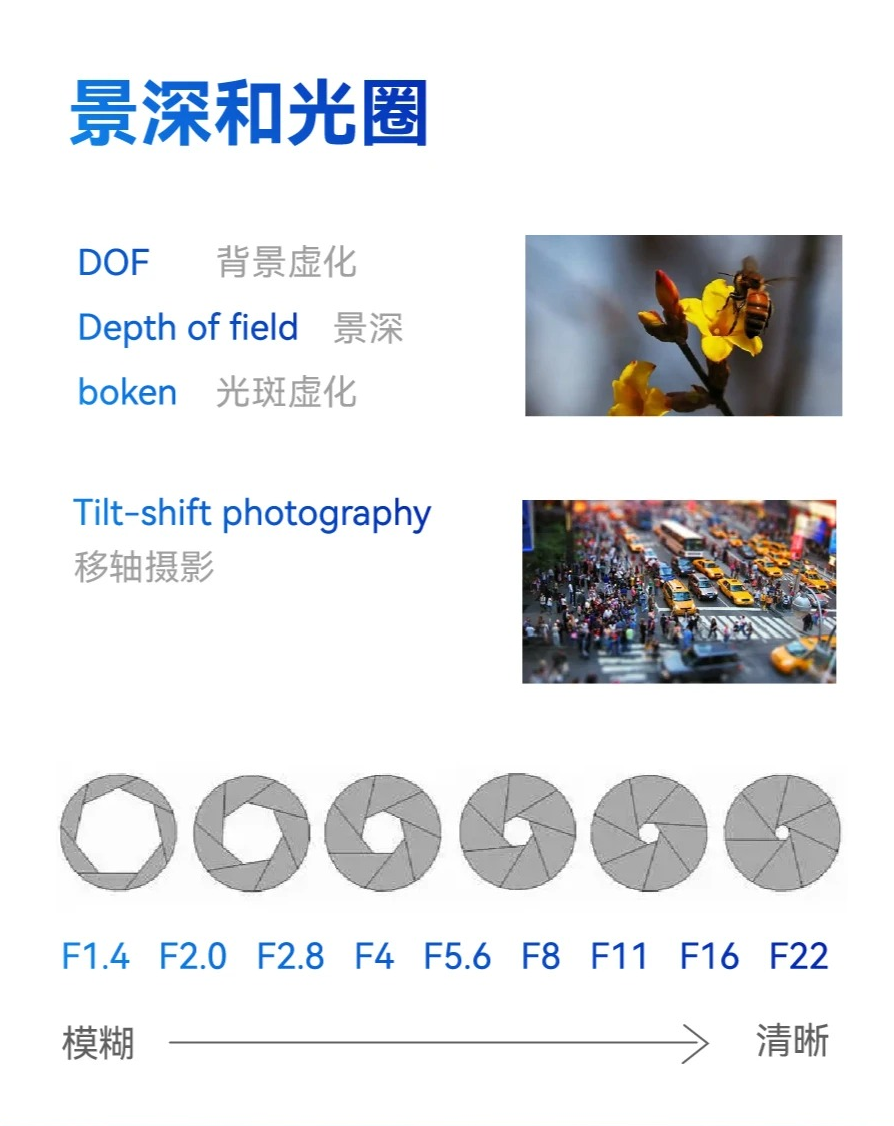
Medium (interactive and carried):
Mediumview is the region where the subject is located, with a focus on its exposure to the environment。
Stepwise:
Not just “persons standing on the ground”, but rather the mud, Hand resting on a rough concrete wall。

Prompt: The principal focus is on a high's heady leaver. The boots are fully looking forward to the deep, showing weight and physical input with the triage.
Principle: Establish physical contact points and anchor the position of the person。
Vision (extension and atmosphere):
Vision determines the breadth of the world。
Stepwise:
Fading mountain silhouette in the atmosheric haze, Distant city lights bokeh。

Prompt: Behind the subject, layrs of towering pines made professionally into the game, white atmous fog.
Rationale: By describing the vagueness and colour of the distance, the space distance can be significantly removed。
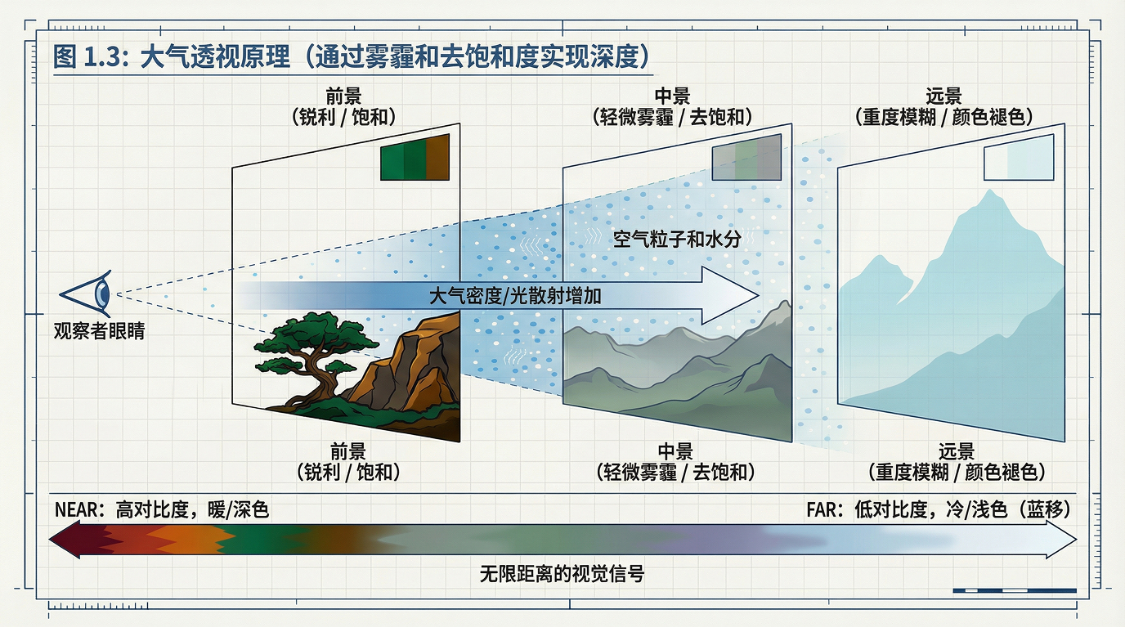
3. Tool manipulation
THE CURRENT AI TOOL SUPPORTS A LONGER CONTEXT. YOU CAN TRY TO USE LINEAR SCANNING TO DESCRIBE:
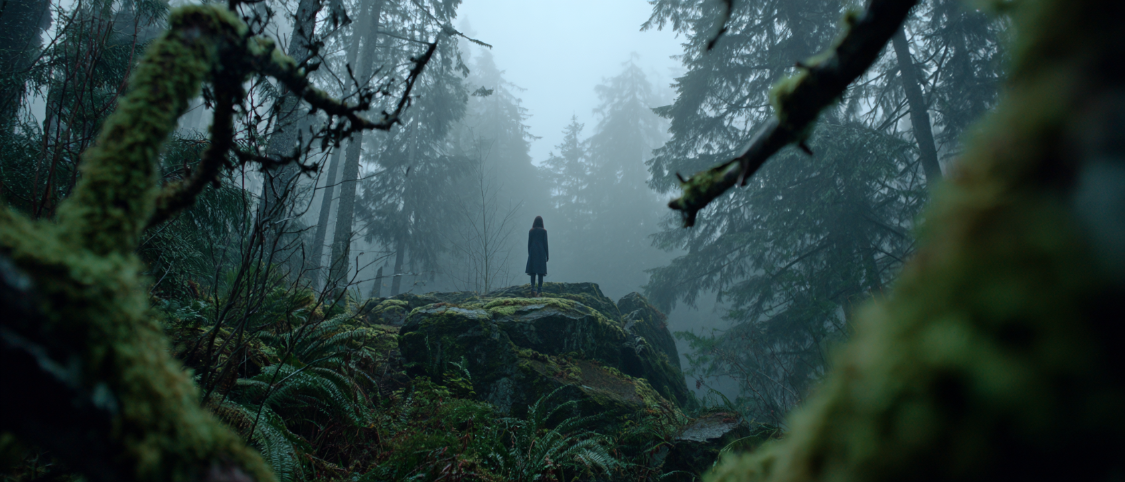
“The camera looks through wet tree blanches, focusing on a woman standing on a mossy rock, with a deep forest foreshadowed behind her (BG). I'm not sure
Method II: Absorption of the causal logic and elimination of the “compelling sense”
1. Impairment of terminologies
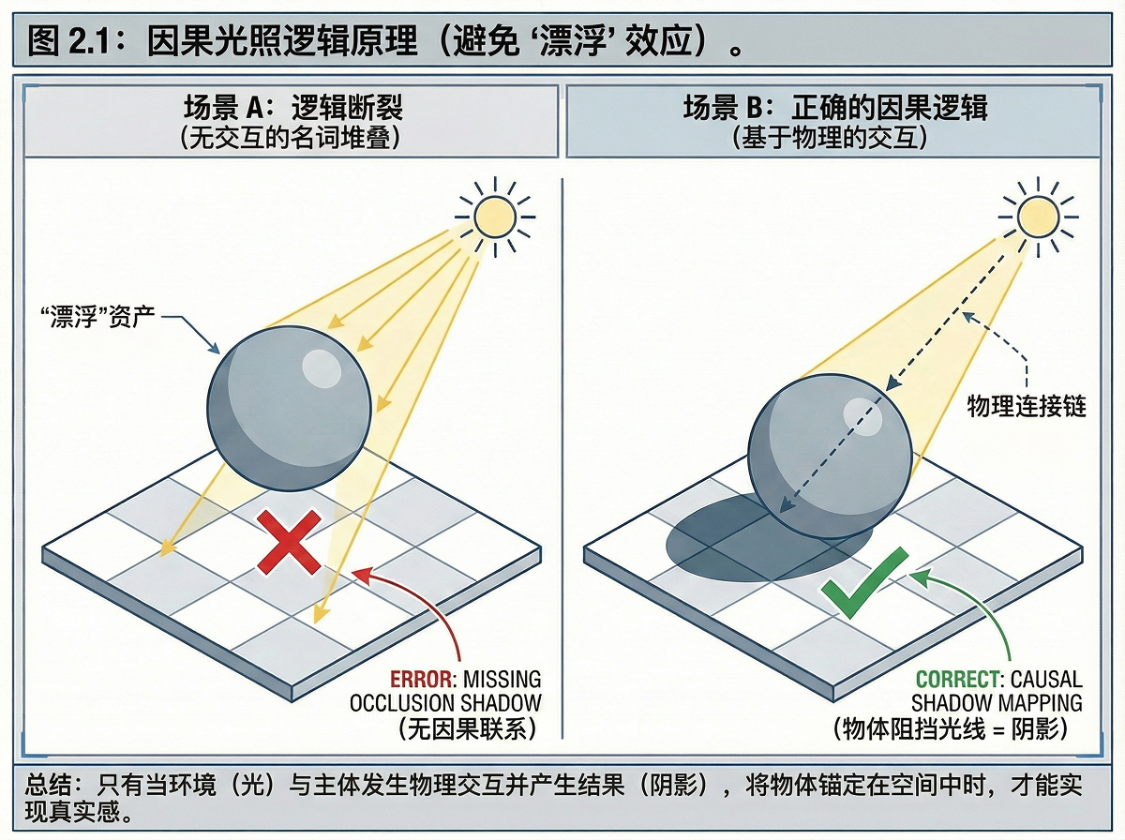
Many of the hints look rich: “sun, lamp, window, cat”. But often the images are made: the couch is perfect, the lights are bright and the windows are permeable -- they have nothing to do with each other. The light was not on the couch, and the cold light on the window did not affect the heating of the lamp. That's the classic collage。
2. Establishing a logical chain of environment
We're going to tell AI about Causality. The real world has physical logic: because there's light, there's shadow, there's darkness。
Operational skills:
Shadow cause and effect:
Common:
Sunlight, wall
Logical:
Harsh sunlight sharp shadows of the window fire onto the drawing wall。
There are not only objects, but also interactions between them. The light became the link between the window and the wall
Case:
Common:
A beautiful woman sitting on a sofa, living room, sunlight, window, plans.
Logical:
Becauselarge monstera plans are placed the window and the sofa, they block the harsh afternoon sunlight.

Material cause and effect:
Common:
Rainy street
Logical:
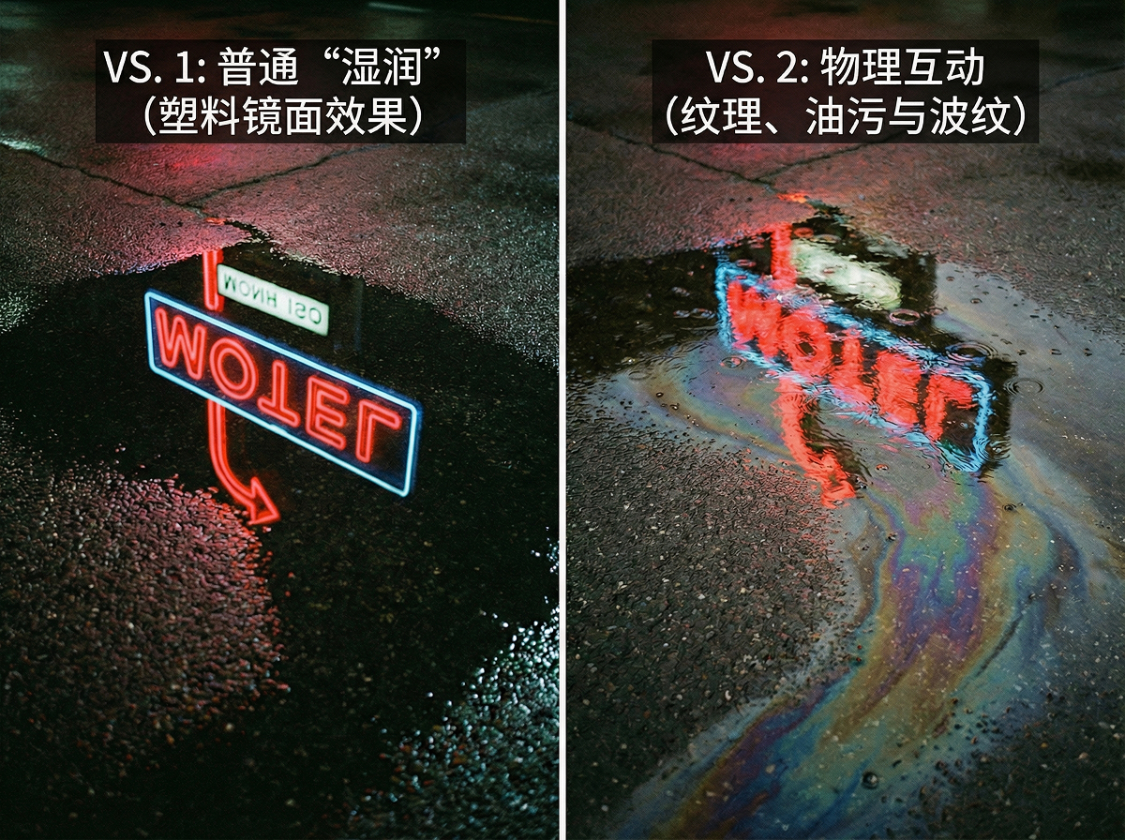
Neon lights reflect on the oil puddles on the asphalt road。
Analysis: Physical feedback on light (Neon) of materials ( bitumen, water, oil) is defined. Algorithms can be perfect for this physical properties if you're in place。
Case:
Cyberpunk Street, Raining, nonlights, puddles on the ground.
Cross-up of the logic base.

Time trace cause and effect:
The environment should reflect the passage of time。
Logical:
Dust motes dancing in the Shaft of light, Rust running down from the metal bolts。

Case:
Old robot, rusty metal, abandoned factory, dust.
A logical writing in a reality.
3. Core thinking: using verbs to connect nouns
more verbs and verbs (casting, reflecting, bloaking, developing through) are used in the preparation of the hints。
"Because the green lights block the main light source, dappled shadows fall on the character's face." This logically deduced description activates the physical simulation layers in the AI model and produces very convincing images。
Method III: Emotion and character, depth control of light and weather
1. Light determines mood, weather is decisive
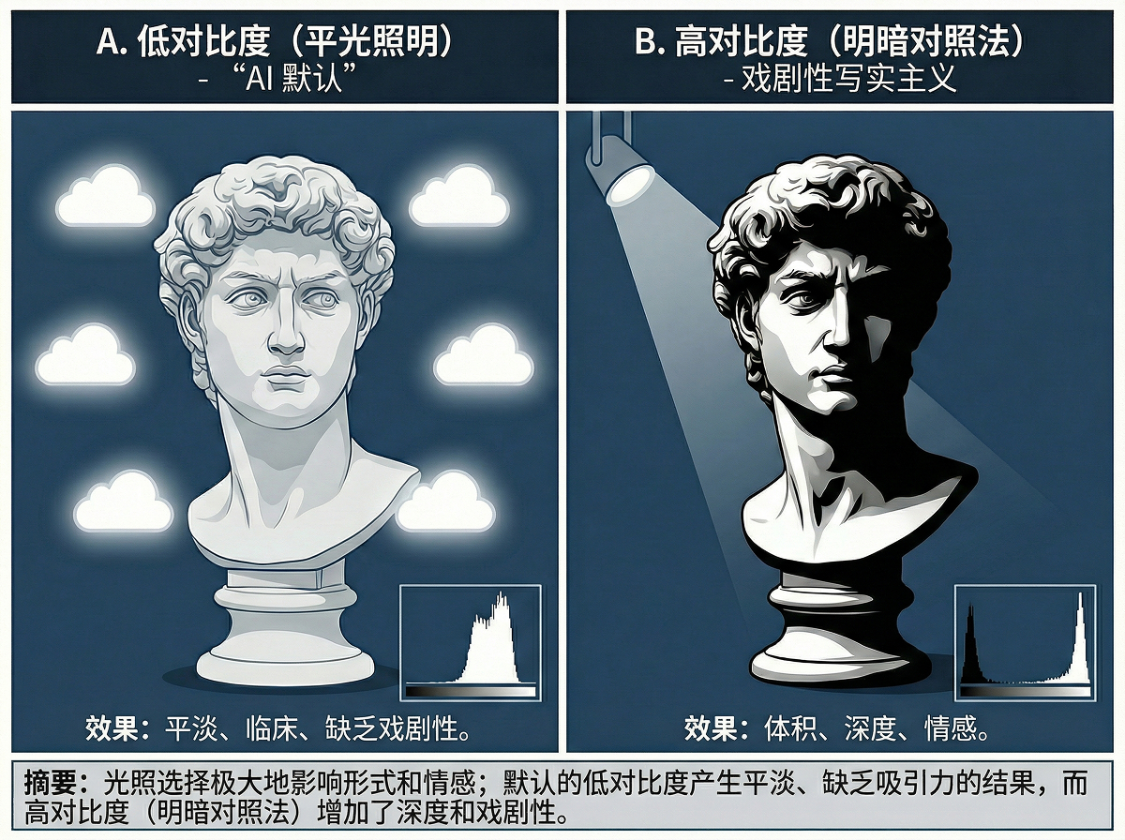
IN HIGH-LEVEL CREATION, THE LIGHT IS NOT JUST "LIGHT OR DARK" BUT A VECTOR OF EMOTION; THE WEATHER IS NOT JUST "CLAIR OR RAIN" BUT THE CHARACTER OF THE ENVIRONMENT. IF THERE IS NO CLEAR LIGHT CONDITION IN THE HINT, AI WILL AUTOMATICALLY FILL THE LIGHT。
This “automated light” is usually a flat global reflection, which is clear, but highly false, like a cheap view of the cinema。
2. Vector quantification of light
NOW THE AI TOOL ALLOWS US TO CONTROL LIGHT WITH EXTREME PRECISION. YOU NEED TO DESCRIBE THE POWER, DIRECTION, COLOR TEMPERATURE AND MEDIUM OF LIGHT。
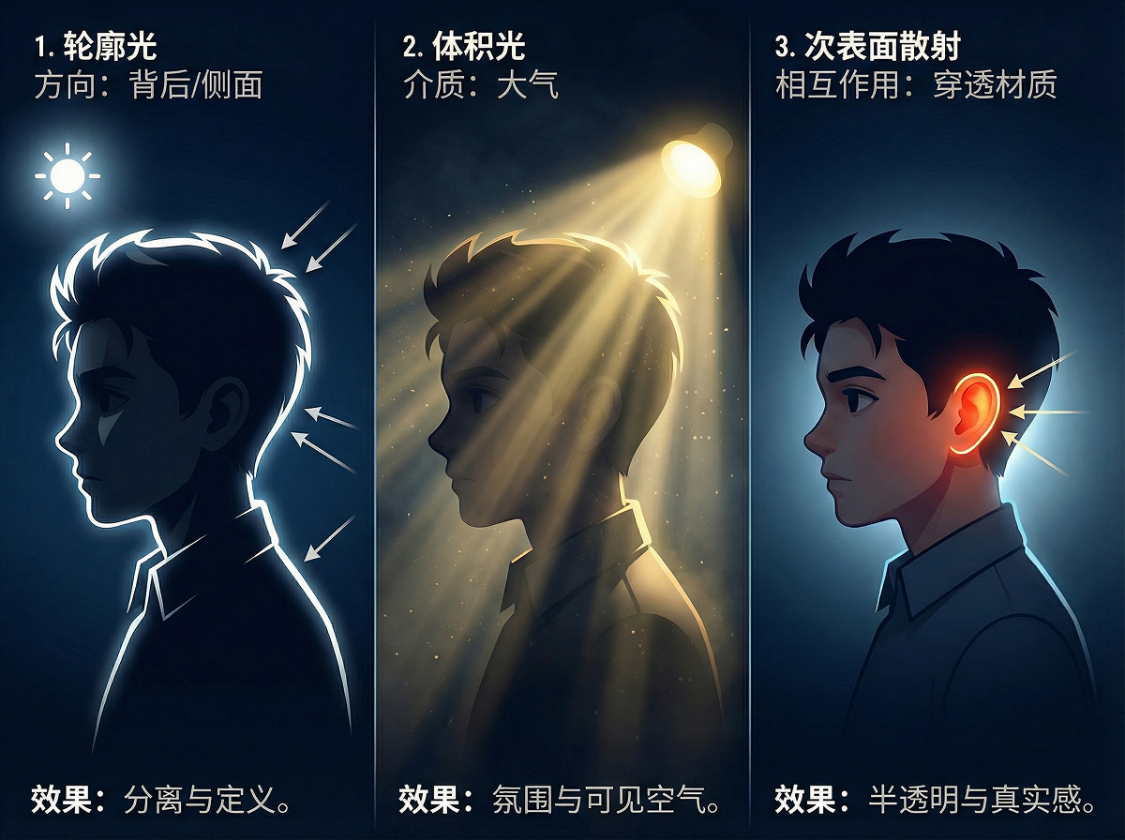
Directionality:
Rim Lighting: Squeeze the edge and strip people off the environment。
Volumetric lighting (heavy/dindal effect): increases the air sense so that the light is “visible”。
Subsurface scattering (subsurface dispersing): for humans or leaves in reverse light, the true sense of transparency。
Light versus contrast (Contrast Ratio):
Don't be afraid of the dark. Real images often have large dark parts。
Attempts to use Chiaroscuro (in this way) or Lowkey Lighting (lowlighting) to force AI to suppress the background and keep only key details。
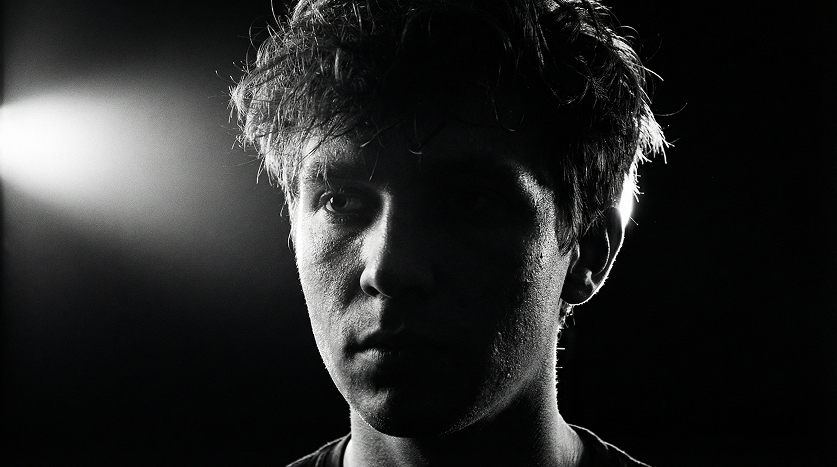
Practising:
One side of the face is revealing skin and water, while the other side falls into the pitch-black shadow.
(Spint Lighting / Harsh light source / Pitch-black shadow / Rim light)
3. Weather as an environmental state
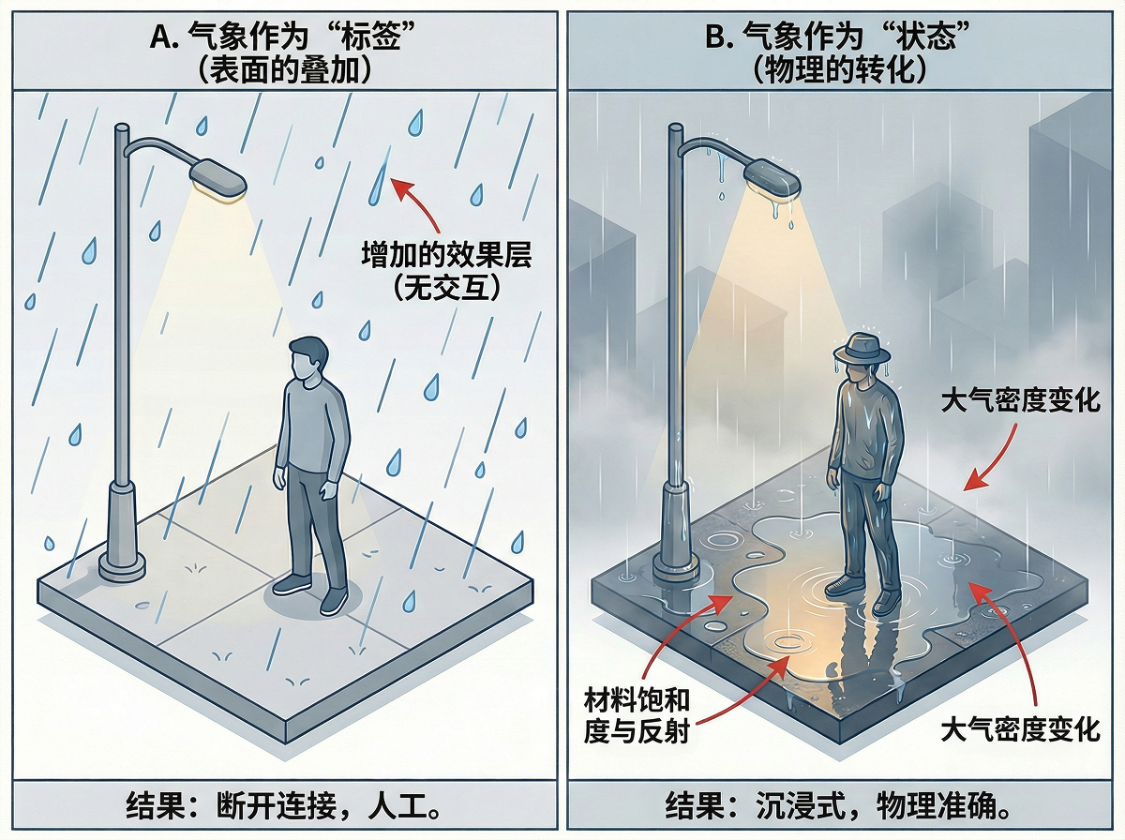
Weather should not be seen as additional information (Tag), but rather as part of the state of the environment (State)。
Not just "Raining":
Write about how rain changes the environment: Clothes soaked and clinging to the body。
Not just Windy:
The picturing of the wind: Trash flying in the turban air, Hair whipped across the face strongly。
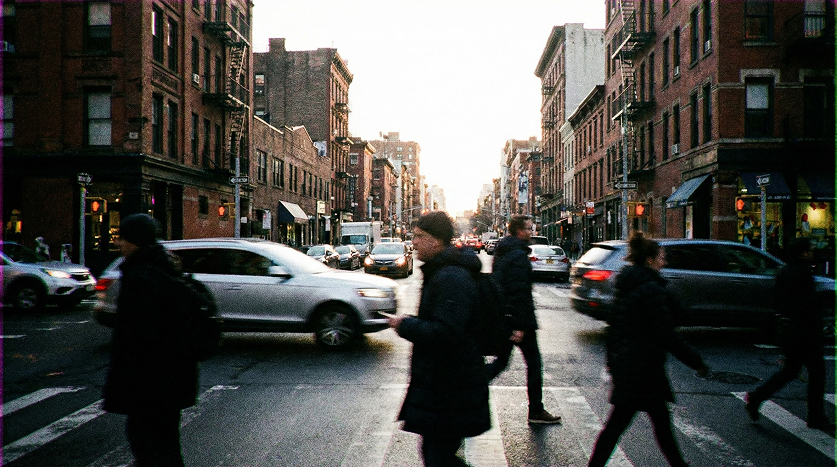
Practising:
The wind is very popular outside the girls' face, visiting her.
(Logical Keywords: Victoria Whipping / Flapping Wildly / Inverted / Expressing off / Soaked & Cling)

4. The aesthetic paradox of the real world
Finally, you have to understand that the real world does not exist for "good looking"。
Many AI beginners like to use it. But in real photography, the environment is often messy and imperfect。
Try to add the word "wrong":
Overexposed sky (exposed sky), Chrommatic aberration (colour differential/violet edge), Motion blur (mixed dynamic), Grainy film texture (film particle sense)。
THESE FLAWS ARE THE KEY SIGNAL OF THE HUMAN BRAIN'S JUDGEMENT THAT “THIS IS A PICTURE, NOT A CG”。
Conclusion: Environmental determinants of world credibility
Summarizing today's course, we no longer see the environment as a “filler”。
1. The spatial level addresses the false image of the plane。
Logical relationships resolve the fragmentation of elements。
3. The light weather gives the image a sense of breathing。
Even if there are no characters in the picture, a good environment itself should be “alleged”. It has a structure, a causality, a state. The environment is not a match, it is the cornerstone of the virtual world that you have created。
NOW, OPEN UP YOUR AL TOOLS, FORGET ALL THOSE FANCY QUALIFIERS AND START BUILDING A REAL WORLD。