



WITH THE EXPLOSION OF VIDEO GENERATION TOOLS SUCH AS DREAM AI, COVEN AND CONCH, WE FOUND A PAINFUL POINT: IT'S EASY TO CREATE A NICE FACE, BUT IT'S HARD TO MAKE IT "NATURAL" IN FIVE, 10 SECONDS OF VIDEO。
DOES THIS HAPPEN ALL THE TIME: DO YOU WANT A "SMUGGLE" VIDEO, AND THE RESULT IS THAT THE PERSON CREATED BY AI GETS BIGGER AND BIGGER, UNTIL HIS CHIN IS DISLOCATED, OR HIS FACE MUSCLES MUTILATE LIKE LIQUIDS
This is itAI video generationThe resulting bottom-level logical defect: it does not understand “restraint”。
In the video stream, excessive emotional commands (e.g. “Angry”, “Laughing”) are tried and strengthened by each frame of AI, resulting in an “emotional overload”, which collapses。
Micro-expressions are not just for real, but for “stable”。
TODAY, WE DON'T TALK ABOUT PICTURES, WE TALK ABOUT VIDEOS. WE'RE USING THREE CORE METHODS TO TEACH YOU HOW TO CONTROL THE "TRANSFORMATION" OF THE VIDEO MODEL WITH A HINT, SO THAT YOUR AI CHARACTER HAS A NUANCED ACTURE AND NEVER LOSES FACE。
Method I: Control of emotional intensity - “restraint” for “stability”
1.1 "Overload effects" of video generation
IN TODAY'S TOP TOOLS (E.G. DREAMAI, CLIN) WE RARELY SEE FACES BROKEN. BUT HAS ANYONE NOTICED THAT THE SMILE THAT AI PRODUCES, WHILE PERFECT, ALWAYS MAKES PEOPLE FEEL "FAKE," "GREASY"
When you write:
A girl laughing loudly
NOW THE AI MODEL PRODUCES A PERFECT SMILE, BUT THE PROBLEM IS THAT THE SMILE WILL REMAIN AT THE STRENGTH OF 100% FROM SECOND TO FIFTH。
WHEN A REAL HUMAN LAUGHS, THE FACIAL MUSCLES WILL HAVE A SLIGHT TREMOR, THE THORAX WILL RISE AND FALL, AND THE SMILE WILL FALL. BUT THE VIDEO GENERATED BY AI TENDS TO BE LIKE A “DYNAMIC MASK” — THE RADIANS OF THE MOUTH ANGLE, THE BENDS OF THE EYE BEING PRECISELY LOCKED TO DEATH. THIS LACK OF BREATHING) IS PERFECT, AND THAT'S WHY THE AUDIENCE RECOGNIZED "THIS IS AN AI VIDEO."。
CORE CONCLUSION: AI'S DEFAULT “MAXIMUM VALUE” DOES NOT BRING ABOUT A COLLAPSE, BUT RATHER A CHEAP “PLAYING SENSE”。
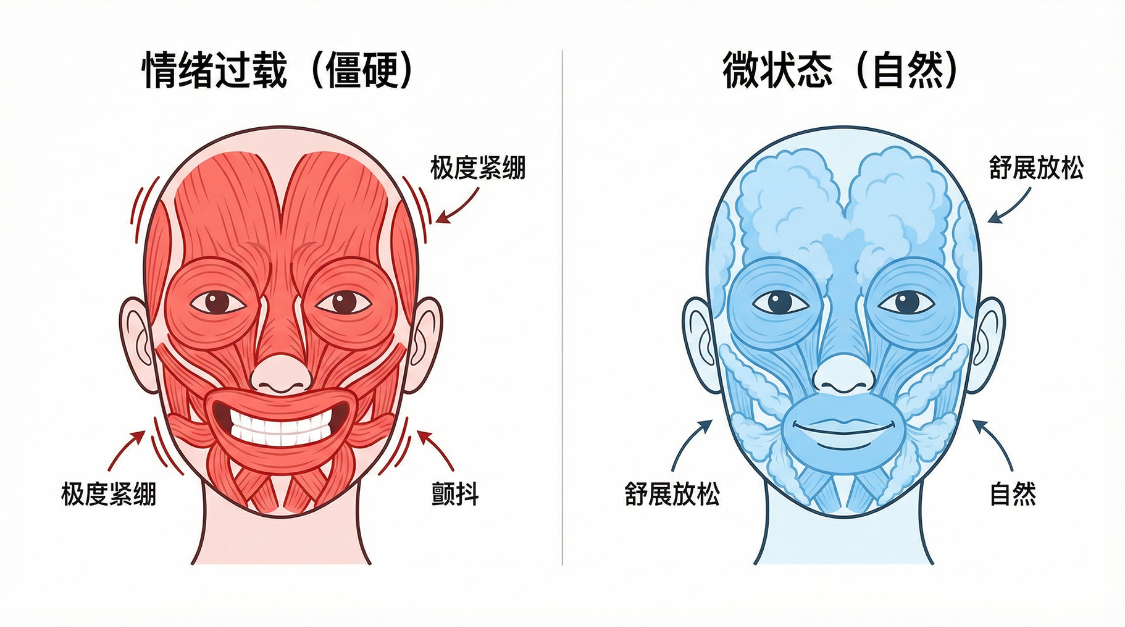
1.2 Demersal strikes: “Unfinished” for “real sense”
WE CAN'T LET A.I. DO THAT. WE MUST INTRODUCE UNCERTAINTY AND A SENSE OF RELAXATION BY ARTIFICIALLY “NOISE” IN THE HINTS。
Miswriting (caused greasy):
Beautified women are happy at the camera.
(Results: Looks like a model with a stiff, fake smile for advertising. I'm not sure
Correct (micro-expression path):
A former woman, could play on the lips, soft gaze, facile muscles relaxed, not posing.
copy
"A relaxed woman with a light smile on her lips, a soft look, a loose face, no tweaking"
FIELD DEMONSTRATION (DREAM AI/ CLIN):
Group I: video alerts for negative teaching materials
DESIGN LOGIC: THIS IS A HINT THAT 901 TP3T WOULD WRITE. YOU JUST TOLD AI, "SHE'S HAPPY," "SHE'S HAVING COFFEE." CONSEQUENCES: AI CAN'T FIND A FOCUS ON ACTION, BUT IT CAN ONLY MAKE PEOPLE LAUGH AT THE CAMERA, OR SHAKE IN THE AIR WITH A CUP, COMPLETELY WITHOUT LIFE。
Prompt A
The woman is drining Coffee and smiling happy
The problem is "state word": Smiling happy is a conclusion。
AI Reaction: In order to meet “Happy” and “Drinking”, AI usually keeps people in a cup-side position, with a stiff smile on their faces, neither drink nor drop。
Group II: video alerts for positive teaching materials
Design logic: We don't write "happiness," we write "drinking." Consequences: Only by describing physical actions can facial muscles be naturally carried out in a manner consistent with the movement. You'll see lips sprung to blow and eyelids plunging to feel the scent。
Prompt B
Then she does not drink yet.
The core is "microactions": Smell the aroma - >Eyes close - >Blows on stage (blowing)。
AI REACTION: AI WAS FORCED TO CALCULATE THE OSCILLATION OF THE NOSTRILS WHEN THEY SMELLED, THE SHAPE OF THE LIPS WHEN THEY BLEW. THESE PHYSICAL MICRO-ACTIONS, WHICH DIRECTLY ELIMINATE THE "FALSE SMILE," MAKE THE AUDIENCE FEEL LIKE SHE'S A LIVING PERSON。
A template for the reduction of emotional strength
Application of scenery: prevent greasy, stiff, high-profile faces. Core logic: replace the word “mixed” with the word “micro-modified”。
Chinese Filling Formula (Direct Copy):
[Personal description], [emotional] on the face with [slight words], mouth horns [mob movement], eyes [eye state], face muscles relaxed, no slapping, breath, real nature。
Fill in an empty vocabulary (reference):
[whispering words] faint, subtle, barely invisible, subpressed.
[felts]: smile (frowning), freown (frowning), smirk (smirk laughing), worry.
[ muscular details].
[easy] relaxed, breathing naturally, cdid.
METHOD II: A CAUSE FOR MICRO-EMOTICS — ELIMINATION OF "AI" WITH "PHYSICAL INERTIA"
2.1 Why do you have a video character like a "wire puppet"
Many people produce videos, people with faces, but feel like they're being held by a wire. Like you wrote:
Shey woman.
♪ The shy woman ♪
In the video, the woman would stare at the camera, and then blush, twist. This is terrible, because the face of a real human being is a “by-product” of a physical movement, not an independent one。
IN VIDEO PRODUCTION, IF WE ONLY WRITE AN EXPRESSION, AI FAKES FACIAL MOTION; BUT IF WE WRITE AN ACTION, AI PRODUCES AN EXPRESSION BASED ON HUMAN MOTORS。
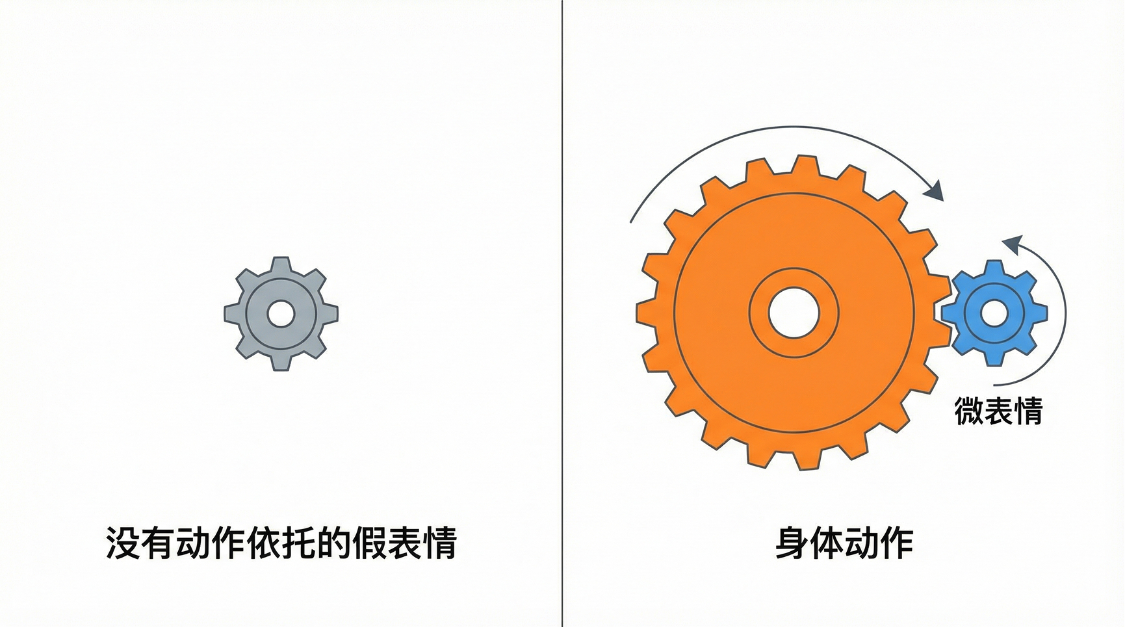
2.2 Action-driven method
Formula: body micromove + vision shift = real microexpression
Case: Showing “weakness”
Only expression:
The woman is shy and looking directly at the camera.
This woman is shy, looking at the camera. She smiled shamelessly at the audience. She kept her eyes open all the time. The head is still, only the facial expression is changing。
Principle: Although it's written, because it keeps looking at camera and doesn't write anything else, AI understands "weak" as a static twist, and people stare at the viewer's face, which is very unusual。
Add action cause and effect:
She somehow lowers her head to avoid eye contact.
She was shy. She immediately bowed her head to avoid sight. Her eyes look down and she looks up to the side. She took her chin and bit her lower lip. She's afraid to look at the camera。
Principle:
We added shy, but then we took it with lowers her head and avoids eye contact. The advantage of this: AI knows why she's "heading down" (because she's shy) and the low-head movement that's generated is more subtle and softer than mechanical。
Application of scenes: prevent the “wielding puppet feeling” so that people stop staring at the camera and have body language. Core logic: Action in front, expression in back。
Chinese Filling Formula (Direct Copy):
At the beginning of the video, the person is in [start state: calm/deep]. Then, [the trigger action/change occurred], the eyes [reacted]. Finally, the face appears slowly [end state: emotions]。
Fill in an empty vocabulary (reference):
[hands/heads] scratching back of head, fucking hair behind ear, rubbing eyes, looking down at phone.
[voiding eye contact].
[inducing expression] nevous smile, relieved look, confuted frown.
Method III: Timing of emotions — “temporal thinking” using video models
3.1 Video is the art of time
This is the hard part of the curriculum today. Method three is the fundamental logic that distinguishes video generation from image generation。
PICTURES ARE STATIC, VIDEOS ARE MOBILE. IF YOU GIVE VIDEO AI A STATIC DESCRIPTION (E.G., "HE'S SAD" ), AI DOESN'T KNOW THE DIFFERENCE BETWEEN ONE AND FIVE SECONDS, SO IT CAN ONLY DIE。
The essence of microexpressions is Change. We need to write the timeline in Prompt。
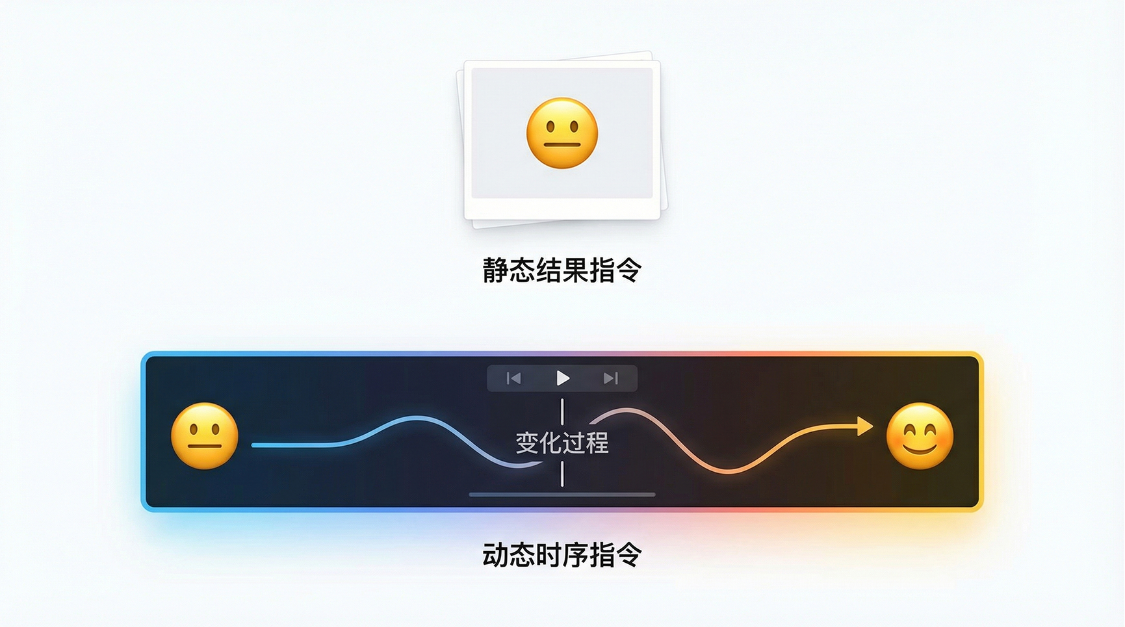
3.2 Dynamic evolution
The current top-of-the-art tools can best understand the “process description”。
Formula: Start (start state) - > Transaction (change action) - > End (final microexpression)
The design of the play: a film shot with a lot of relief. From serious reflections to deep breaths, and finally a soft smile for thinking about something。
Prompt:
The world starts with the man having a sense of security, gazing into the situation.
Phase one (Start): maintaining a secure... expression -- anchoring the initial frame, tell AI not to move。
Phase two: cuts eyes... takes a deep view of the heart! The physical actions of “close eyes” and “deep breath” cut off serious emotions and paved the way for transformation。
Phase three (End): faint, assisted smile slowly forms -- this last smile only looks like flesh and flesh, not like a fake one。
Applies to scenes: Generate highly emotional video clips to prevent the images from still moving。
Core logic: Start state - > Trigger action - > Final result。
Chinese Filling Formula:
At the beginning of the video, the person is in [start state: calm/deep]. Then, [the trigger action/change occurred], the eyes [reacted]. Finally, the face appears slowly [end state: emotions]。
Fill in an empty vocabulary (reference):
[State A]: new expression, slepting face, bred look.
[ triggering] : eyebrows suddenly raise (brows suddenly up), popils dilate, takes a deep breath.
[Stand B]: warm smile (smokes warmly), rocked expression (shocking), tear falling.
Course summary: Video Prompt's philosophy of "reduced"
CLASS, MAKE AN AI VIDEO, "SLOWER, MORE, STEADY."。
CONTROL INTENSITY: DON'T LET AI DO ITS BEST TO LIMIT ITS PERFORMANCE AND PREVENT FACIAL DAMAGE。
Action attribution: To "take" instead of "show" expression, with physical actions such as scratching, bowing, avoiding eyes。
Time sequence: Describe the process of emotional change, not the outcome。
Now the video tools (i.e., dreams, covens, conch) are already very powerful, and what is lacking is not the ability to calculate, but to learn how to use words to guide their "receiving" directors。
IT IS HOPED THAT YOU WILL TRY TO GENERATE A VIDEO CLIP AFTER SCHOOL, “NOT ONLY WITHOUT A BIG LOOK, BUT ALSO TRYING TO COVER IT UP.” IF YOU CAN DO THIS, YOU'LL HAVE THE HIGHEST MIND METHOD OF THE AV MICRO-IMAGE。