



I find that many creators who use top tools like Nano Banana Pro and Midjourney have fatal misunderstandings about the atmosphere
For example, to create a picture, you want it to be warmer, or the first reaction of most people, more depressed:
Add Warm tone directly to the hint or Depressing vibe
This is completely wrong order logic
In the potential space of AI (Latent Space), the atmosphere is not a filter that can be stacked with a single key。
The aesthetic atmosphere of the real world is made of three extremely critical physical and visual layers: bright and dark (light), cold and warm (colour), false (focal)
IF YOU DON'T BREAK THE ATMOSPHERE INTO SPECIFIC INSTRUCTIONS FOR THESE THREE DIMENSIONS, AI WILL USE THE MOST MEDIOCRE "AVERAGE ALGORITHM" TO TRICK YOU。
TODAY WE START FROM THE BOTTOM OF THE LOGIC AND TEACH YOU HOW TO GIVE THE REAL SOUL TO THE IMAGE OF AI WITH THE RIGHT HINT STRUCTURE。
Method I: Control Darkness - Abandon adjectives and shape physical skeletons
The most common hint for many people is misdirected: replace “physical light” with “emotional adjective”
When the newcomers want to add "pressive, lonely, deep" to the picture, the 90% people will be crammed with emotional adjectives in Nano Banana Pro or Midjourney
They're trying to move a cold code in a human language
[Performing new hand complete error alert]:
A portrait of a man sitting in a room, sad atmosphere, depressing dark vibe, global food, highly detailed, 8k, masterpiece.
a man sitting in a room with a portrait, a sad atmosphere, a sense of suppression of darkness, a dim mood, extreme detail, 8k, masterpiece. i'm not sure
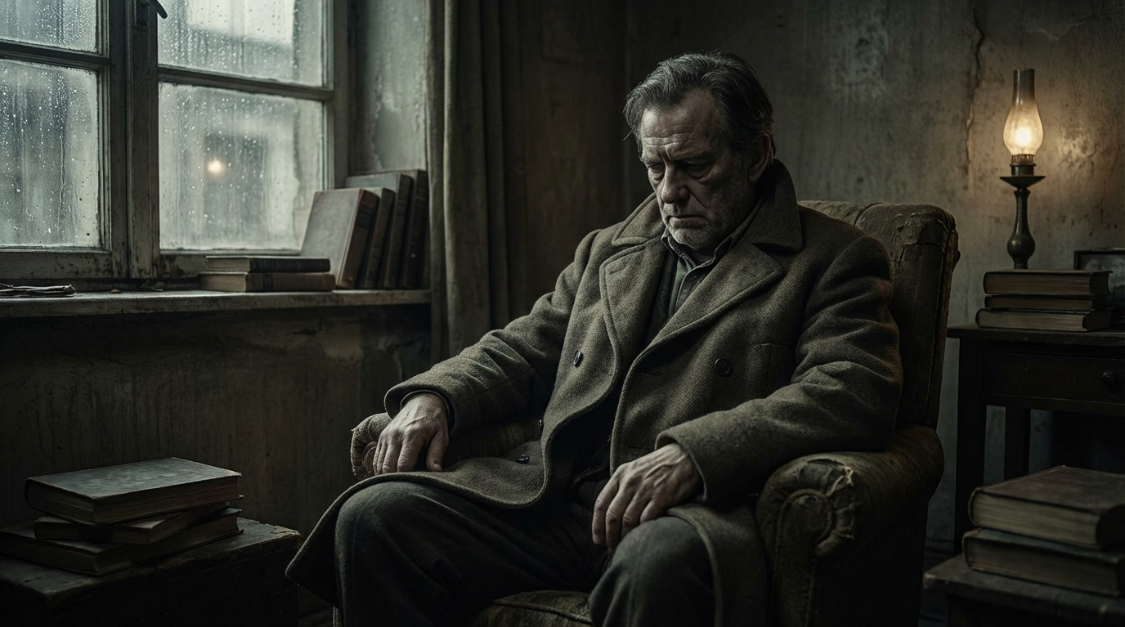
(phone generated under nano banana)
When you enter this hint, hoping to get a big, philosophically depressed piece, reality tends to pour you cold water
2. Why is this happening
Why can't AI understand what you're writing about "Depressing" and turn the picture to ashes
Behind this is an extremely tight algorithm that conflicts with aesthetic mechanisms:
AI ALGORITHM (THE "AVERAGE RETURN" OF NOISE REDUCTION):
The bottom logic of the diffusion model (Diffusion Models) is "details from the noise". In order to ensure that the resulting image is “clear and correct”, AI's default algorithm has an extremely strong “retention detail constraint”。
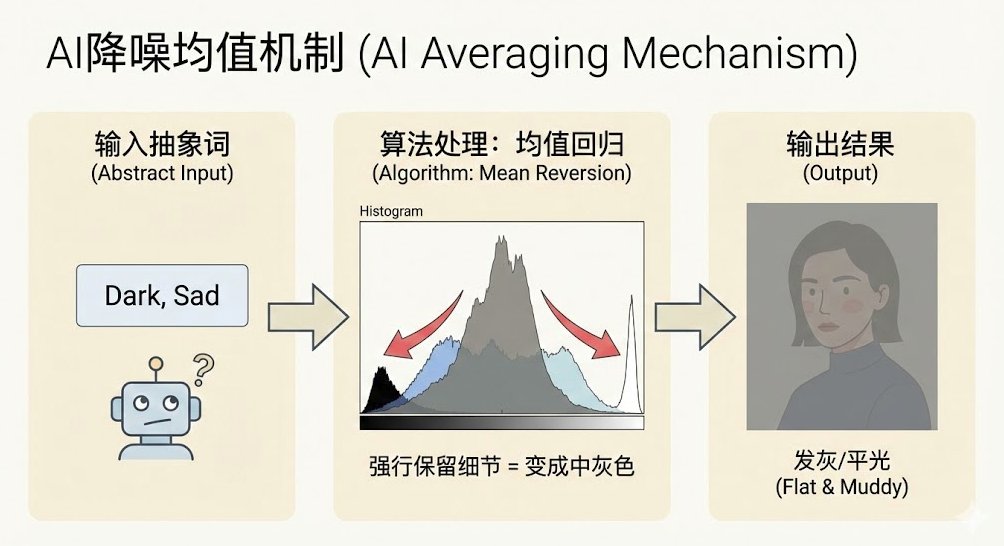
When you enter the dark vibe, the algorithm, in order not to turn the dark side of the image into a dead black, uses the most lazy global dimension reduction strategy - the RGB brightness value of all pixels of the image, which averages down 301 TP3T。
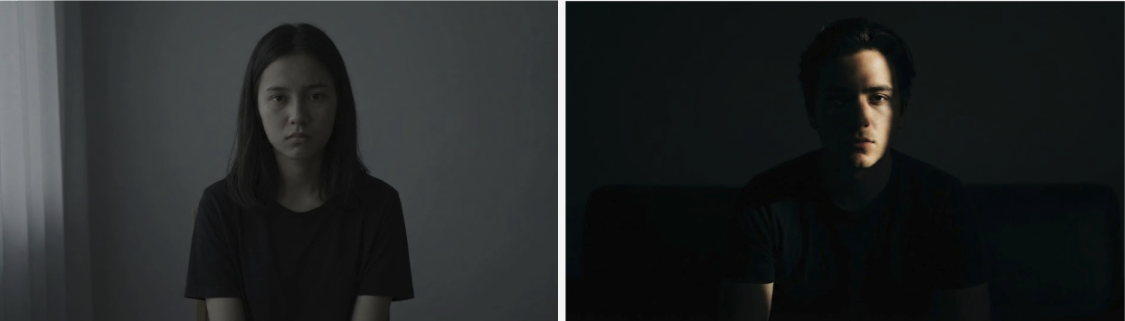
(left graph resolution):
It uses emotional adjectives such as sad, dark, gloomy, and AI, in order to show “darkness”, reduces the overall brightness, but does not create a light contrast, leading to ash, flatness and lack of tension。
A portrait of a person sitting in a room, sad atmosphere, dark vibe, global food, flat lighting, low contrast, Grey tones
(right graph resolution):
physical descriptions such as chiaroscuro (invisible contrast) and single dramatic spotlight (single dramatic spotlights) are used in the hints. in contrast to a strong ray of light, the large dark part of the picture creates a deep, depressed and highly film-sensitive atmosphere。
Cinematic portrait of a person sitting in a dark room, long chiaroscuro lighting, a Single dramatic shootlight from the side.
Real aesthetic mechanisms (no comparison, no emotions):
In photography and film aesthetics of the real world, the "dark" itself is not emotional, and the "light and dark cutting" is emotional。
Examples in real life:
Imagine a basement with a dark, ageing fluorescent lamp on its head and a whole room. Even when the light is dark, you walk in there and you just feel like, "This place is a bad place to shine, and you feel like you're asleep and you don't feel good."
The reverse scene: this basement. We smashed the fluorescent lights completely. And then you make a tiny hole in the wall, and you let an extremely sharp and obstinate ray of sunshine fall into the dark like a sword and light up only a broken wooden chair in the middle of the basement
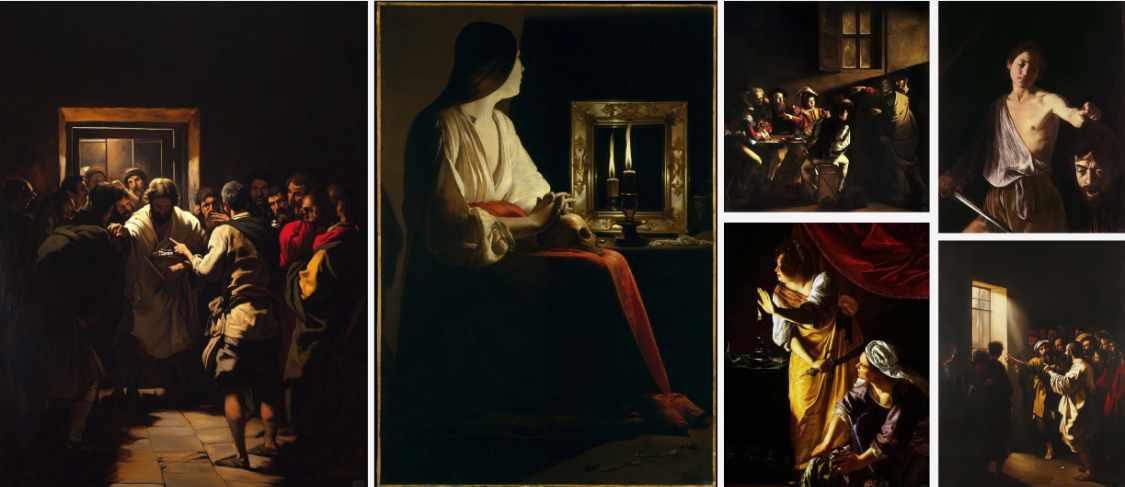
"The dark contrast in classical oil paintings"
At this moment, did the atmosphere of “pressure, sanctuaries, loneliness, cinematicism” blow up in your head? This is the dark contrast in the classical paintings. Emotional drops, always at the intersection of light and shadow。
The correct method: “Creating a abyss, stinging a source of light” like a movie lightman
We know the bottom logic, and when we write the hints, we have to get rid of the useless emotional words of Sad/Depressing
You'll have to use the physical word "Lighting Setup" to force interference with AI's "average algorithm" and force it to create dead black
The correct hint structure must contain two hard-line instructions:
SETS AN ABSOLUTE SHADOW OVER A WIDE AREA (FORCED TO TURN OFF THE AI GLOBAL FLASH)
Sets a clear source of extreme stingy light
[Professional full text (reforms the case above)]
Cinematic portrait of a man sitting in a room. ** High control, chiaroscuro lighting, masterpece, 8k. Image 80% immersed in a heavy, deep shadow of death. A sharp, dramatic flashlight was fired from above, lighting only the texture of half his face and coat. Hard contrasts, light-and-tan, masterpieces, 8k. I'm not sure
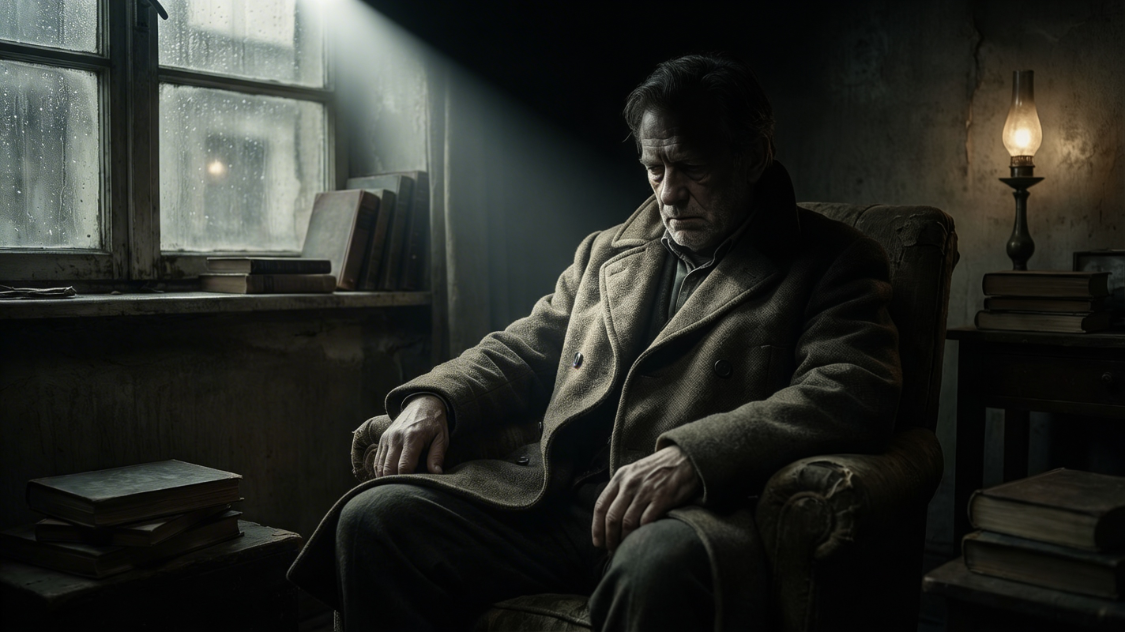
image by nano banana
AI WAS FORCED TO TURN OFF THE GLOBAL LIGHT. THE BACKGROUND MELTS IN DEEP, HIGH BLACK, AND THAT LUMINOUS LIGHT CARVES OUT HALF THE FACE OF A MAN。
At this point, you don't have to write any "sorture" in a hint, and people can feel the loneliness and depression that deep into the bone marrow。
Because you recreated the emotional skeleton of the image with physics。
Control the dark and bright
Next time you need to set a deep emotional tone for the image, stop entering adjectives and apply this bottom formula:
+
submerged in deep pitch-black shadows / subrouted by absolute darkness.
clear light source description: a single sharp spotlight / a dramatic rim light / a narrow beam of light.
High-comparison term (triggering the AI film emptiness engine): High contrast, Chiaroscuro.
AND WHEN YOU LEARN TO GIVE ORDERS TO AI LIKE A LIGHT MAN, YOUR PICTURE IS REALLY "FILM-CLASS."。
METHOD TWO: DISMANTLING THE WARM COLOURS -- REFUSING TO LET AI BE THE COLOR MASTER
One of the most frequent hints of many people is misdirected: greedy “colour piles”
When many newcomers try to add "richness" or "higher sense" to the picture, the most lethal mistake is:
In the same hint, insert all the colors and light you can think of。
THEY HAD THE ILLUSION THAT AS LONG AS I PUT IT ALL IN COLD LIGHT, WARM LIGHT, ENVIRONMENTAL COLOR, AI WOULD AUTOMATICALLY HELP ME TO PULL OUT BIG HOLLYWOOD COLORS。
[Performing new hand complete error alert]:
A finematic shot of a girl in a Cafe, warm sunlight, cool blue environment light, rich colors, atmous detail, 8k. I'm not sure
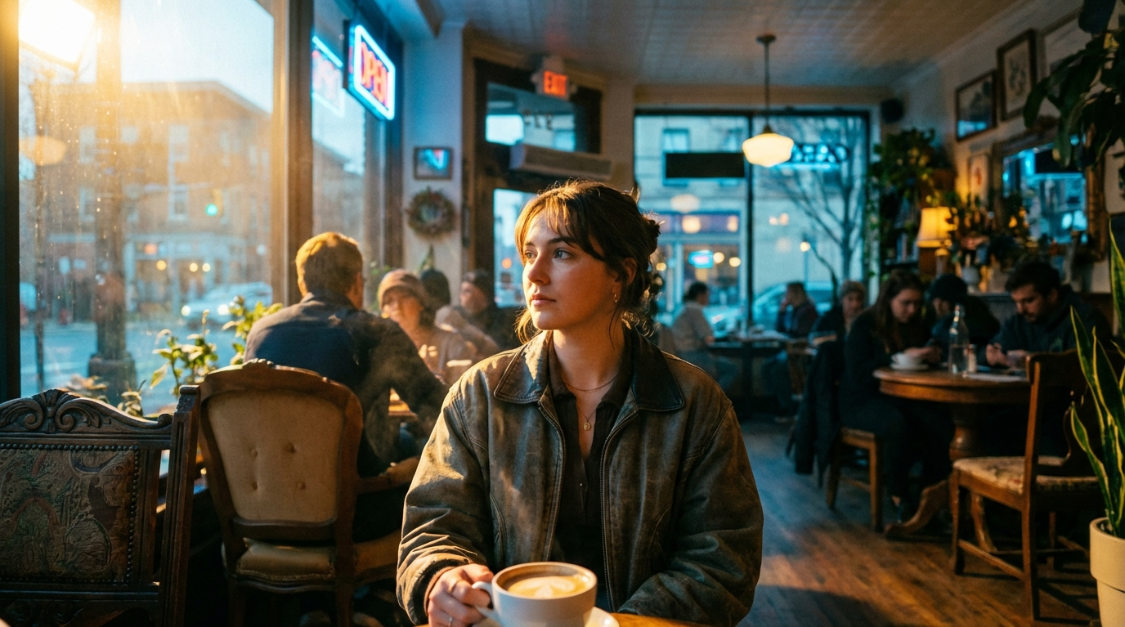
image generated in nano banana
When you enter this message with great expectation, you get a picture that is not only low-level, but rather a "dirty":
The color of the image is like a dish that has been smashed and is not cleaned. The girl's face is marked by a flash of yellow and a dark and strange blue light。
The color purity of the whole picture is extremely low (grey, brown), which is called "Color Pollution."
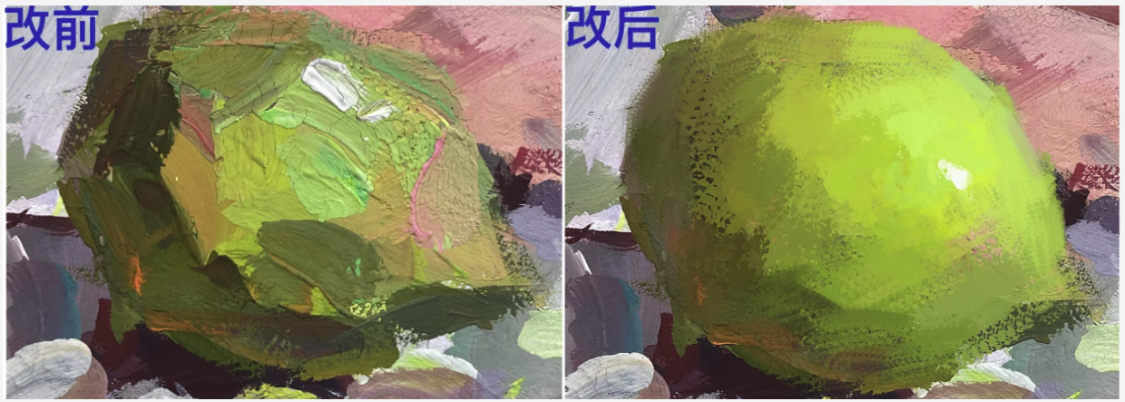
"A classic case of obnoxious color"
The deadliest is: no emotion
2. Why is this happening
WHY WOULD AI PAINT A GOOD COLOR "DIRTY"? BEHIND THIS IS THE CLASH OF HUMAN AESTHETICS:
Real aesthetic mechanisms (color must have an absolute “class”):
In real-life professional photography and cinematography (Color Grading), colour is the dominant class, with no priorities, no emotions。
Why is this scene beautiful? Because it's got the absolute primary color of Key Color -- most of the area of the picture is dominated by a warm, obscurant orange golden sunset
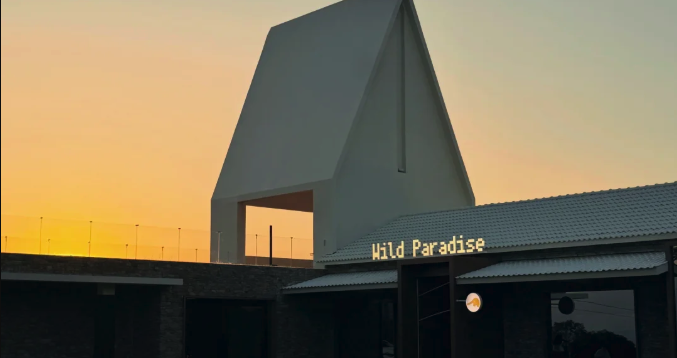
Café in reality
And where's the blue sky outside? It, as an accompaniment of the Fill Color, displays a faint, cold blue reflection only on the edge or in the shadows。
IF COLD AND WARM IS REALLY 50% FOR 50% EVENLY IN AUTUMN (E.G. A BIG, WARM LITTLE SUN ON THE LEFT SIDE OF THE ROOM AND A COLD BLUE HOSPITAL WITHOUT A SHADOW LIGHT ON THE RIGHT) THIS IS DEFINITELY NOT AN ATMOSPHERE。
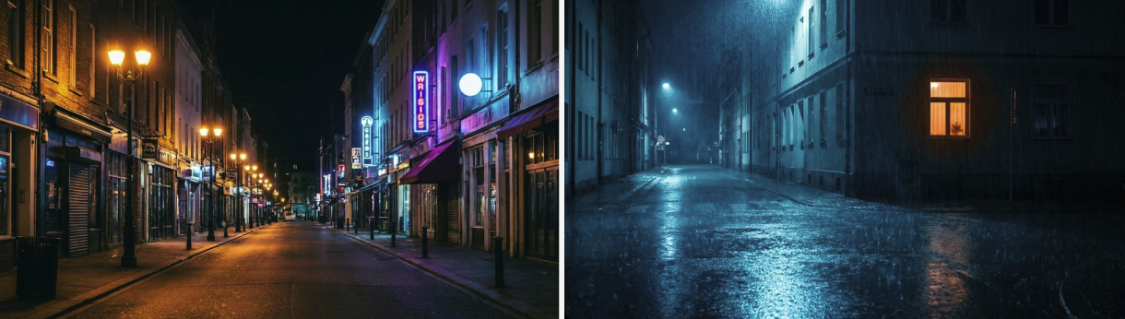
And, for example, this classic example, shows how to create a clear atmosphere by establishing a dominant and complementary tone, avoiding colour disorder。
Left graph resolution:
THE HINT DESCRIBES BOTH WARM AND COLD, BUT DOES NOT DISTINGUISH THE MAIN. AI DISTRIBUTES THESE COLOURS EVENLY, RESULTING IN A TUMULTUOUS IMAGE, WITH NO UNIFORM TONE AND MOOD。
Phrasing:
A first scene at night with warmstreetlights and cool signs, many different colours moving together without a dominant typographical color.
Right diagram:
The main and supplementary tone is specified in the hint. The large-scale cold tone creates a cold, humid atmosphere, and a warm window is a dotted dot, creating a clear warm contrast, giving the picture a visual center and an emotional drop。
Phrasing:
A beautiful scene at night, Dominicaned by the cool blue light, with a single warlight or light light from a window breaking a long color.
Correct methodology: establishment of absolute “colour dictatorship” and “micro-vulnerabilities”
KNOWING THIS BOTTOM-UP LOGIC, WE HAVE TO FORCE THE "EXTREME COLOR" ACT OF DEPRIVING AI OF IT WHEN WE WRITE A HINT。
You have to grade the color in the language like a strict art guide:
Who is the head of the mood? Who's the weak patch that's been pushed so hard that he can only stay in the corner
we need to introduce quantitative control terms such as dominated by, subtle/faint
[Professional full text (reforms the case above)]
On the other hand, the most powerful shadows in the background contain a very subtle, effective cool tasting. The whole scene is strictly ruled by a rich, warm golden moment. Only in the deepest shadows of the background, there is an extremely subtle, weak, cold, blue reflection. Koda Portra 400, film-level color, masterpiece. I'm not sure
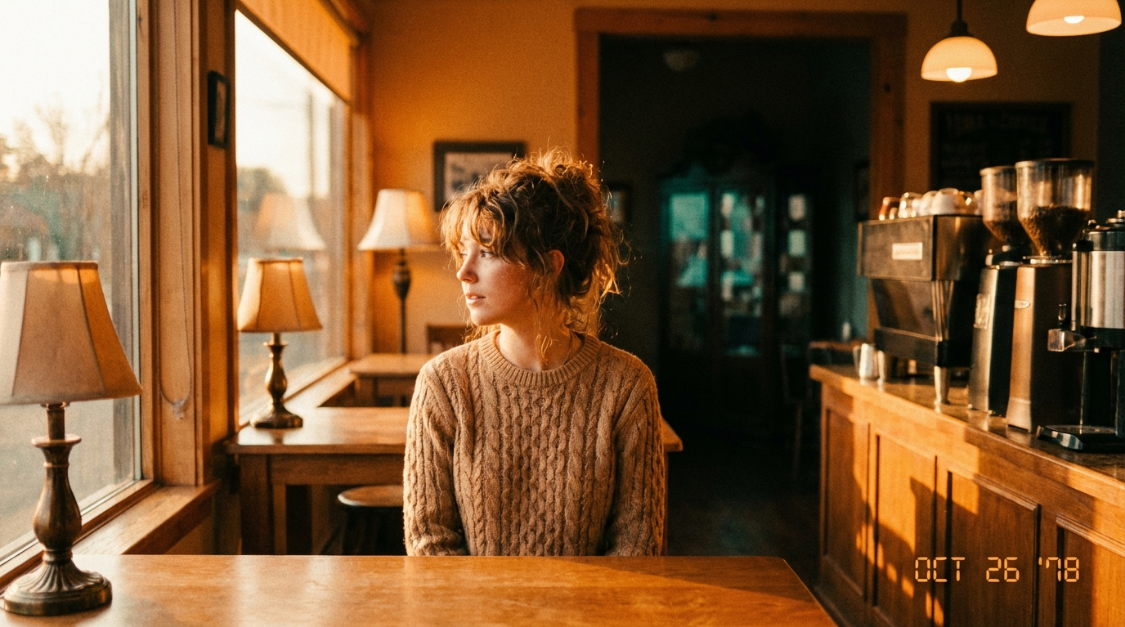
image generated in nano banana
THE “WARM, NOSTALGIA” MOOD OF THE IMAGE WAS IMMEDIATELY ESTABLISHED. AND THAT COLD, DARK REFLECTION, WITH ONLY 10%, NOT ONLY LEFT THE PICTURE CLEAN, BUT OPENED UP THE SPACE LEVEL OF THE PICTURE, CREATING THE MOST CLASSIC "ORANGE, BLUE" SENSE IN THE PROFESSIONAL FILM INDUSTRY。
That's the advanced aesthetics of algorithms
Wrap-up: Control of the cold and warm
Next time you want an advanced color atmosphere, stop placing colours and apply this formula directly:
The entire scene is targeted by + main color/ main mood
main-telephone reference: dominated by warm amber light / dominated by melancholic cool blue light.
Only the deep shadows / Only the rim of the glass.
tiny complementary reference: a low cool real reflection / a subtle warm orange light photo by @leave.
AS LONG AS YOU USE THIS LANGUAGE LOGIC TO TEACH AI THE DISTRIBUTION OF WEIGHTS, YOUR IMAGE WILL ALWAYS BE PURE, HIGH-LEVEL AND DIRECT。
Method III: Control Focus & Depth - Focus visual narrative
One of the most common hints of many people: blind pursuit of “full-screened”
991 TP3T'S STARTERS ARE ALL FALLING INTO THE SAME TRAP
They thought, "The more details the picture, the higher the quality, the better the atmosphere."
So they always have this "All-powerful spell" in their hints:
highly detaied, heavily detaied background, intercate details, harp Focus on everything, 8k, 16k, UHD.
(in chinese: high detail, super-detailed background, complex details, full picture with clear focus, 8k, 16k, super-high resolution. i'm not sure
[Performing new hand complete error alert]:
A lonely girl walking in a rainy city street at night, highly detached buildings, Sharp Focus on rain drops, Sharp Focus on background, intice neon signs, 8k, masterpiece. I'm not sure
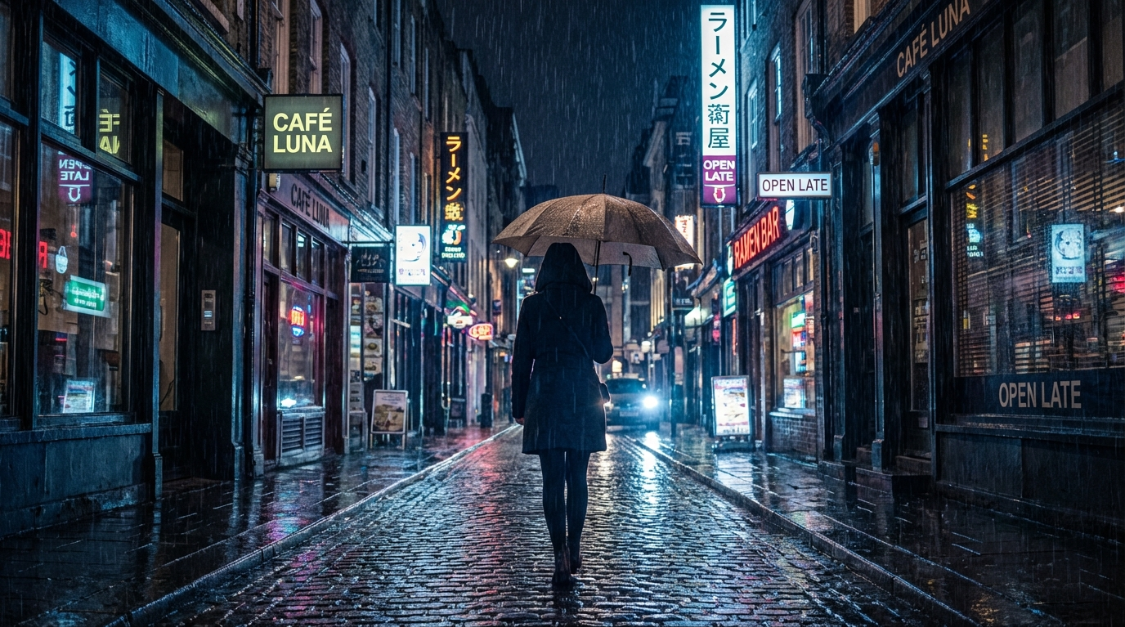
(show in nano banana)
When you asked AI “sharp Focus on everything”, you personally killed the atmosphere of the image
You'll find that the eyelashes of prospective girls are clear, the drops of rain falling around are clear, and even a billboard at the end of the street is sharp。
And because there's no real change in what's near and far, the character is like a "paper man" who's been cut off in the background
Because when everything matters, nothing matters。
It's only for game scene art. It's totally out of the picture
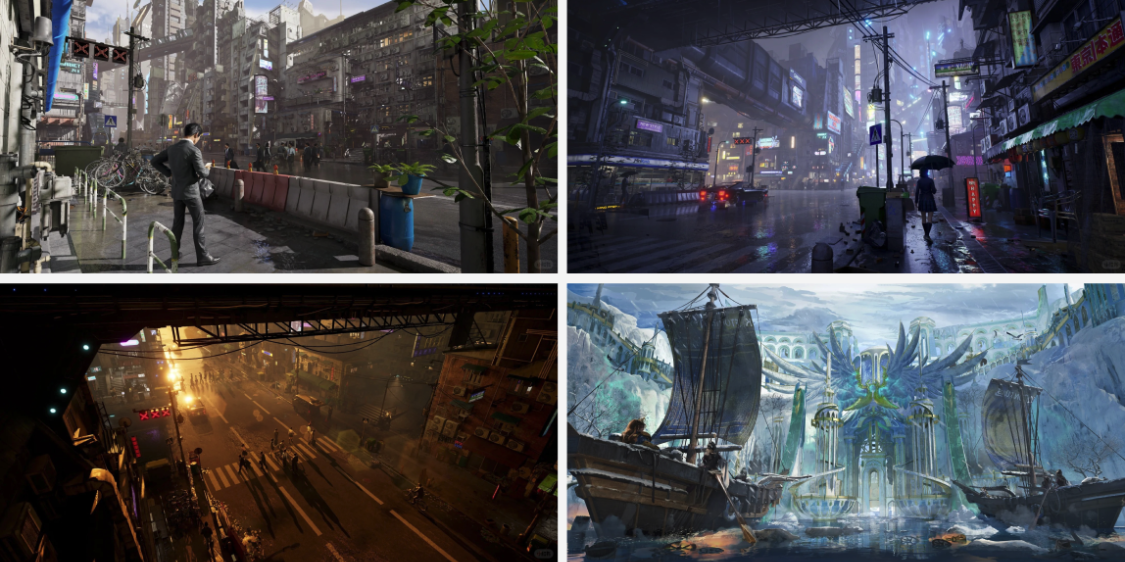
If you want to do the art game scene, it's a little interesting
This is a huge conflict between algorithmic instincts and human vision:
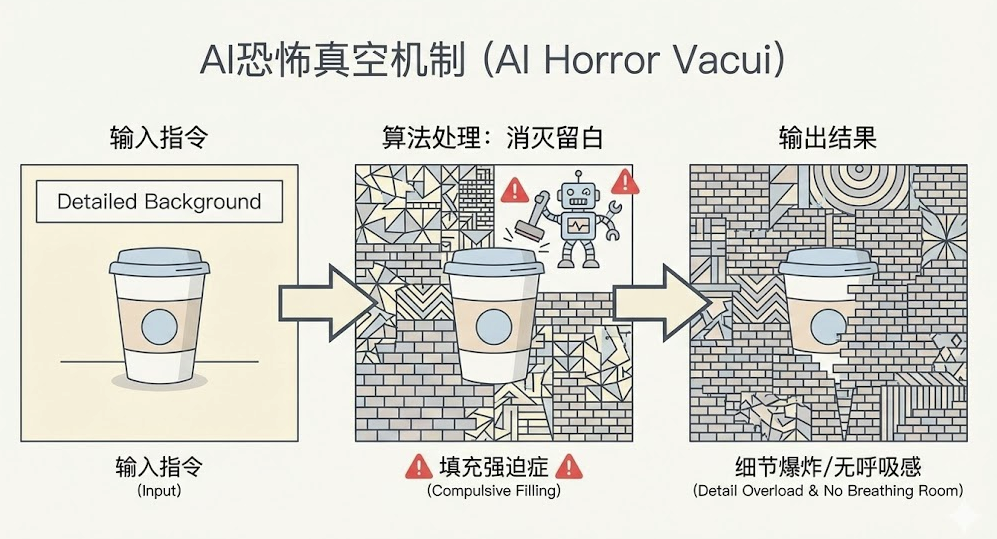
Algorithmic mechanism (terror vacuum Horror Vacui):
The Diffusion Models generation process produces meaningful pixels from a random noise。
ALGORITHMS HAVE A “FILL-UP CONSTRAINT DISORDER”. IF NOT LIMITED, AI WILL TRY TO FILL EVERY CORNER OF THE PICTURE WITH IDENTIFIABLE TEXTURE AND DETAILS。
It doesn't know what it means to be white, or what it means to be air。
as long as you write, detailed background, it'll hate to figure out the texture of every brick in the background
Real aesthetic mechanisms (one cannot see the world together):
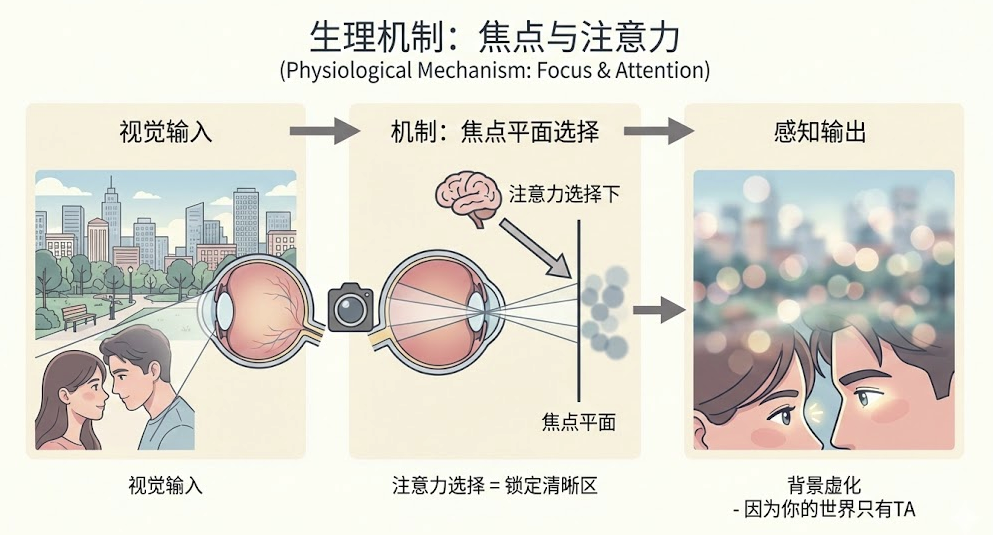
The physical nature of the atmosphere is actually optical。
Physical mechanisms:
Human eyes have a Focus Plane as well as a camera. When you look into the eyes of your lover, the world behind you must be blurred. This ambiguity is not because you can't see well, but because you're here。
Narrative mechanisms:
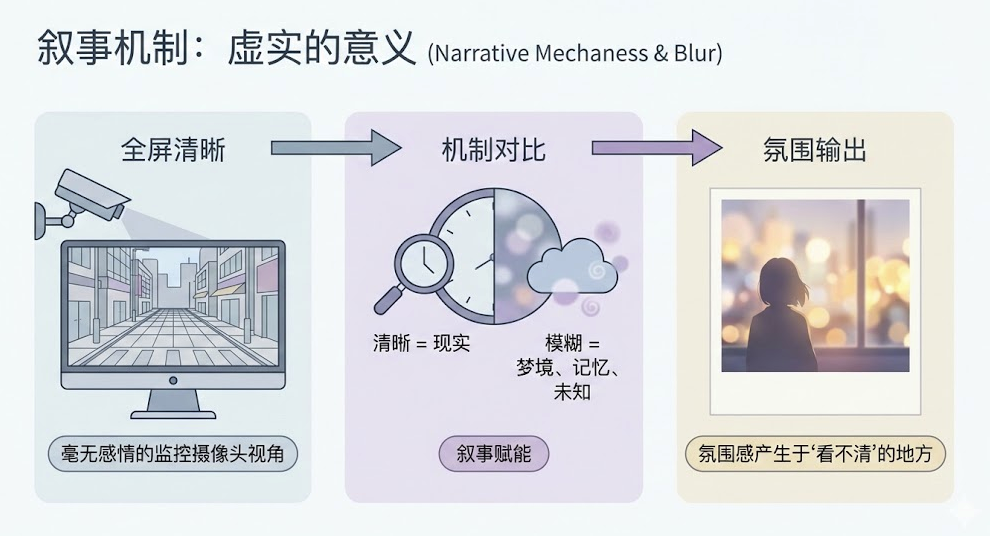
The atmosphere is often the result of “discovery”. Clear for reality, vague for dream, memory or unknown
Full screen clear = unemotional security camera view。
The right way: Guide the sight with an optical focus
TO GET THE AI CHART TO HAVE A MOVIE SENSE, YOU HAVE TO LEARN TO DO SUBTRACTION。
We need to introduce the terms "Aperture" and "Depth of Field" in photography。
IF YOU WANT TO SAY "THE WORLD HAS NOTHING TO DO WITH ME," YOU NEED TO BE VERY SHALLOW。
[Professional full text]:
Linematic shot of a lonely girl walking in rain. **Shot on 85mm lens, f/1.2 opture. **Dreamy atmosphere. (Chinese interpretation: film lens, lonely girls walking in rain) 85 mm lens, f/1.2 arc. Deep down. Girls are extremely clear. The entire urban context is completely defunct into an abstract cold blue spot. Dream atmosphere. I'm not sure
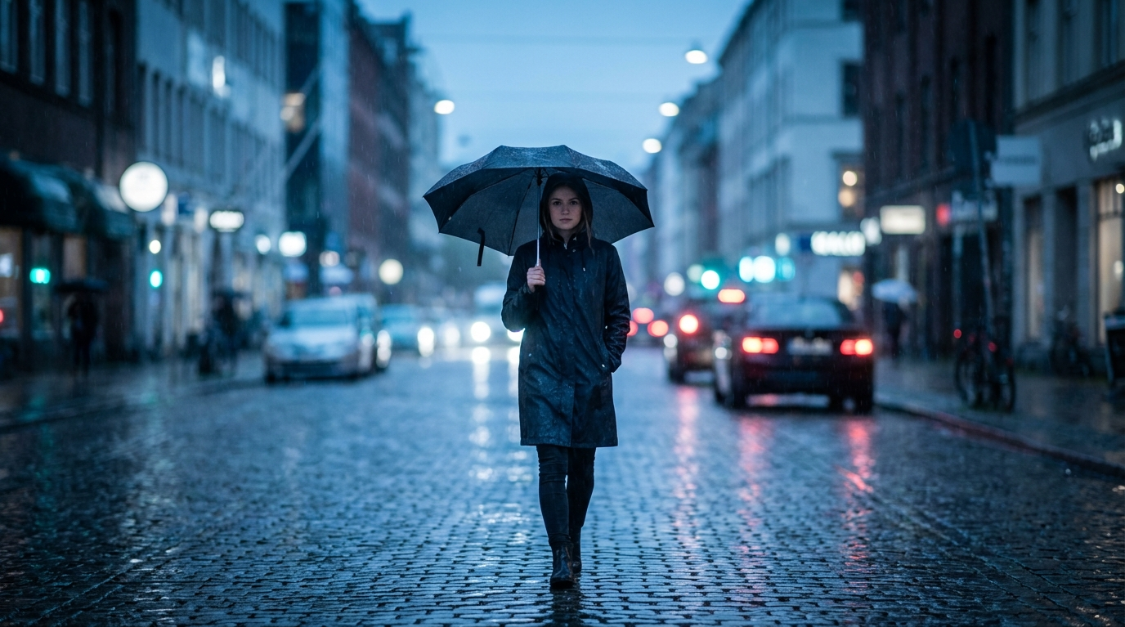
(the expression in nano banana)
IF YOU WANT TO SAY "I'M DROWNING IN THE WORLD," YOU CAN DO THE OPPOSITE。
[Professional full text]:
The opening buildings and signs are sharp and overhelming. Deep view. The oppressive buildings and neon lights are clear and suffocating. The girls in the centre are slightly obfuscated and integrated into the population. Lost, lost time. I'm not sure
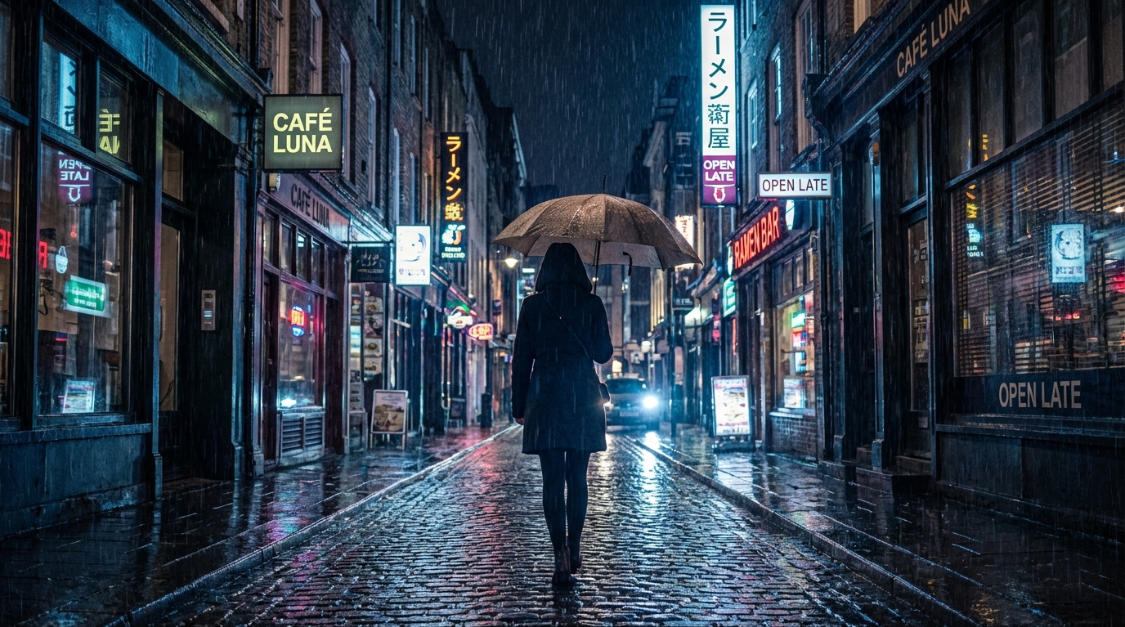
(the image in nano banana)
Error method (full focus/high detail): Image message explosion, long eyes. No focus, like an information chart, no emotional fluctuations。
The correct method (control of impurities):
The shallow vision: the background is a beautiful light, and the viewers are physically locked into the eyes of the girl, and there's a strong sense of intergenerational input。
Dynamic fuzzy solutions: a fluid, unsettled emotional oil。
That's the power of "false story" -- you decide what the audience looks at, doesn't look at what。
Wrap-up: Controlling false [focal narrative formula]
Next time you feel too "dry" and too "fake", check if the background is too clear. Then apply this formula:
[Scene/Aperture Arguments] + [Maximity Clarity Description] + [Background Fusion Description]
Shot on 85mm f/1.2 (fiction lens) / Macro lens (microrange) / Tilt-Shift (movation axis/small human sense).
Subject description: Subject in sharp eye.
Background description: Blured background / Creamy bokeh / Motion blur.
Core Common Formula
Bones:
[Media and main area] + [false control area] + [black and dark control area] + [cold and warm colour area] + [painted suffix]
Area 1: [Media and Subject]
command format: [articular form/scenario] of [subject detail description], [environment setting] i don't know.
Replace Thesaurus:
Cinematic photography / Commercial fashion editoric / Macro product shot
Artistic style: Anime style, Makoto Shinkai Aesthetic / Surrealist summer fashion / Wes Anderson style
Zone Two: [False Control Zone]
Command format: Shot on [focal arguments]. The subject is [subject clarity] while the background is [background defiction].
Replace Thesaurus:
focus on/solvency (slight view): 85 mm lens, f/1.2 impact + background completely blued into soft bokeh
14 mm wide angle lens, f/16 + everything in sharp focus from forward to backward
To get lost/move (move dynamic):
Zone Three:
Command format: [dark scale/environment light setting]. A [photo-source nature].
Replace Thesaurus:
Deep/high (low-key lighting): 80% submerged in deep shadows (80% immersed in a dark shadow) + a single dramatic spotlight (single dramatic spotlight) + Chiaroscuro, High contrast (obscurant and dark, high contrast)
Battered in soft, diffid imbent light + bright light bright mirrors the whole room (light brightness) + High-keylighting, low contrast
Subject is silhouetted against the bright background
Zone Four:
Only catch a subtle.
Replace Thesaurus:
film is nostalgic: mediumd by warm gold and aber parette (the warm gold/ amber rule) + subtle cool equipments in shadows
colder by melancholic cool blue and cyan
extremely simple/molandi wind: + a single pop of vibrant red
WHEN YOU USE THIS TEMPLATE TO GET A RUN, YOU'LL FIND THAT AI SUDDENLY BECOMES VERY "BEHAVED."
It no longer fills the details in a mess, does not mix the colours into mud, does not give you that gruesome light。
Because it's stuck at the bottom of your optical, color, photography
THE SO-CALLED ATMOSPHERE IS NEVER THE MAGIC OF AI, BUT THE ABSOLUTE CONTROL THAT YOU, AS AN CREATOR, HAVE OVER THE PICTURE, WHICH IS DARK, WARM AND FALSE。
AND REMEMBER, DON'T RECITE THE ADJECTIVES. BY WORKING ON THIS FRAMEWORK, YOU CAN BE THE TOP DIRECTOR OF AI'S VISION。