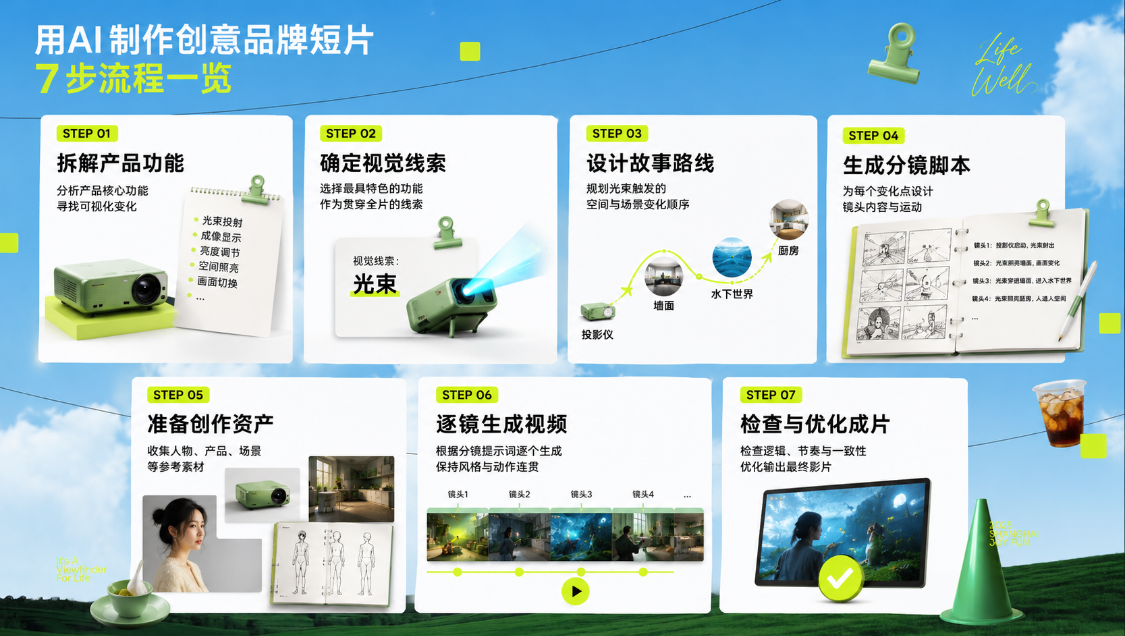



FOR THE FIRST TIME, MANY PEOPLE USE AI TO MAKE SHORT FILMS, AND THEY FOCUS ON "IMAGES CAN BE SO FANTASTIC" THAT THEY FLOAT, EXPLODE, DEFORM, AND ADD A LOT OF PARTICLES, LIGHT AND FAST-TURNING. SUCH IMAGES MAY BE POPULAR, BUT THERE IS OFTEN A PROBLEM — THE AUDIENCE REMEMBERS THE EFFECTS, NOT THE PRODUCTS。
The real effective brand idea is not to put a story on the product that has nothing to do with it, but to find a story from the original function of the product. Lighting equipment has changed to dark, coffee machines have turned raw materials into drinks, cleaning tools have restored chaos and sound has created rhythms in quiet spaces. As long as this “change” is refined and continues to develop in multiple lenses, the product function can be transformed from a narrative to a visible experience。
THE CURRICULUM WILL PRESENT AN AI SHORT-FORMULATION METHOD FOR MOST PRODUCTS: DECOMPOSE THE PRODUCT FUNCTION BEFORE CHOOSING VISUALIZEABLE THREADS, DESIGN A COMPLETE COURSE OF CHANGE, AND THEN GENERATE SPECTROSCOPY, IMAGE AND VIDEO. YOU DON'T HAVE TO GET TO KNOW COMPLEX ADVERTISING THEORIES FIRST, AND YOU DON'T NEED TO START WITH A LONG HINT. IT'S REALLY IMPORTANT TO THINK ABOUT EVERY STEP, SO AI KNOWS WHO'S IN ACTION, WHERE THE ACTION IS, WHAT IT TRIGGERS, AND WHY THE NEXT MIRROR IS。
I. The idea of a short brand film, why start with a product function
A short film answers at least two questions: what is the product and why it is worth remembering. Common product presentations are good at answering the first question, such as displaying appearances, keys, use methods and results; creative short films are further transforming functions into emotions, actions or scenarios that allow the audience to feel while understanding the product。
The special effects themselves do not accomplish this automatically. If a coffee machine suddenly floats in the universe, it has nothing to do with it, it's just a visual packaging. In turn, if coffee fragrances pass through the room like a warm tan mist, and rejuvenating where they go, each image is magnifying the product's “awakening state”。
The idea can be examined with a simple test:
Will the story be complete after the product is removed
If the answer is “Yes”, stories and products may simply appear in parallel. The good idea is not to show the product in the story, but to make it the story。
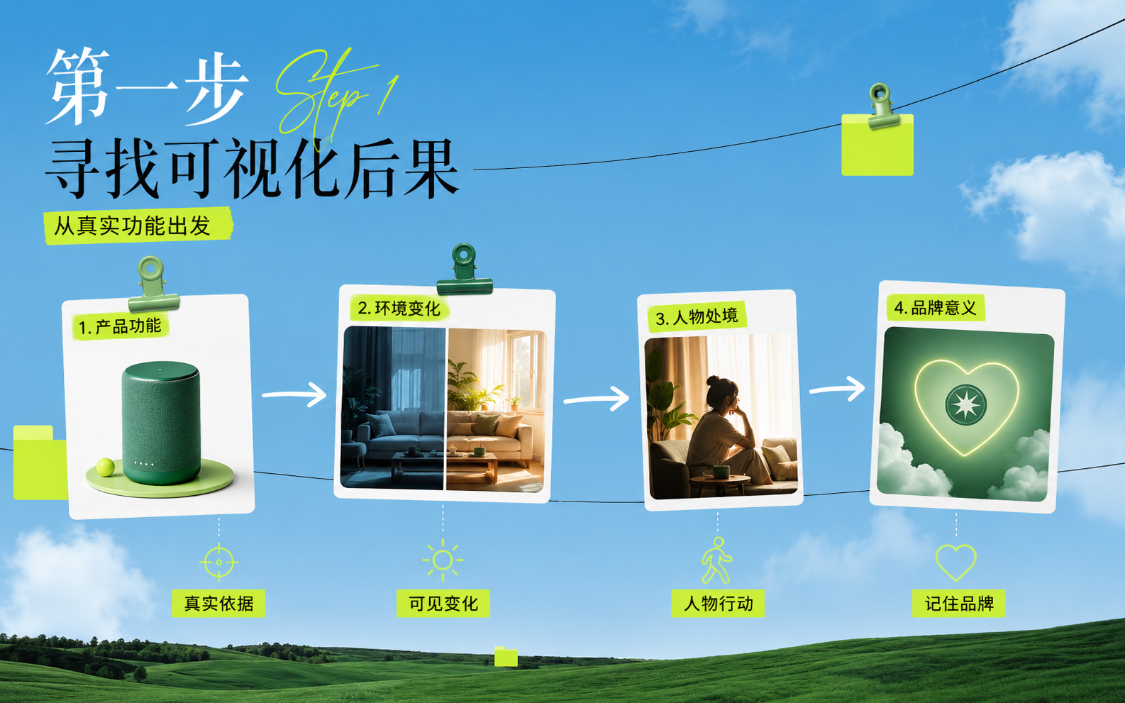
Step 1: Dismantling the product into “visible change”
Branding can be driven by the impact that products have on life. Real functions provide the basis for stories, and changes in people and the environment provide narrative space. The creators need to continue to observe: who is affected by the product, which object, which relationship, which emotion or which world rule。
The task of the first round of analysis was to establish a complete value chain:
The real product is based on changes in the outside world and the situation of people is affected by brand values being seen。
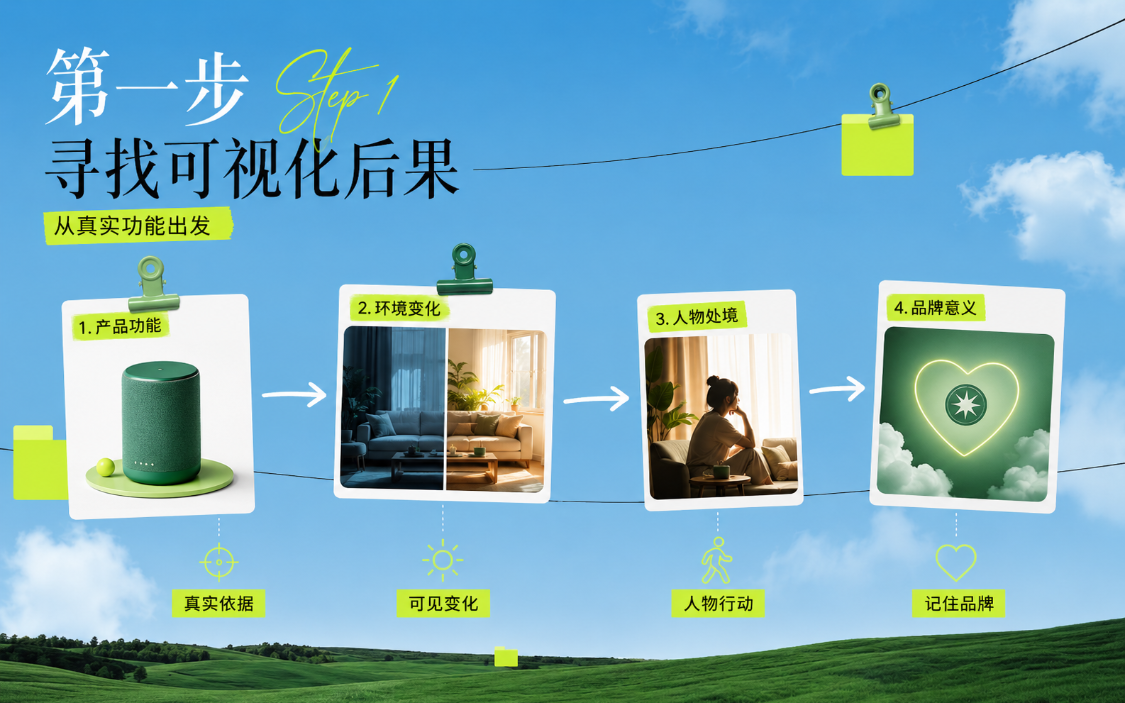
Ideas can be found at four levels:
Product layer: what happens to the product itself, such as light, colour, wind, image or cleaning
2. Environmental layers: how the surrounding objects, colours, sound, space and order are changed
3. Class of person: what changes have occurred in the person ' s actions, relationships, identity, emotions or dilemmas
Branding: These changes ultimately convince the audience of what the brand represents。
In the case of lipstick, for example, the ointment turns out to be a product, and the red lips are dyed as a result of the use; by extending the "upholstery" to the hotel as a whole, you can design a story of red disappearing, people looking for answers, and a painting to restore the red. The eyes of all end up on the person, and the color is further linked to confidence, existence and appeal. For projectors, beams can change rooms or lead people into another world, thereby extending imaging functions to exploration and imagination。
Brands, audiences and advertising targets are completed when product charts, instructions, brands and functional presentations are prepared. The following hint is used to comb the facts of the product, its external influence, the position of the person and the significance of the brand, and to screen the visual parentage that is appropriate for developing into a short film:
You're a brand creative director and visual director. I'm gonna plan one for the next product
Creative shorts with full story logic。
This step should not lead to the writing of scripts or to the stacking of special effects. From the real function of the product, please
Using scenes and brand values, the search for “the visualization of the product when it enters life” is being carried out
It has been developed into a visual theme that can carry brand expression。
"Signature Information"
– Brand name: [insert]
– Product name and type: [insert]
– Core function or selling point: [insert]
– Target audience: [insert]
– The brand value the audience will remember:
– Short film purpose: [new product release/brand recognition/functional dissemination/festive dissemination, etc.]
– Expectations:
– Projected duration and painting: [e.g. 30 seconds, screen 9:16]
Analysis mission
Please follow the following four levels for creative opportunities:
1. Product layer: what is the real function, use action and direct result
2. Environmental layer: which objects, colour, light, sound, space or day-to-day order the product changes
3. Class of person: how such a change affects the person ' s actions, relationships, emotions, identity or position
Branding: This change can prove what the brand represents and how the audience feels。
In particular, look for the following types of story mechanisms:
- Zoom in: extend a small result to the entire space or the world
– Transmission: the same change affects different persons or objects in turn
– Missing: the value of the product disappears from the world
– Recovery: return of lost colours, sound, order or state of order when the product appears
– Inverted: the audience misunderstood the anomaly and finally discovered that it was related to the product
– Relationship change: the product creates new connections, attention or action between people。
Creative transformation requirements
Continue to judge each candidate change:
– It is directly related to which real product function
– Who or what was changed
– What specific impact the change has had on the person
– It translates into some kind of visual clue across the film
– What anomalies, conflicts or tasks will arise if it is magnified from everyday phenomena into stories
– Why do people have to act
– The product will be the starting point, the promoter, the solution or the end result of the story
– How to return naturally to product and brand value at the end
– What is most likely to be remembered by the audience when it's finished。
The real product is based on the changing situation of a changed person or environmentalally visualized person
PART II: SCREENING OF 3 SHORT BRANDS; EACH DIRECTION CONSISTS OF: 1. CREATIVE NAME; 2. CREATIVE CONCEPT OF A SENTENCE; 3. ANOMALOUS OR PROBLEMATIC IN THE STORY; 4. VISUAL CLUES THROUGHOUT THE FILM; 5. HOW THE PRODUCT PROMOTES OR SOLVES THE PROBLEM; 6. BRIEF LINES FOR THE BEGINNING, DEVELOPMENT, ORGASM AND END; 7. HOW THIS DIRECTION STRENGTHENS BRAND MEMORY; 8. WHY IS IT APPROPRIATE TO BE MADE INTO AN AI SHORT SET OF IDEAS。
PART III: RECOMMENDED CONCLUSIONS RATE FIVE ASPECTS OF "BRAND RELEVANCE, IMAGE RECOGNITION, STORY CONTINUITY, AI DIFFICULTY OF IMPLEMENTATION, END-RECYCLING CAPACITY" AND RECOMMEND ONE OF THE MOST WORTHY DIRECTIONS TO CONTINUE TO DEVELOP THE COMPONENT LENS。
[Limitations] – No functional creation of the product that does not exist; – Mechanical changes in the product itself, such as lights, rotations, switches, need to continue to be extended to the environment, character or relationship level; – No unrelated explosions, floats, particles and deformations as alternatives to creativity; – No product is considered a last-minute common proprietors; – All exaggerated changes must be traced back to real function or brand value; – If information is insufficient, please list the missing information and do not add to the facts。
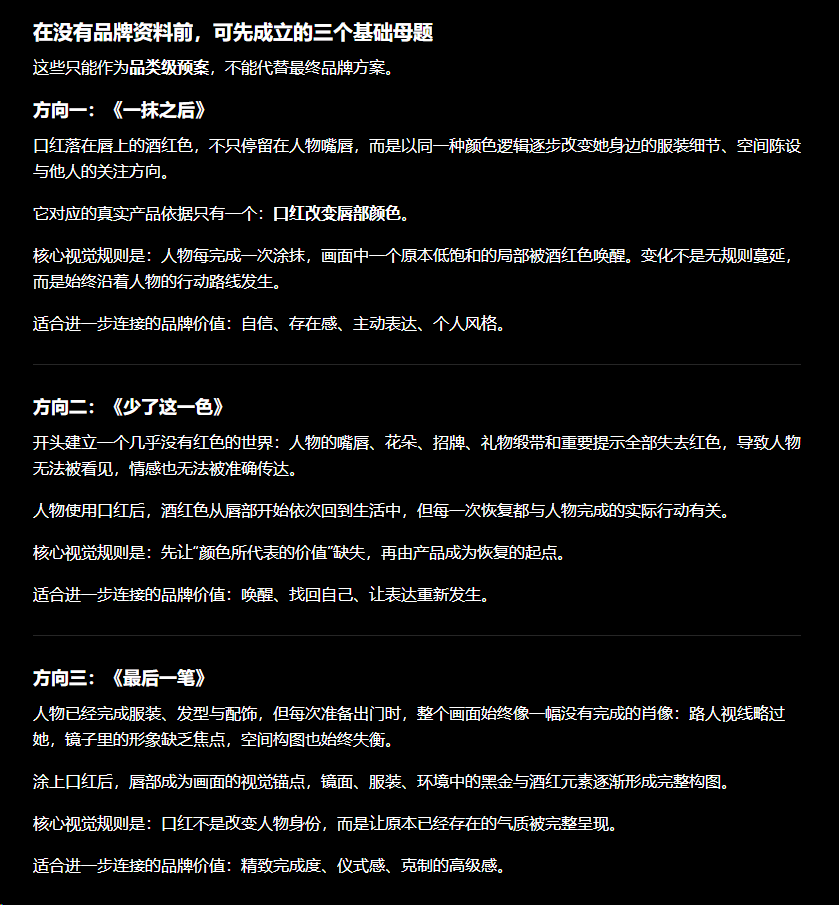
A.I. GAVE ME A FEW IDEAS
The “brand creative opportunity table” connects four key messages: “real product basis” to ensure that creativity is a product, “visualized consequences” to provide a picture, “person situation” to produce stories, and “brand significance” to establish a link between product and audience memory。
Finally, it is up to the creator to choose the direction. Five things are judged: whether the product is the cause of change, whether it affects the world beyond the product, whether the person needs to act, whether the story is sustainable and whether the end is a return to brand value。
Step two: turning the function into a visual clue through the entire film
Visual clues are re-emerging, constantly driving images. It can be a light, a wind, a drop of water, a sound, a crack, a colour, or a continuous object. It's not decorating, it's a "wire stick" between the lenses。
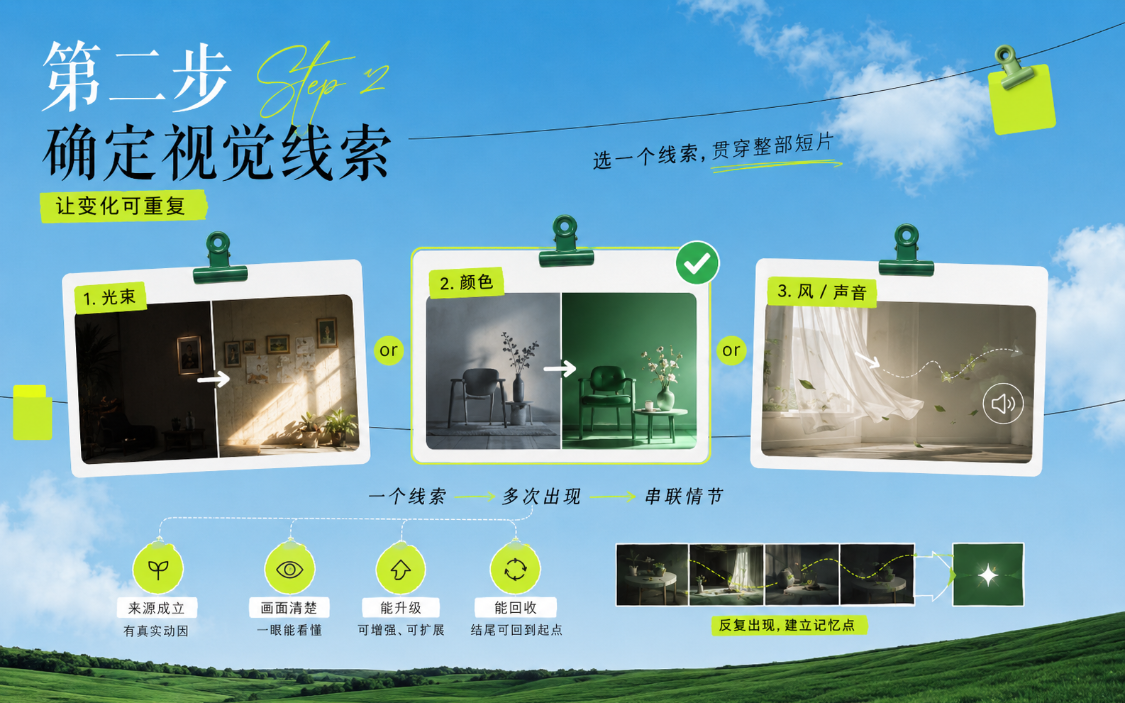
When identifying visual clues, it can be judged in four ways:
1. Whether the source is established: whether the clue can be naturally derived from product function, use perception or brand characteristics
2. Whether the picture is clear: what visible changes will occur in the person, object or space after its appearance
3. Whether the story can develop: whether the same rules of change can be repeated, upgraded or reversed in different lenses
4. Reclaimability of brands: Can the end lead to a renewed sense of what products and brands want。
The four were used to determine whether a visual clue was worth continuing. Specific ideas still need to be chosen in combination with products, audiences, cultural contexts and stories。
Visual clues can be either positive or reverse. The way forward is to allow light, wind, colour or sound to move from product to product and constantly change the surrounding space; the way back is to let some critical feeling leave the world before the product is the answer for restoring it. For well-colored cosmetics, “lost colour” tends to create suspense more easily than “enhanced colour”。
Note here that visual clues must preserve the functional logic of the product. Cleaning products can remove stains, but they should not cause buildings to collapse for no reason; projecting devices can give new images to the wall, but should not suddenly become vehicles unrelated to the display function. Imagine can be bold, and cause and effect must be clear。
Paste the “Recommended Direction Card” as a whole from the first step in the following message. The second step will determine what visual clues are used in this story, how they are repeated, and how audiences recognize the same rules of change。
Following is the first step in identifying the recommended direction for short brand films:
Paste Recommended Orientation Card
Please maintain the basis of the product in this card, brand value, story issues and the role of the product
Designing 3 visual threads for the same creative direction。
Each programme description:
1. What is the visual clue
2. The basis on which it is linked to the real product
3. The state in which it first appeared or disappeared
4. Which persons, objects or spaces it affects in turn
5. Which rule of change is repeated each time it occurs
6. How the middle segment should be upgraded to avoid mere mechanical duplication
7. When the product intervenes and changes the outcome
8. How to return to brand value at the end
9. MAIN DIFFICULTIES IN THE GENERATION OF AI VIDEOS。
Compare 3 scenarios, select the clearest, most branded, most easily continuously generated, and output the final results in the following format:
Visual Thread Definition Card
Visual Thread: Real Product Basis: Brand Meaning: Initial Status: Affected Object: Fixed Change Rule: Upgrade: Product Intervention: Final Recovery or Result: End Brand Image:
The original orientation of the first step should not be altered and the functions not available in the product should not be added。
The real case: when the red in the big hotel disappears
The short lipstick was chosen not for the ordinary demonstration of “the lipstick is coloured on the lips”, but to magnify the red from the product into the visual order on which the hotel is based. The short film first shows the red shade and then turns it from red to white; then objects such as strawberries and front doors lose red. Audiences can understand the rules by repeating changes even if they have not seen the product: red is disappearing from here。
The entrance shroud began with the creation of a “Redness of the Hotel”。
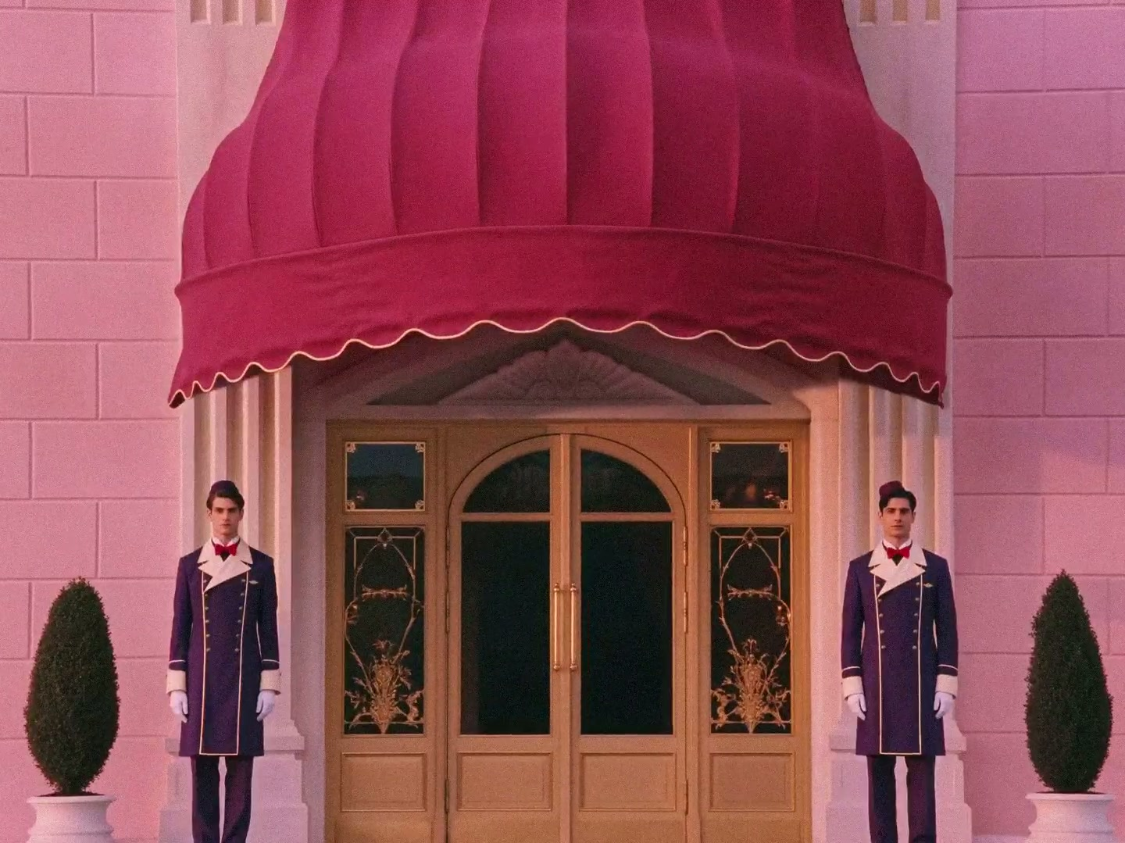
The same image only changes the shade color. It's very clear
The hotel staff then took a product box to the dressing room. Women open boxes, take out red and finish a painting. This action is both a real use of the product and a solution to the situation. The lipstick appeared later, but all the colourless lenses had accumulated value for it。
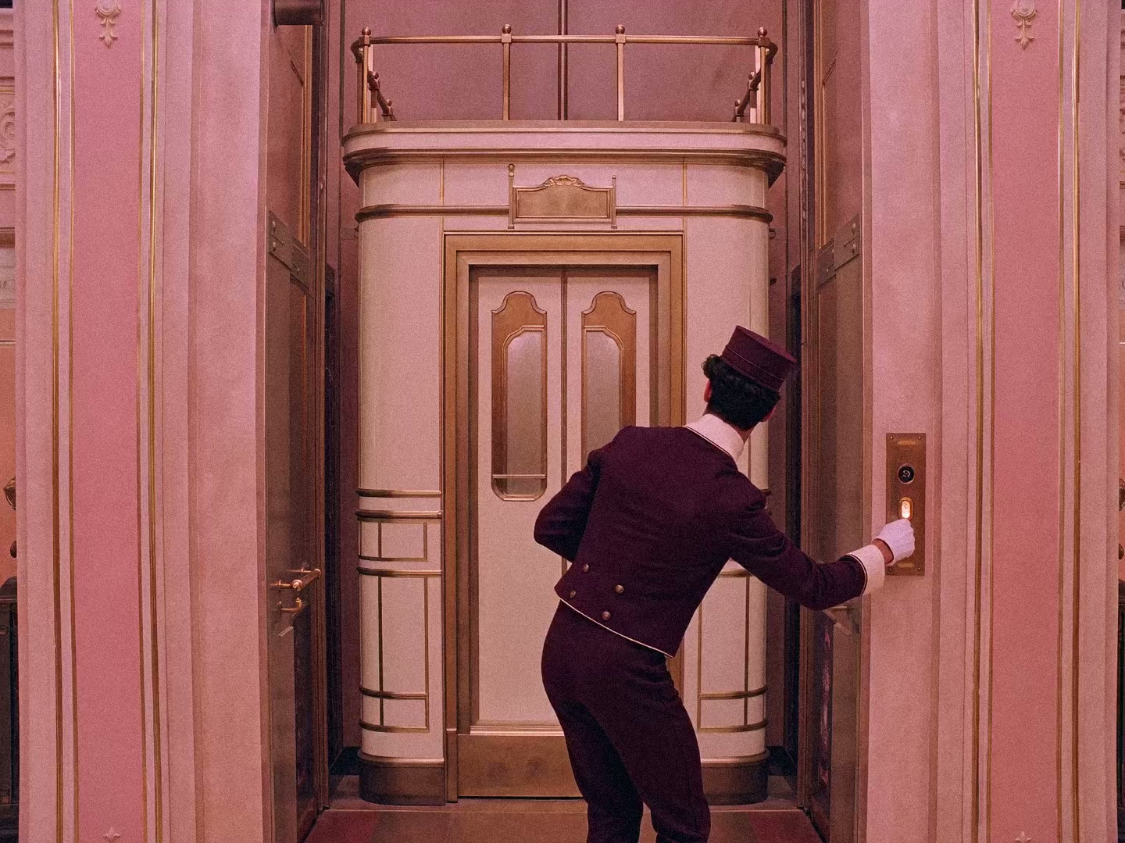
When the red lips were completed, the entrance covers were reded again and the initial questions were answered. The end was followed by a set of images of the person, still products and brand information, and the value of the product went from “to bring red” to “to focus on you”。
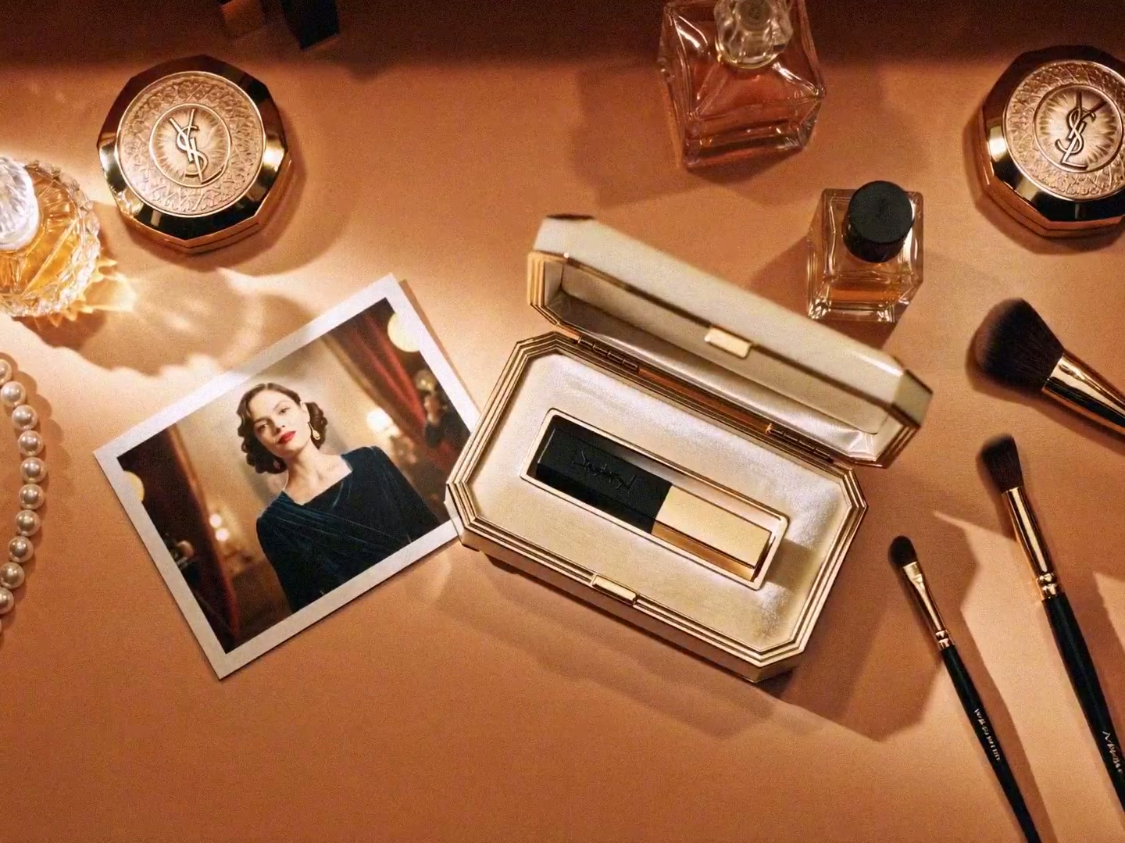
The structure can be summarized as follows:
Creates a colour-colour-disappearing, an abnormally proliferationd character to find answers, a product-delivery, one-time restoration of brand-branding。
It proves that visual clues do not have to move in person. As long as the same pattern of change continues to work on different objects, the audience also connects the lens into a story。
Step III: Designing a consistent course of action
WE HAVE VISUAL CLUES, WE CAN'T PRODUCE VIDEO IMMEDIATELY. YOU NEED TO DETERMINE ITS FULL ROUTE. THE ROUTE DETERMINES THE CONSISTENCY OF THE STORY AND IS THE KEY TO AVOIDING THE IDEA OF A RANDOM LENS。
A basic route can be described as:
FROM THE PRODUCT, POACH INTO THE FIRST SPACE A POACH TO THE OBJECT A POACH TO TRIGGER CHANGE B POACH TO THE SECOND SPACE B POACH TO TRIGGER CHANGE B POACH TO FINISH ORGASM TO RETURN TO PRODUCT OR BRAND RESULTS。
If a reverse route of “preforming a deficiency” is used, it may also be written as follows:
The creation of normality, the first disappearance of the core elements, the continued proliferation of the same anomaly, the search for reasons or answers, the emergence of products and the use of normality to restore brand claims。
When each station is designed, five questions are answered in turn:
1. Where does the clue come from
2. Where does it move
3. What did it touch
4. Which of the changes in the picture after exposure
5. How does this change naturally lead to the next mirror
“Natural extraction” is very important. The last lens is covered by black cloth, and the next one continues from black. This allows the camera to move forward, not randomly。
The first step, the “Recommended Direction Card” and the second step, the “View Thread Definition Card”, are inserted in the following hint. The third step is to prioritize each change in the direction of a given brand and in the rules of change。
Please design a complete short-copy route based on a defined brand orientation and visual trail。
Paste Recommended Orientation Card
[A pasting visual thread definition card]
Additional production information:
– Total duration: [for example, 30 seconds]
– Picture scale: [e.g. 9:16]
Route requirements:
Maintaining the product basis, brand value and fixed change rules in the two cards。
Please output:
1. A full storyline
2. Route nodes:
Node Node Node Node | Start Status | Impacted Object | Trigger action | change results
How a character reacts to the role of a brand in the next section
"`
Step 4: Breaking the route to “One shot, one major change”
AI IS OFTEN OUT OF CONTROL WITH VIDEO, NOT NECESSARILY BECAUSE OF INSUFFICIENT MODELLING CAPACITY, BUT ALSO BECAUSE OF TOO MANY CAMERA TASKS. WHEN A HINT REQUIRES THE PERSON TO RUN, THE PRODUCT TO ROTATE, THE ROOM TO MELT, THE SKY TO CHANGE COLOUR, THE LENS TO SURROUND AND THE TEXT TO APPEAR, THE MODEL NEEDS TO MAINTAIN MULTIPLE SUBJECT, ACTION AND SPACE RELATIONS WITHIN A VERY SHORT PERIOD OF TIME, WITH THE RESULT THAT THE PERSON IS PRONE TO DEFORMATION, PRODUCT STRUCTURE DRIFT OR DISRUPTION。
The more effective separation principle is that one lens completes only one major spatial change。
“A change” does not mean that there can only be one action in the picture, but that all actions serve the same result. For example, beams are ejected, beams pass through dust, beams change the surface of the wall and can be removed into three lenses. The clearer each mirror target, the easier to control the connection。
An enforceable spectroscope should at least be clear:
– Start state: where is the subject and what is the space at the beginning of the lens
– Core action: who moves in what direction
– Object of contact: what the subject encountered or affected
– Result change: which one of the images changes from what to what
– The lens: fixed, pushed, followed, projected or pulled
– End image: the next mirror needs to inherit visual elements
– Length: This change takes seconds to complete。
VI. Step 5: Prepare assets before generating images
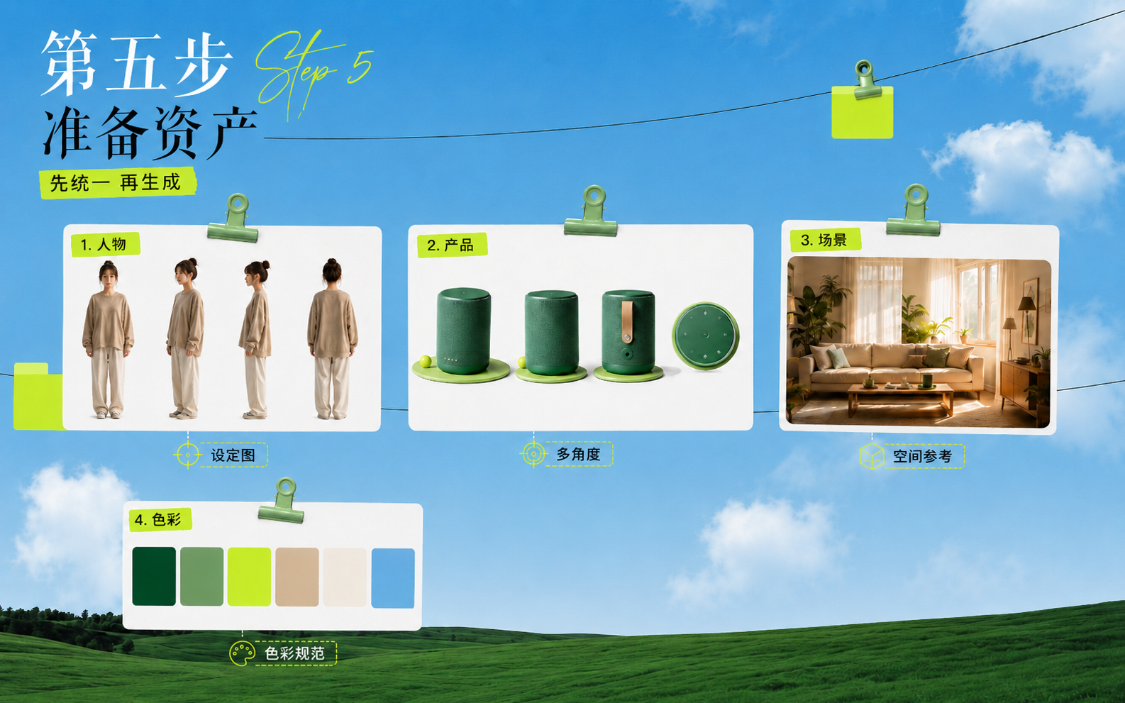
THE HINTS DESCRIBE THE ACTION AND REFER TO THE ASSET TO TELL AI WHAT THEY LOOK LIKE. THE SPECTROSCOPY OF THE FOURTH STEP IS EXAMINED ON A LINE-BY-LINE BASIS, COUNTING ALL RECURRING FIGURES, PRODUCTS, SCENES AND PROPS, AND THEN DECIDING WHAT REFERENCE MAPS NEED TO BE PREPARED. IN ORDER TO REDUCE FACE-TO-FACE CHANGES, CHANGES IN CLOTHING, FAULTY PRODUCT STRUCTURE AND SCENERY, AT LEAST THE FOLLOWING ARE PREPARED:
1. Product set: front, side, back, key details and state of use
2. Personal profiles: front, side, back, body, hair, clothing and proportion
3. Site reference maps: space layout, materials, main colour, light orientation
we have spoken about this before when we spoke about this。
IF THE PRODUCT STRUCTURE IS KEY TO BRAND IDENTIFICATION, NOT JUST A POSITIVE IMAGE SHOULD BE UPLOADED. IT IS ALSO GENERATED BY CHECKING SIGNS, INTERFACES, KEY NUMBERS AND KEY STRUCTURES. AI INCREASES SPEED, BUT IS NOT A SUBSTITUTE FOR PRODUCT ACCURACY AUDITS。
VII. Step 6: Visualizing video
we're using soedance 2.0 to generate videos, and the core messages of the message are usually connected:
1. Where to come from: source and starting state of clues
2. Where to move: direction, speed and path
3. What is exposed: a specific object, surface or person
4. What changes have occurred: a single, observable result after exposure。
“What happens” is to use a language that can be seen. Instead of simply writing “more advanced sense”, it is written that “the gray wall is gradually warming from the light drop point out and other objects remain the same”. The more specific, the easier it is to check。
Generates and saves results by lens number. The current lens is checked and then enters the next lens, which reduces the number of errors accumulated in the subsequent lens。
Conclusion
AI CAN HELP CREATORS QUICKLY LIST FUNCTIONAL CHANGES, EXPAND VISUAL ROUTING, SPLIT THE LENS AND GENERATE IMAGES, BUT WHAT REALLY DETERMINES WHETHER SHORT FILMS ARE CREATIVE IS STILL A FORWARD-LOOKING CHOICE: YOU CHOOSE WHICH FUNCTION OF THE PRODUCT AND HOW IT CAN DRIVE THE STORY。
When the product is just put in a fantastic scene, the audience sees the effects; when the function of the product is the reason for every change, the brand is the brand. First, a core change can be seen, starting from the product, going through a sequence of causal lenses and finally going back to the product itself. The short films thus produced, even if not stacked, would appear complete, clear and easier to remember。