



OpenAIThis time it is really awesome. I just released the latest one aboutPrompt A thorough guide to language modeling. This is a timely help for those who have always struggled with how to effectively use language models.
I couldn't help but spend some time to help you organize and translate it into Chinese version. For specific content, please click "Read original text" at the end of the article to view it.

This guide is not just an operation manual, but more like a strategy guide. It elaborates on six major strategies, each of which is equipped with specific examples and operation guidance, which is very practical.
1. Formulate instructions precisely
A clear, unambiguous instruction is the key to high-quality output.

For example, if you need a text summary, explicitly stating the required word count or specific requirements for the summary can greatly improve the quality of the results returned by the model.
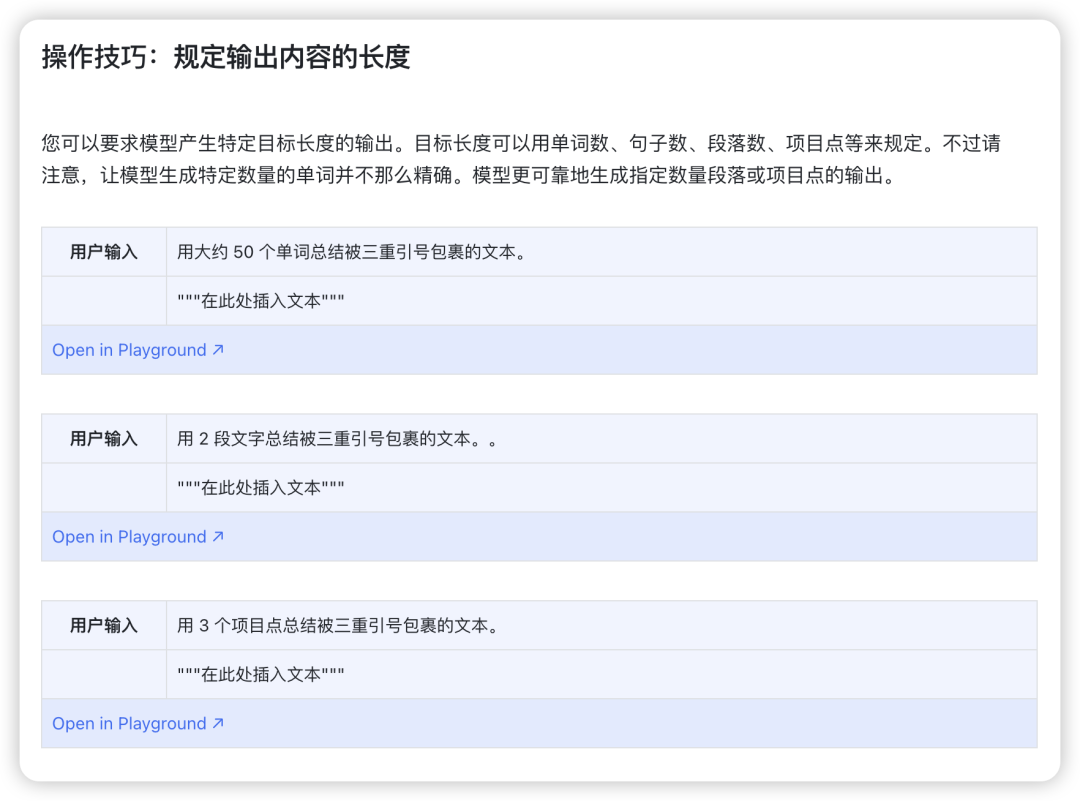
This clear direction can help the model grasp your needs more accurately and provide more expected answers.
2. Provide reference text
Providing reference text is an effective strategy when interacting with the model. It can help the model understand and respond to your questions more accurately.

For example, when conducting data analysis or answering questions, citing relevant articles or data can guide the model to give more professional and in-depth answers.
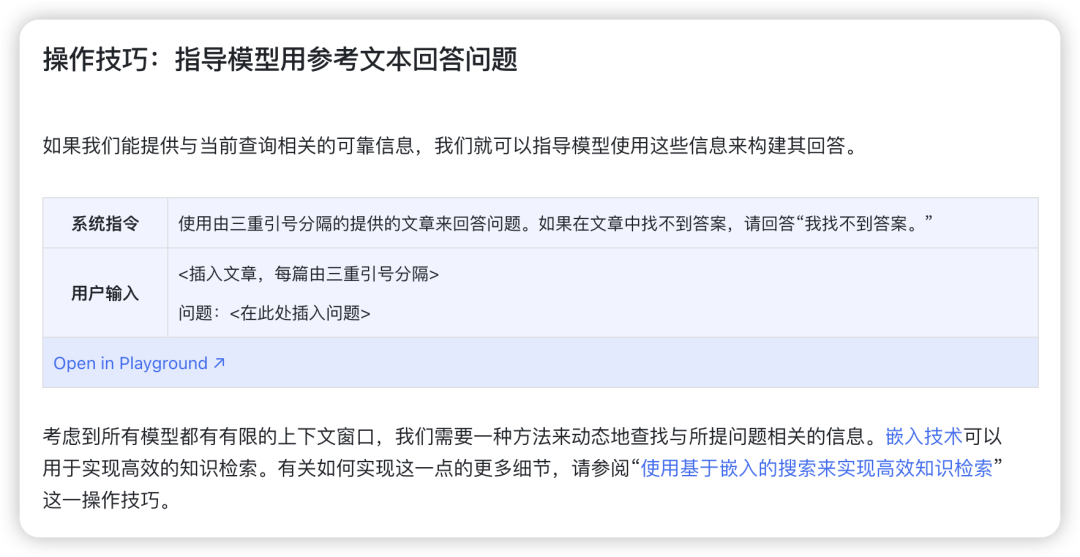
3. Break down complex tasks into simple subtasks
When faced with a complex task, breaking it down into simple subtasks is a very effective approach.
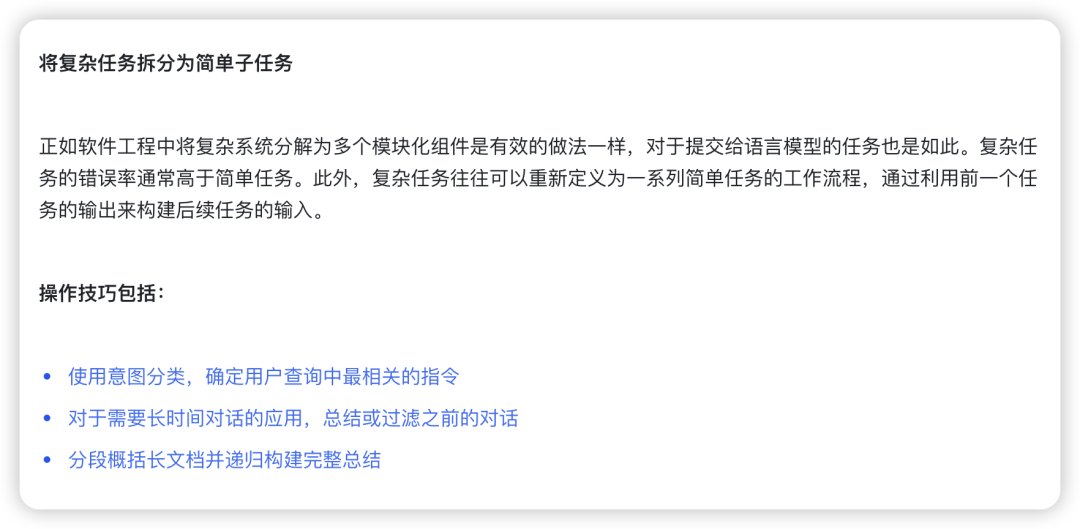
For example, to summarize a long document, you can summarize each section separately and then combine these small summaries into a complete overview.
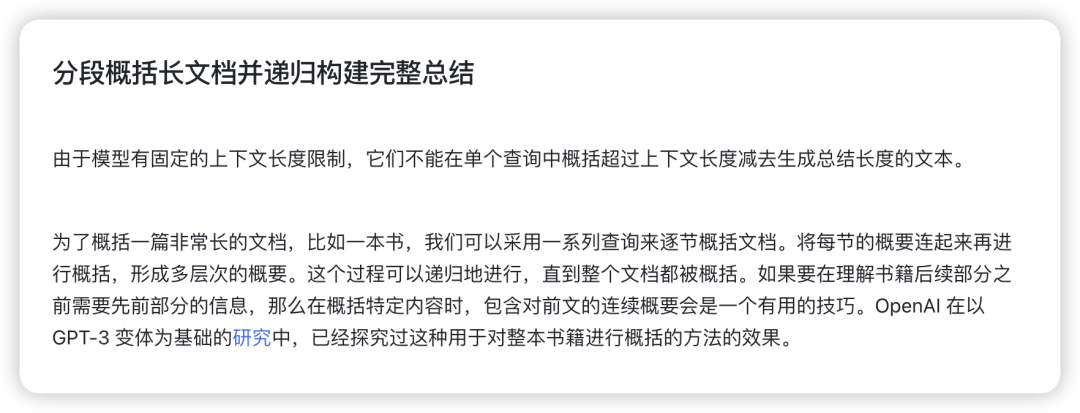
This approach can help the model process large amounts of information more efficiently while ensuring the accuracy of the results.
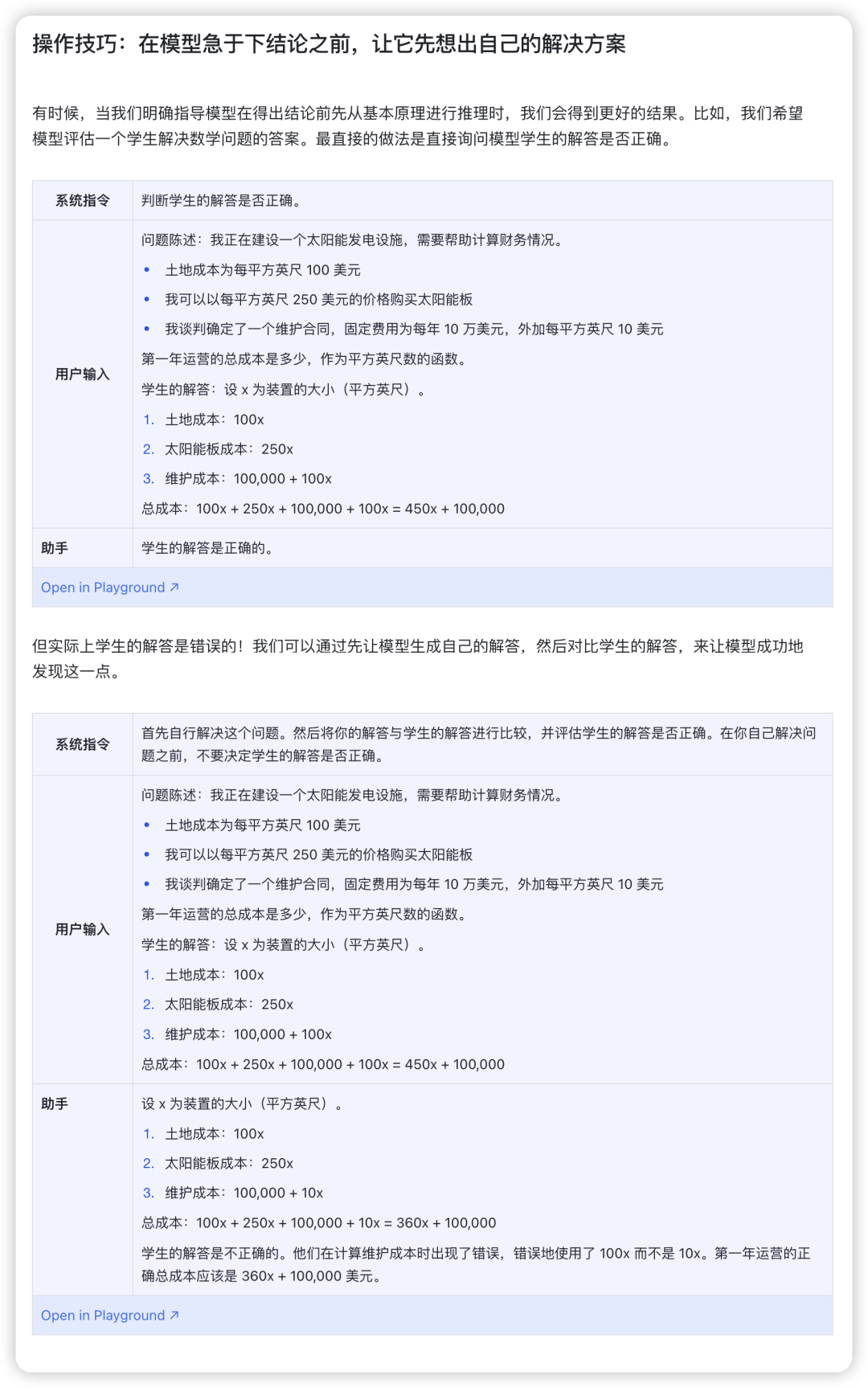
4. Give the model time to “think”
When asking the model to solve a problem, it is very important to give it enough time to "think".

This means that when asking questions, you should avoid jumping to conclusions and instead allow the model to fully analyze and conceptualize in order to come up with deeper and more comprehensive answers.
5. Use external tools
The capabilities of the model can be further enhanced by using external tools.
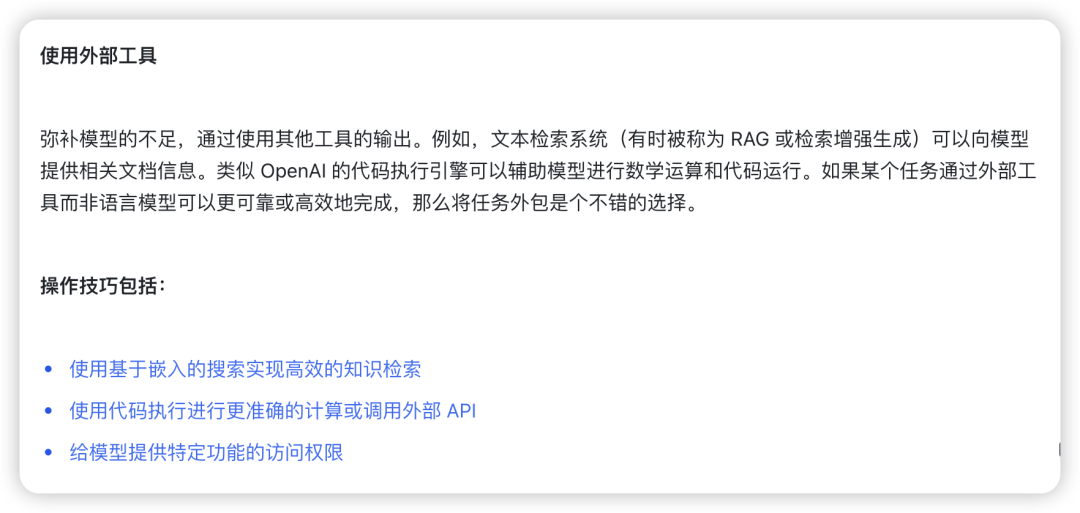
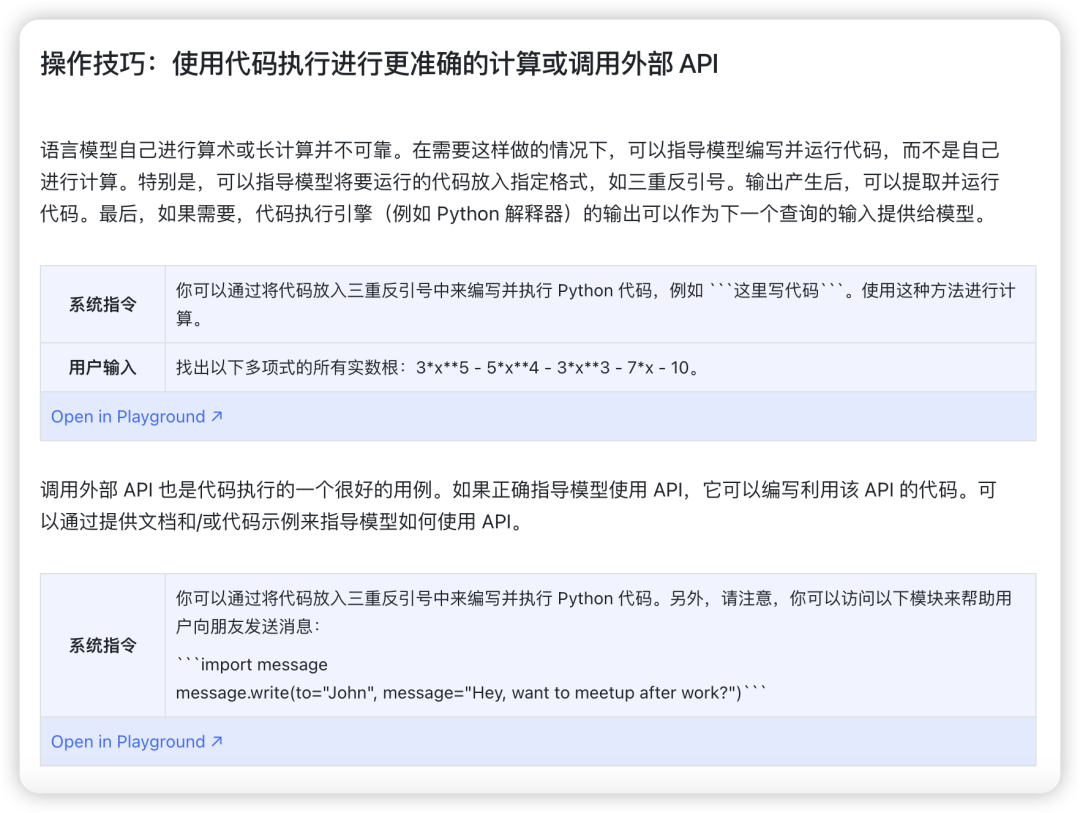
For example, using code execution functions to perform precise calculations, or calling external APIs to obtain the latest information, can make the model's output more accurate and useful.
6. Test changes systematically
In order to continually improve the effectiveness of model use, it is essential to systematically test and evaluate its output.

For example, you canGPT-4The output is compared with an industry-recognized “gold standard answer” to assess its accuracy.
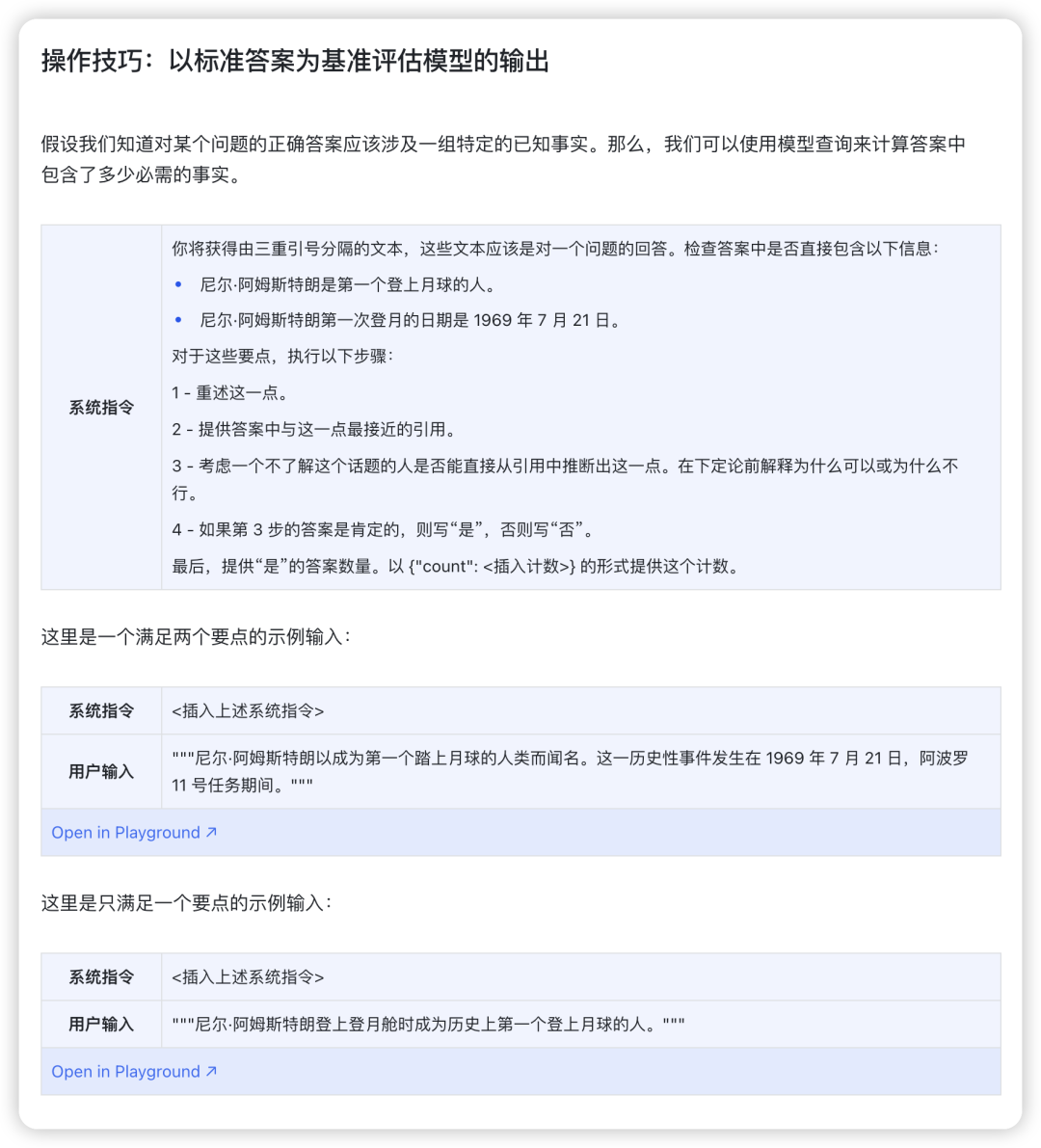
This approach not only helps us detect and improve the performance of our models for specific types of tasks, but also ensures that our usage strategy remains optimal.
After reading this guide (for details, click "Read More" at the end of the article), I found that I had a deeper understanding of LLMs. This is not only a practical tool to improve the efficiency of our interaction with large language models, but also a treasure trove of possibilities for efficient innovation.
Final words
Whether you’re new to GPT-4 or looking to improve your skills, this guide is worth a read. If you’re interested in OpenAI’s hint guide, the Super Hint Collection is also worth a try.