



May 9, 2011 - According to a report today in the foreign media Neowin, the U.S.Duke UniversityThe latest study points out that despite the AI Tools can increase productivity, but the use of tools like ChatGPT, Claude, and GeminiMay make coworkers and managers think you are inadequate.
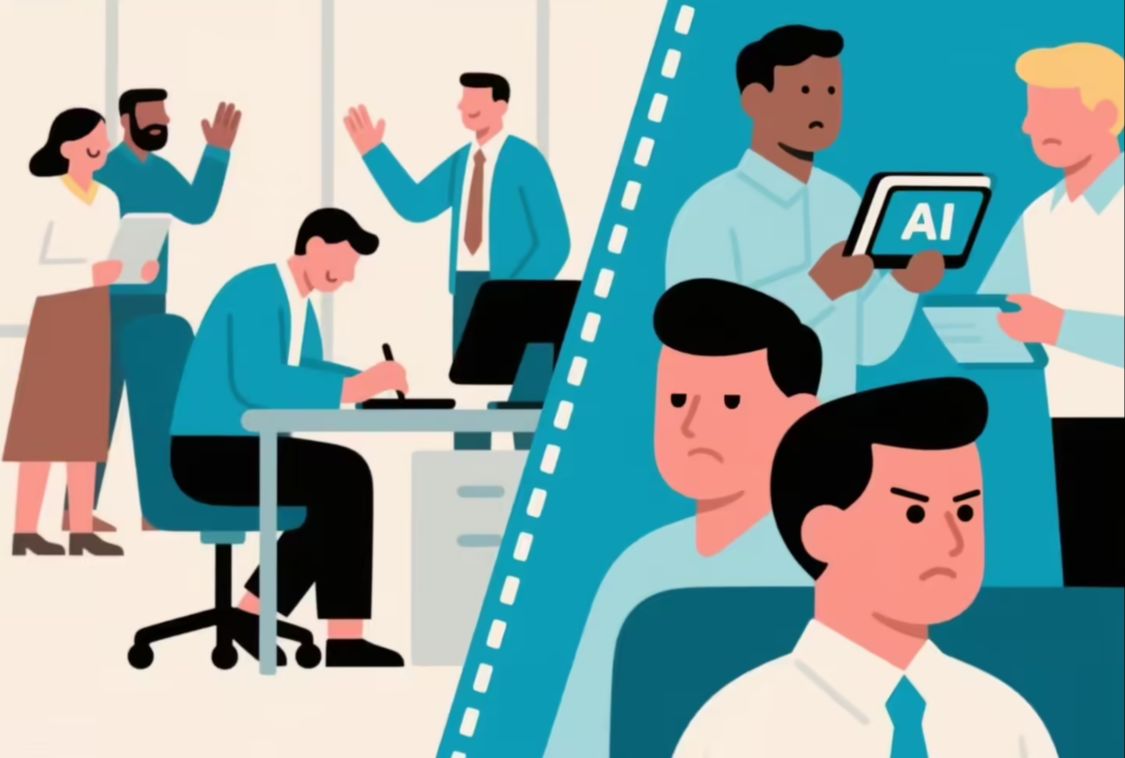
The study, titled "Using AI Tools Encounters a Social Evaluation Penalty," has been published in the Proceedings of the National Academy of Sciences. Using four experiments involving more than 4,400 participants, the study found that people who use AI tools often experience negative judgments from coworkers and managers about their abilities and motivations.
Duke University Fuqua School of Business researchers Jessica A. Reeve, Richard P. Larrick, and Jack B. Saul found that.Employees using AI tools are often perceived as not being competent enough, or even lazy and not trying hard enough.
In the first experiment, participants were required to envision themselvesWhether to use AI tools or traditional dashboard creation toolsto accomplish work tasks. The results showed that participants who chose the AI toolA general expectation that one will be perceived as lazy, incapable, and not hard enough working, and even easier to replace.
Participants also statedLess willing to disclose to coworkers and managers that they are using AI tools.. A follow-up supplemental study validated this result, showing that participants using the AI tool received significantly lower competency scores than those using the traditional tool.
The second experiment thenFurther validating these concerns.. When evaluating employee performance, employees who use AI tools alwaysEvaluated as lazy, not capable enough, not independent enough and lacking self-confidence.
Another study looked at the Whether AI is common in the workplace and whether this factor would change the negative comments above.. It turns out that the prevalence of AI use does not significantly change these social ratings, showing that this negative rating is highly stable.
In addition, this biasMay also influence actual business decisions. In a recruitment simulation, theManagers who use AI infrequently are less likely to hire candidates who use it frequentlyThe study also found that managers who used AI frequently were more likely to hire candidates who used AI. This phenomenon is also consistent with other findings in the study:Evaluators who are less likely to use AI tend to think that AI users are lazier.
The final experiment showed thatPerceived lazinessis the main reason for this negative evaluation, if AI toolsEffective and appropriate for the given task, this penalty may be mitigated. The study notes that in certain manual tasks, the use of AI tools would be considered (human) incompetent, but in digital tasks, the use of AI isSeen as a positive factor in improving task suitability, helping to counteract the negative perception of laziness.