



June 16, 2012 - Recently, theMeta There's a fierce "war for talent" in the field of artificial intelligence, with companies offering attractive and lucrative salaries to a handful of top AI researchers in an attempt to build super-smart AI.
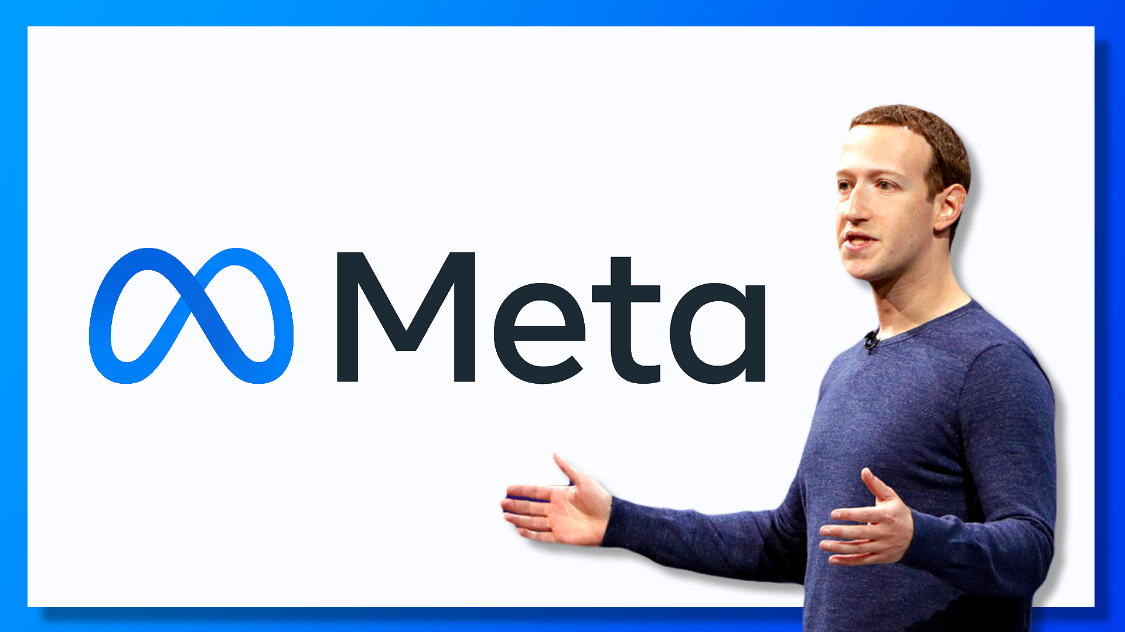
According to TheRegister, people familiar with the matter have revealed that Meta CEO MarcZuckerbergPersonally involved in thisrecruitmentevent to send job offers to elite talent. One AI researcher who received an offer said that Zuckerberg sent an email directly to theA shocking eight-figure compensation package was offered, with an annual salary of at least $10 million (note: about Rs. 71.848 million at current exchange rates). The fellow said in an interview, "I got an email from Mark himself saying 'I have a job offer for you,' which surprised me, the offer was unbelievable."
Although the researcher has not yet decided whether to accept the job offer, he has expressed a keen interest in the meaning behind it, noting, "I'm curious about how this will affect the job market, and to be honest, I'm really taken aback." It is understood that Meta is targeting around 50 to 100 of its top AI talentand is making a strong effort to recruit them.
However,Meta faces a huge challenge in recruiting top AI talent. According to Deedy Das, a partner at venture capital firm Menlo Ventures, on social media, "Meta is currently offering AI talent salary offers upwards of $2 million per year, but many are still choosing to leave for OpenAI and Anthropic. in the past week alone, I've heard of about 3 of these cases. The competition for AI talent has gotten ridiculous." Das also cited a report from a venture capital firm called SignalFire, which showed that in 2024, Meta had 4.3% of AI talent going to other AI labs, second only to Google's 5.4%.
The report also notes that Anthropic has the highest AI talent retention rate of 801 TP3T among hires made between 2021 and February 2023, followed by Google's DeepMind (781 TP3T), OpenAI (671 TP3T), Meta (641 TP3T), Cohere (641 TP3T) and Mosaic (63%).
In an interview with TheRegister two years ago, Yudian Zheng, an AI leader at Twitter who turned down a $1 million-a-year offer from Meta to co-found his own company, Jobright.ai, said, "I've worked at companies like Google, Microsoft, and Twitter, and I'm very familiar with how big tech companies work. In an interview with TheRegister, he said, "I've worked at companies like Google, Microsoft, and Twitter, and I'm very familiar with how big tech companies work. What I really value is the startup ecosystem in Silicon Valley, which is a place where ambitious people can start from scratch and create real impact."
Woo-Deun Jung, whose declined position was on Meta's Generative AI advertising team, noted, "Meta has multiple projects in generative AI, both foundational work like Llama and projects that apply it to core business like advertising. The team I've had discussions with is focused on applying generative AI to improve ad effectiveness and automation."
When asked if Meta's offer of an eight-figure salary was unusual, Yuden Zheng said, "It's not really particularly rare, as the competition for top generative AI talent has become extremely fierce. Training cutting-edge models is a bit like alchemy, and a handful of experienced researchers can have a huge impact."
He added: "The market has recognized this, and salaries reflect it. companies like Meta, OpenAI, Google DeepMind, Anthropic, and xAI are all actively hiring, but the pool of talent with real fundamental modeling experience is still very small."
Meta has been using AI technology extensively in its social networking and advertising business, and the company has launched the Llama-based Meta AI assistant, which is available on the web as well as Android and iOS apps. In addition, Meta has deployed AI models for social media recommendations, content review, ad targeting and ad creation. Its AI research team is committed to advancing the technology and recently released a video-trained "world model" called Meta Video Joint Embedding Predictive Architecture 2 (V-JEPA 2) to help bots navigate the real world. navigation in the real world.
As Bloomberg reported earlier, Meta is interested in assembling a new AI team of top talent, with Zuckerberg personally involved in the hiring process. Zuckerberg appointed Alexandr Wang, CEO of Scale AI, to head the team as part of a deal in which Meta reportedly invested about $15 billion into its data labeling business. Alexandr Wang made the announcement in a social media post on Thursday and named Chief Strategy Officer Jason Droege as interim CEO.
While neither Meta nor Scale AI responded to requests for comment, observers have speculated that the poor performance of Meta's Llama 4 model, which launched in April (with disappointing performance and allegations of cheating in benchmarks), may have been part of the reason the company formed a new team. TheRegister has learned, however, that discussions about assembling the team date back to at least December 2024, predating the release of Llama 4.
When asked if Meta's AI team is likely to pursue superintelligence, an AI researcher approached by Meta said it's a reasonable question to consider.
"In many ways, these models have surpassed humans, right? For example, they can beat humans in areas like math or Go. So that's not crazy to me. While there are still shortcomings in these models, they are disappearing as we continue to scale and improve the algorithms." The researcher noted, "What's even more interesting is that these models have become useful and commercially viable; we've crossed that threshold, and what comes next will be a natural progression."
For his part, Woo-Deun Jung believes that Meta is concerned about falling behind OpenAI, Anthropic, and Google in the AI space, noting that "Meta's core strength has always been in social platforms, but now they're clearly investing heavily to catch up and compete in the fundamental modeling space. The latest reports of a possible investment in or acquisition of Scale AI also suggest that they are investing more in high-quality data, model training infrastructure, and elite AI talent."
Meta has been accustomed to investing large amounts of money in projects that do not immediately generate significant revenues.. The company's Reality Labs VR team has lost money every year since its inception in the fourth quarter of 2020, racking up losses of more than $64 billion. However, given that Meta turned a $62 billion profit last year, the company clearly has enough money to attract 50 top AI researchers, paid $10 million each, especially after the company laid off 3,600 employees in January.
If Meta's expectations of AI's revenue potential materialize, the $500 million payroll expense - a fraction of the company's $60 billion to $65 billion AI-specific capital expenditure plan for 2025 - will be a drop in the ocean. As recently disclosed in a legal filing in the publisher's AI lawsuit Kadrey v. Meta, Meta predicts that its generative AI products will generate $460 billion to $1.4 trillion in gross revenue by 2035.