



October 21st news, todayOpenAIJoint statements by the American Federation of Actors - the American Federation of Television and Broadcast Artists (SAG-AFTRA), the actor Bryan Cranston, the United Agency Agency, the Creative Arts Agency and the Association of Talent Agents to ensure the use of “productive cooperation” Sora 2 and the content generated by the Sora applicationportrait rightProvide adequate protection。
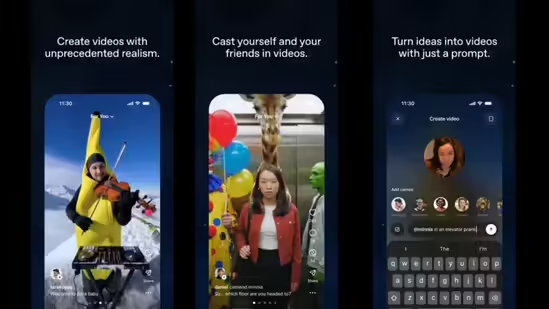
Previously, Colanston raised concerns about Sora, noting that the tool could be used by users without their consent or remuneration to generate deep-fake video with its portrait. In addition, the families of Robin Williams, George Carlin and Martin Luther King Jr. also complained to OpenAI about Sora applications。
Despite the OpenAI policy of opt-in, which requires explicit permission from the outside world to use its voice and portrait, Sora users were able to generate videos with a Coranston image, which he himself never authorized. To address this loophole, OpenAI has strengthened technical protection measures(b) Strictly restrict voice and portrait reproduction without express consent。
OpenAI emphasizes that artists, performers and other individuals should have the right to determine whether and how their image is simulated by Sora. In addition to the additional protective mechanisms, the company undertook to “promptly respond” to all complaints received in the future。
Before that, last weekend, OpenAI had for the first time adjusted Sora in response to a complaint by the Martin Luther King family and indicated that it would strengthen the control of the use of images of historical figures. OpenAI noted that the depiction of late historical and public figures involved “significant freedom of expression interests”, but that the relevant authorized representative or estate manager could still apply for a ban on their presence in Sora’s creation。
1AI understands that Sora officially went online on September 30th and quickly became one of the most popular applications in Apple Store。