



23 October, at a recent conference of sustainable global leaders held in Shanghai, the New Wave Financial Dialogue featured Nobel Prize laureate in chemistry, Professor Michael Levitte of Stanford UniversityMichael LevittThe latter also shared their interest AI How to change the way humans learn and think。
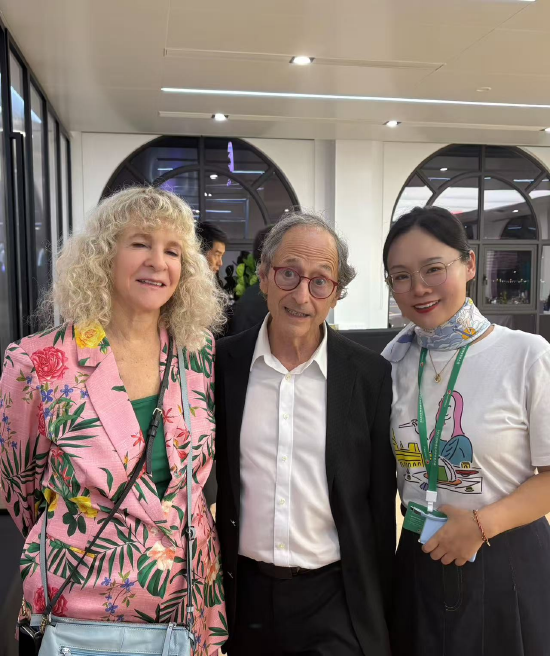
Levitte and wife (left)
Levitte said, "The future, a young man who is smart but has not gone to college, is going to be smaller and smaller. In his view, artificial intelligence does not make people lazy, but rather the "second enlightenment" that drives human learning。
LEVITTE SAID THAT "THE PERSON USING "AI" WOULD BE BETTER THAN "THE PERSON WITHOUT "AI" AND WOULD BE BETTER THAN "AI ITSELF". HUMANS AND AI ARE COMPLEMENTARY, LIKE A CELL PHONE ON THE TABLE IS USELESS, BUT IN YOUR HANDS IT BECOMES A POWERFUL TOOL. THIS IS THE CASE OF JOURNALISTS:
IF ANYONE SAYS TODAY, "I'M A JOURNALIST, I WRITE BY HAND, I DON'T HAVE A COMPUTER, I DON'T HAVE A RECORDING DEVICE," THEN OF COURSE, BUT IT'S LIKE TRAPPING MYSELF 50 YEARS AGO. AI IS JUST A NEW GENERATION OF TOOLS. FOR ME, IT IS EXCITING, NOT TERRIBLE。
"WHEN EVERYONE USES AI TO WORK, TO STUDY, TO LIGHTEN THE RESEARCH BURDEN, TO MAKE PEOPLE LESS CREATIVE AND LESS INTELLIGENT." AND LEVITTE SAID, "I DON'T THINK SO, YOU KNOW, WHEN THE INTERNET FIRST APPEARED, PEOPLE SAID THE SAME THING. I'M SORRY
It points out that, in fact, people are writing more than ever — they are filming videos and cutting films. Today almost every teenage girl is a good "little filmmaker". And this is actually an excellent creative skill。
SO HE DIDN'T THINK THAT THE GROWING POPULARITY OF THE AI TOOLS WAS A PROBLEM. ON THE CONTRARY, HE BELIEVED THAT THOSE MOST OPPOSED TO THE NEW TECHNOLOGY HAD NEVER REALLY USED IT。