



November 27, according toTsinghua UniversityThe website released a press release yesterday, and the University of Tsinghua recently released The University of TsinghuaAIFor the first time, the Guiding Principles on the Application of Education (hereinafter referred to as the Guiding Principles) systematically provide holistic, hierarchical guidance and norms for the application of artificial intelligence in schools。
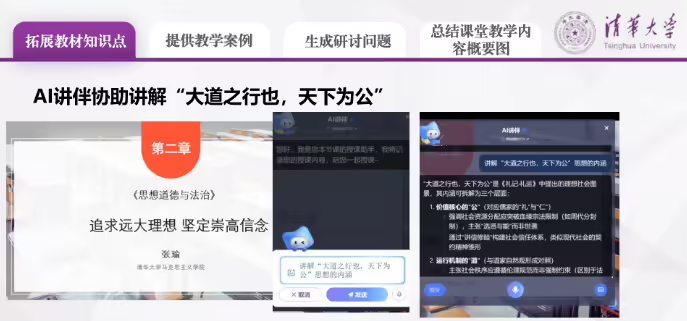
The Guiding Principles consist of a “general rule” “teaching section”, “degree papers and practical results”,3 which covers the current core scene of teaching and academic research。
ACCORDING TO AI, THE “GENERAL PROVISIONS” PARTLY CLARIFY THE BASIC POSITION OF SCHOOLS AS “POSITIVE AND PRUDENT” AND SUGGEST FIVE CORE PRINCIPLES OF “SUBJECT RESPONSIBILITY” AS “COMPLIANCE WITH INTEGRITY” AS “DATA SECURITY” AS “CAREFUL CONSIDERATION” AS “EQUITABLE INCLUSION”。
- The principle of “subject responsibility” emphasizesArtificial intelligence is always a tool to assistTeachers and students are the leaders in teaching and learning
- The principle of “conformity and integrity” requires teachers and studentsRegular disclosure of the use of artificial intelligence and the generation of content(b) The prohibition of academic misconduct
- “Data security” principleTeachers and students are prohibited from using sensitive information, classified data or unauthorized dataTraining or driving artificial intelligence models
- The precautionary principle reminds teachers and students to verify through multiple sourcesPrevention of mental inertia caused by overdependence;
- The call for “equitable inclusion”Actively identify and work to reduce algorithm bias and the digital divide.
“Pedagogical Book” recommends that teachers be based on teaching objectivesSelf-development of artificial intelligence applications and levelsat the beginning of the courseExplicit statement of use normsmergeResponsible for teaching content generated by artificial intelligenceAnd lead the studentsQuestion and answerArtificial intelligence。
"Pedagogical Book" also encourages students to adhere to the curriculumActively exploring artificial intelligence tool support learning,butIt is strictly forbidden to submit text, code, etc. generated by artificial intelligence either directly or simply as a result of learning.
For the group of post-graduate students, “Thesis of degree and practical results” emphasizes thatThe use of artificial intelligence is strictly prohibited for acts such as writing, theft, forgery, etcPostgraduate mentors are required to provide normative guidance and process supervision to ensure the integrity of academic training and the originality of academic thesis and practical results。
The Director of the Online Education Centre of the University of Qinghua, who participated in the development of the Guiding Principles, Wang Zhuang, stated that the Guiding Principles also provide sufficient space for the future to expand the boundaries of artificial intelligence applications in more areas such as academic research, management services and so forth, “we hope that it will be a living and evolving guidance system as technology evolves”。
The Guiding Principles were issued not as a limit in themselves, but as a means to better stimulate innovation. The General Provisions clearly state that schools actively encourage and support all teachers and students to explore innovative applications of artificial intelligence in education and will recognize and promote good practices。