



On December 23, according to Business Inners, Dameter Capital's co-founder and managing partner in managing about $25 billion of assets, Scott Goodwin says that he is not the only one who has a businessAIThere's more to the heat thanchipandData Center.
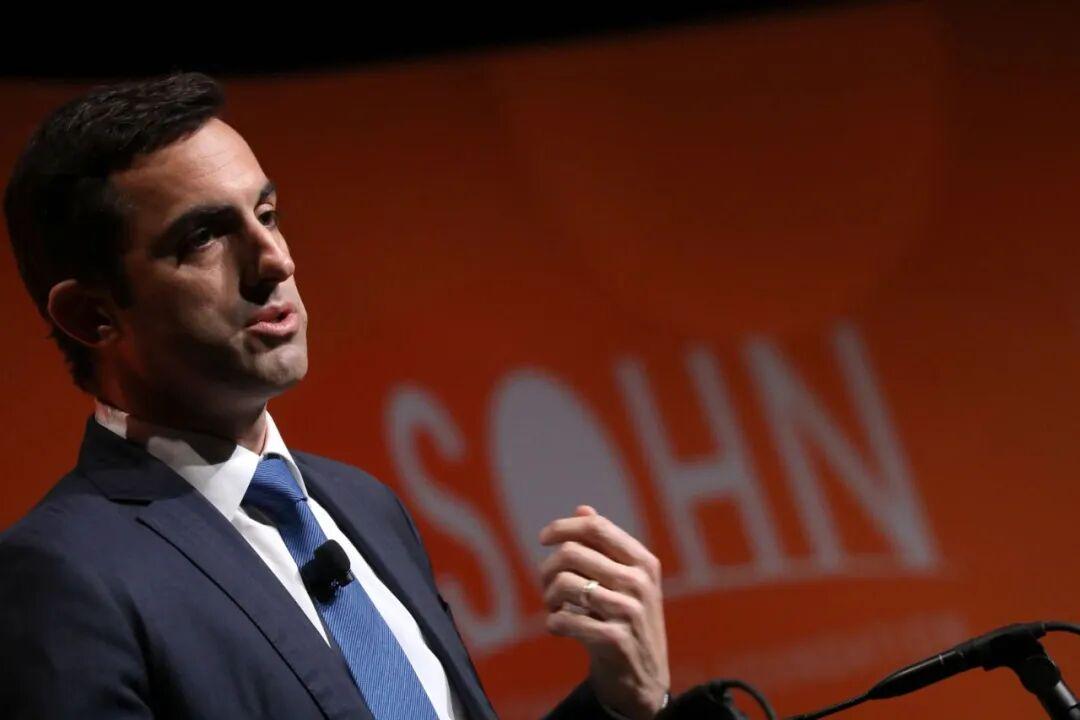
Goodwin noted that the long-term cycle of AI would release value through broader infrastructure and the introduction of competition。
On his podcast Goldman Sachs Exchanges, he said that the team was concerned with the mismatch between demand-driven AI and less visible bottlenecks and pricing in the credit market, and that this "super-microcycle" would continue and reshape the investment landscape。
Goodwin revealed that Diameter Capital bought an unsecured debt from a medium-sized telecommunications company in 2023, and the logic is that when an enterprise moves from a training model to a practical application, the demand will shift from a "chip-only" to a network and commercial fibre-optic to carry data。
How can data leave the data centre? It's a commercial fibre-optic pipe。
Subsequently, the telecommunications company contracted over $10 billion with a number of super-large cloud service providers, and its debt price rose back to face value. In addition, Diameter Capital also "reduced" a satellite company associated with the wireless spectrum, whose debts returned to nominal value after it sold the spectrum assets。
At the risk level, Goodwin warns that AI-related credit transactions, especially chip financing, are accumulating a “residual value risk” that is difficult to price - some investors pledge the residual value of hardware after a few years, but the front-line technology is frequently updated and the chip is fast out of date for some customers。
We'll ask experts from Silicon Valley and large technology companies to judge the residual value of the chips after three to seven years, but no one can give a definitive answer。
He pointed out that the next stage was not just infrastructure capital spending, but a change in the competitive position around AI adoption: "Who can use AI to lead and who can lose?" This competition cycle will be longer than the pure Capex cycle。
Goodwin’s perspective also responds to the market’s debate about the sustainability of AI’s high valuation: rather than bet on the most visible winners, the credit dimension is more noteworthy in terms of “neglected bottlenecks” such as web transmission, spectrum and satellites, and the ways in which the speed and breadth of business landings affect cash flows and capital structures。
THIS MEANS THAT THE CORE OF THE AI DEAL IS MOVING FROM "EQUIPMENT BUILDING, BUILDING ROOM" TO "WHAT KIND OF COMPANY USES AI FOR PRODUCTIVITY ADVANTAGE" AND RE-EVALUATES RISKS AND RETURNS ACCORDINGLY。