



It's not just a dry product today, it's covering 38 professionslens handling techniquesMETHODOLOGIES. IF YOU DON'T DO THIS, YOUR AI GENERATION OF VIDEO LOOKS LIKE SO MUCH, IT'LL ALL LOOK LIKE A ROOKIE。
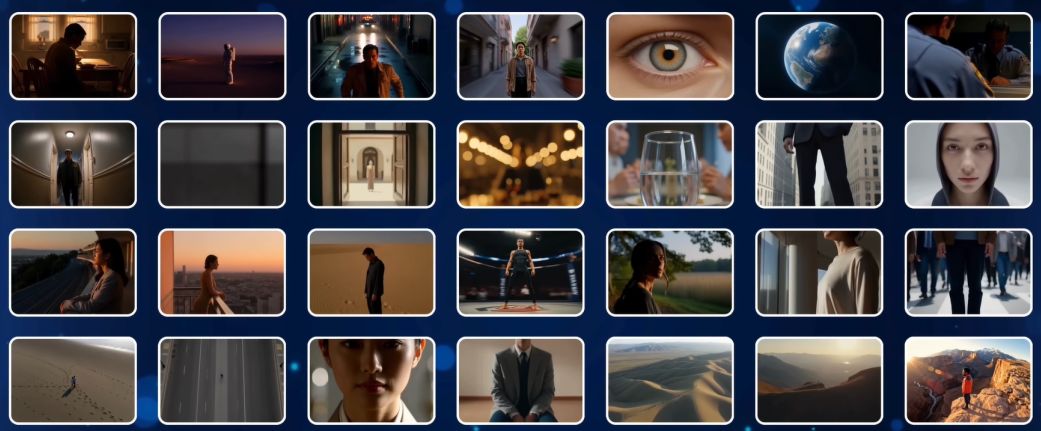
I don't care if you're a digitalAI VideoIt's either a product introduction video, a short film video, or an animation videoAI Video TutorialSuper dry
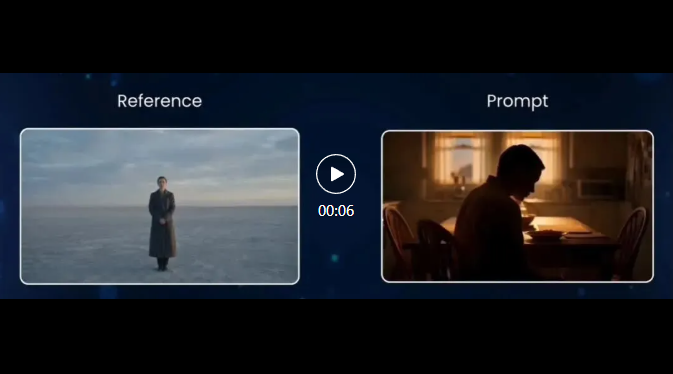
Number 1: The following is the hint for slow advance (low-orbit push)
A small caratter scheduled at a kitchen table at duty, warm window light past them, the room completely excepting in the middle as the camera moves close.
Case Note: Without distracting attention, build a close and focused image. By placing the audience's eyes in the eye, this mirror can effectively strengthen the tension, or highlight a moment of awareness, while keeping the picture real。
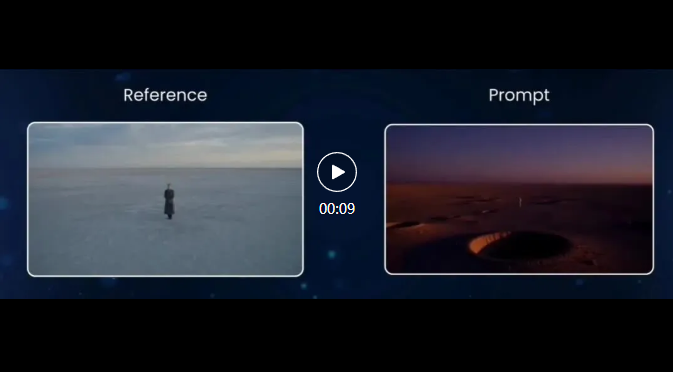
Number 2: The following is the hint for slow-latitude pull (slow-orbit back)
A left standing movements on a barren alain at duty as the camera performs a slow dolly out, completely revealing the vast, desolate landscape under a fading purple sky
Case note: More environmental detail will be slowly shown, moving the focus of the picture from the person himself to the space in which he or she lives. This mirror highlights the effects of loneliness, spatial senses or events, especially at the end of a full-of-the-moment, the moment of awareness or the moment of retrospect -- that is, the moment when the environment covers the subject, such as the end of the film, the discovery of the truth or the rise of the subject。
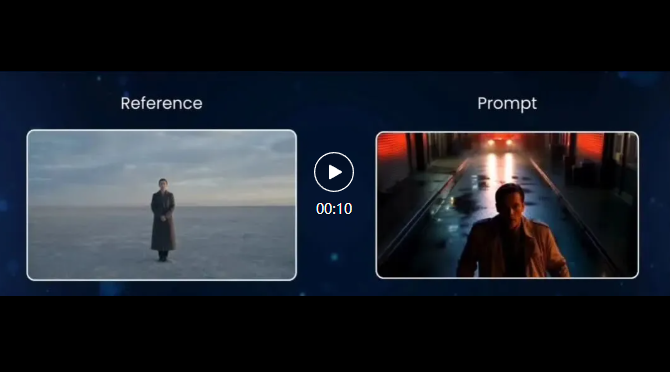
Number 3: Quick advance (quick push) hints as follows:
FAST DOLLY / RUSH on a determined decision as first chances in a narrow, sin-sooked alley at night, non-reflections flying across problems wet gave.
Case Note: The camera pushes forward at a faster rate, and is strongly drawn closer to the subject, greatly increasing the tension and emotional tension of the image. Its role is to “pull” the audience directly into the inner world, which is best suited to the moment of awareness, crisis or emotional orgasm, especially in a small space that requires a focused response。
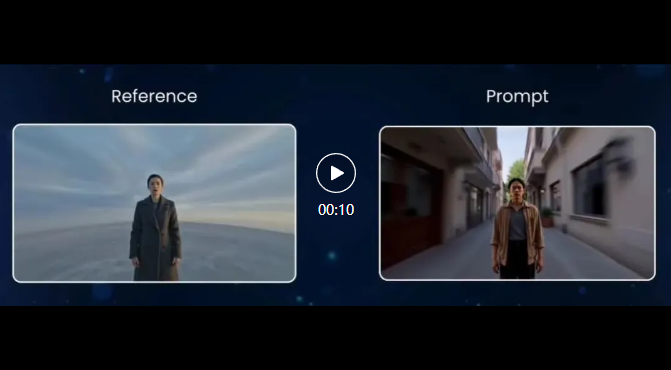
Number 4: Spizziness effect (orbit pull to focus)
The subject stays the same size in the same situation outside of the system.
Case note: This mirroring technique combines back-scan and reverse focus, creating a strong sense of psychological distress by distorting the sense of space. It conveys a sense of fear or surprise within the person, while keeping the subject at the centre of the picture. It's best for moments of shock or fear to be used in closed and deep spaces, such as corridors and stairwells。
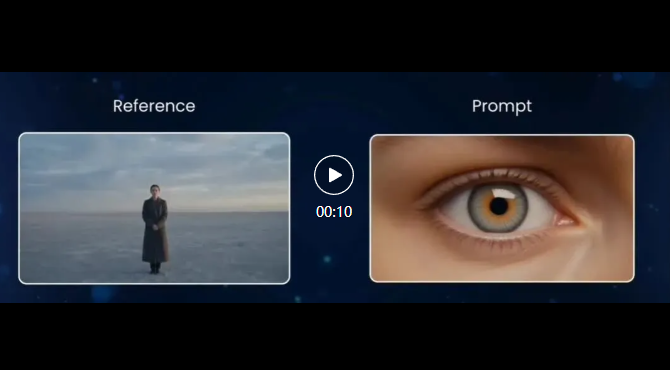
Number 5: The nuanced focal reminder is as follows:
A human who's leading unbrinking directly into the camera
Case note: The mirrors use extreme micro-drives to create a sense of penetration and exploration that translates familiar human faces into abstract, near-absorbing visions of the universe. It is well suited to use in a dramatic, sci-fi, medical or psychological lens, to suggest through visual effects the inner world of the person, the process of transformation or the hidden truth, especially in light-controlled, stymied images。
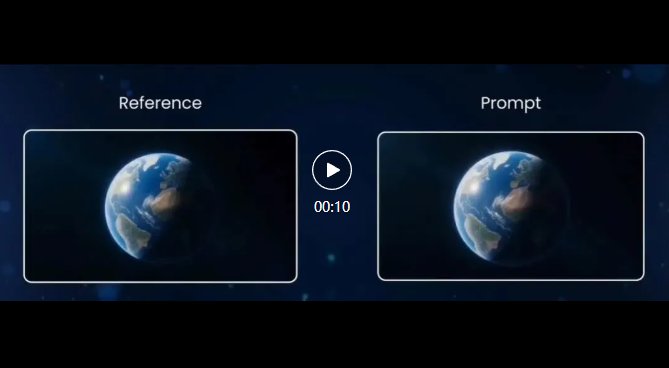
Number 6: Ultra-distant focaltips are as follows:
A single, unbroken races from Earth in deep space, through claudes and city blacks, and lands everywhere on a busing fare.
Case Note: This extreme axle-focusing can compress a very remote distance into a seamless lens, allowing viewers to switch from a microscale to a personal scale, without editing the entire process. It allows for rapid communication of scenes, spatial scales and video rhythms, while allowing viewers to move quickly into specific situations. It's best for an opening shot, a preview or a turnover -- that's, the scenes that need to focus from the big context to the personal story。
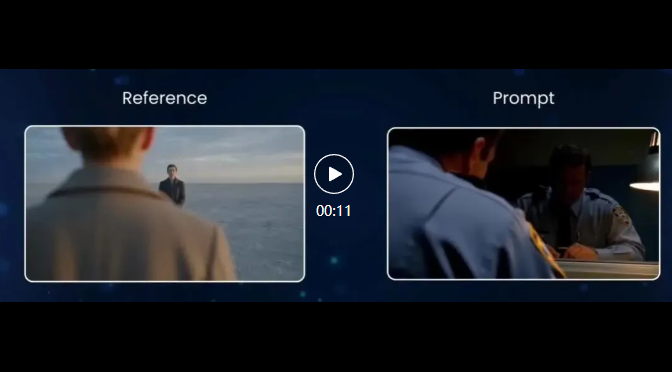
Number 7: The cross-shoulder hint is as follows:
Over-the-shoulder shot from a blackly detached's shoulder, criminalizing a natural natural injury lights in a dim police intelview room, minematic test, shallow depth of field.
Case Note: The lenses cross the shoulders of the prospective person to photograph the subject, and can naturally create a sense of proximity and perspective to the image, so that the audience can be seen in the scene. Such mirrors are well suited to the context of dialogue or confrontation, to maintain the clarity of space and to highlight the reaction of the person, especially in the context of a tense dialogue, interrogation or truth discovery。
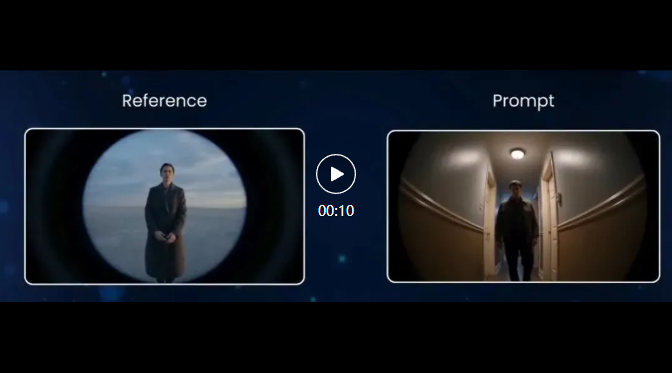
Number 8: The fish eyebrows (poaching perspective) hint is as follows:
A few days ago, a young man stood alone in a dim apartment hall, walls curving unnatablely toward the Edges, harsh overhead light, security-cameramood, cinematic conversation, political lighting, shallow crime on the Lens.
Case Note: This exaggerated wide-angle lens will raise the edges of the picture and shape the audience into a hidden observer's perspective. The distortion of the image creates an atmosphere of tension and anxiety, with a glimpse of the subject, which makes it look like it was being watched or trapped. It is most appropriate to use surveillance material or scenes of psychological suspicion, especially in closed spaces such as corridors, gates, elevators or interrogation rooms。
Number 9: The following is the hint behind the mask:
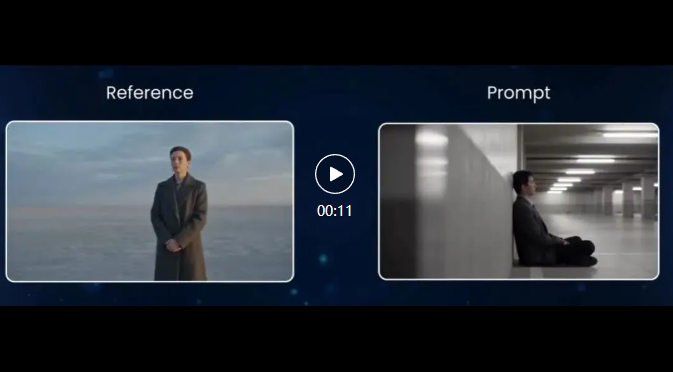
In fact, I'm not sure I'm going to be able to do that.
Case Note: The camera starts with a screen that is blocked, gradually reveals the subject by moving horizontally, guides the viewer ' s eyes with a motivational mirror, and builds suspenses incrementally. The trick is not to show information directly, but to reveal the subject through natural elements of the outlook (e.g. walls, columns), which is best used in the scenes where new things or characters are found。
Number 10: The introduction to the lens is as follows:
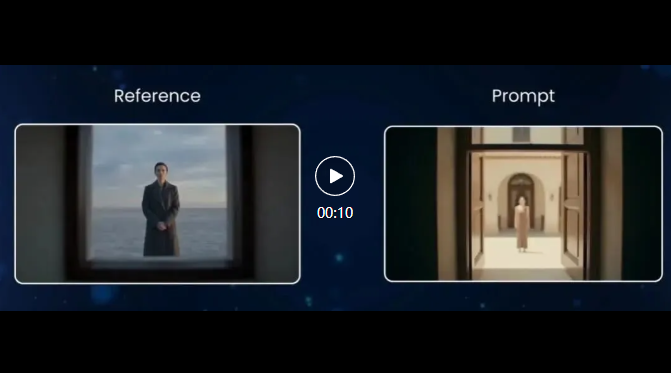
Cinematics fly through as the samea passes through a narrow window into a small court, revealing a calm of women standing caught in the distance.
Case Note: The lens moves forward, through a physical barrier (e.g., a door, window, glass, fence) and “takes” the viewer directly into the scene. This mirror enhances the sense of advancement and exploration of the image and creates visual experience of entering the unknown. It would be appropriate to use a lens to reveal the truth, to turn the scene or to turn the scene to a turning point, especially from closed spaces to a more open and meaningful environment。
The remaining video cases are not available because they are beyond the maximum of articles, so they are not, and you can test them yourself。
Number 11: Fuzzy and clear (focus shift) hints as follows:
Cinematic focus pulls back together from full bokeh to full focus on a man scheduled alone with an unreadable exception inside a nighttime caffé, Circular bokeh lightlights coming in the background, shallow diveth of Field.
Case Note: This camera does not rely on camera to move, but rather to focus the audience ' s view from vague abstract images to clear subjects。
Number 12: Focus transition (from perspective to context)
A cinematic rack focus shot: a glass of water in the bathroom while a forest is in sight, then the focus flies to the background as the glass softens.
Case Note: The shift of attention is done in the same image by precise focus, while keeping the camera still。
Number 13: Upward (vertical up) hints as follows:
A clinical low tip-up shot from Bolivia to the face of a Saudi society standing on an urban street with challenging builders behind them.
Note: From the ground to the face of the person, the person ' s sense of presence is gradually built up, and it is appropriate to shape the authority/mystical person, the person ' s appearance, the atmosphere。
Number 14: Downward (vertical down) hints are as follows:
A fashion model holds eye constact in a few cases as the camera slows down from face to shots.
Note: Scrambling from the face to the foot, gradually displaying the details, suitable for person appearances, fashion and focus lenses。
Number 15: Horizontal left (array orbit left) hints as follows:
Camera ducks left with a long pairax as a woman looks out from a balcony over a played city at sunset.
Note: A smoother view of the parallel subject to the left, a sharper/floating perception of the difference, no dizziness, suitable for exploration, rising tension, and personal observation。
Number 16: Horizontal right-hand (right-right-wing) hint as follows:
A woman looks out from a balcony over a played city at sunset, cinematic depth and motion.
Note: A right-sliding of the parallel subject, a relative movement in the background at a deep level, and an increased sense of space / motion, suitable for scenes that require a visual rhythm and a high environmental scale。
Number 17: Semi-rounded mirrors (180 degrees semi-rounded)
A cinematic half-orbit shot: the camera moves 180 degrees around a single man with his head slightly bowed, turning from front to back, set in an endless open plain.
Note: Homogenize the main body 180 degree motion, keep the distance constant, change the perspective, show the depth/ presence, and create a feeling of immersion。
Number 18: Fast Full Rounding Mirror (360 degrees Rotation around)
Fast 360° orbit around a fightr standing fire in a Circular arena as lights black into streaks.
Note: Rotation at extreme speed by 360 degrees to increase tension / master control to keep the subject core in the context of confusion。
Number 19: Slow movie arc mirror
Slow arc shot of a contemplative woman gazing off-camera in a simple forward clear with soft backlight.
Note: The slow arc is projected around the side of the main body, with restraint to stretch the contours and increase emotional depth / intimacy, without editing。
Number 20: Vertically down (deposition)
Pedestal down on a standing figure slowly inside a mobile office with clean vertical lines.
Description: Vertical downslide, weakens the dominant position of the subject, highlights the / interior, and makes the mood more emotional。
Number 21: Vertically up (alteration)
Pedestal up on a person risking virtually family as the environment opens up.
Note: Move vertically, raise the sense of existence of the subject, symbolize growth / awareness / awakening, visualize and enhance emotions。
22nd: Upstretch (discovered with a high angle)
Clane up from a couple standing together as a vast beats before them.
Note: Move up + back, broaden the horizon, turn a sense of proximity into a sense of scale and expose the context and emotional ambition。
Number 23: The swing arm drops (land-focused) hints as follows:
Clane down on a left pather waiting in a side city plaza that narrows into Focus.
Note: Slow down, turn the pound sense into a sense of proximity, pull back into the person's personal space, and enhance emotions。
24th: Smooth Optical Focus (Inner Focus)
Smooth optical zoom-in on a calm face as it slowly fills the fire inside a softly lit internor with blacked background highlights.
Note: Fixed-spaced, in-sight modulation, focused at the psychological level, increased proximity and isolation of the subject from the environment。
25th: Smooth Optical Focus (Focus Out)
Smooth optical zoom-out from a selected person as a side room is completely protected around them.
Note: Fixed slots, zooming out of the lens, displaying environmental details, shifting focus from people to the environment, adding a more dramatic context。
No. 26: The text of the prompts is as follows:
Snap straight into a standing woman's eyes Mid-realization against a chaotic, frozen background.
Note: The camera suddenly became extremely focused, did not overwhelm the shock, shocked/awaken, forced to lock audience attention。
Number 27: The UAVs' high-altitude dives are as follows:
High-altitude Drone fly over of a small group walking through expansive rolls.
Note: High-altitude flying overlooking, highlighting a sense of scale / dynamic, reinforcing visual impact against small people and the wider environment。
Number 28: The following are the poems of the drone history
Epic Drone revealing from behind a trackery to expose a lonely figure standing at a Cliff edge at safety.
Note: Up + rotate, control the image to reveal the rhythm, build a sense of expectation, and lead to dramatic discoveries。
29th: The UAV wide-ranging circulars are as follows:
Wide Drone orbit curcing a central situation with a last natural landscape, emphasizing immensity.
Note: The air is surrounded by the main subject, the main subject is centered, the environment rotates, highlighting the master control / the sense of loneliness, the sense of passing the scale and the importance。
Number 30: God's perspective (vertical topography)
Top-down driving drop of a left figure in a flying red clack caught in a curcular environment carvings, soft mist, and shitting light.
Note: Vertically, take down, abstract the scene into geometric graphics, reinforce the sense of isolation / destiny, and fit to symbolize the moment of great significance and key myths。
Number 31: Cross-board subduction lens hints as follows:
Aggressive FPV driving down urban armed with a runner bringing the case of the building.
Note: Extreme speed dives down to create a strong sense of speed / urgency, suitable for the pursuit of dramas, the discovery of secrets, and an environment with a strong sense of vertical space。
32nd: Hand-held documentary style tips are as follows:
Handhold camera follows a person speaking perfectly in a real-world internor with uncontrolled, practically lighting.
Note: A light vibration of the panoramic film belt creates a sense of truth, is suitable for interview, is highly authentic, and is suitable for living indoors。
Number 33: The quick-shocking mirror (swirling) hint is as follows:
When a new subject concerns used by streaking motion.
Note: Swinging at extreme speed horizontally, blurring and setting up new subjects, infusing a sense of motion / surprise, suitable for transient, transient action。
34th: The slant angle (Dutch slant) hint is as follows:
Rolled cameras an emmolutionally aggressive character inside a tight, claustrophobic interror.
Note: Intentionally tilted, unbalanced images re-embracing, carefully applied, suitable for a closed space at the time of an emotional outbreak, and magnifying psychological tension。
Number 35: Lead and shoot (back track and) hints as follows:
A determined person begins through a long corridor as the Cameron glides backward, holding constant distance and criminalizing.
Note: Move back in the face, move in the direction of the subject, create a sense of vigor/confidence, and focus while enhancing the pace of advancement。
Number 36: Follow-up (forward track and) hints as follows:
A single figure walks away a long way as the camera follows closely from behind.
Note: Following in the back of the subject, incarnate chaser's perspective, highlighting the sense of unknown / mystique, and maintaining the distance between direction and emotion。
Number 37: Parallel side and hints (side track and beat) as follows:
Side-trucking carcasses parallel to a realist family intractively left to right on a highly urban street.
Note: Move side by side in parallel, keep speed/distance constant, spread body language/ environmental flow sense, and maintain dynamic energy。
Number 38: The first person will say the following:
First-person POVs with general walking away through a live-in space, the subject impregnated by their, healthy Edge, or shadow in conflict.
Note: To visualize the simulator walk-in perspective, to develop a strong sense of introspection/realism, to create an immersion experience, suitable for exploration, fielding, experience travel lens。
It's finally over。