



The news of January 30thSaudi ArabiaThe Line City, an Arab super-project, was originally planned to create a linear city in the desert that would extend about 170 km in extremely high density formCombining automated transport with renewable energyIn narrow space, about 9 million inhabitants。
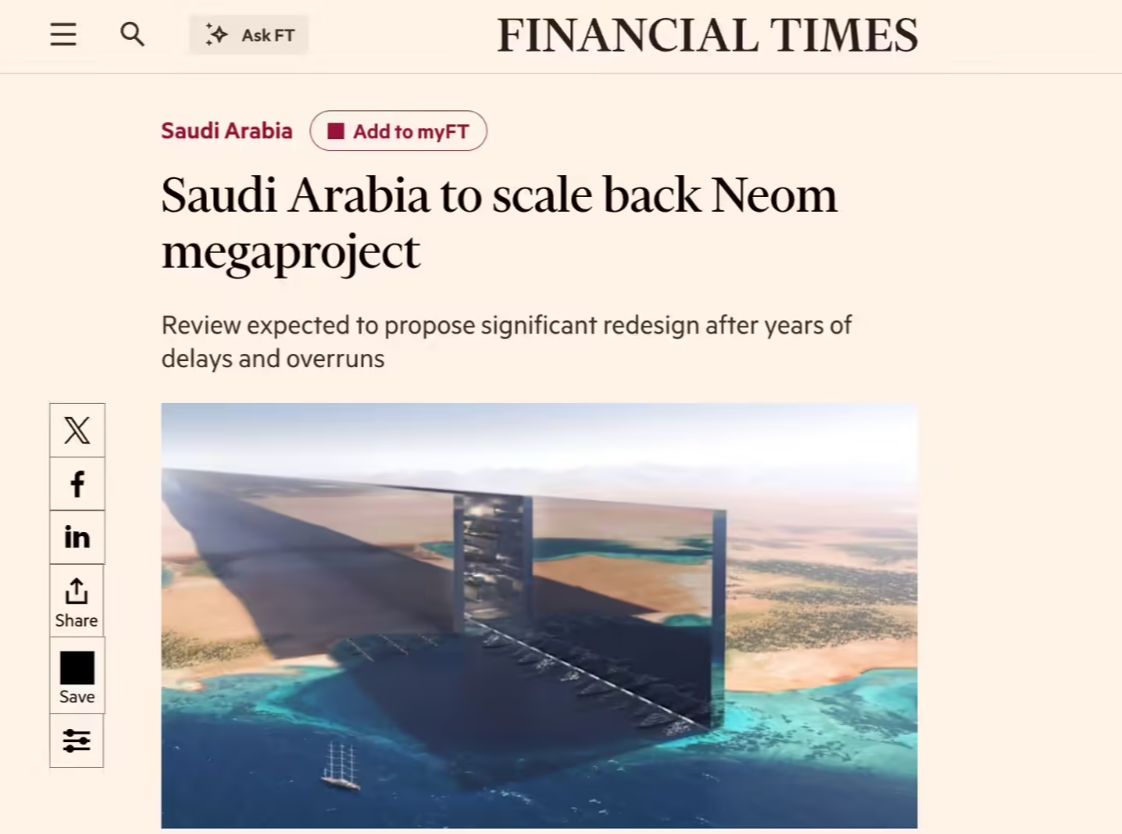
However, according to the Financial Times on 26 January, internal reviews revealed delays in the project and continued cost escalation, while Saudi financial pressure increased and officials were reassessing this ambitious blueprint. According to the source, the new scheme may beNo longer targeting large-scale residential citiesInstead, it has shifted to much smaller industrial uses。
In this context, the planning team is reportedly considering transforming the area into a cloud service and largeData CenterBase, to support high-intensity computing needs. The project's focus is likely to become a high-density server clusterSERVICE AI TRAINING AND REASONINGInstead of building houses or urban public services。
The view was also expressed that operators might prefer naked metal infrastructure to maximize performance and resource efficiency。
ACCORDING TO AI, SAUDI ARABIA IS GRADUALLY ACCELERATING ITS AI COMPUTING LAYOUT AND PURCHASING THOUSANDS OF ADVANCED GPUS FOR STATE-SUPPORTED FACILITIES. HOWEVER, THE SAUDI CLIMATE IS A RECOGNIZED CHALLENGE FOR THE OPERATION OF DATA CENTRES:Long-term high-temperature superheat plus limited freshwater resourcesThe issue of cooling costs and efficiency was highlighted。
Independent studies indicate that most of the existing data centres in the country are in less cooling-efficient areas. However, the geographical conditions of the “line city” near the Red Sea coast were seen as advantages, and planners suggested the use of sea water cooling to mitigate the challenge。
After many years of expansionary public spending, Saudi liquidity tightened, while oil price revenues fell, compounded by multiple commitments such as Expo and the 2034 World Cup, further raised fiscal pressures。
The Neom side did not actively deny the reduction in the scope of the projectEmphasis on a phased approachand ensure alignment with national priorities. Observers note that similar reductions and adjustments have occurred in other large Saudi projects。