



February 10, local time MondayOpenAI It's starting atUSAFor Free and Go Subscription User TestadvertiseFunction.
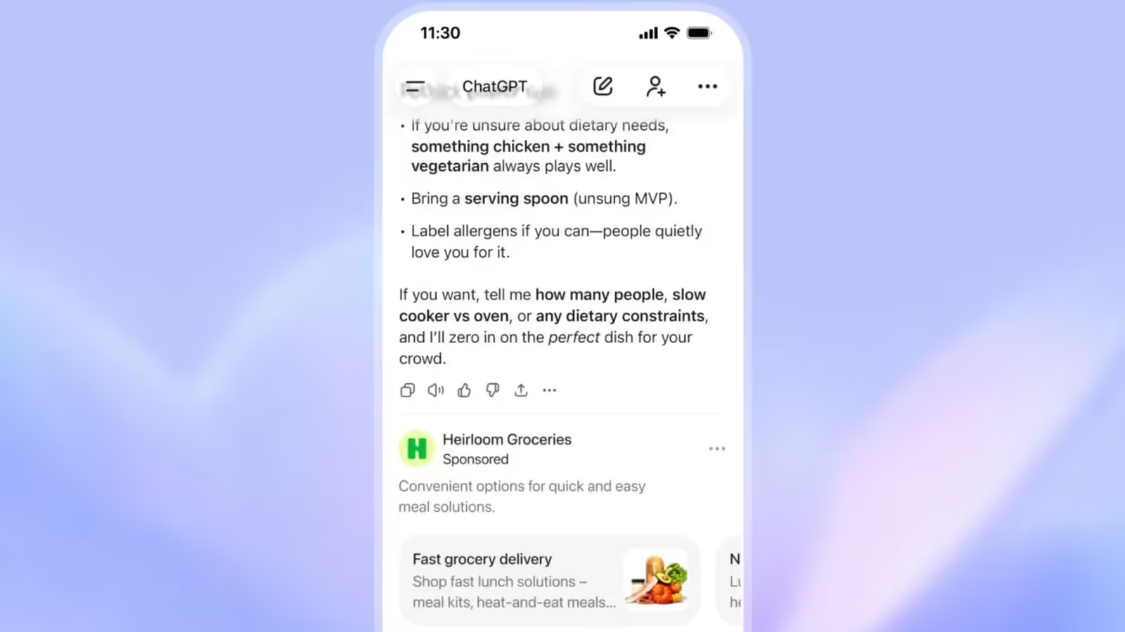
The brand-new Go package, a low-cost subscription service, was set at $8 per month for the United States area (note: the current exchange rate is approximately 55.5 yuan), and was launched globally in mid-January。
The company stated that OpenAI's paid subscribers - including Plus, Pro, Business, Enterprise and Education versions - would not see advertisements。
In a blog post, OpenAI responded to the concern of the outside world that advertising could affect users' experiences: Advertising will not affect ChatGPT's answers to you, nor will we leak to advertisers your conversation with ChatGPT. Our goal is to get more people to use the more powerful ChatGPT function through advertising while keeping users' trust in ChatGPT in important, private matters."
The initiative was published a month ago, and in Sunday's Super Bowl ad, its main rival, Anthropic, mocked it。
In the TV ads, Anthropic tuning part of AI (e.g. OpenAI) is about to be added to the advertising function and shows how inappropriate advertising integration can seriously undermine user experience. In this image, the faceless actor plays the AI chat robot, and while giving his advice, plays a non-relevant and bad ad。
The CEO of OpenAI, Sam Altman, was extremely dissatisfied with this, calling the advertisements “unfaithful” and accusing Anthropic of being a “authoritarian company”。
To date, there has been widespread consumer opposition to advertising in AI responses. At the end of last year, OpenAI tested the application recommendation function for similar ads with strong user opposition. But AI still needs to generate revenue from this hot chat robot to cover the costs of technological development and business expansion。
While this is understandable, critics are concerned that advertising may affect ChatGPT's response. In its bulletin, OpenAI denied that advertising would be optimized on the basis of “the most helpful content for you” and stated that all advertisements would be clearly labelled as sponsorship and clearly distinguished from original content。
During the test, OpenAI tried to match the ad with the user dialogue theme, history chats and past ad interactions. For example, users searching for recipes may see advertisements for fresh distribution or food packages. OpenAI states that advertisers do not have access to user personal data, but only to aggregated advertising effects such as views, hits, etc。
Users can also view their own records of advertising interactions and remove them at any time. In addition, OpenAI indicates that users can close ads, submit feedback, see the reasons for their placement and manage the personalization of advertising。
Users under 18 years of age do not see advertisements, nor do they appear close to the contents of sensitive or regulated topics such as health, politics, mental health。