



A LOT OF PEOPLE DO THE SAME THING WHEN THEY DO THE AI VIDEO: IT'S TOO SHORT A SINGLE TIME, AND IT'S OVER AS SOON AS IT'S IN THE STATE. SO THE MOST COMMON WAY TO DO THIS IS TO CUT OUT THE LAST FRAME OF THE LAST VIDEO AND CONTINUE TO PRODUCE IT AS THE FIRST FRAME OF THE NEXT VIDEO. THIS APPROACH SEEMS REASONABLE, BUT WHEN IT IS REALLY CUT TOGETHER, THERE IS OFTEN A PROBLEM WITH CARTONS, PAUSES AND SPLITS。
The reason is simple: a picture can only record a moment of silence, but not a person's state of movement. At the end of the previous video, the person may be turning his head, walking and raising his hand, but the next video is regenerated from a static map, so it is easy to break between the two segments。
IN THIS SECTION, WE MOVE AWAY FROM TALKING ABOUT “HOW TO GET THE FIRST FRAME” TO A MORE PRACTICAL IDEA: HOW TO MAKE THE AI SHORT VIDEO REALLY BECOME A LONG VIDEO FROM THE LENS DESIGN, MOTION EXTENSION, VIDEO CONTINUATION AND LATER EDITING. AS LONG AS IT CONNECTS NATURALLY, THE AUDIENCE DOES NOT SEE ANY CIPHER, AND 15 SECONDS AND 60 SECONDS ARE NOT VERY DIFFERENT。
I. WHY THE FIRST ENDS ARE NOT THE BEST LONG VIDEO PROGRAMME
The biggest problem with the frame is that it only resolves the static consistency of the picture but not the continuity of the movement。
A PICTURE CAN ONLY RECORD A MOMENT. IT CAN TELL AI WHAT A PERSON LOOKS LIKE, WHAT A DRESS IS, WHAT A BACKGROUND IS, WHAT A PICTURE IS. BUT IT CAN'T TELL AI EXACTLY HOW PEOPLE MOVE, HOW FAST THEY MOVE, WHERE THE WEIGHT OF THE BODY IS, WHERE THEY SHOULD GO NEXT。
THAT'S WHY A LOT OF AI VIDEO CIPHERS ARE NOT NATURAL。
The last frame of the first video, for example, is a frame in the turn of the person (as shown below). At this point in time, the person is still in the exercise, with his shoulders, his eyes, his hair and his clothes。
BUT WHEN YOU USE THIS FRAME AS THE FIRST FRAME OF THE SECOND VIDEO, AI WILL UNDERSTAND IT AS A NEW BEGINNING. IT WILL NOT FULLY INHERIT THE SPEED AND INERTIA OF MOVEMENT OF THE PREVIOUS PARAGRAPH, BUT WILL RE-DESIGN THE MOVEMENT FROM THIS MAP。
The result is that the first paragraph ends with the words “outcomes in the movement” and the second paragraph begins with the words “regenerated start”。
Once these two states come together, the middle will naturally stop。
So when you make a long video, you can't just stare at "the last frame doesn't look like it," but at "the action can't get on."。
II. METHODOLOGY I: To continue video with video, not just pictures
The first more stable way is to continue the next video with the last clip of the previous video。
THE FIRST FRAME GIVES ONLY ONE IMAGE TO AI, AND THE VIDEO CLIP TO AI IS A COMPLETE EXERCISE. IT CONTAINS THE MOVEMENT OF THE PERSON, THE MOTION OF THE LENS, THE CHANGE OF SPEED, THE CHANGE OF EXPRESSION, THE MOVEMENT OF THE CLOTHES AND HAIR, ALL OF WHICH CANNOT BE PROVIDED IN A SINGLE PICTURE。
The approach is simple。
When the first video is produced, not just the last frame, but the last two to three seconds of video footage. And then this clip is used as a reference for the next paragraph, so AI continues to move down in this state of motion。
The advantage of doing so is that the second video is not restarted from static pictures, but continues from an ongoing campaign. It's easier to connect people and more natural for a camera。
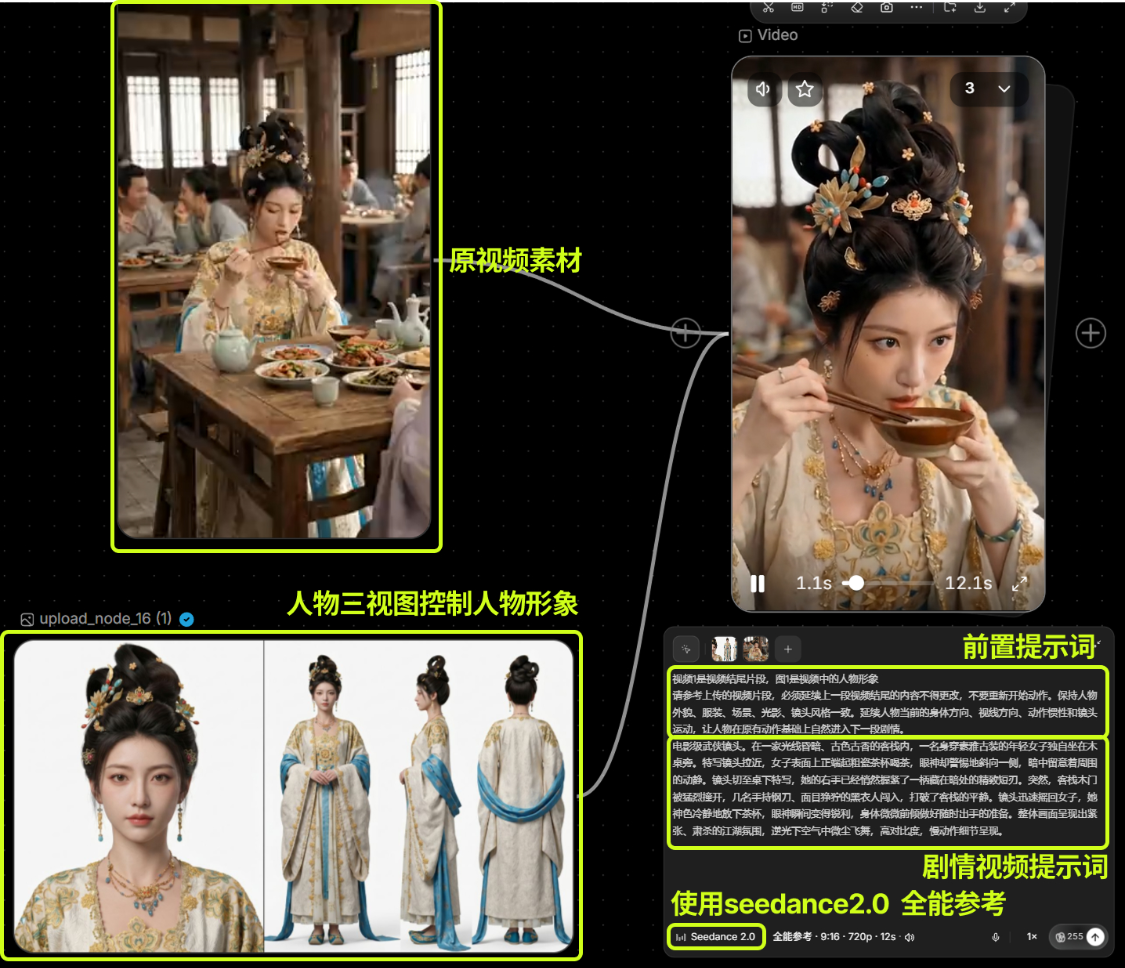
generate using feedance 2.0
THIS IS FOR MOST OF THE AI VIDEOS
In particular, there is a need to keep the person's movements, the camera movement, the scenery atmosphere and the image style between the two sections。
Whether the person walks, turns, lifts, returns his eyes, or the camera pushes, moves across, surrounds, cuts from the view to the new space, as long as the last video ends in a moving state, the next one can be more naturally connected by means of a “video extension”。
IT'S NOT JUST ABOUT SOLVING A FEW ACTIONS, IT'S ABOUT SOLVING THE MOST COMMON "ACTION FRACTURES" AND "REBOOTING SENSES" OF AI VIDEO FUSION。
Here you can give a template for a hint:
Please refer to the uploaded video clip, which must remain unchanged and do not restart. It's like a person's appearance, clothing, scenery, photo and camera style. The continuation of the person ' s current physical direction, vision direction, mobility inertia and lens movement allows the person to naturally enter the next scene on the basis of the original movement. After that, add your follow-up video alert
The disadvantages of this approach are also clear: it will require more tool capacity and credit consumption, and the video will become even more dead. If you don't care about generating costs, it's a smoother way. But if you want to be more cost-effective, you have to start with the spectroscopy。
III. METHODOLOGY II: Disassembly the 60-second script into a fraction
If you've got a script in your hand for 60 seconds, don't just make it a long shot. Because now there's a lot of AI video tools that produce a single time limit of 15s。
The better way is to turn this 60 seconds script into a storyboard。
There's a storyboard here, either a full storyboard or more。
But from a practical point of view, it would be more useful to press 15 seconds to produce a storyboard, so that the image message would be clearer and the lens would be easier to read, and then it would be more operational when the video was generated。
That is, if you have a 60-second script, you can tear it down like this:
0-15 seconds to generate the first storyboard
15-30 seconds to generate the second storyboard
30-45 seconds to generate the third storyboard
45-60 seconds to generate the fourth storyboard
I have the following script。
Copy the scenes and characters to ChatGpt and add prefixes to the storyboard。
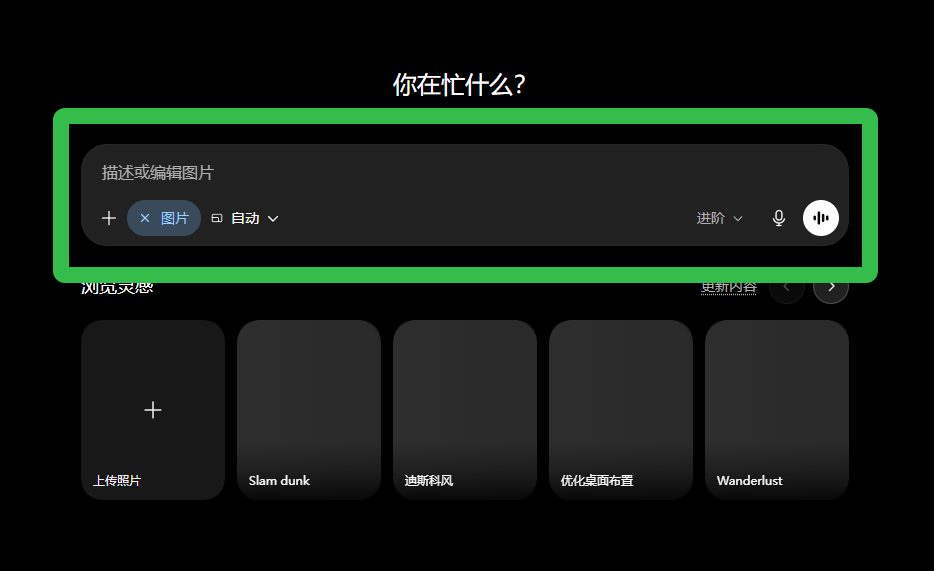
Call Picture Generation
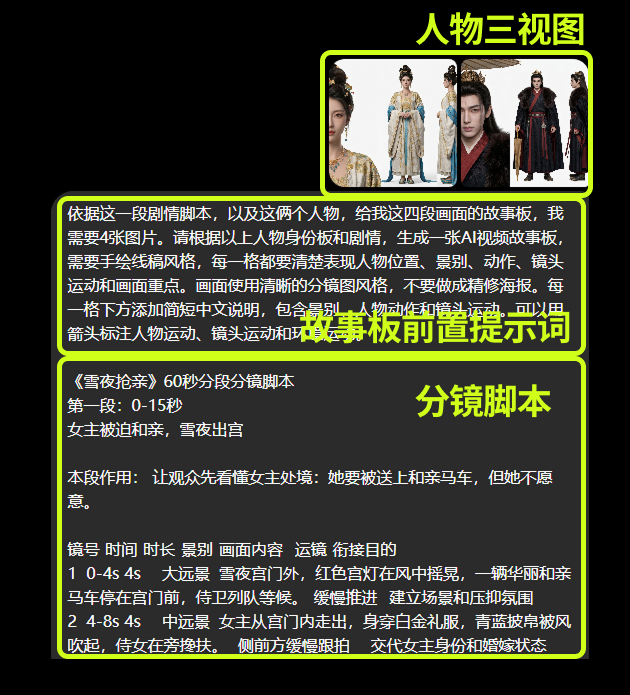
ChatGPT Interface
Storyboard prefix:
On the basis of this script and these two personal items, I need four images for the story sheet of these four images. Please generate one based on the above profile and the storyAI VideoStoryboards, which require hand-drawn draft styles, each of which clearly shows the location of the person, the view, the action, the lens movement and the focus of the image. The image uses a clear spectrograph style and does not make a fine poster. At the bottom of each grid, add a short description of the Chinese language, including the scenery, the movement of the person and the motion of the lens. An arrow can be used to mark the movement of people, the movement of lenses and the movement of the environment。
Here's the storyboard
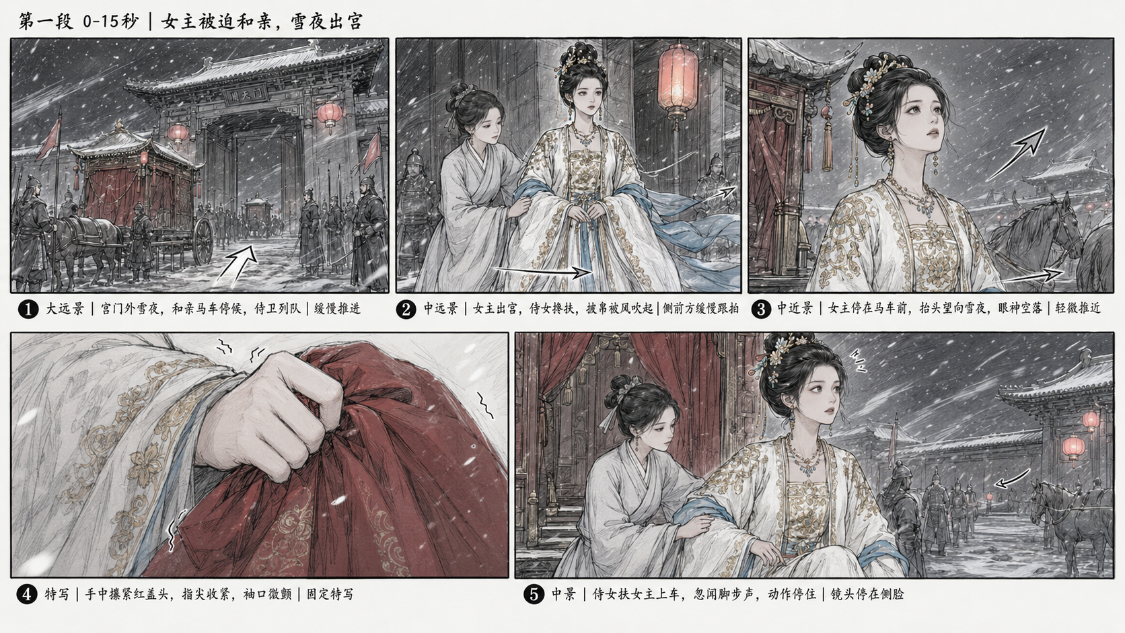
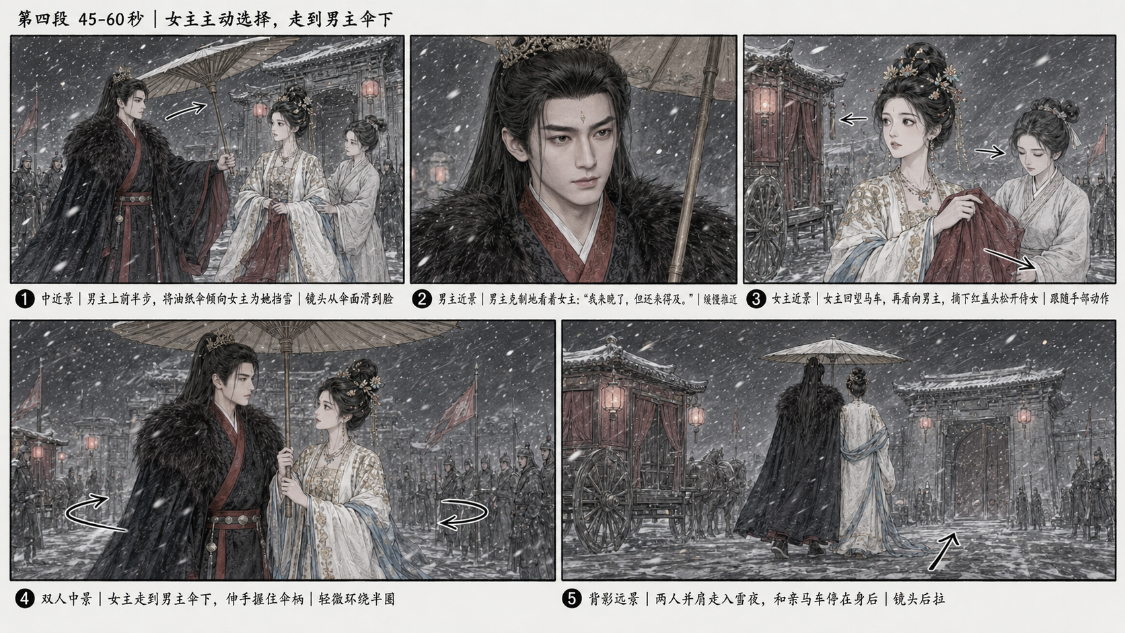
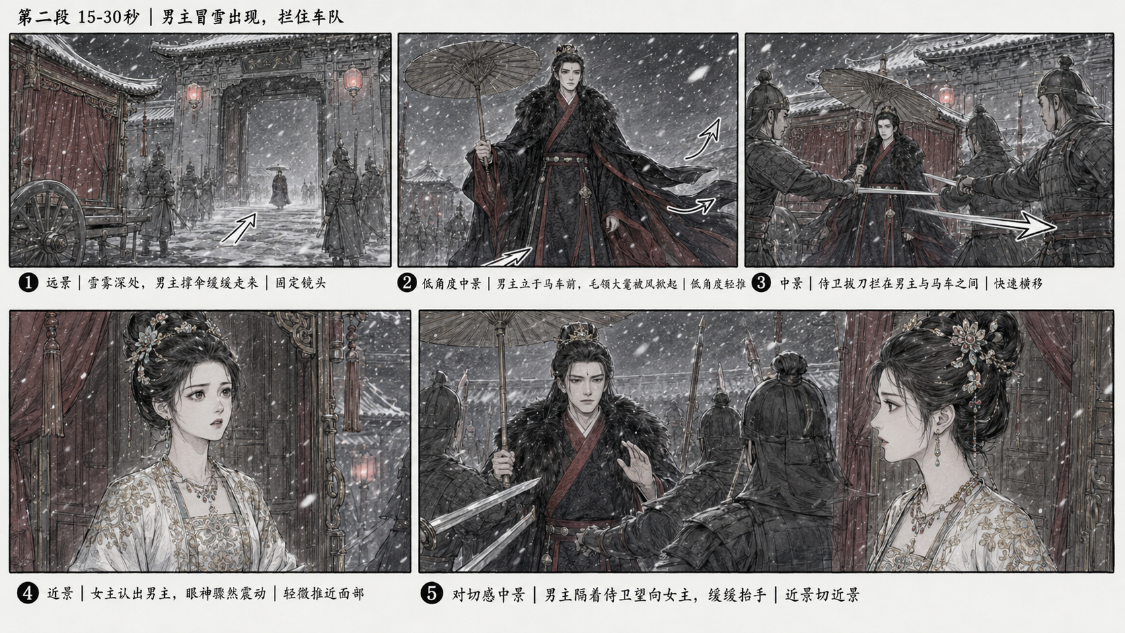
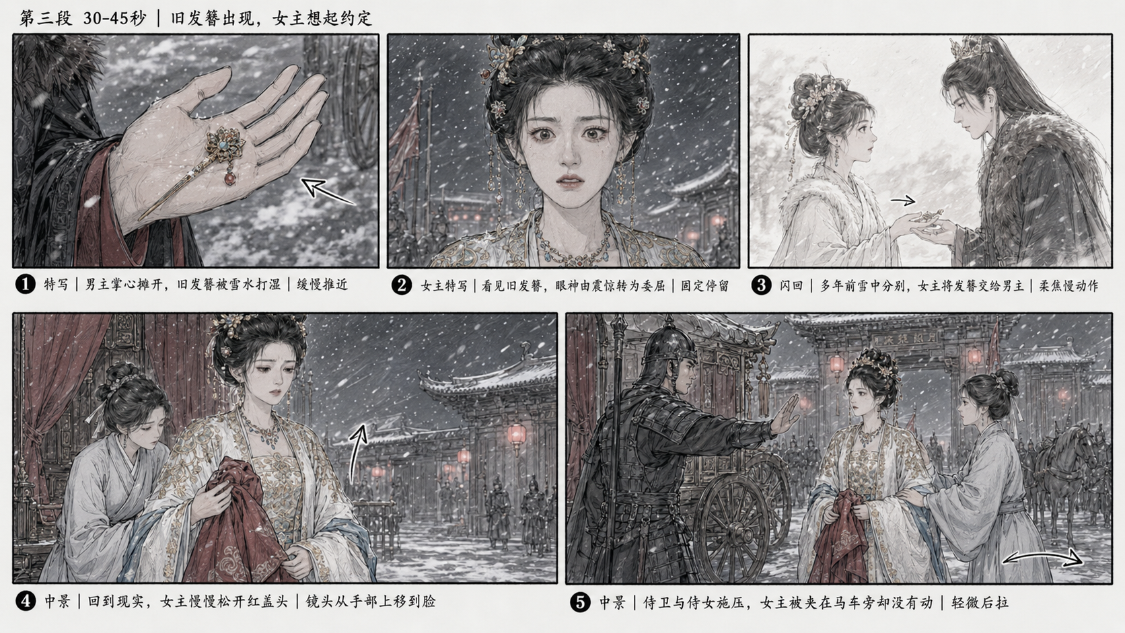
The advantage of doing this is that each storyboard is responsible for only one small paragraph within 15 seconds, that the information is not too crowded, and that the lens is clearer. When you look at the storyboard, you know more clearly what the camera is, what the person is doing, how the mood changes, how the picture moves。
for example:
The first storyboard is for “persons entering the situation and giving opening messages”
The second storyboard is in charge of “Persons acting and moving forward”
The third storyboard is for “the escalation of conflict and increased emotional change”
The fourth storyboard is responsible for “results presented, ending the end of the line”。
so, the whole 60-second video, though broken down into four parts, is not randomly cut, but built on the same set of drama logic. you don't follow the video with a paragraph, but it's based on the storyboards every 15 seconds. (storyboard tutorial can be consulted at https://www.1ai.net/57960.html)
That means:
The first video is generated using 0-15 seconds of corresponding storyboard content
Use 15-30 seconds to generate a second video using the corresponding storyboard content
The third video is then generated using 30-45 seconds of corresponding storyboard content
Finally, using 45-60 seconds of the corresponding storyboard content to generate the fourth video。
The core of this approach is in line with the preceding thinking:
Don't wait for the video to be finished, and then try to spell it; rather, before it is produced, the visual logic of the whole video is removed。
Just a little bit of a clip。
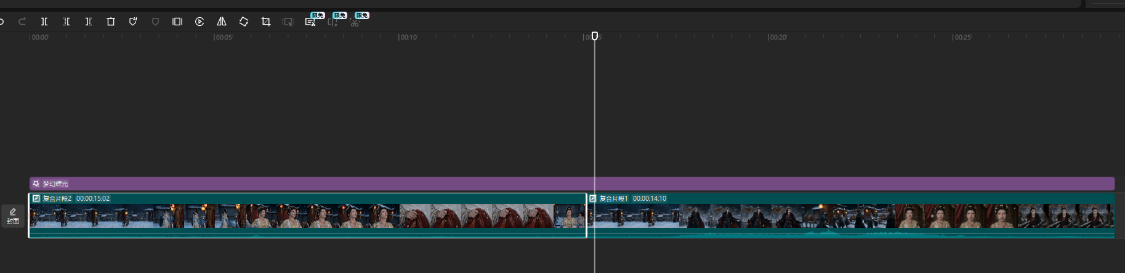
THE BENEFITS OF DOING SO ARE NOT ONLY EASIER TO GENERATE, BUT, MORE IMPORTANTLY, TO CONNECT LATER. BECAUSE EACH SECTION ITSELF HAS A CLEAR STORY AND A VISUAL BASIS, AND EVENTUALLY IT WILL BE MORE LIKE A WHOLE PIECE, RATHER THAN A FEW SEPARATE PIECES OF AI。
Method III: Repetition of the preceding paragraph at the beginning of the subsequent paragraph
The third approach is very practical and is particularly appropriate in a situation where multiple videos have been generated, but the fusion position is inadequate。
Its logic is that the second video should not start with a new story, but rather repeat the last of the previous video before entering a new one。
For example, at the end of the previous paragraph, the person was responding to the question, and at the beginning of the next paragraph, he continued to answer the question
This video, for example, ends with a response from the man who answered the woman:
So the next video starts with a man responding to the hostess' questions
The advantage of doing so is that you add an "optional interface" to the clip. You don't have to start with the first line of the second section. You can go in the right place。
THIS TECHNIQUE IS IMPORTANT IN AI VIDEO。
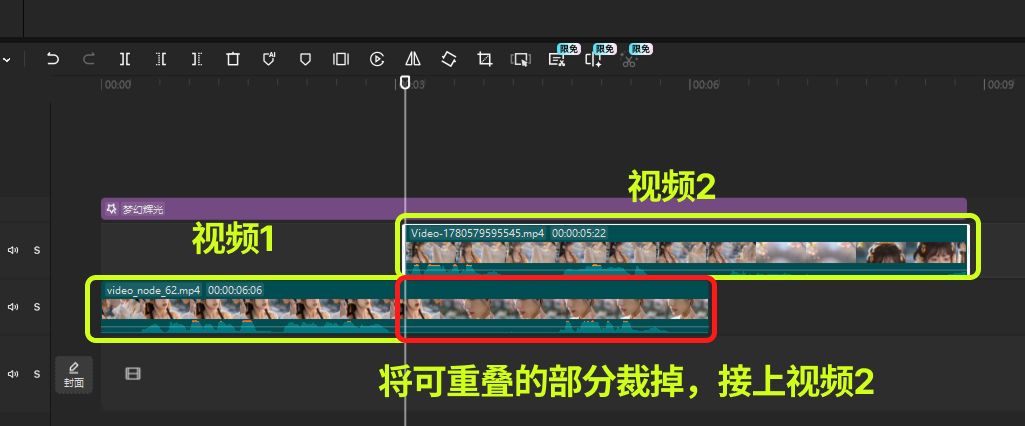
As shown in the figure, the two “men's responses to questions” were stacked together and the overlapping parts were deleted。
Method 4: If you can't catch it, hide the problem with the clip
The fourth method is the most direct, and the most like that used in actual production: cut。
MANY OF THE AI VIDEO LINKS TO CARDON, WHICH IS ACTUALLY FOCUSED ON A SINGLE FRAME OR A VERY SHORT ACTION BREAK. AT THIS POINT, IT IS NOT NECESSARY TO REGENERATE OR TO CONTINUE TO REFINE THE HINTS。
If it's just stuck in the middle, you can cut the frame of Cardon. If necessary, add a little movement blurry, a slight turnover, or a reaction lens。
I added a superstition to the video
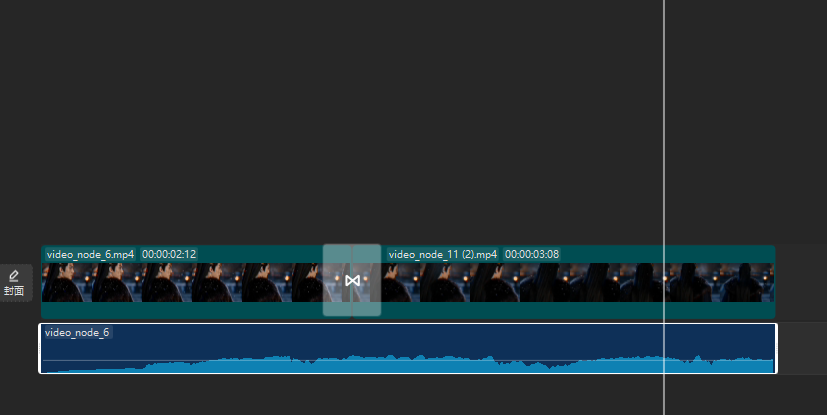
However, this approach is more appropriate for personal works, short video presentations, and teaching cases. In the case of high-demand commercial items, or should efforts be made to resolve the problem at the front end of the spectroscopy and generation phase rather than relying entirely on later remediation。
Summarize
THE REAL HARD PART OF AI'S LONG VIDEO IS NOT THAT THE TOOL CAN ONLY PRODUCE 15 SECONDS, BUT WHETHER IT'S NATURAL TO CONNECT TO EACH VIDEO。
IN ORDER TO TURN AI VIDEO INTO A LONG VIDEO, THE FOCUS IS NOT TO GET A FEW VIDEOS TOGETHER, BUT TO DESIGN THE CONNECTION BEFORE IT IS GENERATED。
THE CORE OF AI LONG VIDEO IS NOT "TO PRODUCE LONGER" BUT "TO DESIGN BETTER."。
As long as there is a clear spectroscopy in the front period, there is a clear extension of the action, and later the cut is used to process the Cardon point, and 15 seconds can be spelled into a naturally coherent 60-second video。
It doesn't matter if the video was generated at once when the audience didn't see the cipher。