



A lotAI VideoLooking at each image on its own, it's fine, and it's like a fast-to-turn set of pictures: people talk, emotions are stressed, cameras are not stopped, and viewers don't have time to enter the story. The more mature way to deal with it is to prevent the image from remaining on her face while the red woman is waiting. Instead, it cuts to the roof of the rainy night, shakes the lantern, table glasses, embroidered shoes with petals and falling red silk. These images, which don't seem to have a lead, are blank mirrors or insertions。
Empty mirrors are not used to fill long decorations, but to speak for people. It can account for time and place, it can slowly bring a line to the audience or it can naturally connect the two scenes. This section will start with a script analysis, and will take you to create a reusable version of an empty spectroph approach, and to clarify what the spectroscope should be, how it should be written, where it should be placed, and how to avoid a good-looking image that has nothing to do with the story。
I. Understanding what an empty mirror is
Many people heard the words "empty mirrors" and thought first of all of the empty view of mountains, sky and streets. Actually, the scope of the glass is wider than the view. As long as the camera is not showing the key figures in a positive way for the time being, but is still sending the story, it can play an empty role. For example, candle fire is shaken by the wind, indicating that doors and windows may be opened; the gills fall on the ground, implying that the person has left in haste or an accident; and the foot outside the door stops suddenly, suggesting that someone has heard what he should not have heard。
THE KEY TO THIS TYPE OF LENS IS NOT “NO ONE”, BUT WHETHER IT LEAVES THE PERSON'S FACE AND CONTINUES TO TELL STORIES THROUGH THE ENVIRONMENT, OBJECTS OR LOCAL ACTIONS. THEREFORE, WHEN PRODUCING THE AI VIDEO, DO NOT INTERPRET THE LENS AS SIMPLY CREATING A VIEW, BUT ASK FIRST: WHAT DOES THIS IMAGE EXPRESS FOR THE STORY
II. The three central roles of an empty mirror
1. Address the environment and allow the audience to quickly enter the story
Before a play begins, the audience needs to know when, where and in what atmosphere the story happened. Instead of saying, “It's raining outside, it's getting late”, you should give a window wet by rain, a dark street light and an empty alley. In a few seconds, the environment is empty, and it takes more than one sentence to complete the text。
2. Control the rhythm and breathe in content
When a person finishes an important line and cuts immediately to the next line or to the next move, it is easy to interrupt. Add an empty mirror of one to two seconds at this time, so that the audience can see that the tea is cool and the clock is still swinging and the mood will naturally extend. The pause in the mirror is not a drag, but a real catch。
3. Replacement of a person and implicit expression of emotions
People do not have to cry all the time when they are sad; they do not have to frown when they are anxious. An empty mirror can be used to express internal emotions with external things. Swinging lights can show unease, unplugged doors can show waiting, candles that are about to run out of time. This expression is more restrained and more ecstatic than a direct expression of expression。
iii. Extracting three types of blank lens from the script
Before writing an empty spectroph, three elements are extracted from the current scene: environment, props, emotions. This step would prevent a hint from being out of the picture and would be the easiest way to design an empty mirror。
Environment Mirror
Answer: "Where is the story?" For example, the rainy night house, the wet roofs and the dazzling lanterns were given first so that the audience could immediately know that it was a cold, quiet night. The emptiness of the environment not only indicates the location, but also pre-empts the light, colour and atmosphere of the whole scene。
Props
The answer is “what is relevant to the person”. Wine cups, red silk, embroidery shoes and candlesticks can all be linked to the wedding, waiting for it. They are not random flavours, but traces of the person's situation. In the selection of props, priority should be given to the search for objects used in the script, mentioned, or capable of representing relationships between persons。
Emotional lenses
"What do you want the audience to feel right now?" Instead of expressing their loss through women's tears, it is better to keep the rain falling, candles shaking and red silk in empty rooms. Emotions are dispersed into the environment and objects, which makes the picture more subtle and more hierarchical。
The way to judge: if this mirror is removed and there is no change in the audience ' s understanding of the place, the time, the relationship or the mood, then it is likely to be just decorative。
IV. A five-element formula for an empty spectra
At least five messages must be clearly written in an empty spectra that is available: the subject, the main state, the dynamic details, the light atmosphere, the lens movement. formulae can be recorded as:
Empty Mirror Psych = shoot the subject + the main state + dynamic details + light atmosphere + lens motion
A role reference is also needed if the story is to be continued by a fixed person. All the follow-up characters used the same reference diagrams: Zhao Ning kept the gold crown, pearls, red gold wedding dress and jewel necklaces; Xiaoxi kept the black high-stringed long hair, dark red-haired hairbelts, black red-coloured robes, and golden dragon thongs. Skelescopes can be changed, props can be changed, but characters, hairstyles and clothing cannot change with the lens。
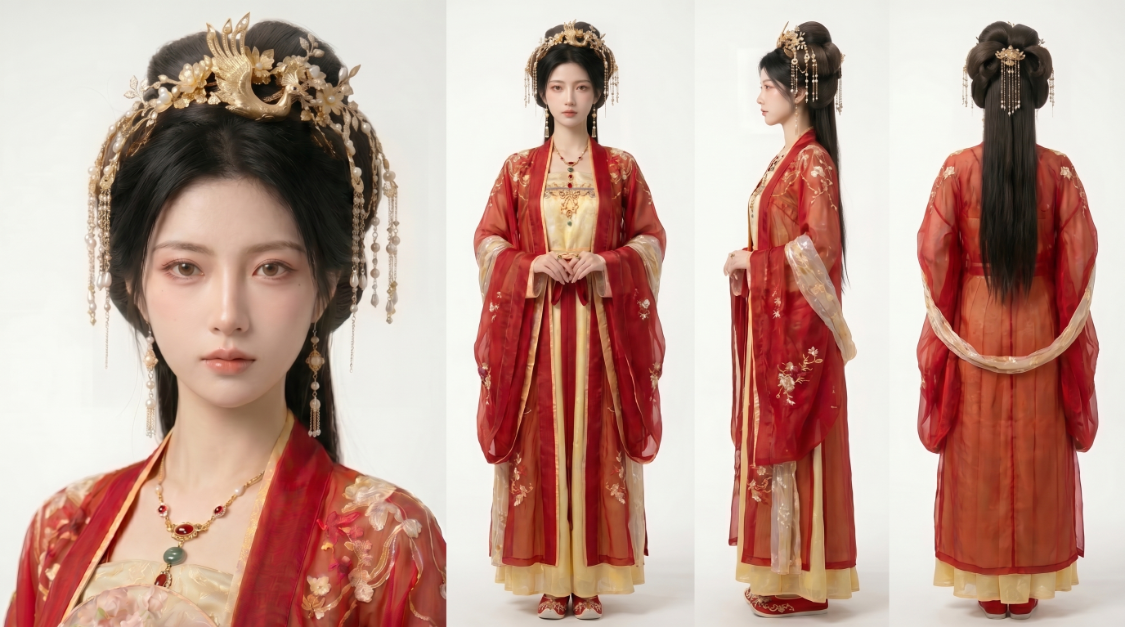
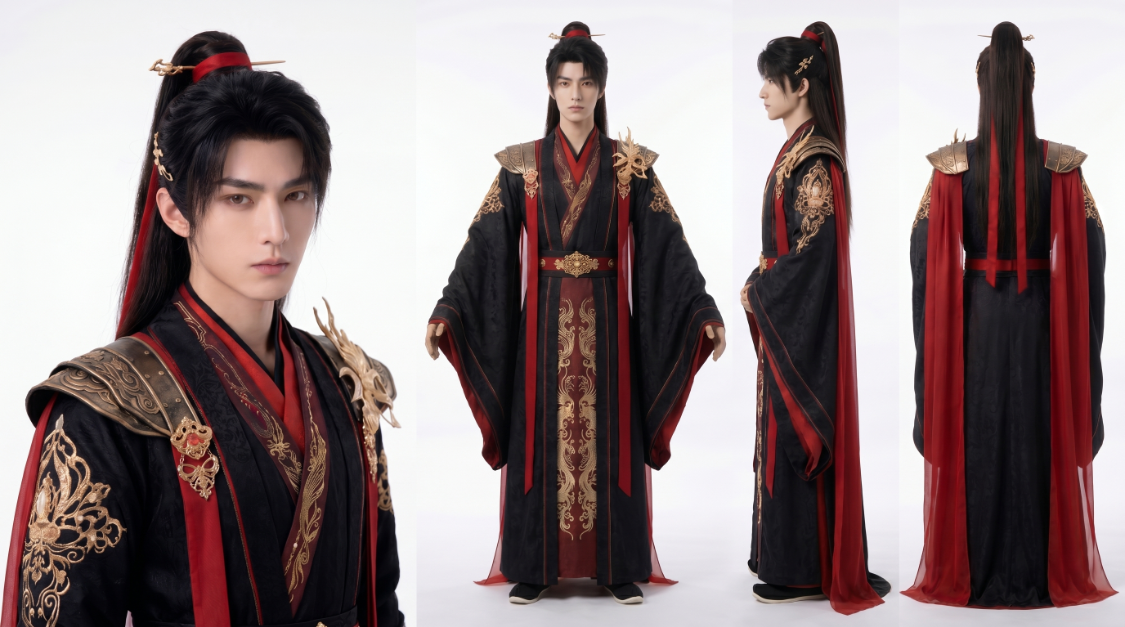
These two reference diagrams are regularly used by the character lens, and the follow-up story is always about two people。
Let's look at the video of my case:
1. Subject: What exactly is the shot
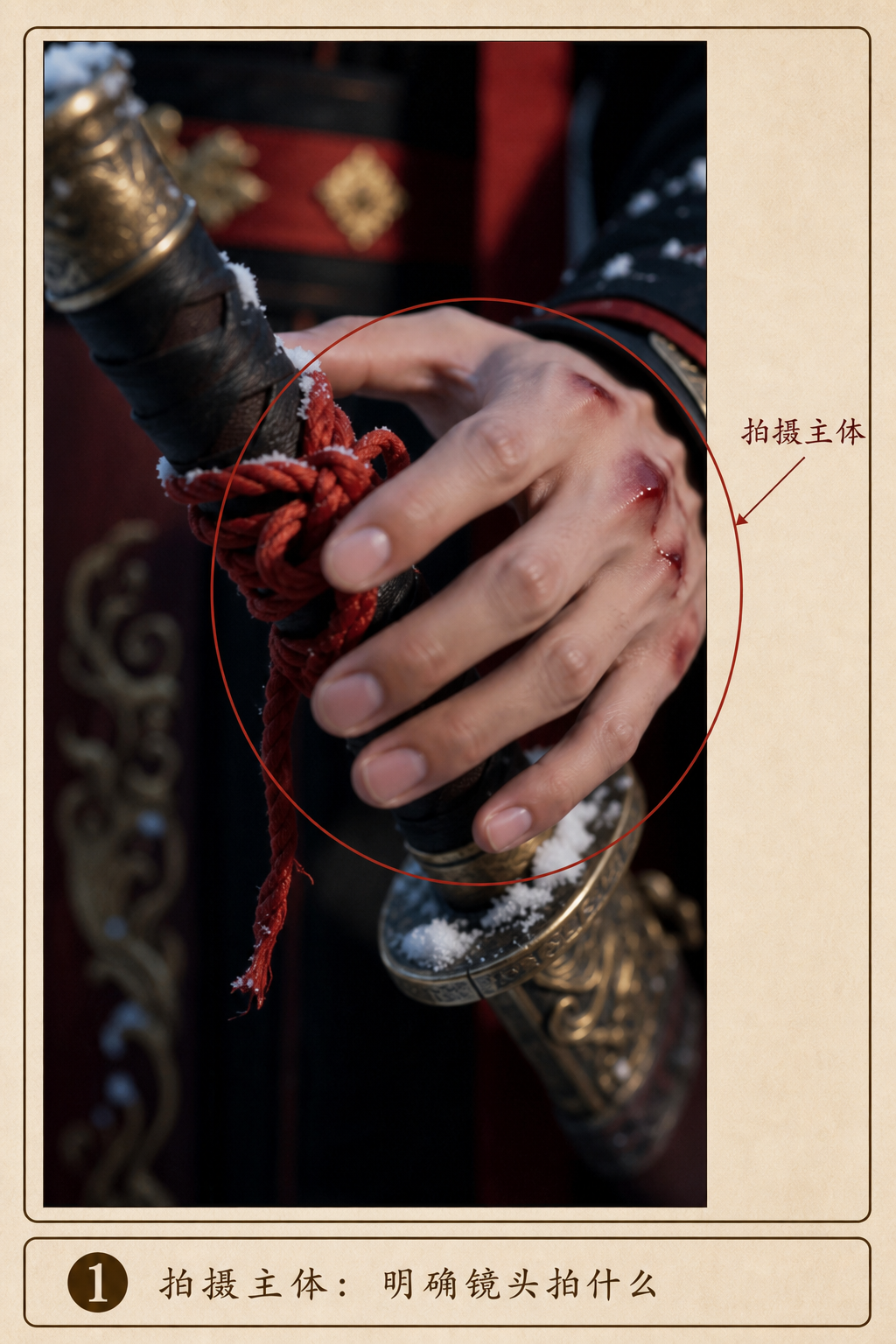
The clearer the subject, the more stable the picture. If the male master is injured, not just “the returning general”, but rather “the red co-concerts worn on the handle of the sword”; if the two men are shown to have a choice, the choice is “the golden hair of Zhao Ning in the hands of the male master”. It would be better to keep only one main subject for one shot。
2. Main state: an indication of what it looks like at the moment
THE DOMINANT STATE INCLUDES THE VIEW, LOCATION, MATERIAL AND CURRENT STATE. FOR EXAMPLE, “SWORD-SWORD HANDLES MICRO-TIPS, IMMERSED IN SNOW” “THE HAND CLOSES IN THE HANDS OF THE TWO PEOPLE, AND THE GOLDEN HAIR IS IN THE HANDS OF THE MAN”. THIS INFORMATION CAN INFORM AI SUBJECTS ABOUT THE SIZE AND NARRATIVE FOCUS OF THE PICTURE。
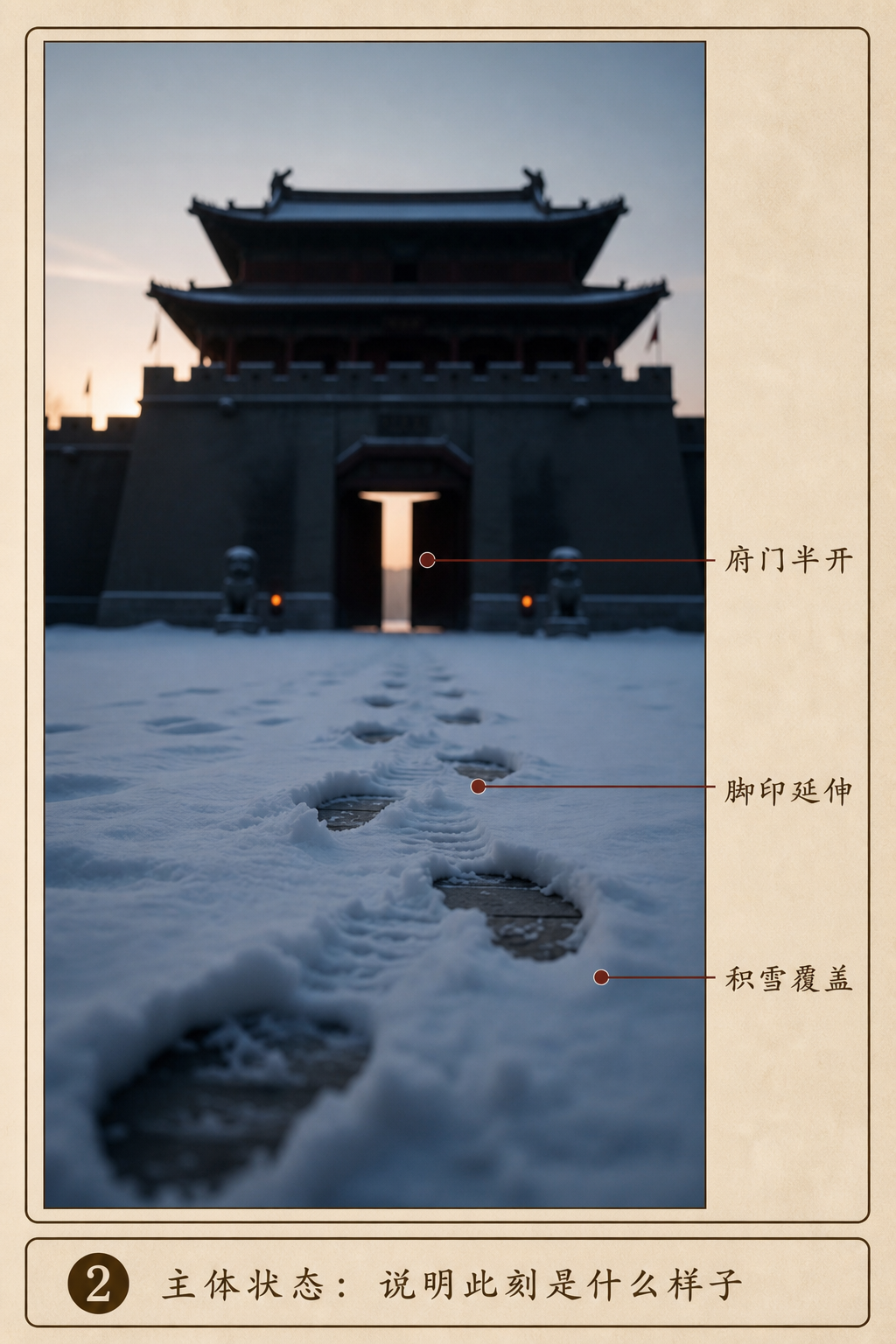
Snow, footprints and semi-open gates illustrate the specific state of the environment at this time。
3. Dynamic detail: keeping the stills a story
Video alerts should not only be nouns but also write changes. The conjunctivation of the male master's finger after Zhao Ning dropped his hair was slow and small, but it turned the relationship into visible detail. Each shot selects a major change。
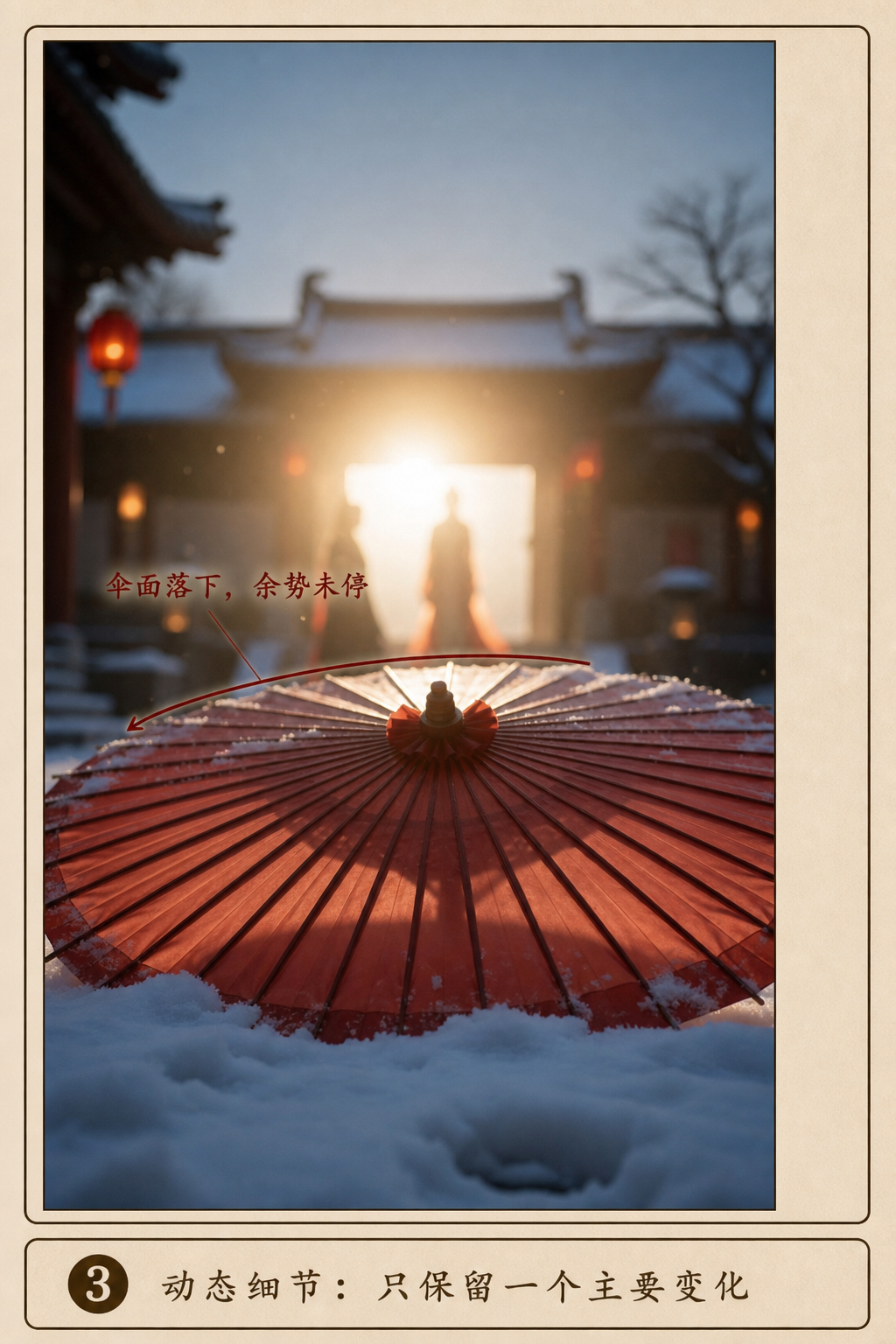
The remnant after the fall of the red umbrella is changed and the second main action is no longer superimposed。
4. Light atmosphere: unity of image
Instead of stacking "film senses, high senses, big senses," it's better to write about light sources. When the male lord returns at night, he wears out in the cold and gray morning light, leaving the warm light of the palace in the red coat
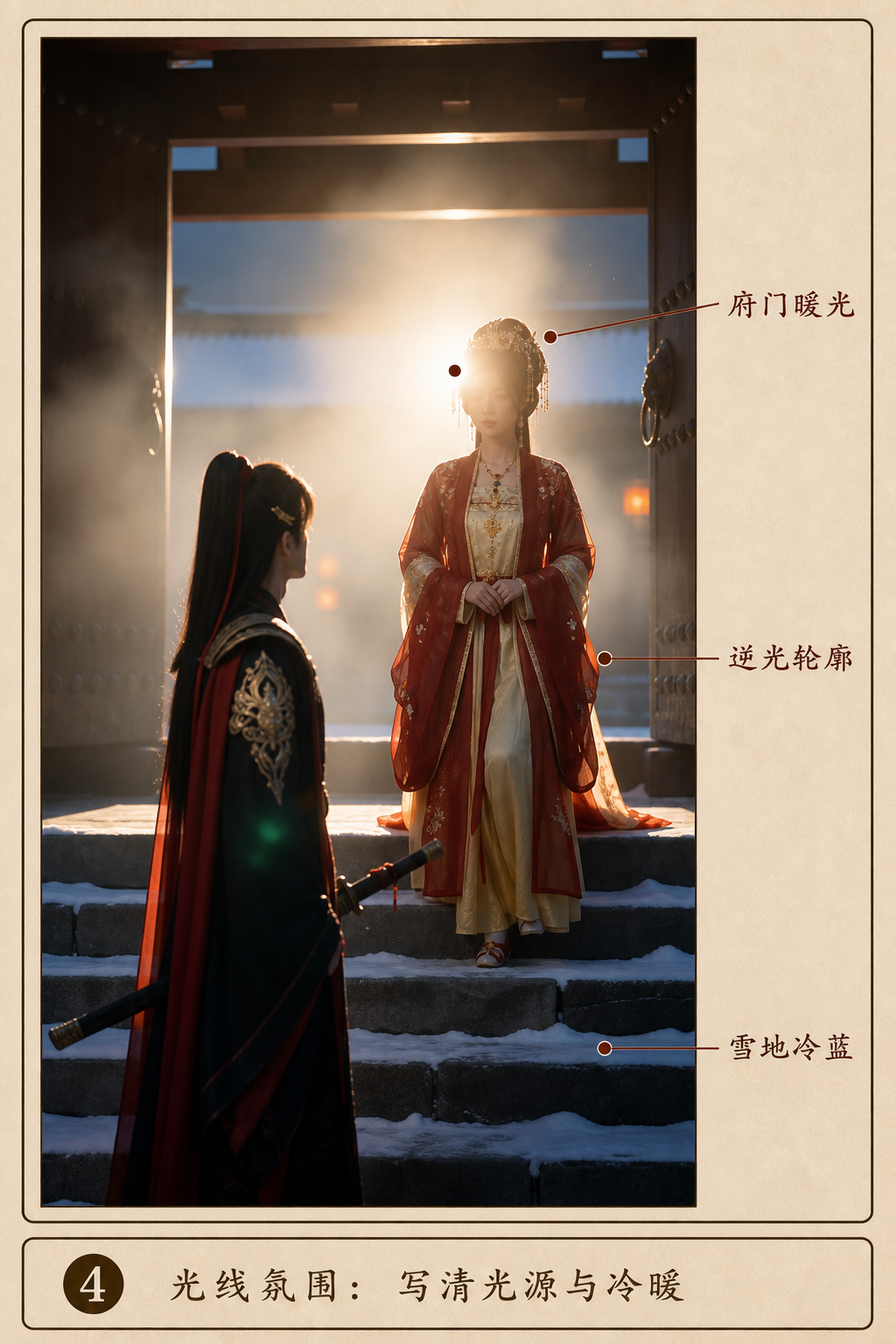
The warmth of the palace, the cold blue of the snow and the relativities of the characters constitute a clear warm relationship。
5. Camera exercise: deciding how to view
The environment can be transmitted slowly from the gate view to the returning male master; the proprietors are suitable for the fixed view, and the camera is stopped on the moving horse-footprint. The mirrors should be simple and clear so as to avoid simultaneous propulsion, rotation, rotation and up and down。
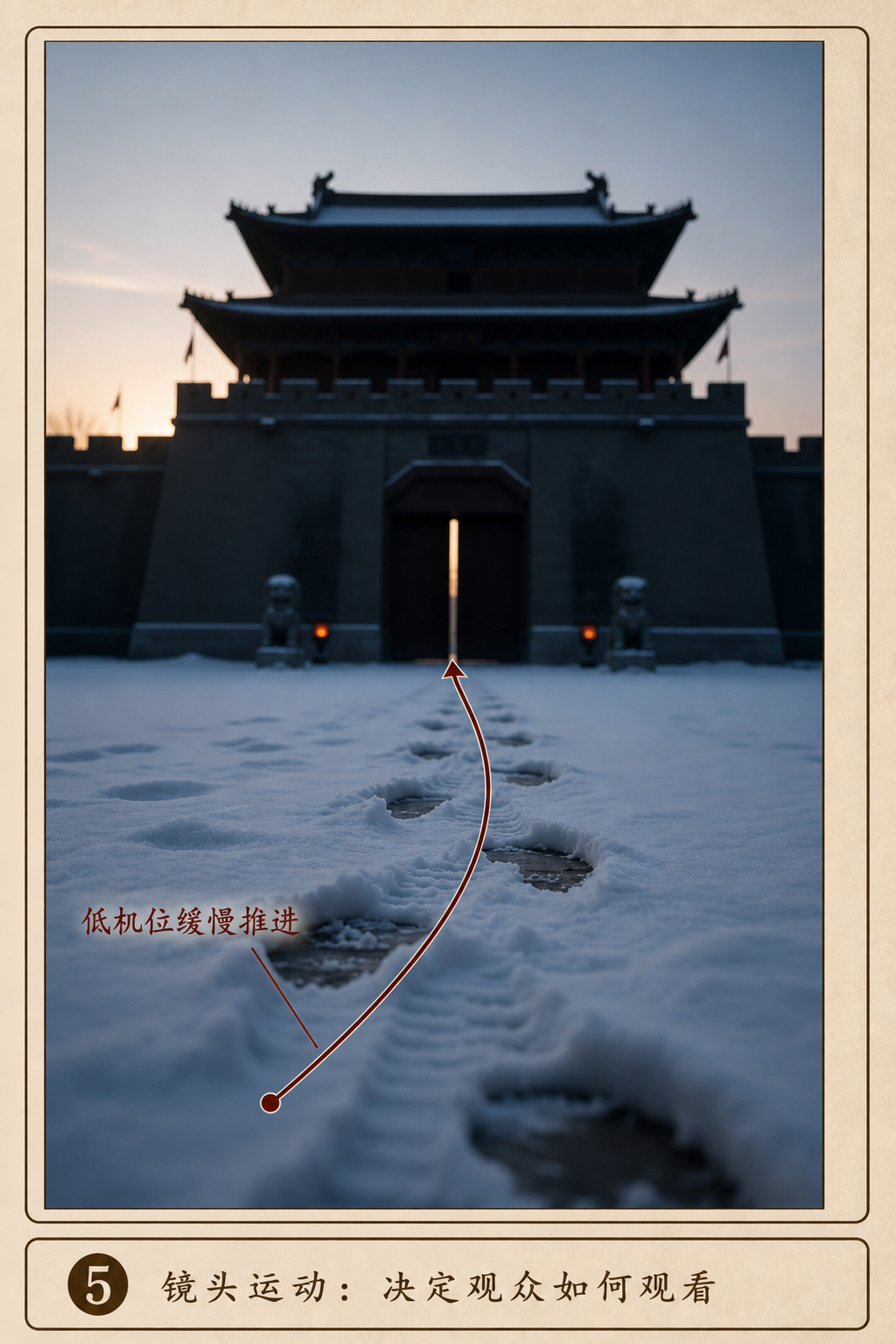
The low-altitude position slowly pushes to the door, allowing the audience to follow the action trail into the story
V. Change from a generic description to a narrative reminder
Assuming that Shaw returned with injuries on snow nights, Zhao Ning was still in mid-care. It's probably just "The General is back and the sword is red." It describes events but does not translate the relationship between the two into concrete and visible footage。
May read:
Sword-sword handle micro-trip, fixed shot. The handle of the sword is bound by a worn red coring, and the rope is humid with snow water, and a thread moves gently with the wind. Shaw Tsai's blood-stained hands hold the handle tight。
This hint does not say directly that the man misses Zhao Ning, but rather that the moribund conglomerate shows that he has always brought her with him. Blood, snow and warmth show how hard it is to return. True and effective emotions are not the more adjectives the better, but the change in detail is consistent with the person。
VI. Location of the blank mirrors
1. Before the beginning of a play
The time and place are first presented with an environmental lens and then enter the person lens. For example, after filming the frost outside the palace, horses and military flags, and then going to Zhao Ning and Xiao Tse to say goodbye in the gallery, the audience will immediately understand that the Xiao Tse is about to march again。
2. After significant lines or actions
Zhao Ning asked “This time, how long will I have to wait” to cut off the hand close to her and put it in the hands of the male master. The props allowed the two men to pause for a moment and to avoid switching to another performance immediately after the key pair。
Between the two scenes
When the male master leaves on horse, he can get a horse hoof mark from the top of the palace gate and a horse hoof mark from the border mud. Similar shapes and continuous horseshoes can cross time and place while retaining the emotion that Zhao Ning sent him away。
The proposed structure: the location of the environmental lenses → 昭 昭 → → → → → → → → → → → → → 。 。 。 。 。 。 。 。 。 。 。 。 。 。 。 。 。 。 。 。 。 。 。 。 。 。 。 An empty mirror requires a change around the relationship between the two persons, rather than a temporary addition of non-hierographic objects。
vii. Mr. Storyboard to generate video
WHAT IS NEEDED HERE IS NOT A SINGLE SCENE OF NINE PALACES, BUT A COMPLETE STORYBOARD WITH A 5-7 CONTINUOUS LENS. FIRST, THE CHARACTER REFERENCE, STORYLINE AND SCENE REQUIREMENTS ARE HANDED OVER TO AI, SO THAT IT CAN BE SEQUENCED IN THE SAME PICTURE. STORYBOARDS NEED TO SHOW HOW THE DRAMA MOVES FORWARD AND BE THE BASIS FOR LATER VIDEO PRODUCTION。
storyboard tutorials can go to this link (https://www.1ai.net/57960.html)
VIII. Common problems and methods of modification
Question one: Empty mirrors have nothing to do with the hero. Don't join just nice clouds and palaces. And when the male master returned with his wounds, he took a picture of his hand-to-hand tie on his sword, more than an indication of their relationship。
Question two: One shot sets too many moves. Only Zhao Ning lays down his hair in three seconds, the man holds his hair, and arranges not for a hug, a turn, a horse and a door to close。
Question three: There is no connection between white and picture. When Zhao Ning says that “it is not the seal of the father”, the image should be cut to the mark of a missing corner, rather than adding a non-relevant varnish lens。
Question four: Too many lenses and the downside of personal relationships. The two had a chance to keep their hair and horse hoof prints. If you continue to join the flowers, the rest of the moon, the geese and the water, it will dilute their performances。
Question five: Inconsistent person or scene. Each camera containing the person is uploaded to the same reference set, which repeats the look of Zhao Ning and Shaw; each spectroscope is accompanied by a reference to the same scene, the nine palaces, the location of the doors and windows, the porch, the courtyard, the table and the light source. The scene can be switched, but the same play cannot redesign space。
Conclusion
THE AI VIDEO SENSE OF FILM IS NOT ONLY FROM CLARITY, COMPLEX MIRRORS OR GORGEOUS IMAGES, BUT ALSO FROM THE AUTHOR'S JUDGMENT AS TO WHEN TO STOP IT. THE OPTIC LENS, WHICH DOES NOT APPEAR TO HAVE A LEADING ACTOR, IS IN FACT ALWAYS ABOUT THE PERSON: THE ENVIRONMENT INDICATES WHERE THE PERSON IS, THE TRACES LEFT BY THE PROPRIETORS, AND THE CHANGES IN DETAIL REVEAL THE EMOTIONS THAT THE PERSON DOES NOT SAY。
The most important step in gaining access to an empty lens is to move from “to produce a good picture” to “to generate a shot that is useful to the story”. The environment, props and emotions are extracted from the script, written in a five-factor formula, and finally the camera is placed where it really needs to stop. In this way, even if the hints are short, the picture is informative, pacing and fratricidal。