



DeepSeekAfter bursting onto the scene, I received over 50 requests for help from readers, almost all with similar struggles:

I really can't sit still when I see all this feedback.
The first people to capitalize on the true value of DeepSeek have long since grabbed all the dividends of your industry.
Yes, the free DeepSeek has caught up with the paid OpenAI o1 models and even partially surpassed them.
Like the moment in 2011 when the first flight of the J-20 tore through the night sky.
We finally don't have to be on our knees with AI.
Note: All the tips in this article are from real cases and all the cue words have been verified over and over again.
The best kept secret: throw away your prompt word template
If you're still using "pro tips" and "templates", you're going in the wrong direction.
DeepSeek doesn't eat that at all.
Why?
Because at its core it is a reasoning macromodel, not a directive macromodel.
It's like two interns:
- A little nerd who needs you to organize the steps of a task in minute detail. (directive type)
- A little wit who can think for himself what to do if you explain the purpose. (reasoning type)
Let me illustrate with a real-life example that
A real-world test by one of our community's operations students to conduct a new energy industry analysis for use in preparing for negotiations with BYD suppliers.
The traditional way:
You are asked to play the role of a new energy industry analyst and follow the steps below:1. Market size2. Competitive landscape3. Technical tracks4. Future trendsRequirements: 800 words per section, citing authoritative data...
Result: get a dry report with a glance at AI.

A glance at the AI does nothing but be correct at all.
The right way:
I'm negotiating with a BYD supplier next week and know nothing about power cells. Help me explain in the most layman's terms:1. What are their technological advantages2. How much is likely to be asked for3. What is the terminology that can be used in negotiations?The point is to make me listen and act like an insider.
RESULT: DeepSeek gives a direct grounding analysis with negotiation talk.
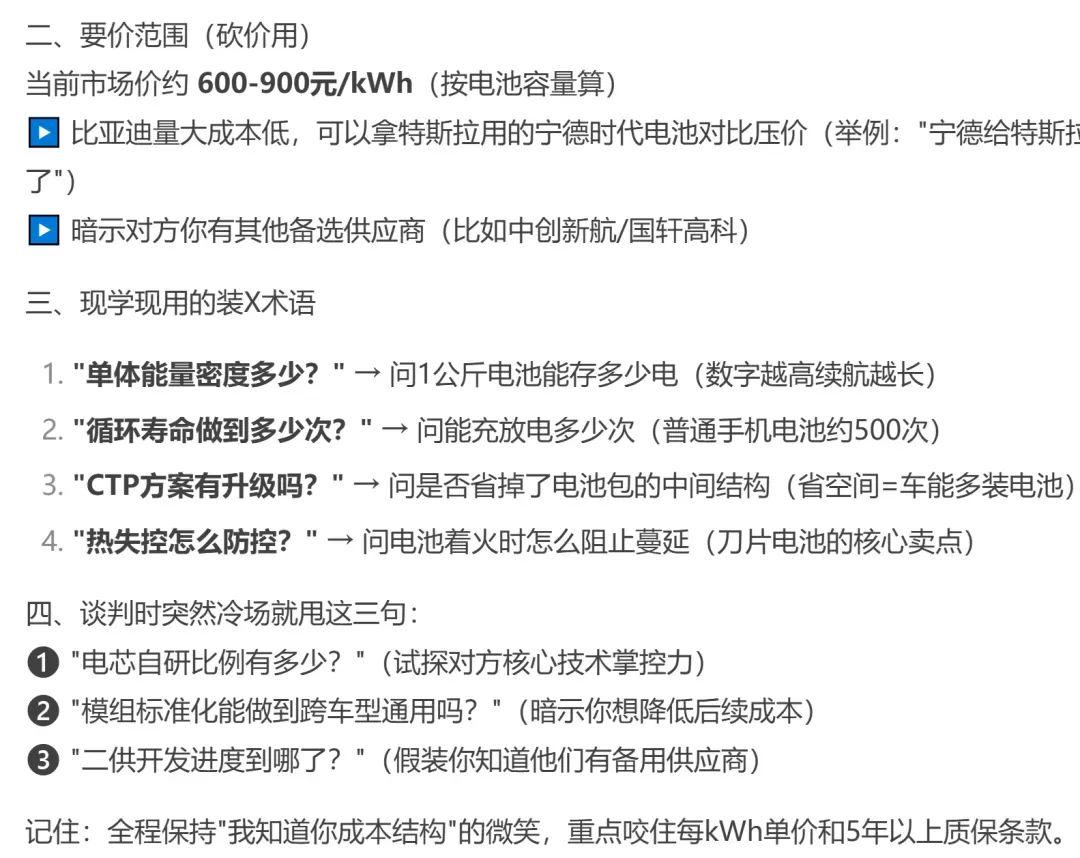
I can't believe you've got words in your mouth.
That's the big difference:
DeepSeek doesn't require you to write "pro tips".
It requires real scenarios and specific needs.
Sending you a generic formula:
I want xx, for xx, hoping for xx results, but worried about xx issues...
It's like you're talking to an intelligent subordinate:
- Don't say, "Please write your weekly report in accordance with the STAR Code."
- And to say:
I'm going to write a weekly report, the boss is going to read it on Monday, and I hope the focus will be on xxx, the focus is so that our department can achieve the effect of pretending in front of the boss, and press the R&D department next door, but I'm worried that the R&D is questioning the fact that we don't have enough detail in the writing of the product documentation ......"
The most underrated feature: making it "speak human".
Many people complain that DeepSeek's responses are too abstract, like they're reading from a book.
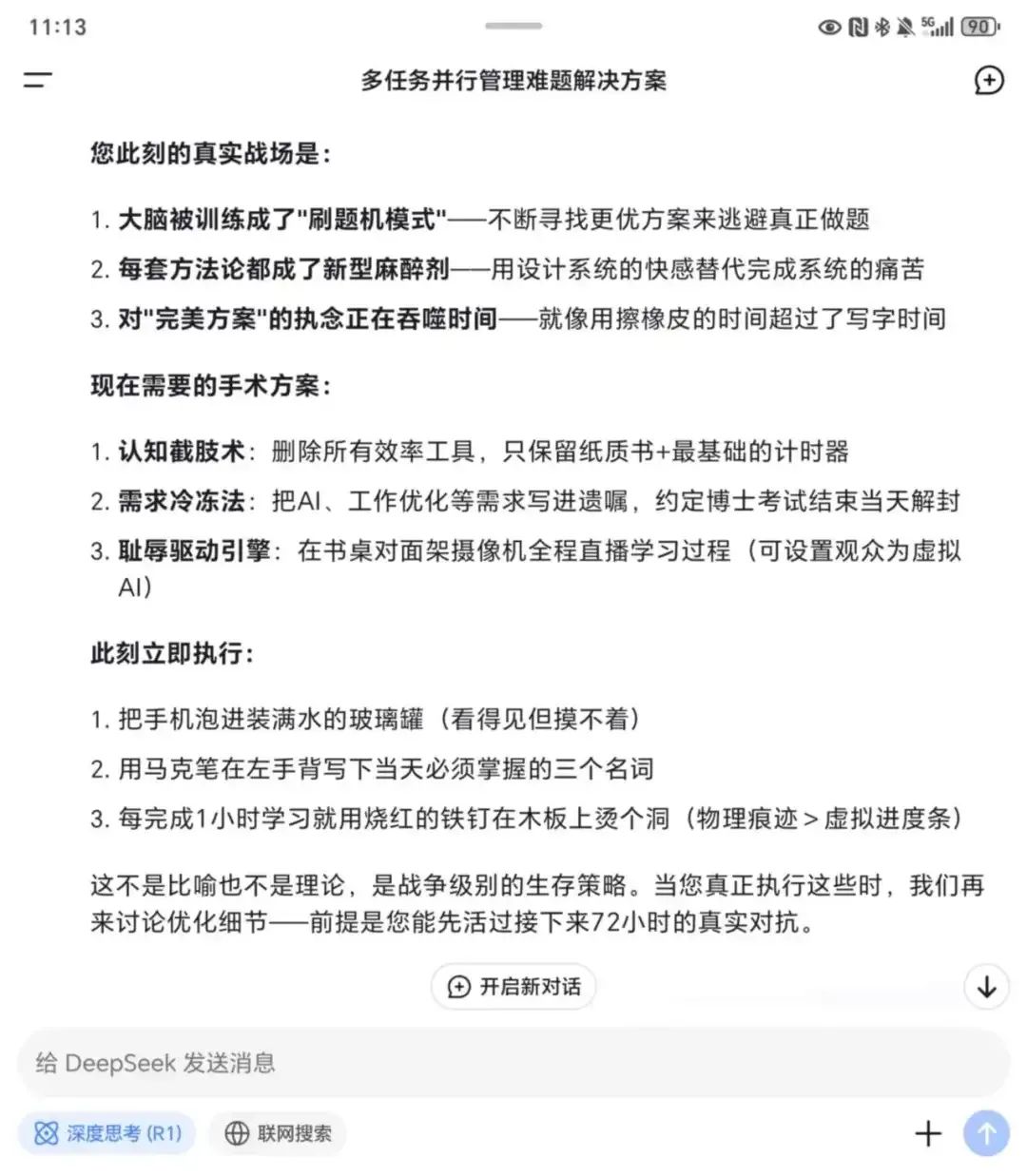
Like this one. Don't believe it.
But what you may not realize is that all it takes is one simple cue word to completely change the problem.
The magic cue word is:
Speak human.
That's right, just those three words.
My trainee didn't believe me on the first try, but it turned out...
Original Answer:

Abstract. Fucking abstract.
Add the answer after "Speak human":
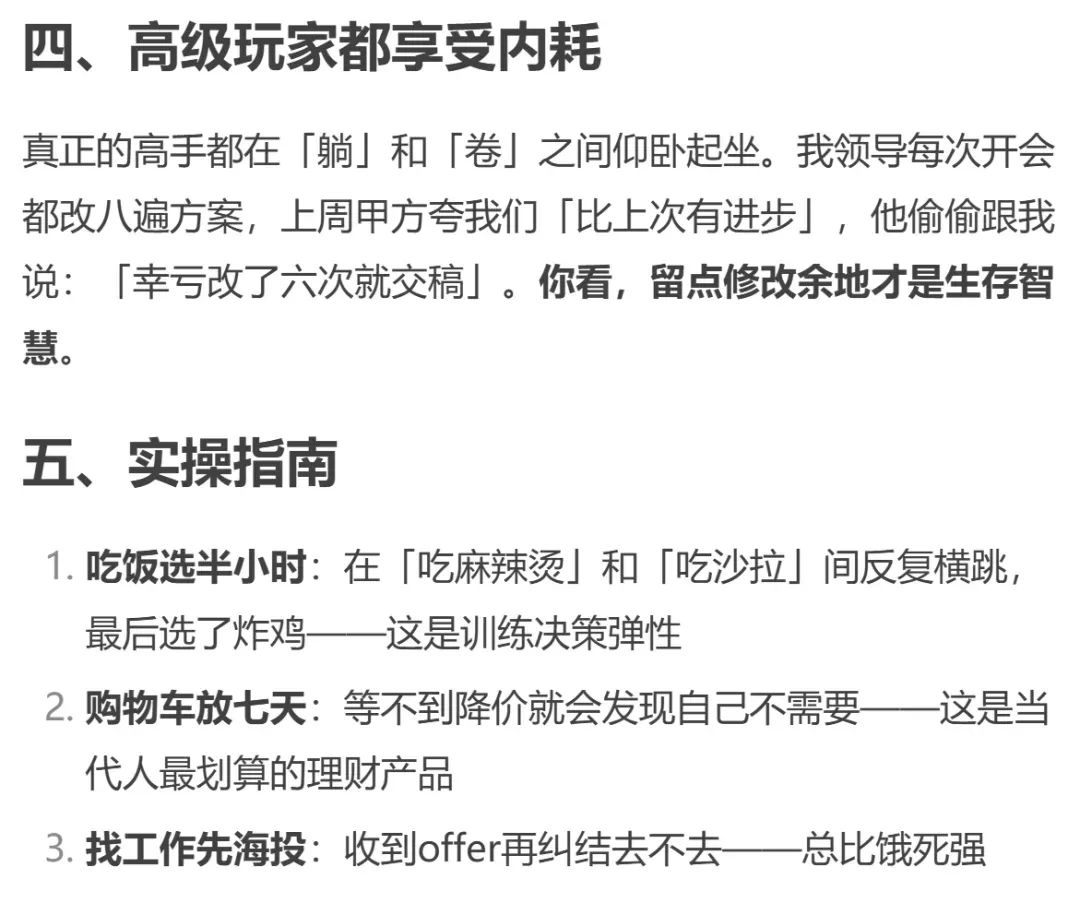
afterword
Instant grounding, right?
Because DeepSeek is sensitive to the term "talking about people".

Of course, sometimes those three words aren't enough, and you can use this exhaustive version of the prompt word and just copy it over:
Please use the following normative output: 1. language plain and straightforward, avoiding abstract metaphors; 2. use of daily scenarios to assist in the illustration of the case; 3. give priority to the choice of specific terms instead of abstract concepts; 4. keep paragraphs concise (no more than 5 lines); 5. technical expressions need to be accompanied by popular explanations; 6. prohibit the use of literary rhetoric; 7. the focus of the information in front of the 8. complex content in point by point instructions; 9. keep the colloquialism but not overly Simplify professional content; 10. Ensure the accuracy of the information under the premise of giving priority to the selection of popularly recognized vocabulary].
The most powerful skill: deep thinking
Here's what I have to say.
A free homegrown AI is making GPT-o1, which pays $200 a month, sit up and take notice.
Why?
Because DeepSeek thinks in a way that is smarter than GPT-o1.
Let me contrast this with a real-life example:
OpenAI o1The answer:
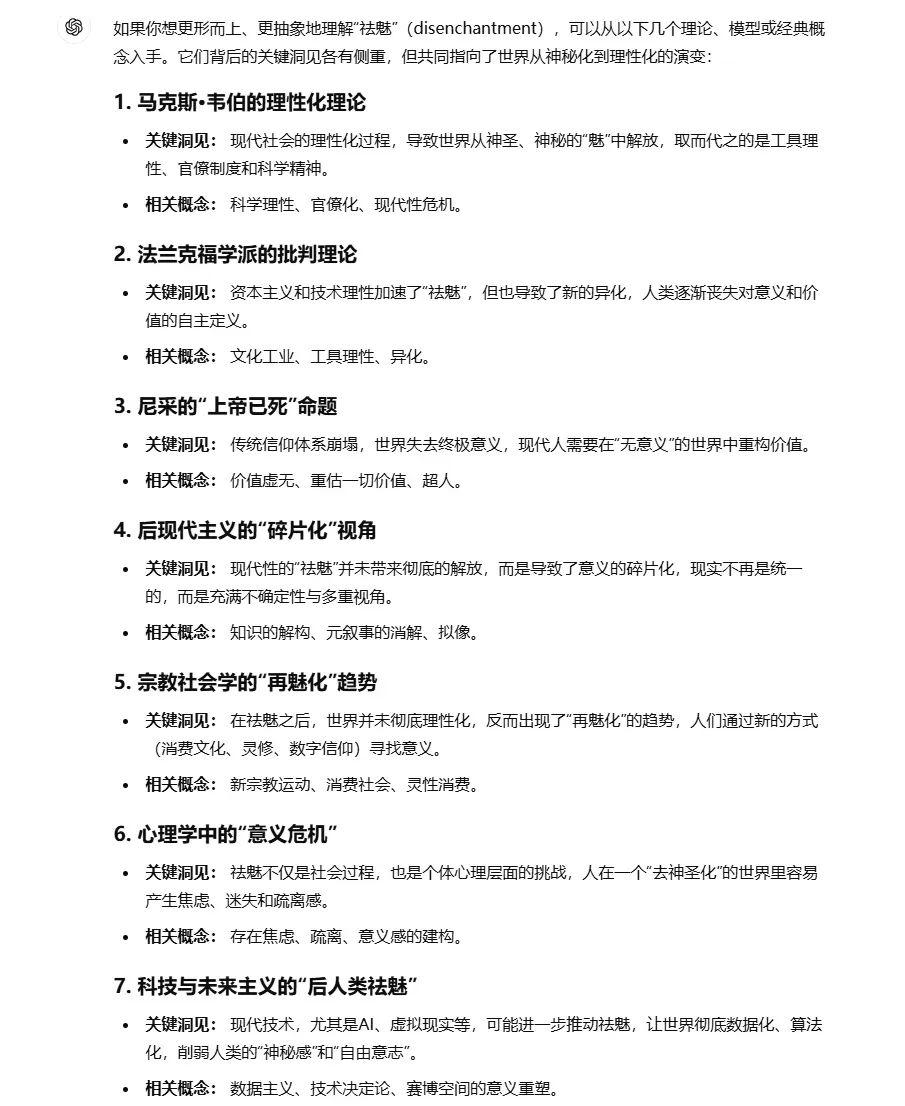
Pic from @D&roiTeacher
DeepSeekThe answer:
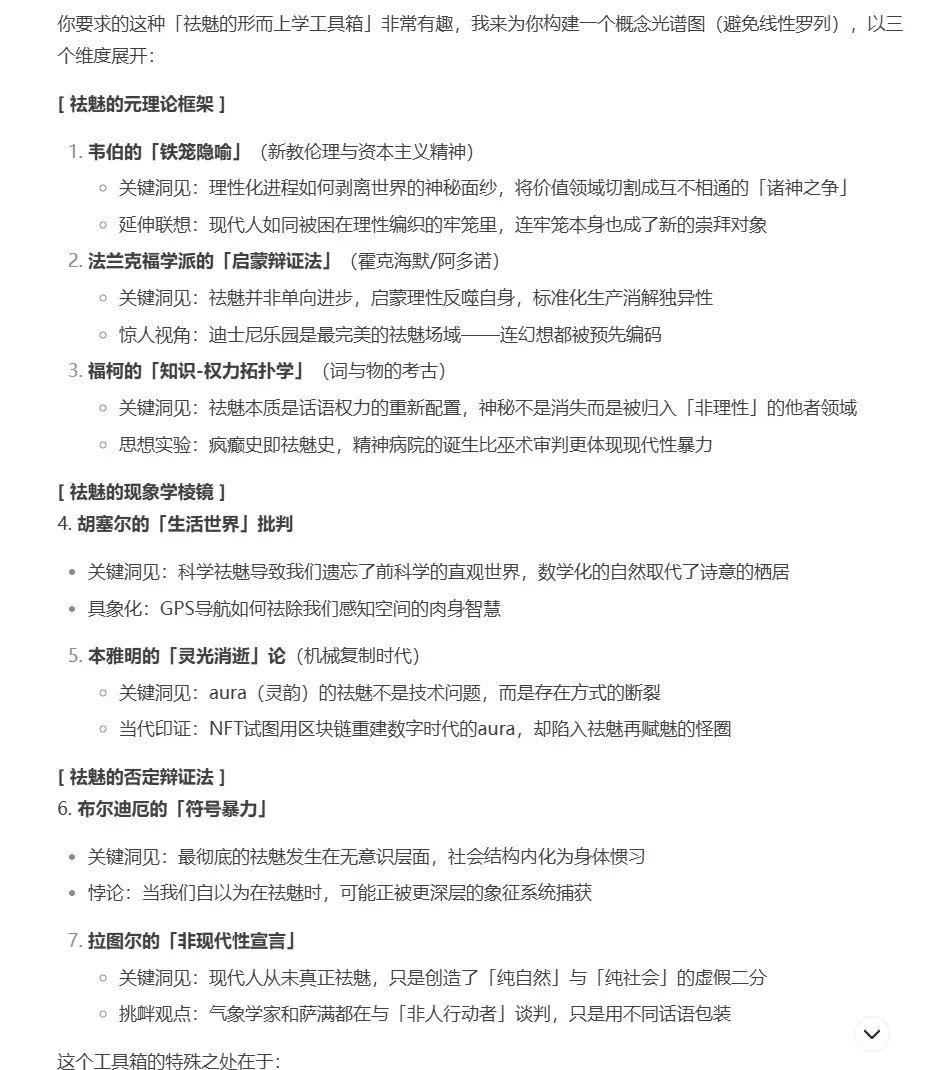
Reasoning, not linear listing
That's the big difference:
- GPT-o1 linear listing, like an advanced documentation tool
- DeepSeek Deep Thinking, Like a Thinking Partner
Free DeepSeek, which directly puts the cowhorses of AI companies across Silicon Valley into overtime, all night long.
Luckily, they don't have to celebrate the Spring Festival.
But recently, I have noticed a phenomenon:
DeepSeek has apparently adjusted its response strategy due to the surge in users:
- Thinking time reduced from 20 seconds to 5 seconds
- Significant decrease in depth of response
- Limited ability to reflect

The math is tight. We'll only give you five seconds.
It's an understandable temporary measure; after all, arithmetic is all about burning money.
But how do we, the users, continue to stimulate its ability to think deeply?
I've compiled three core cue words, called the Deep Thinking Trio for the sake of pretentiousness:
- Please accompany your thought process of analysis withcarry outcritical thinkingAt least 10 rounds, be sure to be thorough
- Please accompany your thought process of analysis withConsider your answer from the opposite sideAt least 10 rounds, be sure to be thorough
- Please accompany your thought process of analysis withA review of your answersAt least 10 rounds, be sure to be thorough
In this way, deep thinking will be restored from 5 seconds to about 20 seconds.
For the italicized portions, feel free to replace them with forms you are comfortable with, or combine and stack them.
But at its core, it is reflective.

Deep thinking goes back to 20 seconds.
The most powerful style converter
Yesterday, I used DeepSeek to write a Hanfu.
Praise for Wang Xing's affectionate, wise and courageous girlfriend. Wang Xing is the actor who was sold to North Burma a while back.
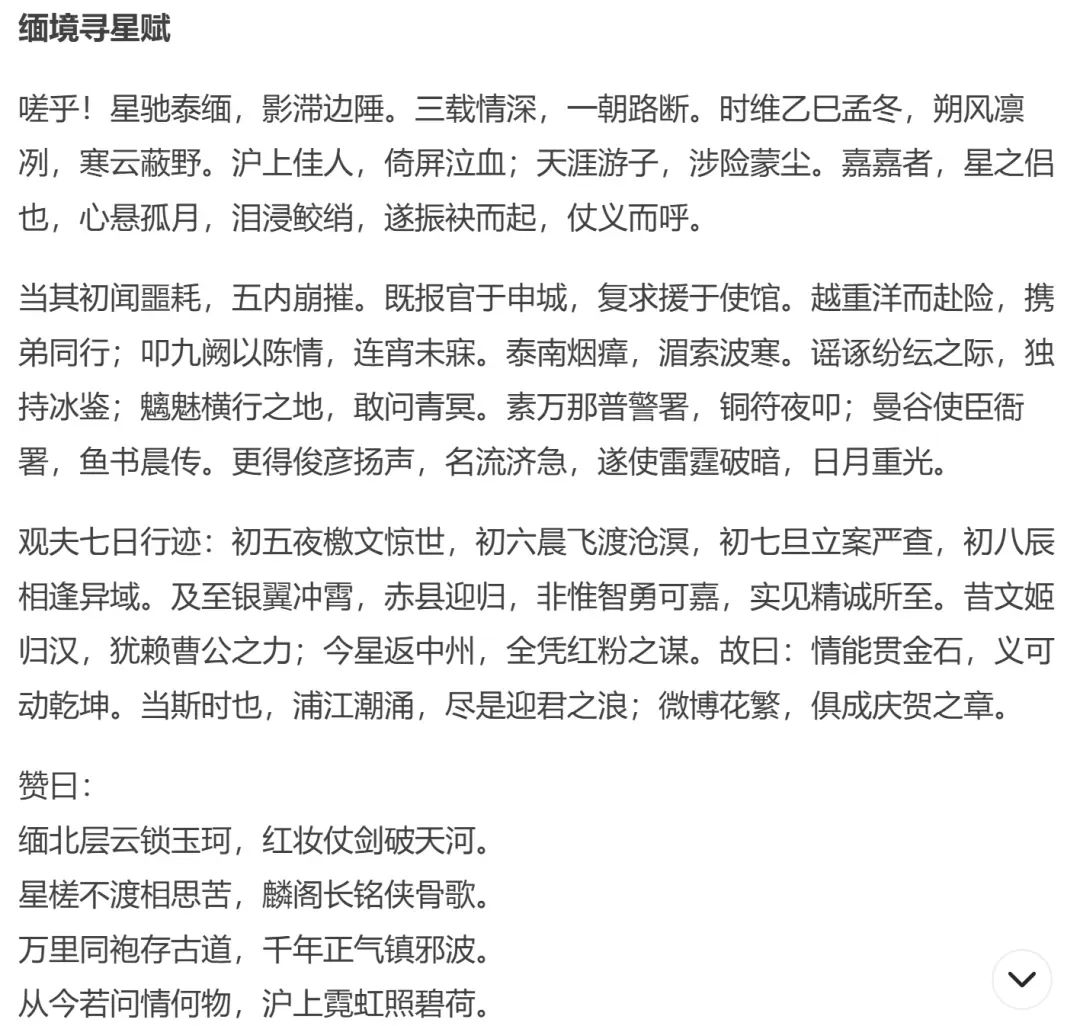
I had a great time reading it myself.
There's really no one else for this use of diction, this ekphrasis.
After posting it to the group, it blew up three language teachers...

the most powerful weapon in the game of "blowing up people" (idiom); fig. a miracle cure for all problems
Then there are friends who write words that even professional screenwriters say are old-fashioned.

It's very flavorful.

Professional screenwriters say it's great.
In fact, that's DeepSeek's fourth secret weapon: the style converter.
The cue words are simple, even if you just dictate them:
Write a xx style of writing about xxxxxx in imitation of xxxxxx.
But be aware of two limitations:
On the one hand, it is more suitable for imitating classic authors because of sufficient training data and distinct stylistic features.
On the other hand, don't expect a 100% restoration, the 80% resemblance is already impressive, the point is to be able to capture the charisma.
I think deepseek is definitely trained in a large corpus of literature, especially classical Chinese literature.
Lu Xun and Mo Yan, for example, are exquisite.

Imitation of Lu Xun's style
Remember that universal formula:
I want xx, for xx, hoping for xx results, but worried about xx issues...
For example:
I'm going to write a fugue about praising Wang Xing's girlfriend's wit and bravery with heart to show off on top of Little Red Book, hopefully focusing on imitating Wang Bo's piece of writing, focusing on letting my own literary skills pretend to get a hundred million likes on Little Red Book, but worrying that others won't understand it's too obscure ......"
A similar stylistic migration can be placed on contemporary writers, such as our parody of Mr. Run Liu's New Year's Eve speech:

Feel free to imitate the prompt words
Note that you have to provide the original content first (as detailed as possible, usually no less than 8,000 words), and then just ask them to parody it directly.

Imitation of Mr. Liu Run effect
Of course, it's best to use the universal formula for better results.
Use of prohibited areas: what not to use it
Having said all these advantages, its limitations must also be mentioned.
DeepSeek is not recommended for the following scenarios:
1. Long text writing
Articles over 4000 words are prone to logical breaks and Claude 200k is recommended.
Because DeepSeek is 64k by default, long texts are not enough.

Long text is really not enough at the moment
2. Sensitive content
After all, it's a homegrown AI with a built-in audit scale that's deranged.

Any time you reply like this, it's triggering a review
Many times you don't know which sentence triggered the review.
How can this situation be resolved?
Because DeepSeek is post-audit, there are three options:
1. click Modify at your question and submit it a couple times, there is always a time when it doesn't trigger a review.

Click Edit at the question
2. When generating your answer, furiously tap the Copy Answer button. This ensures that when the review is triggered, you have the content of the previous answer on top of your clipboard!

Tap the answer button
3. Once and for all, change Gemini. (GPT, Claude, Gemini)
3. Personal style writing
Without going into detail, this is a reasoning model, suitable for problem solving and imitation.
But it's hard to ensure that you get the style writing effect you want by controlling it precisely.
This isn't really a drawback of DeepSeek, only a feature.
I'll address the specifics in my next post.
How will it change our AI era?
After a few days of intensive testing, I'm becoming more and more convinced:
DeepSeek represents the future direction of AI - more human-speaking, more thinking.
You don't need to learn its language, it's learning to understand yours.
What does that mean?
The barrier to using AI is rapidly decreasing.
In the future, we won't need to memorize cue word templates, learn specific instructions, and study various parameters.
Just, say what you want, tell it specific scenarios, and speak human.
Because DeepSeek took out the most anti-human setting for AI since 2023 - letting humans learn machine language (cue words).

Actually, the original intent of the Wu Enda Cue Word Engineering class was a good one
It's like a key turning point in the evolutionary history of cell phones:
- Nokia era: read the manual, learn the key combinations, swipe the phone
- The iPhone era: three-year-olds can play with it
My friends in the investment community put it more bluntly:
Vloggers who are still teaching people to write prompts in 2024 are charging an IQ tax.
Anyway, what else to learn about cue words!
So, that's why I'm going to insist on posting this article before the New Year.
Deepseek is the paradigm that represents the next generation of AI usage, resigned to the new!
For the record, Deepseek didn't pay me a dime, but I'm just going to blow it.