



I don't know what people are doingAI VideoWhen the time, will not encounter, the content of the screen is very good, but do the video is too "flat", lack of that kind of movie texture. If you want to make the picture "move", the lens of the video is the soul.
These "cinematic shots" can be realized through "shot control" and "character emotional expression" during video generation.
Today, I'd like to put together a list of 11 commonly usedlens handling techniquesAnd "ancient style character emotions" prompt words to share with you, novice friends can directly copy and use, easy to get started.
close-up (filmmaking)
Lens Description: Frame the face of a person, a localized part of an object, or a detail. Emphasize expressions, emotions, key details or textures.
Use scenarios:
Commonly used in movies and TV dramas to show the inner emotions of the characters, when the character is in a strong emotion such as excitement, sadness, tension, etc., close-ups can capture the subtle changes in facial muscles and enhance the infectiousness of the emotions
lit. sorrow becomes a river
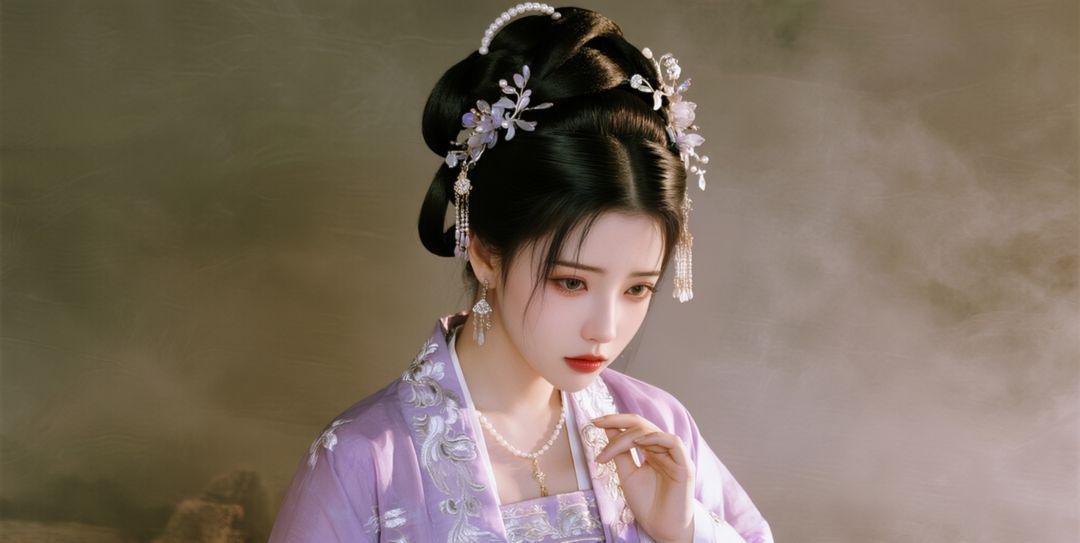
Main Description : Close-up shot of a character with a lax eye. Suddenly the eyes become sad, tears well up in the eyes, the eyes gradually turn red, and eventually the tears slide down the cheeks.
Dramatic technique: The camera gradually focuses from blurry to clear, with slowly advancing movements to capture the changes in the character's mood. At the moment of emotional outburst, the camera pans up slightly.
Medium Shot (Mesh Shot)
Shot Description:
The frame takes the figure above the waist or knee, or shows the figure in relation to its small surroundings.
Use scenarios:
- Demonstrate movements and gestures of the character's upper body (e.g., dialog).
- Demonstrate interaction between two or three people.
- Focus on the characters while accounting for the setting.
Mountain Forest at Night
The first mirror in the middle of the scene is fixed, showing the night in the mountains and forests in green Chinese dress woman holding her cheeks, hair ornaments slightly shaking, the stream fireflies set off the seclusion;
Hard cut close-up fixed, focusing on the eyebrows and eyelashes, pearl chain, through the light and shadow to show the classical softness, accompanied by the fireflies floating away .
fixed lens
Shot Description:
Camera position and focus are completely fixed. The image is stable, emphasizing movement and change within the frame.
Use scenarios:
- Highlight the movement of the subject within the frame (e.g., a person walking into the frame).
- Create a sense of stability, objectivity or observation.
Cold to the point of cruelty.
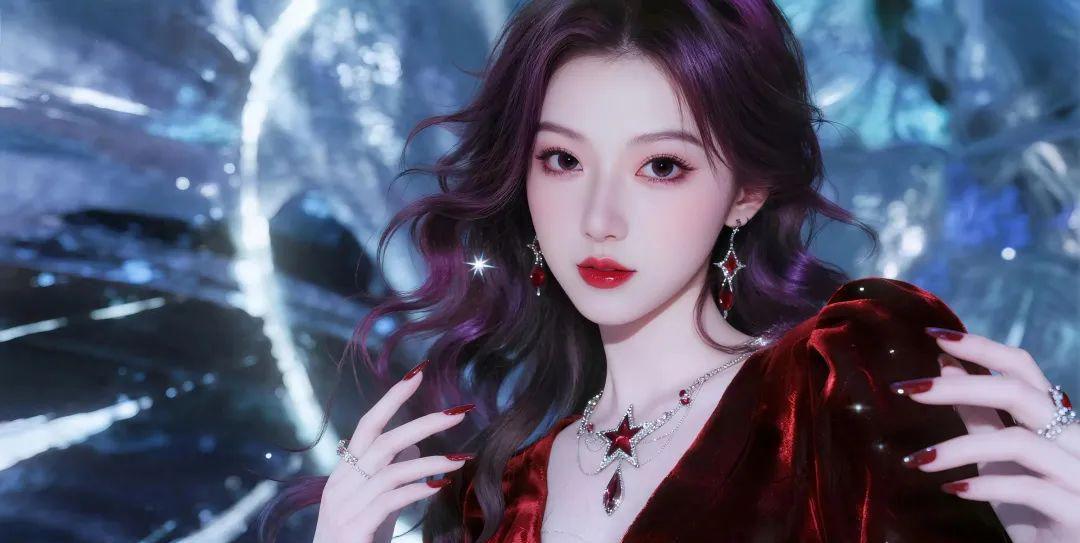
SUBJECT DESCRIPTION: Fixed shot focusing on the woman's delicate expression. Her eyelids are slightly drooping, and her expression appears bland and forlorn. Her hair is gently brushed, adding a sense of coldness and detachment, while revealing a hint of coldness. She turned her face slightly sideways, further reinforcing this detached atmosphere.
Camera Tips: Keep the camera steady and focus on capturing the details of the woman's expression. Through subtle facial movements and changes in expression, convey her inner world. This use of a fixed lens allows the audience to feel the emotions and atmosphere of the character more deeply.
Push-pull lens (Dolly Zoom)
Shot Description:
PUSH SHOT: The camera (or zoom) moves closer to the subject, the frame is narrowed, and the subject becomes larger and clearer.
Pull Shot: The camera (or zoom) is moved away from the subject and the frame is expanded to show more of the environment.
Use scenarios:
- Push Shot: Draws the viewer's attention to key details; reveals information; creates a sense of tension or oppression; simulates subjective proximity.
- Pull Shot: Demonstrates the subject's relationship to the environment; reveals unexpected information (e.g., the subject is in danger); creates a sense of closure, loneliness, or grandeur; serves as a scene closure or transition.
beautiful orchid in an empty valley (idiom); fig. peace and prosperity
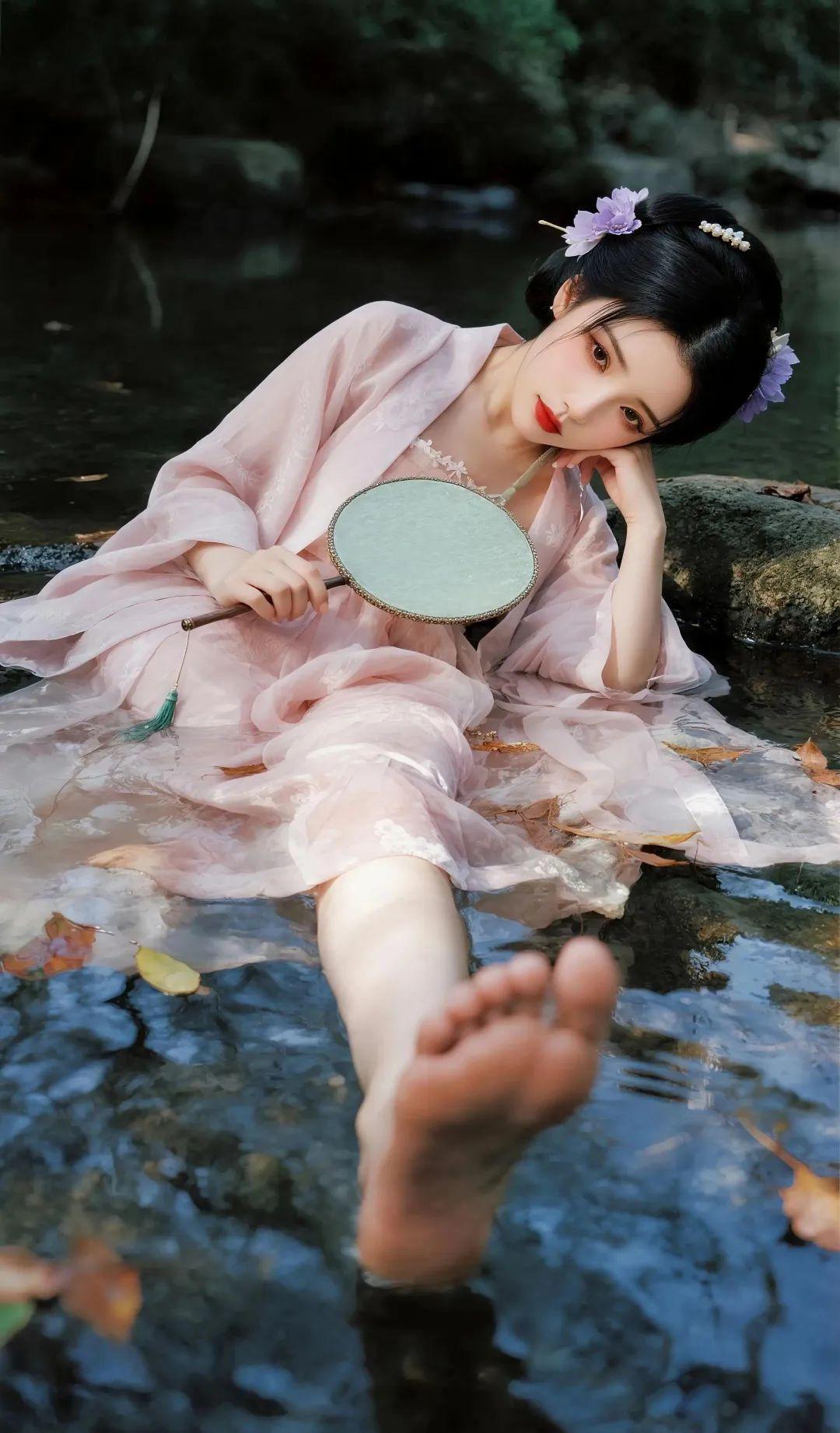
Description: The girl's eyes are mesmerizing and deep, slightly blinking and then turning to the right, her cheeks are slightly red and slightly puffed up, appearing particularly shy. The surrounding light is beautiful and soft, with colorful butterflies slowly fluttering behind her, adding a sense of fantasy. The whole picture is covered in a kind of cinematic soft light, quiet and mysterious.
Lens technique: The camera starts from the front and slowly advances to a close-up of the face, accurately capturing the moment when the girl's eyes are mesmerized. The mysterious stillness and cold-toned light in the background further enhances the cinematic quality of the image, creating a quiet and mysterious atmosphere.
Camera switching
Shot Description:
Multi-scene shuttling by switching between different sceneries.
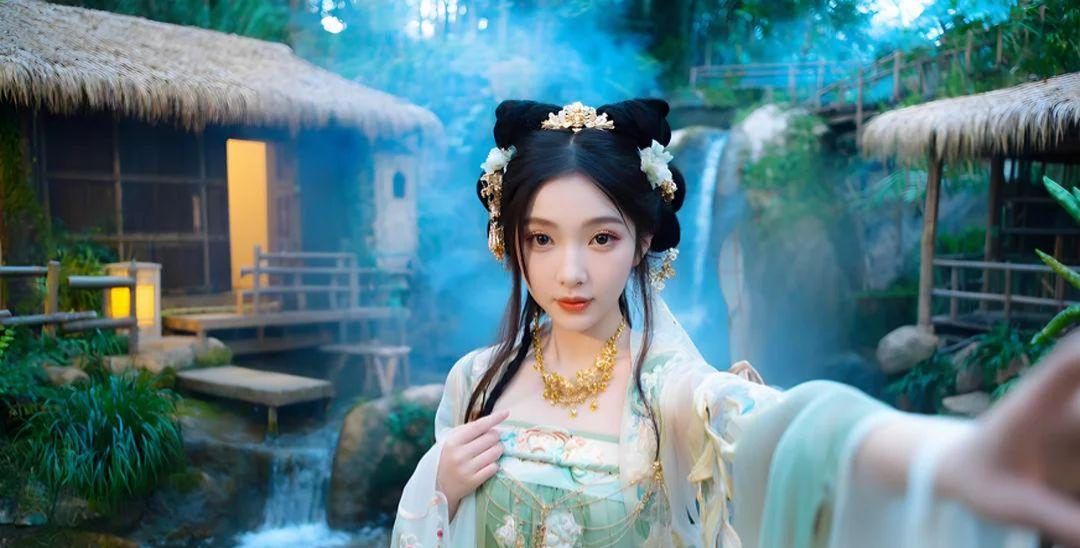
The first mirror in the scene is fixed, showing the landscape with green Chinese women reaching out, hair ornaments gold chain shining, grass hut waterfalls to create a sense of fairy;
Hard cut close-up fixation, focusing on the light spread of the hand, sleeve slightly raised, through the mist of the water to show the classical fairy.
Sleek, wry and playful
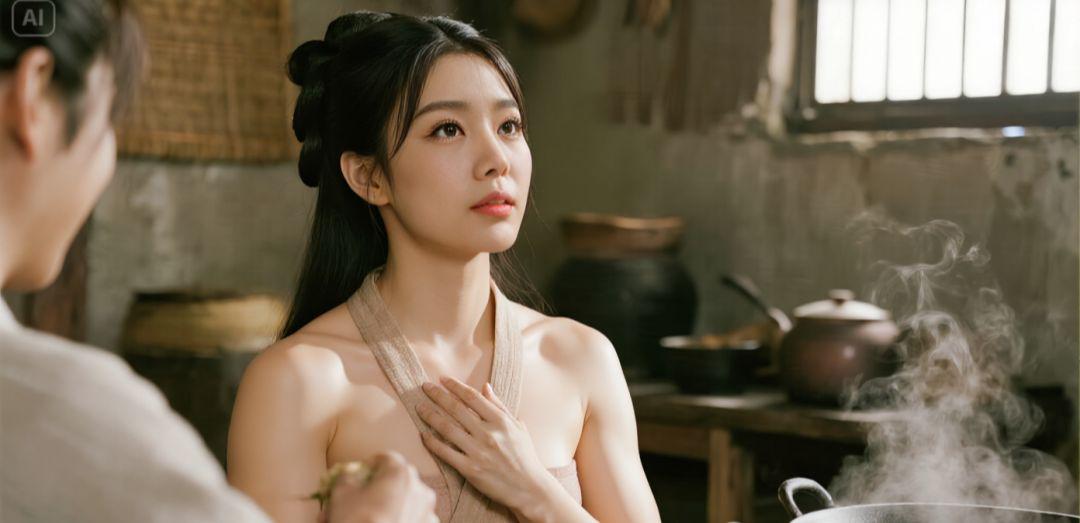
The first frame maintains the pose of the artist looking forward with his chest resting on his chest, his hair and light clothing swaying in the breeze.
Next: do a close-up level look back, eyes with a smile, sweeping in the direction of the camera;
Quickly scanning his surroundings from side to side, his gaze hides a spirit of cunning;
The hand that was originally resting on the chest was lightly raised, and the fingertips were quickly lowered after lightly tapping the cheeks, adding a touch of playfulness; slightly raising his eyebrows, the corners of his mouth curved up in a cool arc;
Slowly rotate your head to make the trajectory of your hair more obvious and the whole set of movements natural.
Handheld lens following
Shot Description:
The photographer holds (or shoulders) the camera and follows the subject. The image is usually slightly shaky, enhancing the sense of presence and documentary.
Use scenarios:
* :: Documentary films, live news shoots.
* :: Simulating the subjective perspective of a character following another person.
go boating
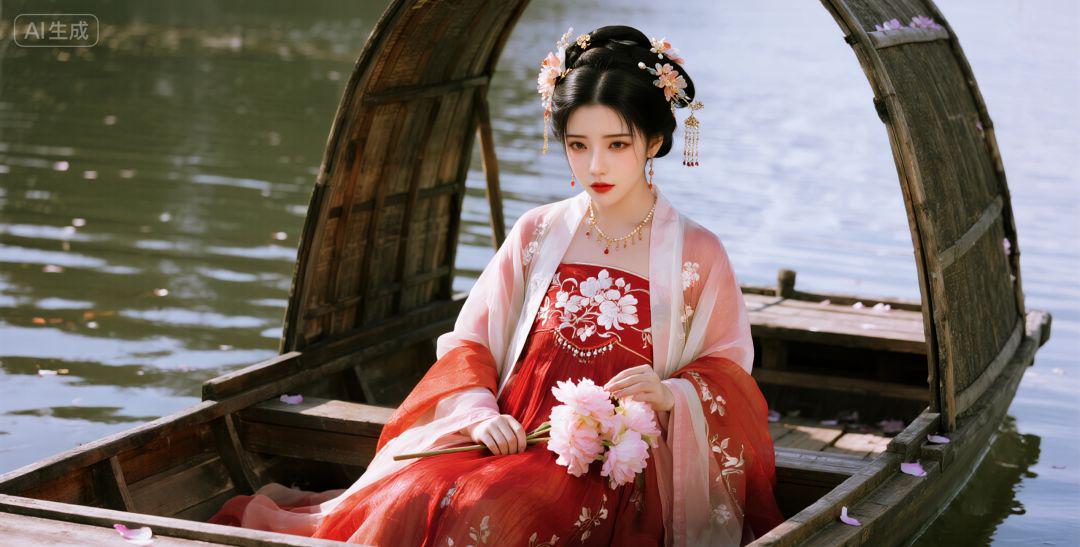
Hand-held lens to follow the shooting, the main figure in the picture on a boat forward through, the young girl quickly close to the camera, first look at the camera, then the eyeballs turn, tilted head to look away, hair swing with the breeze, lips slightly open, puzzled, the camera back to pull back, and then look at the camera, make a kiss-like, the other hand to reach out to block the sunlight with an expression, and then pushed the camera back to the original position, shooting to show the shaking feeling of hand-held lenses
Surrounding Lens
Shot Description:
The camera moves in a circle or arc around the subject. 360 degrees or partial angles show the subject in relation to the background.
Use scenarios:
* :: Showing the subject in all its aspects (people, objects, buildings).
* :: Create a sense of mystery, scrutiny or heroism.
* :: Showing a character's inner turmoil or sense of environmental encirclement.
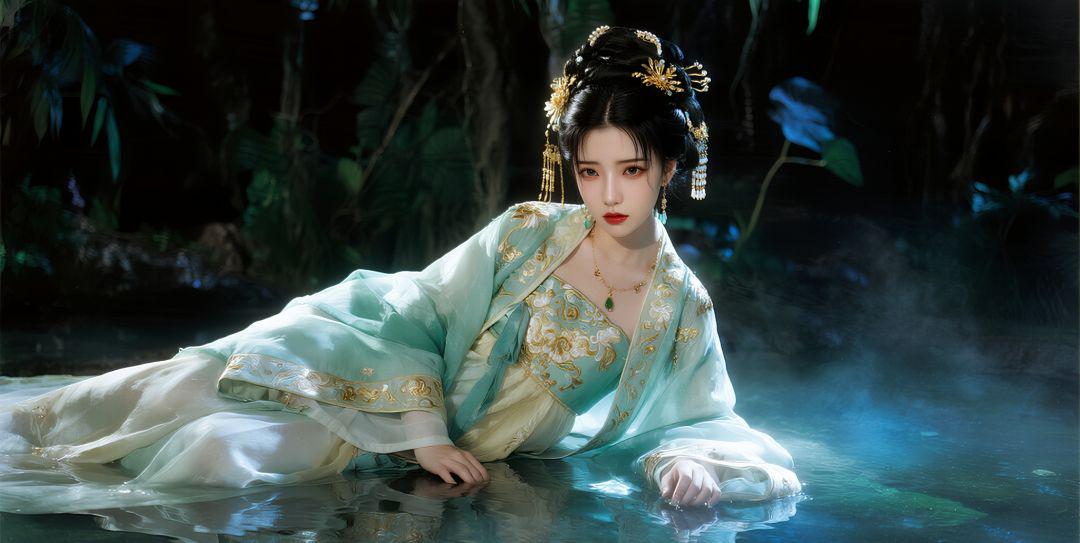
Camera Technique: The camera first pulls away to show a lotus pond surrounded by fog, creating a hazy and dreamy atmosphere. Then, the camera pushes forward sharply and focuses on the face of a woman. The woman opens her eyes and then begins to rotate 180 degrees, and the camera slowly pulls back as she rotates, revealing her surroundings and background.
rotating shot
Shot Description:
The camera itself rotates around its axis (usually the lens axis). The picture produces the effect of heavenly rotation.
Use scenarios:
- Simulates subjective feelings of vertigo, ecstasy, intoxication, or unconsciousness.
- Create a strong sense of unease, confusion or disorientation.
- Used for special visual effects or stylized expressions.
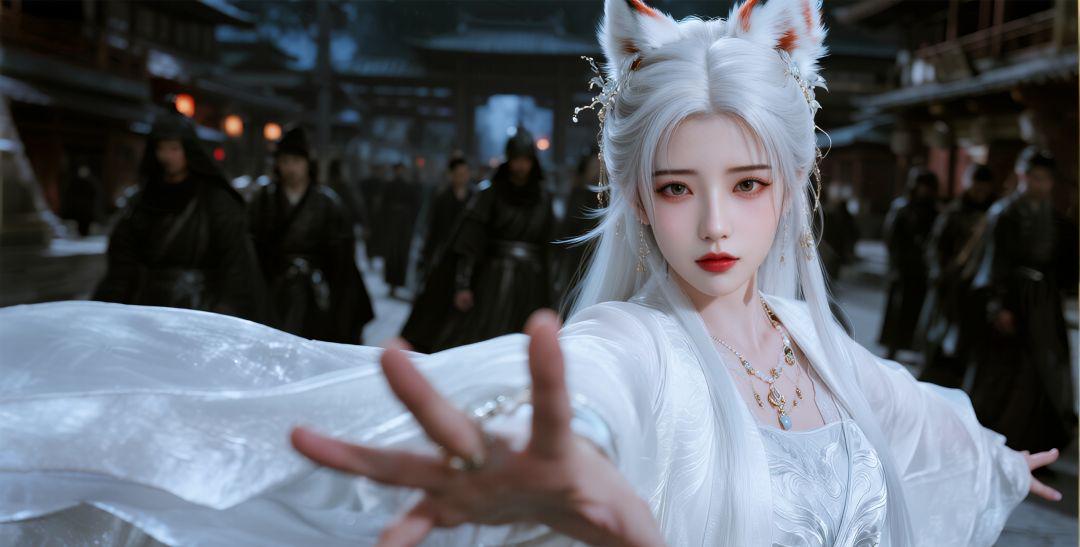
She opens her eyes and looks straight into the camera and smiles, her expression changing from sweet to playful and confident. She makes a small but graceful hand movement. She completes a smooth 180-degree spin. As she turns, the folding fan "snaps" open. The camera should follow her movements smoothly. As she strikes her final pose, the movement comes to an abrupt halt. Before the end of the video, she maintains a smiling expression for a few moments, creating a strong final impression.
POV Lenses
Shot Description:
A shot that simulates the character's own perspective. What the audience sees is what the character's "eyes" see.
Use scenarios:
- Extreme sports (racing, skiing, mountain biking) followers.
- Show unique, dynamic perspectives of grand scenes (e.g., forests, urban complexes, natural wonders).
- Shoot high-speed chases or complex path scenes.
- Create cool visual impact in commercials and music videos.
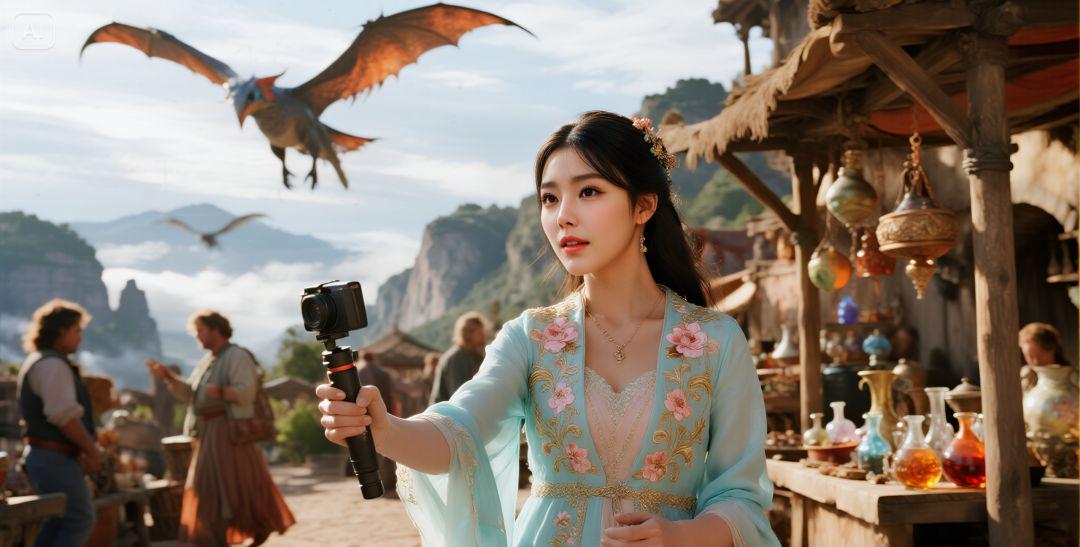
Woman holding a camera and vlogging selfie style. she looks around the market excitedly, describing what she has just encountered, then walks towards a stall and asks for the price of an item. She is confused by a strange contraption holding a selfie stick and has a surprised look on her face.
first-person camera
Shot Description:
The first-person camera is shot from the subject's point of view, and the image is like the viewer's own view of the scene, allowing the viewer to feel a strong sense of immersion.
Use scenarios:
- Video games, VR experiences.
- The movie substitutes the protagonist's subjective point of view (e.g., waking up, peeking, holding a gun).
- Enhance immersion and immersion.
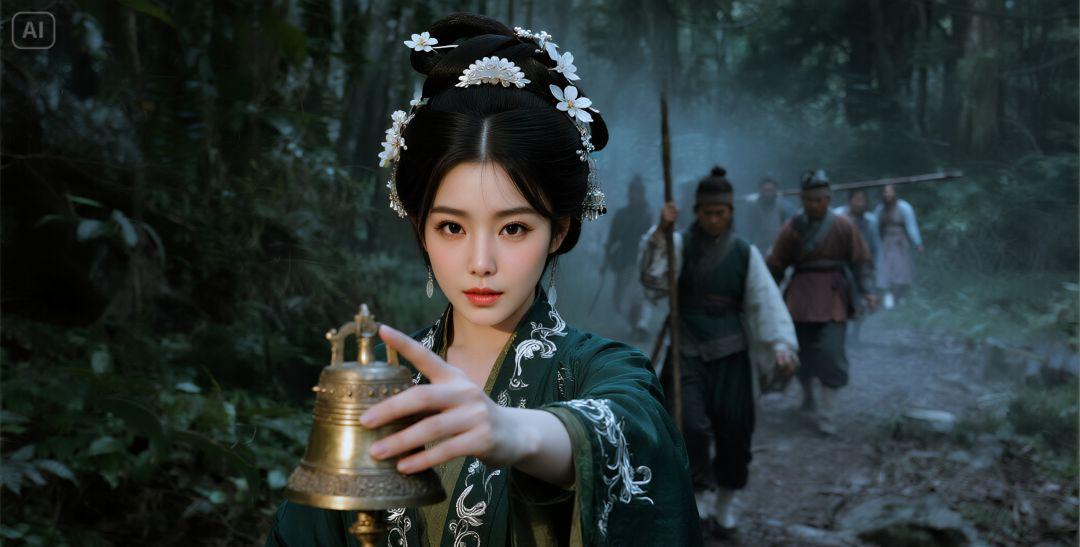
Fixed tracking shot , the young girl keeps her left hand still and walks forward, she gently shakes the bell on her right hand, the person behind the young girl hears the sound of the bell, as if driven by the young girl, and walks quickly forward from the side of the young girl
Low angle lens
Shot Description:
Low angle lens is the camera from a lower position up to shoot the subject, the picture will appear tall, majestic subject, with a sense of oppression or sublime, at the same time can show the subject is located in the ground environment or the sky background.
Use scenarios:
Make the subject (person, building, object) appear tall, imposing, oppressive, or powerful.
- Simulates the perspective of a child, small animal, or diminutive character.
- Showcase unique ground or elevated views.
- Showing a sense of power in action scenes (e.g. hero's entrance, monsters approaching)
Camera tilt up from between her legs, unique angle, realistic style, wearing racing suit, detailed textures, walking forward, camera angle outside car, track background, motion blur, background bokeh,...
Conclusion:
Camera movement is very important when doing AI sketches. The right camera movement will tell the story better and provide a better sense of immersion.
This article introduces these 11 shots, is more commonly used, in fact, there are many more. Hopefully, the lens tips in this post will help you make a more cinematic work when making videos.