



AI video everyone did not do less, but always received the question, "Why do I do the video like PPT, very bland and boring, others do like a blockbuster?"
The answer is actually hidden in themirrorsThese two words on ~tu raw video, it's really so important to do a good job of transporting the mirror.
Today, I put the bottom of the 10 AI camera routines, in the order of "from simple to advanced" in line, and then with pictures and videos to do the demonstration, I hope to give you some inspiration for the creation of AI video ~!
▌First Tier: Basic Mirror Transportation
01. Close-ups - dislike face killing
Lens Interpretation: The frame locks onto a person's face or a localized part of an object to amplify mood and texture.
Specialized supplementsThe focus is on the pupil or key props, with a 24-35 mm focal length that allows for slight distortion to enhance the sense of compression.
give an example:
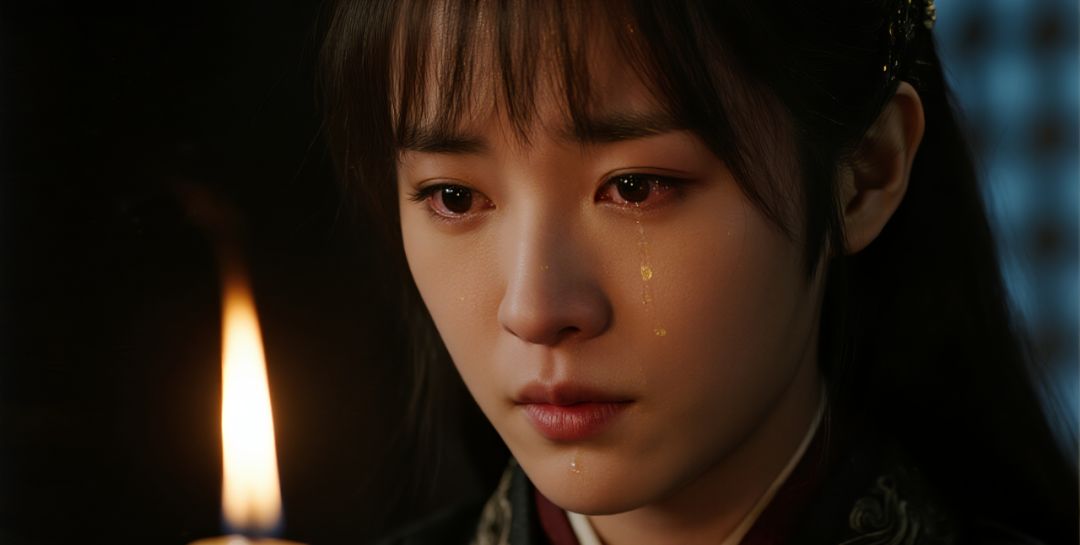
• take: Late night at court, candles flickering.
• mirrors: The lens moves from defocus to solid focus, slowly pushing forward 15 cm to capture a tear in the corner of the eye refracted in the candlelight as a speck of gold.
• Prompt word: "4K extreme close-up of young female assassin with tears that do not fall, candle flame reflects iris texture, shallow depth of field f/1.4, focus transitions from eyelashes to teardrops, slight breathiness."
02. Medium Lens - Shooting People with Scenery
Lens Interpretation: Waist or lap framing, taking into account body language and environmental relationships.
Specialized supplementsThe 35-50 mm focal length is often used to keep the depth of field moderate, with the figure occupying 1/2 of the frame and the background leaving 1/3 of the space to avoid cutting the joints.
give an example:

• take: Abandoned train station, steamy.
• mirrors: Fixed camera position, waiting for the engineer to turn around and light the beacon, steam creating volumetric light in the backlight.
• Prompt word: "Medium shot, male engineer framed at waist level, dorsal 45° low color temperature main light, steam edge highlights, ambient left black to emphasize loneliness."
03. Low-angle lens - oppressive
Lens Interpretation: camera position below horizontal line shooting upwards, subject oppression + background sky/ceiling.
Specialized supplementsWide-angle 16-24 mm to enhance perspective, the sky needs to be spot-metered to avoid overexposure; ground foreground can be added gravel, flowers and grass to increase the level.
give an example:
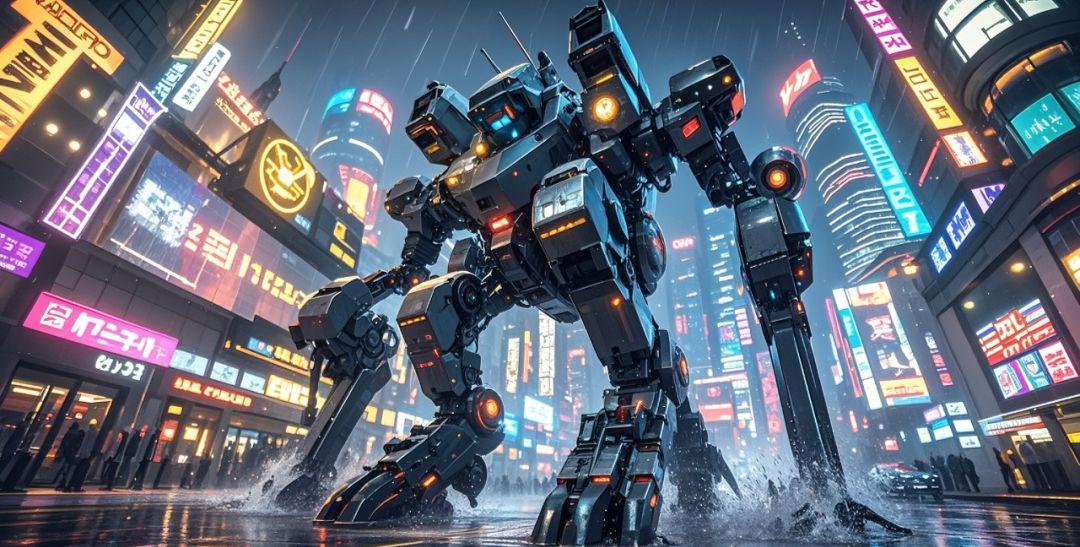
• take: Cybercity, mechanical behemoths stomping through rainy alleys.
• mirrors: The camera sticks to the ground, raindrops splash, and the water explodes into a crown instantly as the behemoth's metal paws stomp down.
• Prompt word:: "Extremely low angle, 16 mm wide angle, reflections on the ground on a rainy night, mechanical behemoth paws falling, splashing, neon billboards stretching in the background."
▌Tier 2: Starting to show off
04. Push and pull lens - far and near
Lens Interpretation: The camera position physically moves while reversing the zoom, and the perspective and field of view change in reverse.
Specialized supplementsPush ≈ compresses space and oppresses the subject; Pull ≈ exposes the environment and creates a sense of insignificance. Need to synchronize zoom speed = movement speed.
give an example:
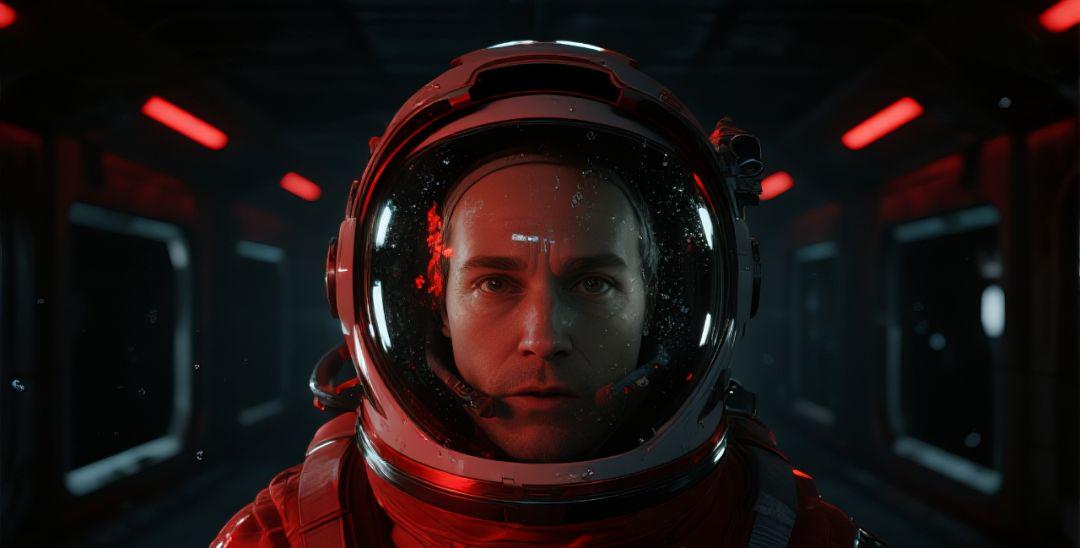
• take: Capsule depressurized, alarm red light.
• mirrors: Dolly pushed forward 2 m, lens zoom 24→35 mm to stretch the background porthole distortion and keep the astronauts' faces the same size.
• Prompt word: "Red light strobe, capsule corridor 10 m deep, Dolly push + reverse zoom, perspective distortion, astronauts' faces unscaled, background portholes stretched into tunnels."
05. Lens Switching - Perspective Switching
Lens Interpretation: Utilizing hard cuts or flung mirrors for time jumps, it's fast-paced and informative.
Specialized supplements: Can be combined with Match Cut or Eye Line Match to minimize skipping.
An example:

• take: The sound of bells echoing from an ancient temple at the top of a misty mountain in the morning.
• mirrors: Aerial panorama overlooking the green tiles and fog → Panoramic center view of the monk knocking on the bell → Hard cut close-up of the eye, pupil reflecting the bell.
• Prompt word: three-stage lens switching, mist, panoramic green tile, the sound of the bells echoing → top angle of the center monks' robes drumming the wind → eye close-up pupil of the bronze bells shadow, eyelashes with the sound of a slight tremor.
▌Third Tier: Mastery Advancement
06. Hand-held Follow-Up - Pretend Camera Operator
Lens Interpretation: The photographer carries it on his shoulder or holds it in his hand, moving in sync with the subject and retaining a sense of breath.
Specialized supplementsWide-angle 18-24 mm to offset shake, shutter 1/50-1/80 s to preserve motion blur, 5-8 % stabilization available in post.
give an example:
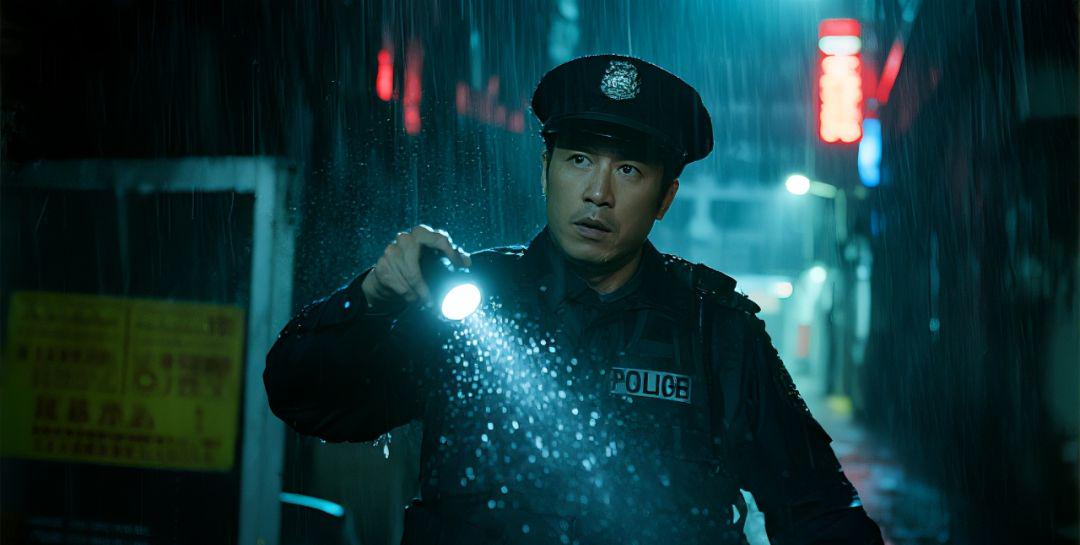
• take: A stormy night chase through narrow alleys.
• mirrors: The cameraman runs backwards, the police chase after the camera, and the rain hits the lenses to create light spots.
• Prompt word: "Handheld follow, 18 mm wide angle, storm backlighting, neon reflections, camera breathing and undulating, police flashlight beam shaking."
07. Surrounding shot - 360° no-death-angle display (changed to opera singer)
Lens Interpretation: The camera follows a circular trajectory around the subject, 360° or in a partial arc.
Specialized supplements: radius 1.5-3 m, orbit or Ronin 360 mode, focus needs to be preset in advance to follow the subject.
give an example:
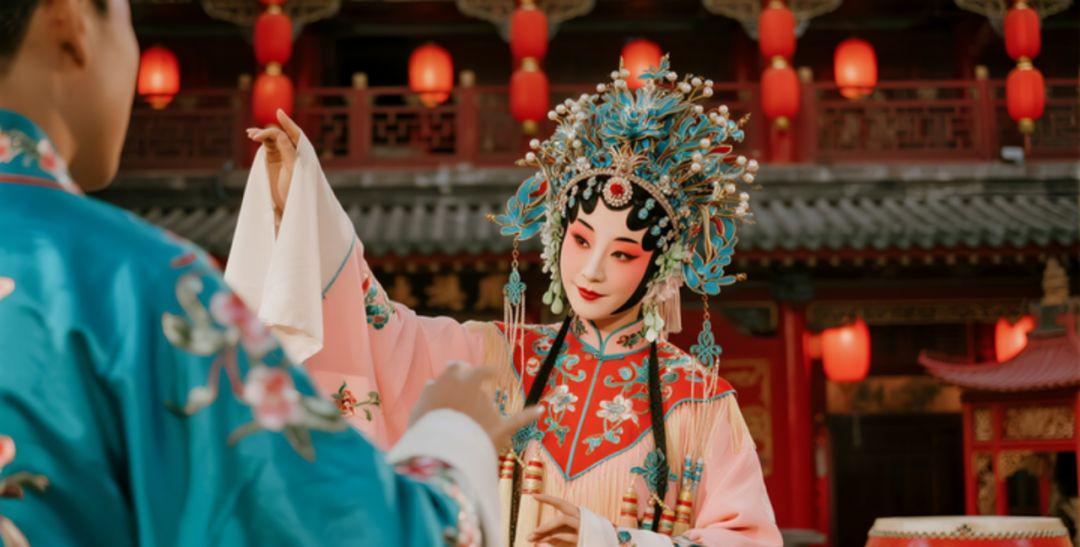
- Scene: In the center of the stage, the flower girl sings "The Drunken Princess".
- Scope: the camera moves along the half-arc of the stage mouth, the water sleeve throws out the trajectory of the full moon, and the gongs and drums point and step on the beat.
- Cue: Red lanterns hanging high on the stage, the camera shooting around the flower girl in a clockwise 270° circle, the water sleeves like a full moon, the drums thumping.
08. Rotating Lens - Sky Spinning
Lens Interpretation: The camera rotates around the axis of light and the picture spins skyward.
Specialized supplements: Angle 90-180° to simulate vertigo or spatial and temporal dislocation; 45° of motion blur can be added later.
give an example:
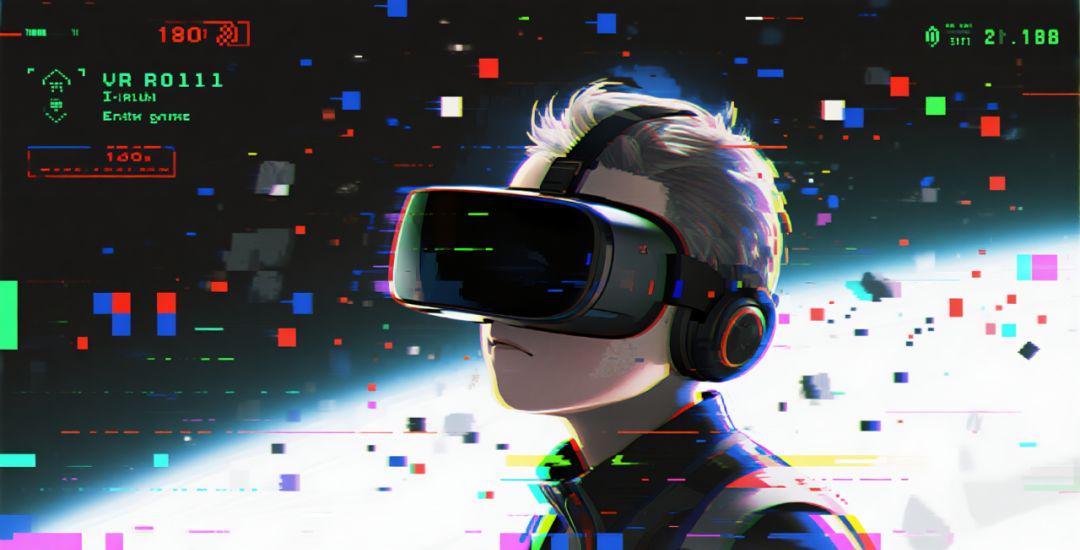
• take: VR game malfunction, player consciousness stripped.
• mirrors: The lens is rotated 180° clockwise, and pieces of the UI interface fly apart, pixelated and torn.
• Prompt word"180° roll, pixel squares flying apart, RGB separation, UI trailing shadows, simulation crashing."
▌Tier 4: Ultimate Immersion
09.POV View - Extreme Crossing
Lens Interpretation: Totally subjective perspective, audience = character.
Specialized supplements: Wide angle 14-20 mm simulates the FOV of the human eye; plus 3D hand or weapon models for enhanced immersion.
give an example:

• take: Wingsuit flight through the canyon.
• mirrors: Head-mounted GoPro MAX, 14 mm ultra-wide angle, high speed sweeping of mountain walls, HUD display speed 180 km/h.
• Prompt word: "First person wingsuit flight, narrow canyon, rock wall textures backing up extremely fast, HUD red alert, wind noise 100 %."
10. First-person interaction - immersion pulled full circle
Lens Interpretation: Characters speak to the camera and pass objects, and the audience becomes a participant in the plot.
Specialized supplementsThe following are some examples: you need to calculate exactly where you want your line of sight to fall to avoid "staring off"; you can place a marker 40 cm in front of the camera to help the actor focus.
give an example:

• take: Surviving on a deserted island, your teammate slips you the last bottle of fresh water, the sun is high in the sky and his lips are chapped.
• mirrors: The camera flattens out as water beads on the bottle and slides off.
• Prompt word: First-person perspective, desert island survival, teammates shove the last bottle of fresh water at you, you in front of the camera reach out and catch it, the action of catching and handing should be coherent and natural.
Let's wrap this up briefly by breaking down these dribblers by scene to memorize them:
- Steady: fixed, close-up, medium shot
- Motion: push-pull, switch, hand-held
- Dazzle: Surround, Rotate
- Immersion: POV, first-person interaction
- Compression: low angle
Skillful use of your AI video production must be very helpful, of course, advanced lens far more than these, slowly, growth are in the accumulation of little by little, learn and practice, works will naturally get better and better ~!