



“AI skitsIs it really profitable?"
"Why is it that other people's AI sketches are getting millions of plays while no one is watching mine?"
If you are a creator of AI sketches, you must have come across this confusion.
The answer is hidden in "director (film etc)Thinking".
First, why must AI creators have a "director's mind"?
With the explosion of AI tools such as Veo, Runway, Corinne, and Instant Dreams, more and more creators are experimenting with AI-generatedskit. But here's the problem:
Why do you generate images that are always scattered, disjointed, and lacking in emotion?
Why do other people make AI skits like movies and you make them like PPTs?
There's only one answer: you lack a director's mind.
AI can help you generate scenes, roles, shots, but the "storytelling" thing, you must make the decision. The director's mindset determines what way you tell the story, what lens you use to express your emotions, and what rhythm you use to promote the plot.
In short, directorial thinking = the ability to tell a story with images.
Second, the underlying logic of the director's thinking: not "generation", but "control".
Directorial thinking, the underlying logic is really just three things:
1. Controlling the scene: controlling the tempo and mood swings
The director is a master of pacing. Fast-paced or slow-paced? Moods rising then falling or vice versa? You have to be clear.
2. Mirror control: knowing how to speak through the lens
You need to know when to use a close up to create intimacy and when to use a wide angle to pull away the oppression. A lens is not just "nice to look at", it's "useful".
3. Cues of control: designing the order of release of information
Suspense, twists, metaphors, reversals - the director decides what the audience sees and when they see it.
👇 A simple example:
- In the same sentence, "He's back."
- It's a suspenseful thriller if paired with footsteps + a close-up of a doorknob turning slowly.
- If paired with sunset + heroine's tearful flashes, it's emotional drama.
- It's a comedy reversal if it's accompanied by funny BGM + the main character slamming the door.
That's the director's mind at work.
Third, the director thinking practical case: AI short drama how to use "director logic" to tell a good story?
We use an AI skit, Tears of the Avenger, as an example to break down the application of directorial thinking to AI creation.
(i) Overview of cases
🎬 Story Concept:
A former secret agent, back in action to save his lover, a tragic revenge is about to unfold.
📌 Mood Rhythm Design:
- Opening: loneliness and stoicism (setting the mood)
- Middle: Emotional contrasts (to stimulate empathy)
- Climax: action explosion (emotional catharsis)
- Epilogue: The end of pathos (emotional sublimation)
Director's Thinking Core:
- Character consistency: consistent characterization throughout.
- Stylistic consistency: The style of the picture is uniformly "cinematic neo-noir" throughout the film.
- Mood Curve: Mood progression and pacing control from shot to shot.
(ii) Role anchors (global consistency descriptions)
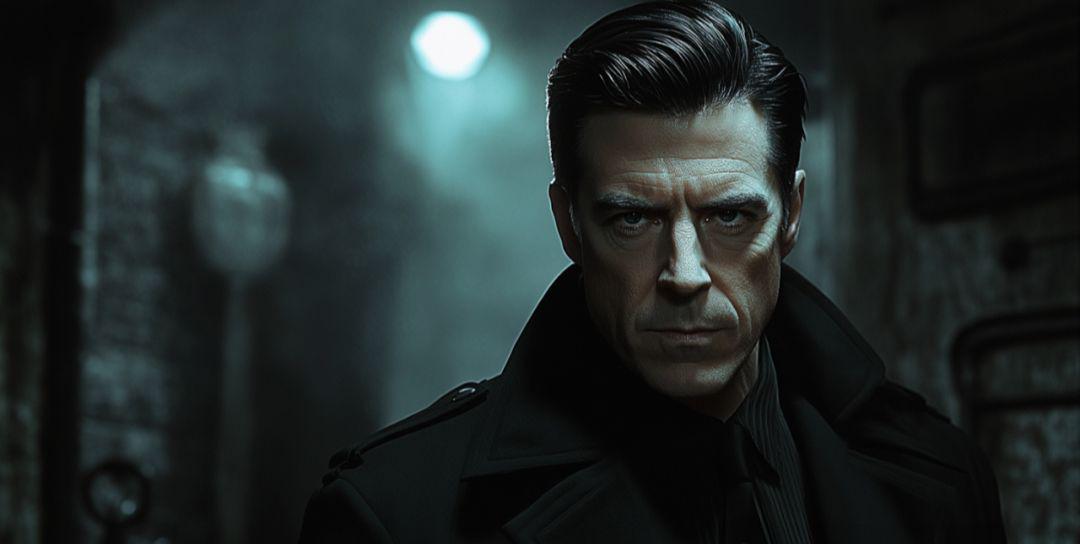
a man in a black trench coat, short black hair, sharp jawline, cold piercing eyes, rugged face, slightly stubbled beard, tall and lean build, cinematic appearance, realistic textures, neo-noir style appearance, realistic textures, neo-noir style
(iii) Text-to-graphic cues: generating freeze frames (for graphic video starting points)
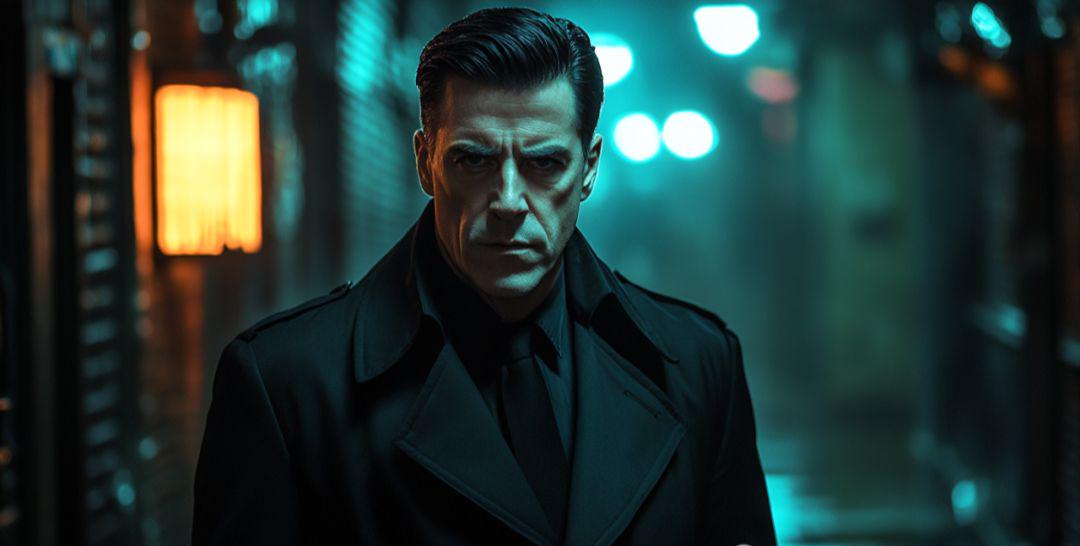
Scene 1: The Return of the Lone Shadow
a man in a black trench coat, short black hair, sharp jawline, cold piercing eyes, walking alone in a dimly lit city alley at night, wet asphalt reflecting neon lights, deep shadows, cold blue color grading, cinematic mood, ultra-detailed, realistic textures, neo-noir tone, cinematic neo-noir style, high contrast lighting, subtle film grain, an anaglyphic color, and a darker color. high contrast lighting, subtle film grain, anamorphic lens flare, muted color grading with selective highlights -ar 16:9
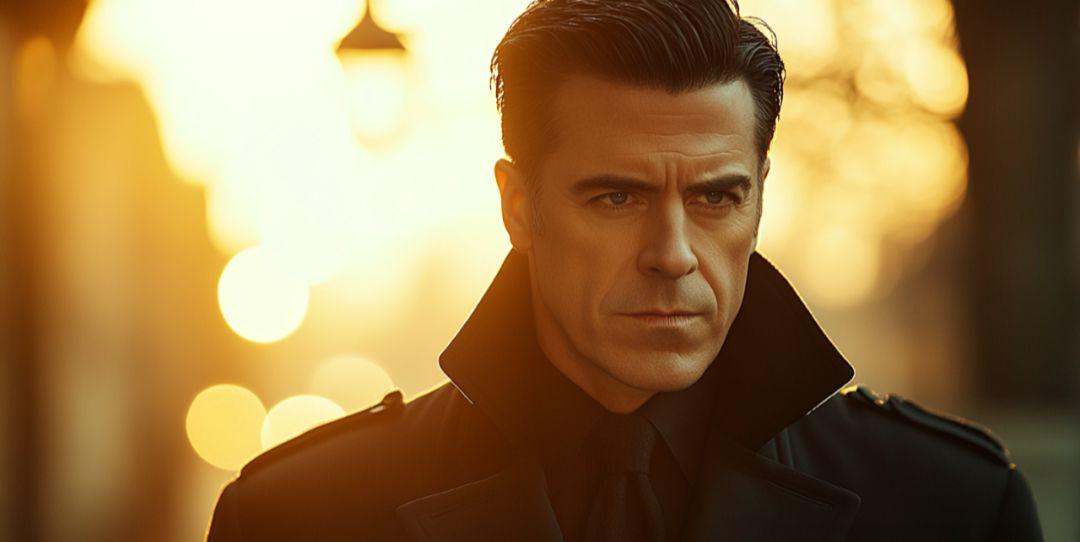
[Scene 2|Remembering Your Loved One
a man in a black trench coat, short black hair, sharp jawline, cold piercing eyes, standing in golden sunlight, soft smile as he looks at a woman 's photo, warm soft focus, romantic bokeh background, emotional and nostalgic mood, cinematic neo-noir style, high contrast lighting, realistic textures, subtle film grains, anamorphic lens, and a darker color. realistic textures, subtle film grain, anamorphic lens flare, muted color grading with selective highlights -ar 16:9
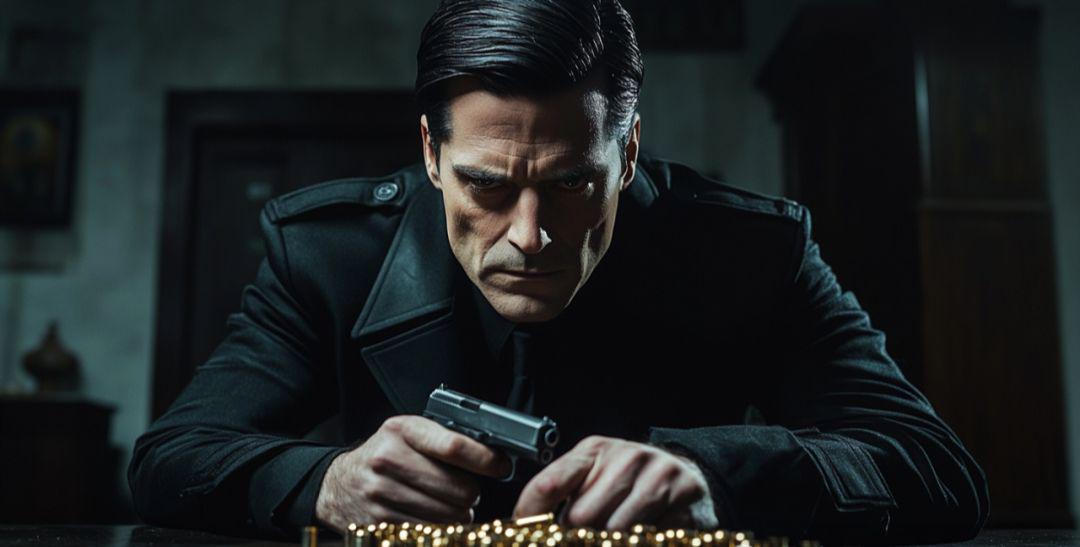
[Scene 3|Weapon Loading]
a man in a black trench coat, short black hair, sharp jawline, cold piercing eyes, sitting at a dark wooden table, loading bullets into a handgun, close-up shot, metallic reflections, low-key lighting, cinematic thriller atmosphere, cinematic neo-noir style, high contrast lighting, realistic textures , subtle film grain, anamorphic lens flare, muted color grading with selective highlights -ar 16:9
Scene 4: The Final Showdown
a man in a black trench coat, short black hair, sharp jawline, cold piercing eyes, dodging bullets in an abandoned warehouse, slow motion action scene, debris flying, harsh backlighting, sparks, intense movement, cinematic dynamic shot, neo-noir tone, cinematic neo-noir style, high contrast debris flying, harsh backlighting, sparks, intense movement, cinematic dynamic shot, neo-noir tone, cinematic neo-noir style, high contrast lighting, realistic textures, subtle film grain, anamorphic lens flare, muted color grading with selective highlights -ar 16:9
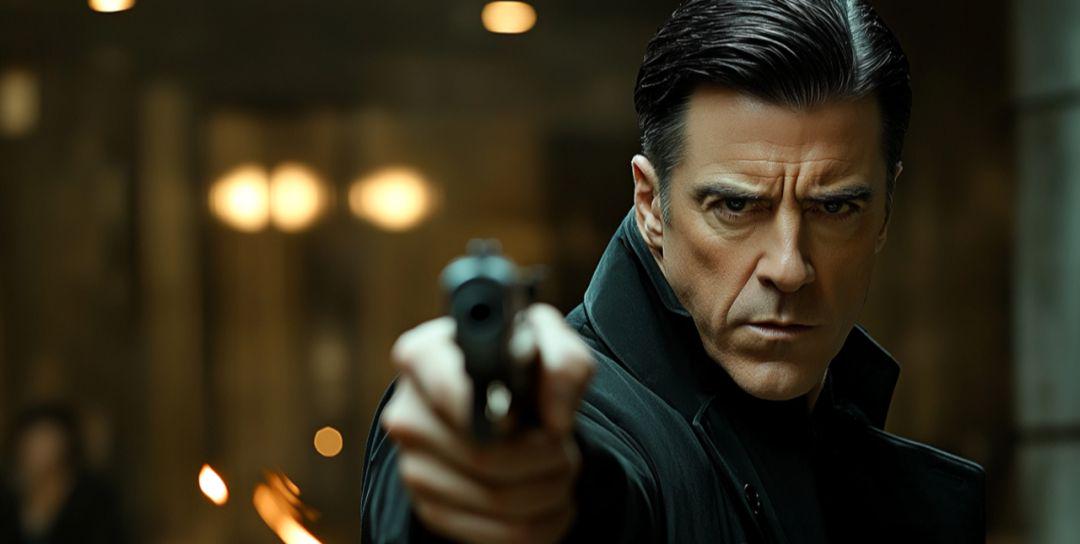
[Scene 5: Tears fall]
a man in a black trench coat, short black hair, sharp jawline, cold piercing eyes, extreme close-up of a tear rolling down his cheek, rain pouring, soft cinematic backlight, hyper-detailed skin texture, emotional climax moment, cinematic neo-noir style, high contrast lighting, realistic textures, subtle film grains, anamorphic lens flare, and a darker color. subtle film grain, anamorphic lens flare, muted color grading with selective highlights -ar 16:9
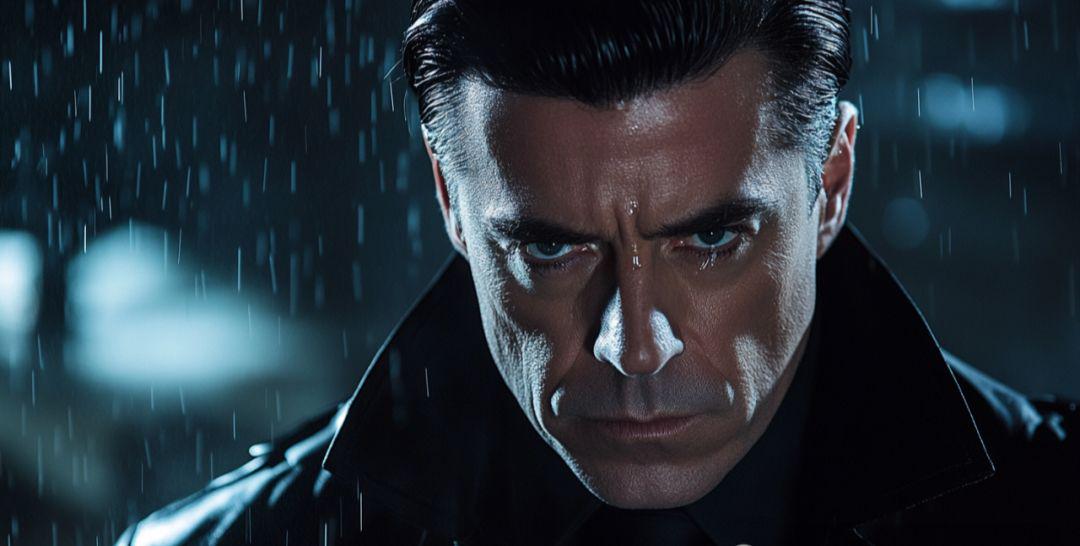
(iv) Graphic video cueing: "animating" the generated image, combining camera, motion and special effects commands.
[Scene 1 → Video Cue Word] (Lone Shadow Returns)
slow tracking shot following a man in a black trench coat walking through a dim city alley, slight handheld camera shake, reflections of neon signs on wet ground, atmospheric fog drifting, cold color grading, cinematic noir tone
[Scene 2→Video Cue Words] (Remembering a Loved One)
soft dolly zoom in on the man's face as he holds a woman's photo in the sunset, lens flare gently sweeping across, background bokeh shimmering, emotional soft focus, warm light enveloping the scene
[Scene 3 → Video Cue Word] (Weapon Loading)
series of quick-cut close-ups of the man's hands loading bullets into a gun, low-angle shots, metallic clicks synced with camera cuts, intense focus on precise hand movements, dark moody lighting, and a variety of other features. intense focus on precise hand movements, dark moody lighting
[Scene 4 → Video Cue Word] (Final Showdown)
dynamic tracking shot circling around the man as he leaps behind cover, bullets ripping through the air in slow motion, flying debris and sparks, rapid camera whip-pans to follow action, high contrast lighting flashes
[Scene 5→Video Cue] (Tears fall)
extreme close-up slow-motion shot of a tear rolling down the man's cheek, raindrops falling in the background, soft cinematic backlight causing a glistening glow, subtle camera pull-back revealing the empty rain-soaked street causing a glistening glow, subtle camera pull-back revealing the empty rain-soaked street
(v) Camera transition cues: inserted between scenes to form a complete audio-visual rhythm
[Memories alternate with reality]
smooth cross-dissolve transition from warm sunlit memory scene to cold dark alley, color palette shifts from golden to bluish tones, emotional mood swing effect
- Where to use: End of scene 2 (Remembering your lover) → Before the start of scene 3 (Weapon loading)
- Role: smooth transition from the hero's warm memories (sunshine and photos of his lover) to the cold reality (the action of preparing for revenge), through the "warm to cold" tonal changes, creating emotional contrasts and strengthening the audience's psychological gap.
[Motion explodes, cuts quickly]
high-speed montage cuts of weapon assembly and sudden action bursts, synced with impactful sound design, rhythmic editing pace
- Usage position: End of Scene 3 (Weapon loading) → Before the start of Scene 4 (Final duel)
- Role: The slow and steady weapon loading shots, through the fast cutting rhythm and strong sound and picture impact, instantly turn into the climax of the battle, creating a "static to dynamic" explosive force, enhance the sense of rhythm.
[Emotional Closing Slow Push Shot]
slow push-in camera movement on the man's tear-streaked face, soft focus blending into a wide aerial shot of the empty rainy street, melancholic reflective mood of the man's face. melancholic reflective mood
- Where to use it: at the end of Scene 5 (Tears fall)
- Role: In the stage of emotional release after the climax, using the "slow push camera + long-distance aerial lens", the protagonist's lonely mood from the individual sublimation to the environmental atmosphere (empty streets, rainy night), forming a double visual and emotional closure, to give the audience an afterglow.
(vi) Full-film style anchoring parameters (all of which have been added to the Vincentian cue words for each scene)
cinematic neo-noir style, high contrast lighting, realistic textures, subtle film grain, anamorphic lens flare, muted color grading with selective highlights
The benefits of doing so:
- Guarantee stylistic consistency throughout the movie;
- The AI locks on to a "style anchor" every time it parses a cue;
- Avoid style drift issues in long videos/multi-camera.
(vii) Steps in the application of the director's mind (execution process)
- Designing emotional curves: holding back → outburst → release.
- Breaking down the emotional nodes: identifying 5 key subplot scenes.
- Write a Vincentian prompt: describe each scene using "scene + mood + camera language + lighting effects".
- Toussaint video dynamization: using video cue words to define the way to move the camera and the rhythm of the action.
- Camera articulation design: include transition cues at mood changes to ensure smooth pacing.
- Keep characters and styles anchored: always include character and style fixed descriptions in all prompt words.
(viii) Timeline of camera pacing
|
|
|
|
|
|---|---|---|---|
|
|
|
|
|
|
|
|
|
|
|
|
|
|
|
|
|
|
|
|
|
|
|
|
|
|
|
|
|
|
|
|
|
|
|
|
|
|
|
|
(ix) Implementation of recommendations
- When generating a Vince map, first lock in the protagonist's appearance and style.
- In the Toussaint video stage, the focus is on adjusting the "camera movement style" and "emotional rhythm control".
- Add a transition shot between the subplot and the subplot to avoid the picture jumping and cutting hard.
- You can import the cue words into AI tools such as Ke Ling, Instant Dream, Vidu, Midjourney, Runway and other AI tools for one-click generation into the mirror.
(x) Summary
This is a complete "director thinking driven AI skit practical case", not only the beauty of the picture, but also the rhythm and emotion of the logical control. In the cue words of the whole movie, the "character anchor words" and "style anchor words" are always kept unchanged to ensure the consistency of the whole drama.AI is not the director, you are. AI is not the director, but you are. With good directorial thinking, AI skits can really impress the audience.
IV. Suggestions for AI Creation Techniques for Directorial Thinking
✅ 1. Designing a scene from the "emotional curve".
Think about the mood first, then pick the shot, don't pile on the images the other way around.
✅ 2. Every shot should have a "purpose."
Not to look good, but to serve characterization, emotional advancement, or message release.
✅ 3. Avoiding "simultaneous giving" of information
For example, character entrances and background settings should not appear at the same time, but one after the other, so that the audience can receive them in a rhythmic manner.
✅ 4. Smoothly articulated shots
Character position, direction of movement, and direction of vision should be consistent to avoid "wearing out".
V. You are not "generating a skit" but "directing a movie".
Many AI creators have a misconception: they think that if they just type in a bunch of cue words, scenes, and dialog, the AI will automatically spell out the play.
Re! It's like when the actors themselves finish acting and the cameraman shoots, but the director doesn't even tell everyone what story is being told.
AI is not the director, you are. The director's mind is the real soul of the AI skit.
VI. Writing at the end: are you ready to become a director?
We are in the era of "everyone is a director". But whether you can make a short play that touches people's hearts does not depend on how many AI tools you have mastered, but on whether you have a complete set of director's thinking.
With AI, it's not about replacing creativity, it's about actually getting the director's mental images off the ground.
👀 If you're still "piling up cues", you're just an "AI operator"; 🎬 If you're starting to "tell a story through the lens", you're an "AI director". 🎬 If you start to "tell a story with the camera", you are the "AI director".
This is what I shared today, did you learn it?