



February 12 news.Meta I want social media accounts."ForeverWhat is it? The company obtained a patent in late December, outlining how large-scale language models “simulate” a person's social media activities, such as responding to real-person releases。
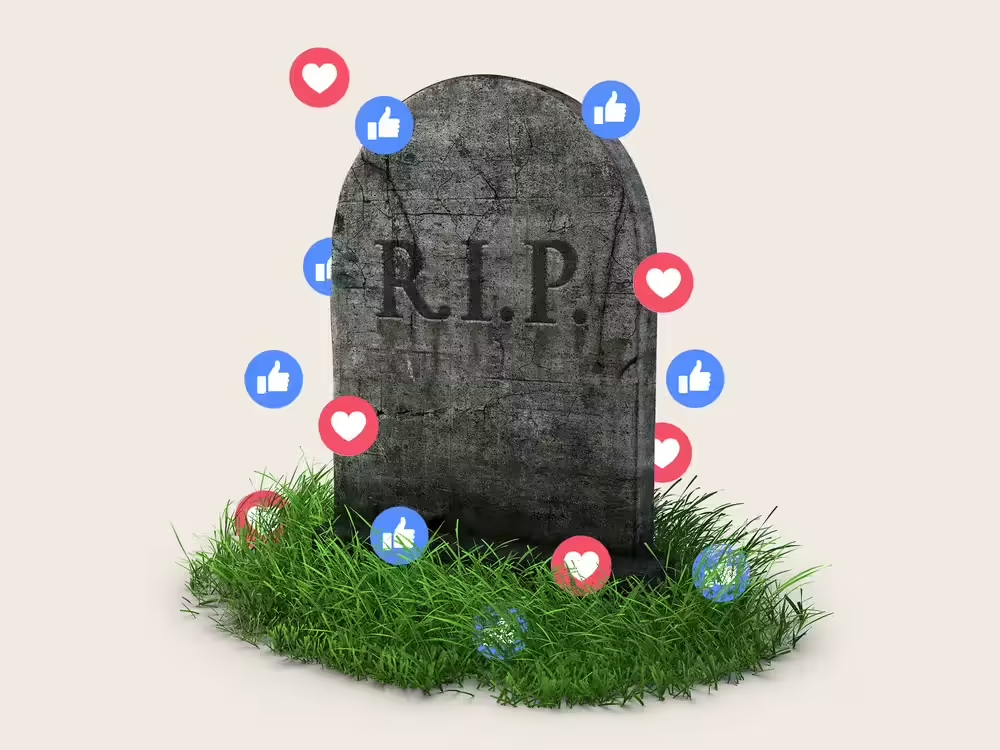
The patent states: “When a user is not in the social network system, such as on extended leave or after death, the language model can be used to simulate users.”
The main inventor of this patent is Mr. Andrew Bosworth, Chief Technical Officer of Meta。
Meta, a speaker, said to Business Insider: “We do not currently have plans to land this programme”
The patent explains why Meta believes that people may need this technology: if you don't update the dynamics, whether you leave social media temporarily, or... if you die, your fan experience will be affected. Simply put, they'll miss you。
The document states: “If the user dies and is never able to return to the social platform, the impact on other users will be more severe and lasting.”
To fill this gap, Meta will create a social media digital divide for you: through your training model of exclusive data (including history reviews, praises, postings, etc.) so that it learns how you behaved in the past。
This number can be praised, commented on the content of others and even responded to private letters. Such tools may be useful for those who rely on the Meta platform for their livelihood and need to be stopped for a while。
Meta's patent also refers to a technology that allows large-language models to simulate video or audio conversations with users。
The spokesperson for Meta stated that the company ' s patent submission was an open concept, but that the granting of a patent did not necessarily imply the promotion, development or landing of the technology。
Even so, it has given rise to much discussion about the nature of technology and sadness。AI The robot is one thing when you're off the grid, and the copycat is another。
Edina Harbina, a professor at the University of Birmingham University School of Law, who focuses on digital rights and post-mortem privacy studies, expressed concern. She stated: “There are not only legal issues, but also important social, ethical and profound philosophical issues.”
Meta has been thinking about the management of the digital heritage for many years. About 10 years ago, Facebook introduced a feature that allows users to designate “inheritance contacts” to manage accounts after I die. In 2023, in the heat of the concept of the meta-cosm, Mark Zuckerberg talked about the idea of virtualizing the dead。
Zuckerberg said at the time: “If someone loses someone, is in mourning, can interact with them, can revisit certain memories, and may help.”
There's a lot of these technologies -- death robots, ghost robots, sad technology -- at the core of all these things are the digital images that help people face the death of their loved ones。
1AI noted that a number of start-ups were founded on this idea and that many of the founders had experienced the loss of their lives: In 2015, Eugenia Cuida founded the AI Chatter Robotics Company Replika; in 2020, Justin Harrison founded You, Only Vital (YOV) after her mother diagnosed cancer。
HARRISON SAID, "EVERYONE IN THE WORLD OF TECHNOLOGY HAS BEEN THINKING ABOUT IT SINCE THE GENERATION OF AI MADE A BREAKTHROUGH."
IN 2021, MICROSOFT ALSO APPLIED FOR AN AI CHAT ROBOT PATENT TO SIMULATED DEAD PEOPLE (AS WELL AS FICTIONAL ROLES, CELEBRITIES)。
Harbinya believes that the patent of Meta means that this technology is becoming mainstream。
Harrison was not surprised by the involvement of large technology companies in this area, which he considered to be an indication that people were beginning to “better accept the matter”. “We can only continue to optimize the services we provide to people”, he said, “the resources of support that are now “bad” against grief,” and “I think that if we can, we have a moral obligation to do more for these people.”
BUT AI, DEATH AND GRIEF ARE BY NO MEANS EASY TO DISCUSS, AND THEIR INTERSECTIONS ARE TABOO ENOUGH TO TRIGGER PHILOSOPHICAL DEBATES ON ETHICS, DIGITAL RIGHTS AND PRIVACY ON ANY OCCASION。
Meta developed this technology with a motivation that goes beyond helping people cope with grief, especially for the temporary stoppage of accounts. Halbinya said, “This means more interaction, more content, more data, more data for now and future AI. I can see the business motivations, just wondering how, when and if they're going to land this innovation.”
Once such products are launched, there are also questions: Will they cover, for example, all Meta applications? Can you distinguish between your status on whatsApp and the direct white tone of Instagram
Joseph Davis, professor of sociology at the University of Virginia, is concerned that robots of this kind affect the way humans experience grief. "One of the sad topics is to face the real loss." Davis said, "Let the dead rest in peace. To bring them back is not really to be resurrected, it just looks like it, which causes confusion.”