



Someone asked Seedance 2.0 The reality videoOverheard. This is a problem that we have been through in the past。
The picture looks fine, it's uploaded, it's backed up, it's blocked, it's a different angle, it's a card。
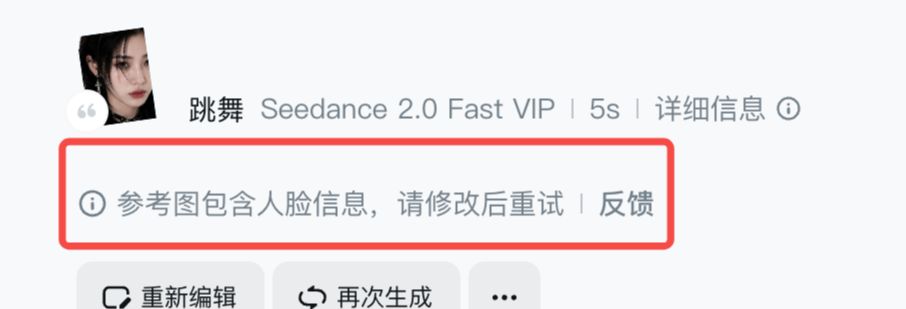
AND THEN, AFTER CONSTANT TESTING AND DEBUNKING, THERE WERE PROBABLY SOME WAYS TO FIGURE OUT, AND INSTEAD OF JUST STARING AT THE FACE, THE REAL PERSON DID A SET OF ORIGINAL AI ASSETS TO MAKE THE PLATFORM KNOW THAT IT WAS CHARACTER-SETTING, NOT A PHOTO OF THE REAL PERSON。
This article does not write a one-size-fits-all formula, nor does it guarantee 100 per cent success, as the rules at the bottom of the model are constantly changing。
AND HERE'S THE FIVE WAYS THAT WE'VE BEEN USING, AND THAT'S FOR PEOPLE WHO DO AI SHORTS。
Method 1: Make a three-view of the whole body, and don't come up and make a face
For the first time, many people have played a reality play, and the easiest thing to do is to do too much。

The bigger the face, the more like a real picture, the more pressure to audit。
You see it yourself, and the platform sees it better。
We're now more used to the whole body view。
The front, side and back run first, the feet are painted in their entirety, the hands are naturally down, and the clothing, shoes, hair, hair and accessories are clear。
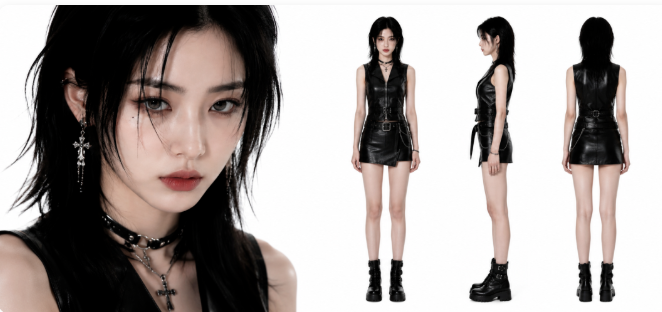
This has two advantages。
First, the role is no longer recognized by one face alone。
Second, when you make a video behind Seedance 2.0, you can see this information together with body size, clothing contour, shoe troupe and hair。
And inside of us, we're using a special Gem to create a set of settings that will help design images。
You can start with this hint:
• Terminal
Real-visual style, role concept make-up photos, whole-body lenses, front-to-face photographs, simple, white and gray background。
Show your body and your feet, stand up, and your hands fall down with no expression。
Roles are [age, sex, identity], [height], [hairs' hair color], [dressing materials and colours], [shoe-tracking description], [dressing or dressing]。
The person's skin and detail are natural, the light is even, the picture is clean, no words, no watermarks, no excess。
If you just want to check if you can pass the trial, don't start with the nine-magics and the face。
Take a three-view of the body first. It's enough for a lot of times。
Method two: Keep your face away from me and fill the information with a medium view and a detailed picture
There's a problem with the whole body chart。
Don't add a big face at once。
A more stable approach is to fill the mid-earth view above the waist, with about one fifth of the face。
It's a model, and it doesn't make the whole picture a human face。
We'll put together the details of the three-view, mid-view, shoes or clothing。
for example, in an ancient play, the crowning, sleeves, shirts and shoes that are necessary can also be put in, and the reference generation capacity of a seedance 2.0 is better。
Many times the model remembers the role, not just the face, but the whole set。
If you always check ahead, you can lower the risk in that order:
• Terminal
First round: Three views of the body。
Second round: Three views of the whole body + mid view above the waist。
Round three: Three views of the whole body + medium view + local details of shoe tracks, sleeves, hairdressing etc。
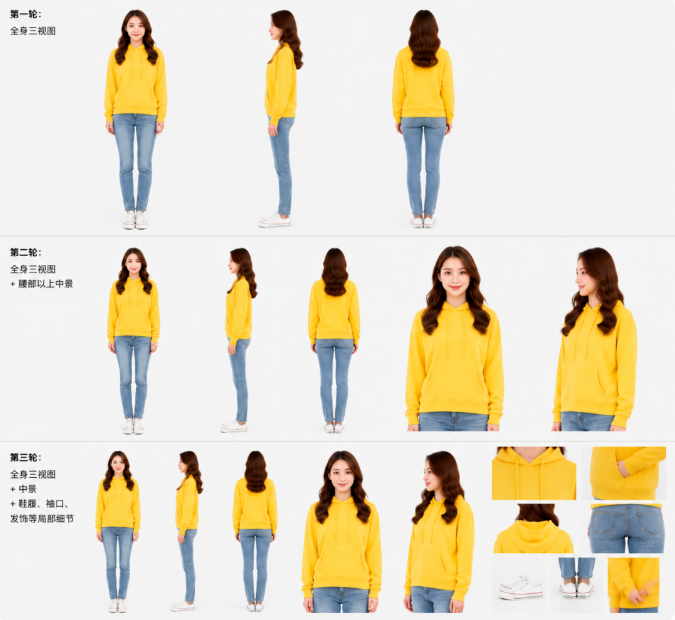
There's no need to make it too difficult, and there's no need to collect a bunch of hints。
One word at the core, and don't let your face be the only information on the whole picture。
Method III. Roles, scenes, props from the script before generating assets
A lot of them give you a big hint to copy and run。
Of course it works, but when it comes to short play, the role is not empty。
The age, identity, desire, dilemma, clothing, standing of a person should be shown in the script。
WE'LL GET AI TO MENTION THREE TYPES OF ASSETS FROM THE STORY: PEOPLE, SCENES, PROPS。
The characters first make a make-up, the scenes make a map, and the props make a pure white-cut feature。
This can be used directly:
• Terminal
YOU'RE AN AI MAP DESIGNER. ACCORDING TO THIS SCRIPT, HELP ME LIST ALL ASSETS, INCLUDING CHARACTERS, SCENES, PROPS。
PLEASE OUTPUT THE AI GRAPHICS TIPS FOR THESE CONTENTS。
The character hint must be white on the head and a description of the shoes。
People don't take anything, their hands fall down and they stand up。
Role-image tips are to describe height, size, age, hair, hair color, dress, face, eyes。
The scene design cannot be manned and produces at least two negative and positive scenery tips and one side-view panoramic。
Props must be white-faced, with no background and no characters。
This paragraph does not seem as exciting as the title party, but it would be a lot easier to do a project。
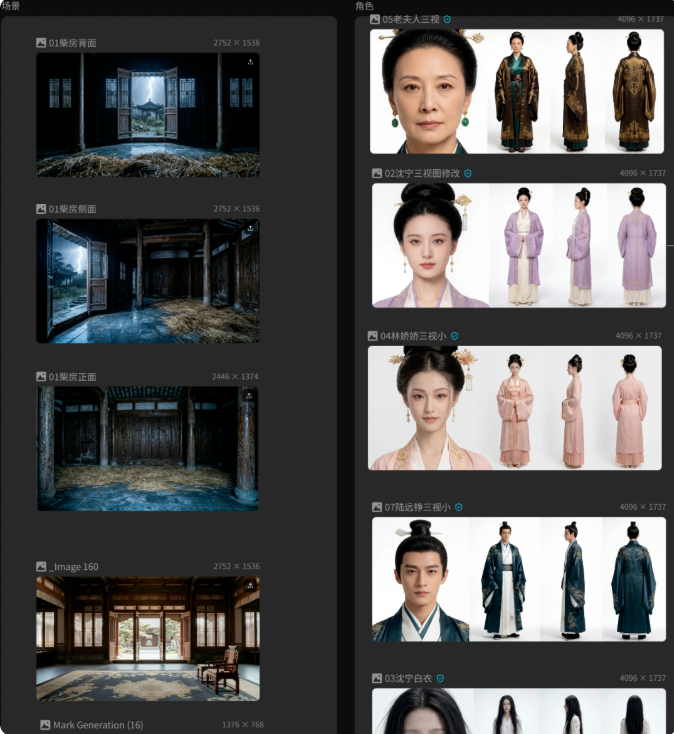
You're not feeding a lonely face. You're feeding a short play asset, with characters, scenes, props. Models have something to understand and generate。
Method four: Platforms don't die. Run on better routes
Let's not kill ourselves。
If you get stuck on a platform over and over again, it doesn't have to be stuck there。
Platforms like LibTV, Tapnow, which are more partial to the AI creation process, will be easier for AI to generate and Seedance 2.0 access。
LibTV, for example, has a special idance 2.0 compliance check, checked with icons, very convenient。
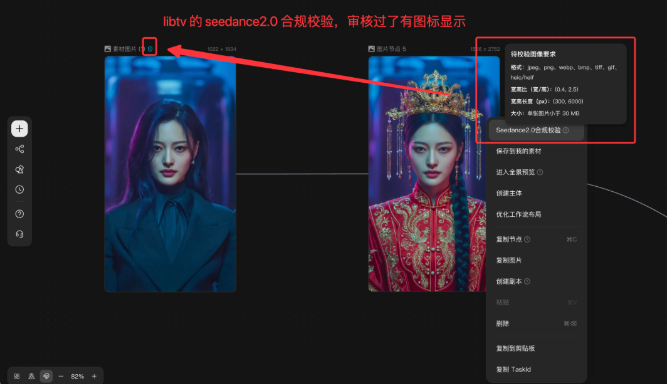
Our proposal is simple。
Let's start with the work, then go back to the quality。
In the past, we've had a long time since we've been checked。
It was later discovered that much time was actually spent on non-creational issues。
It's either the script's bad or the camera can't figure it out or a picture can't come back。
So we can use four or nine of these ways to get our work done first, not to get stuck in reality。
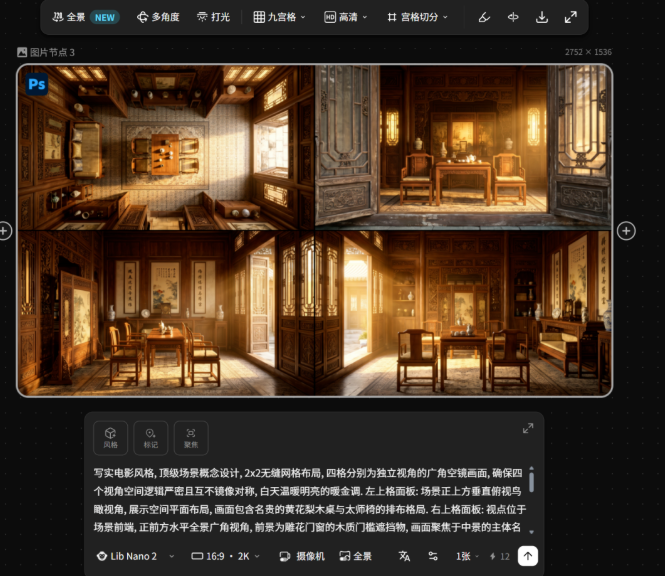
If you just want to dream, it's okay。
FOLLOW THE FIRST THREE STEPS, MAKE AN AI ORIGINAL ROLE ASSET, LESS FACE-CAPTION, MORE THREE-VIEW, MEDIUM AND SCENE-BASED ASSETS。
The platform is just a path, so don't let it become the project itself。
Method five: Seedance
Video alerts will also affect the audit。
I don't recommend this:
• Terminal
A IMAGE CHARACTER IN B SCENES, IMITATING C VIDEO CHARACTERS。
This writing makes it easier to understand a model as a human move。
The more appropriate way to write a short play is to write it into a shot that is being shot:
• Terminal
An ancient house fight for a human play, 9:16 a.m. screen, film level writing for substance。
In the official hall of the Constabulary, the young master mother stood by the wood table, with restraint and calm eyes。
The camera slowly moved from the medium to the near view, where she gently raised her hands to prepare her sleeves and pressed her emotions and spoke。
Indoor warm-coloured candlelights, in the background of a Chinese wood screen and tea case, with clean images, no subtitles, no watermarks and only environmental and personal sounds。
The basic formula that we gave to Seedance 2.0 is basically like the following:
• Terminal
Mirror + Partition + Angle + Subject Description + Movement Description + Environment
It's a formula for a rookie, because it's gonna make you talk about it。
Seedance 2.0 is strong, but you can't just give it a word to get this guy moving and expect it to understand your shorts。
15 seconds, how do we get the growth video
Truth is just the first step。
And then there's a more practical question: Feedance 2.0, which is usually only a few seconds to a dozen seconds, how do you do a full set of shorts
Our practice is to split the batch。
5 to 15 seconds per batch, only one small event。
If the lines are long, more than 20 characters will have to be careful, and more than 30 characters will have to be broken down as much as possible into speech lenses, reaction lenses, props or externals。
For example, in a conversation, don't put all lines in a video。
START WITH A ROLE A OPENING, THEN TAKE A ROLE B REACTION, CUT THE COUNTER OR KEY ON THE TABLE, DRAW A VOICE AND THEN RETURN TO THE FACE OF ROLE B。
It's time to seeedance 2.0 works。
It's not the first time that it's gonna help you create a whole set, but it's better for you to make a piece of material。
at last
It's a pain in the ass, but it shouldn't take most of your time。
If you can use a three-dimensional view, don't start with your face。
If you can use the medium view and local details to supplement the information, do not rush to close face。
If you can run through a more convenient path like LibTV, Tapnow, you can make the film first。
DO THE AI SHORTS, OR DO THE FINAL PIECES OF THE STORY GO ON, DO THE PART STABILIZE, DO THE LENS CONNECT, DO THE MOOD ADVANCE。
The trial was just the step at the door。
Don't get stuck at the door for too long. There's a whole episode to take。