



IT'S HARD TO PRODUCE A FULL-SIZE-FITS-ALL VIDEO, AND OFTEN IT'S HARD NOT TO CREATE A GOOD-LOOKING SHOT, BUT TO MAKE A DOZEN OF THEM LOOK THE SAME. THE FIRST PART IS WARM AND THE SECOND ONE IS GREEN; THE SAME PERSON IS BLIND AND DARK; THE INTERIOR IMAGE IS SOFT AND CUTS OUTSIDE, AND SUDDENLY BECOMES SHARP. EACH PART ALONE IS NOT SO BAD, BUT IT'S ALL THE SAME。
The solution to such problems cannot be a last filter. A more conservative approach is to create colour and photographic benchmarks before generation, to repeat fixed information in generation, and to do a uniform correction after generation. This paper breaks down the methodology into a directly enforceable workflow that applies to advertising, short brand films, drama films, product videos and lifestyle content。
I. UNDERSTANDING THE ISSUES FIRST: A sense of unity comes from three constraints
Most of the video generation tasks still need to be completed in series. Even when tools produce longer clips, complex actions, lens switching and narrative rhythms are often created in multiple lenses. Every time a model is produced, the light, color temperature, contrast, material and colour of the environment are rejuvenated, and therefore there is a high risk of minor deviations between the different segments。
Greater uniformity requires simultaneous control of three layers of information:
The first level is the colour base, specifying which colours are the main use of the image
The second level is the photography language, which defines the light, the lens, the view, the mass and the mode of motion
The third level is later correction, which pulls the inevitable deviations from the generation back in the same direction. Colour cards are not filters, and photographic tips are not a universal parameter. They are more like a visual instruction that all lenses share。
First step: finding a truly appropriate reference from the script
The reference figure cannot be chosen on the basis of "good looking". Read the script, judge the mood of the story, the status of the person, the type of scene, the light time and the brandy, and then look for films, advertisements or photographic works that come close to these conditions. The purpose of the reference is not to reproduce content, but to use its colour relationship, photo-organism and lens language。
Which platforms to look for reference
The different platforms do not have the same level of expertise and can choose from the following:
-ShotDeck (https://shotdeck.com/): Fits to find high-resolution films, plays, advertisements and music video silent frames. Images can be found around people, scenes, colours, light and scenes and are suitable for professional visual reference boards; complete functionality usually requires subscription。
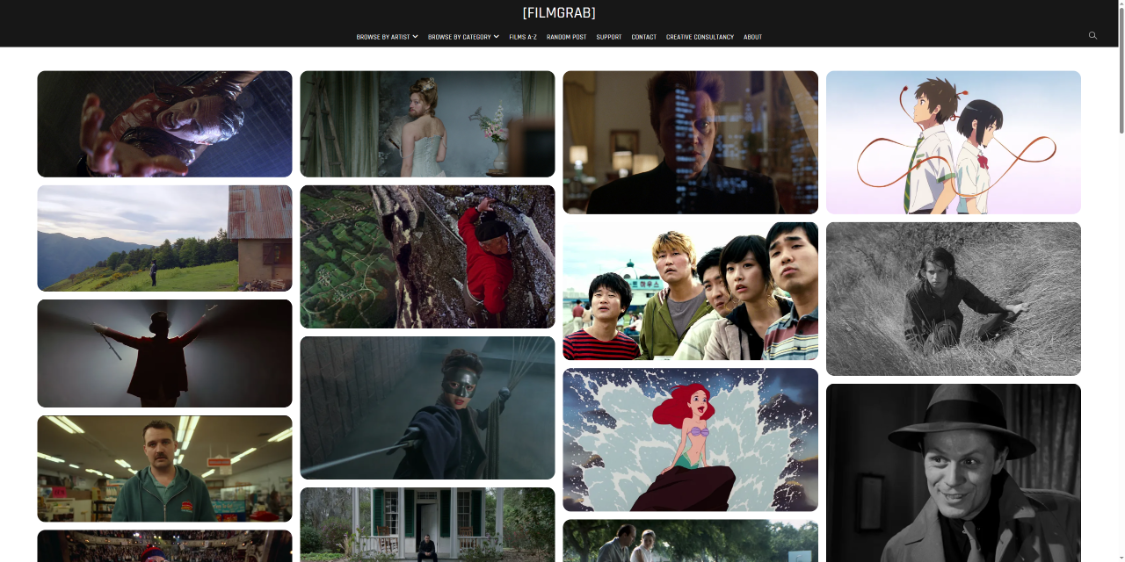
-FilmGrab (https://film-grab.com/): A film-by-film frame is suitable for viewing the overall picture and color changes of a film. The search function is not as detailed as a professional database, but it is easy to use for reference purposes。
-Directors' Library (https://directorslibrary.com/) and Ads of the World (https://www.adsoftheworld.com/): Suitable to find brand advertisements, fashion shorts and music videos, focusing on creative concepts, camera rhythms, product presentation and brand quality。
-Eyecandy (https://eyecanddy.com/): The case is organized according to visual techniques, such as vertebrae, curvature, shuffle mirrors, matching the field and special perspectives. More efficient use is already known when looking for the lens language。
-Vimeo Staff Picks (https://vimeo.com/channels/staff Picks): Fits to watch a complete short film, study how the lens connects, and how images, voices and rhythms work together to service narratives。
-Behance (https://www.behance.net/): Suitable for project proposals for photography, brand vision, colour design and completeness. It is easier to see the overall direction of a project from concept to product than a single picture。
Pinterest, Little Red Books and Berry Beeps can also be used for the rapid detection of keywords and creators, but are better suited as a clue entry. Before using the pictures, it is advisable to continue to follow up on the original work, director, photo director or production company and to avoid replicating it as an official source。
IF YOU HAVE A LIMITED NUMBER OF PICTURES, YOU CAN GIVE IT TO AI, SO THAT IT CAN START WITH A REFERENCE COURSE. THE FOLLOWING INTRODUCTORY WORDS CAN BE USED DIRECTLY:
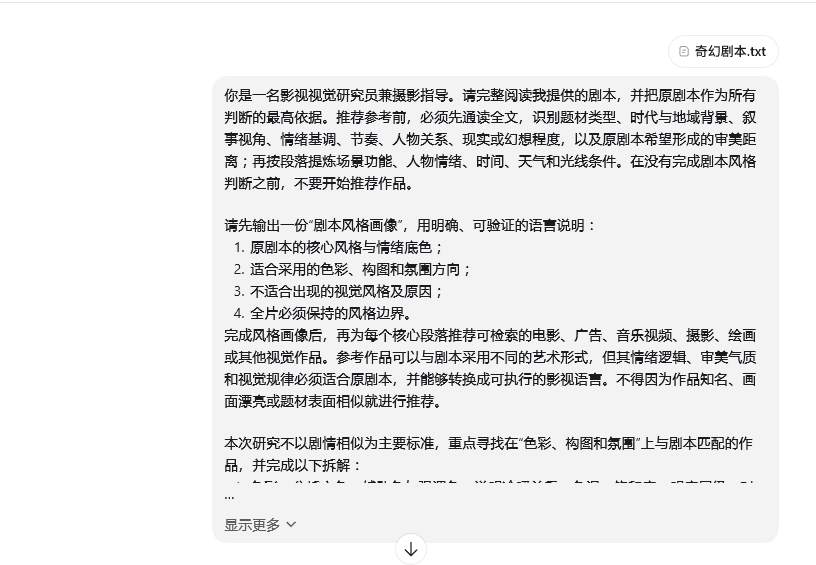
You're a visual researcher and photo director. Please read the script I have provided and use the original script as the supreme basis for all judgements. The full text of the recommendations must be read in writing, identifying the type of subject matter, the time and geographical context, narrative perspective, emotional tone, rhythm, character relations, reality or imagination, and the aesthetic distance that the original script would have wished to create; then extracting the scenery function, the mood of the person, time, weather and light by paragraph. Do not begin to recommend work until the script style has been completed。
Please post a "script style portrait" in a clear and verifiable language:
1. The core style and emotional background of the original script
2. Appropriate colour, image and atmosphere direction
3. Visual style and reasons not appropriate
4. The whole piece must maintain the style boundary。
Once the style is completed, a searchable film, advertisement, music video, photography, painting or other visual work is recommended for each of the core paragraphs. Reference works can take different artistic forms than scripts, but their emotional logic, aesthetic and visual patterns must be appropriate to the original script and can be converted into an enforceable video language. No recommendation may be made because the work is well known, the picture is beautiful or the subject matter appears to be similar。
The study, which does not focus on the similarity of the drama, focuses on the search for work that matches the script “colour, image and atmosphere” and accomplishes the following dismantling:
Colours: Analysis of the main colours, the supporting colours and the emphasis on colours, indicating the relationship of cooling and warmness, colour temperature, saturation, luminance level, contrast, light and shadow tendencies, colour treatment and approximate colour ratios。
2. Structure: Analysis of the drawings, the scenes, the space, the main position, the visual focus, the white, the front-middle background, the lens, the depth of the space and the ratio of the person to the environment。
3. Climatology: Analysis of the main light direction, the soft and hard light, the dark environment, weather or air senses, static or dynamic tendencies, and the emotional feelings that these factors co-create。
Please use the table output, each of which contains a reference to the script paragraph, the visual target, the name of the work and the specific scene, the reasons for matching the original script style, the colour dismantling, the drawings, the atmosphere breaking, the proposed interception, the direct searchable Chinese-English keyword, and a visual principle that is most worthy of migration to the project. If reference is made to drawings, photographs or other non-film forms, please also indicate how it is translated into visual expressions such as luminous, camera, field movement or later colour。
Finally, a set of visual benchmarks that should be consistent for the entire film is aggregated, with an indication of which colours, images or atmosphere can change with the scene. Once the recommendation has been completed, a reverse check should be carried out: if a reference weakens the sense of the original script ' s age, character relations, emotional tone or narrative, it should be deleted or replaced. Do not list only the names of the works, do not replace style matching with similar stories, and do not recommend work that does not provide specific justifications. If the title, title, scene or provenance of the work is uncertain, please indicate clearly that “verification is required” and do not replace unrecognized information。
THE NAME, LINK AND PROVENANCE GIVEN BY AI IS STILL TO BE MANUALLY CHECKED. IN THE END, THREE OR SIX IMAGES OF UNITY OF DIRECTION, SUFFICIENT CLARITY, AND A REPRESENTATIVE OF THE QUALITY OF THE TARGET COULD BE RETAINED. THE LIGHT CONDITIONS FOR INDOOR DAYLIGHT, NIGHTSCAPES AND OUTDOORS VARY WIDELY, AND IT IS ADVISABLE TO CREATE SEPARATE SUB-REFERENCE GROUPS RATHER THAN MIXING CONFLICTING IMAGES INTO A SET OF CRITERIA。
III. Step 2: Compressing reference maps into reusable colour cards
Directly, reference maps are handed over to the generation model, which also sees people, scenes, structures and props, and attention may be taken away from irrelevant content. Colour cards condensed complex images into a small number of colours and uses, which are more suitable as fixed bindings across lenses。
AFTER UPLOADING A PICTURE OF THE SAME REFERENCE GROUP, YOU CAN REQUEST AI:
Please analyse the colour patterns common to these reference maps, extract the 12 or so colours that best represent the overall visual atmosphere and generate a simple colour card。
THE COLOUR CARD PROPOSAL CONTAINS: 4 MAIN COLOURS, 4 AUXILIARY COLOURS, 2 EMPHASIS COLOURS, 1 HIGH LIGHT COLOUR AND 1 SHADE. FOR EACH COLOUR, ONLY HEX COLOUR VALUES AND MAIN USES, SUCH AS BACKGROUND, ENVIRONMENT, SUBJECT, HIGH LIGHT, SHADOW OR LOCAL DOT SUFFIX ARE INDICATED。
Under the colour card, the overall warmth, saturation and brightness are summarized in one sentence. Do not repeat the characters, products and structures in the reference diagram, nor add gradients or too many comparable colours. If the colour difference between the reference diagrams is obvious, please remind me to regroup and not to forcibly merge。
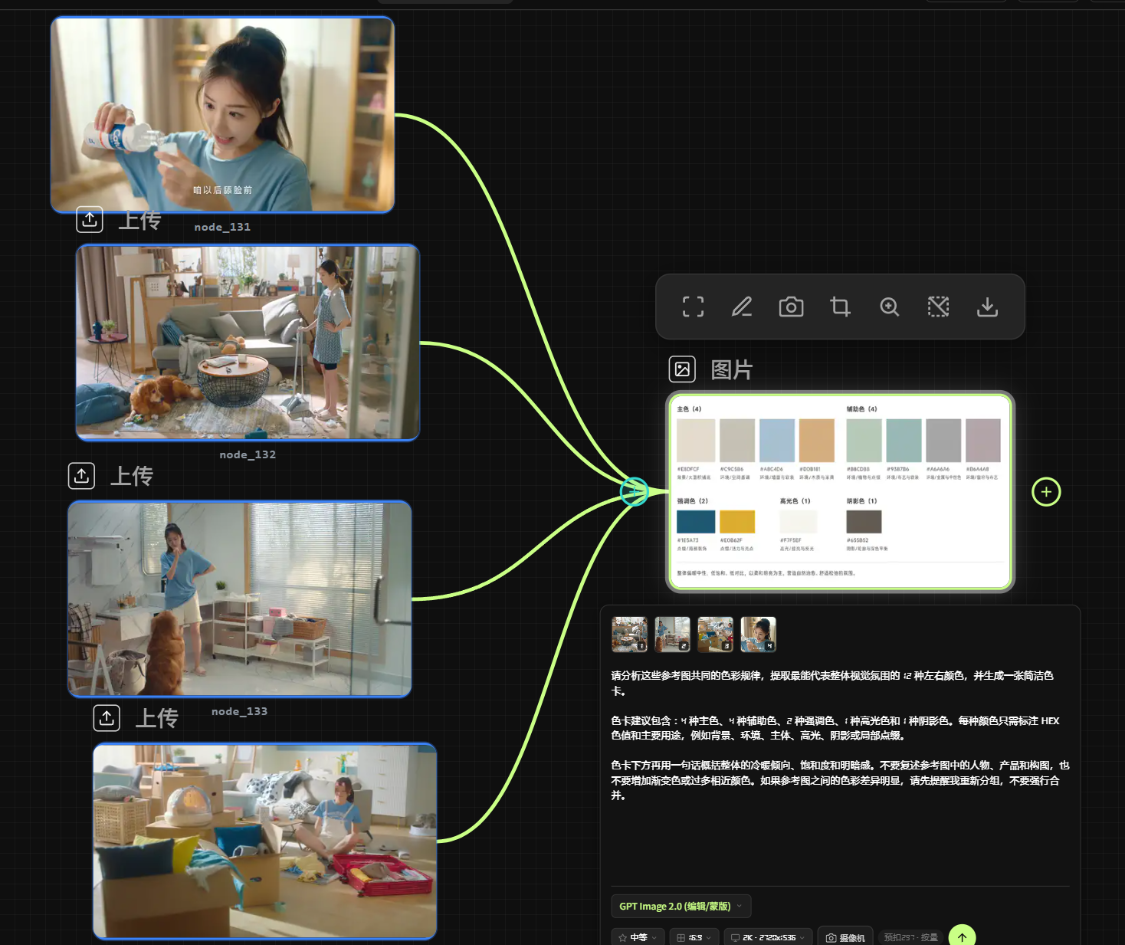
The most important of the colour cards is not the more colored the better, but the more colored the better. For example, “shea white is used for light and walls, as grey for shadows, low saturated blues as small areas of emphasis on colour, and skin colour is kept warm”. It is proposed to keep the main colours in three to five, with emphasis on only a small area, otherwise the different lenses will select different colours, which will reduce stability。
IV. Step 3: Create a set of global photographic tips
The color card deals with "What color is the picture?" The phototip addresses "how these colors are taken." A reusable set of photographic descriptions typically includes lens air, focal segment division, optical and bathymetry, light orientation, contrast, film or digital mass, painting, lens movement and rotation logic。
YOU CAN GIVE IT TO AI WITH REFERENCE MAPS, SCRIPTS, COLOUR CARDS, SO IT CAN REVERSE THE GLOBAL PHOTOGRAPHY LANGUAGE:
YOU'RE A VIDEO GUIDE. I WILL PROVIDE SCRIPTS, VISUAL REFERENCE MAPS AND COLOUR CARDS, AND PLEASE ORGANIZE A SIMPLE SET OF GLOBAL PHOTOGRAPHIC TIPS FOR THIS SHORT FILM THAT CAN BE USED DIRECTLY IN THE GENERATION OF AI IMAGES AND VIDEOS。
Read the script in its entirety and judge the subject matter, the context of the times, the relationship of the person, the emotional tone and the narrative rhythm. Based on script style, reference maps are used only to assist in the determination of light, image and image quality, and colour cards are used to define the overall colour. In the event of a conflict, priority is given to the script and the reference characteristics that need to be abandoned。
Please output as follows:
1. Visual positioning: The photo style and emotional direction of the entire film is summarized in 80 words。
Global photo tips: The full text of a 200-300 word is used as a direct copy of the overall colour, main light orientation and soft and hard, contrast, common focus, depth, image orientation, camera motion and image。
3. Scene fine-tuning: For only the main type of scene actually present in the script, each scene describes the light or colour that needs to be adjusted in a single sentence and does not repeat the global hint。
4. Fixed items and variables: up to 5 items, respectively. A fixed item is used to keep the whole piece unified, and variables are used to adapt to different scenarios and lenses。
Global fixes can include colour temperature, saturation, contrast, shade colours, particles, soft light, painting and motion gas; lens variables include scenery, slot, main action, focus position and specific mirrors. Do not rewrite the whole set of visual rules for each generation。
Cameras, lenses and film models are mainly used in the generation of tips to describe visual tendencies and do not represent a real physical photograph of the model. Rather than stacking up the name of the equipment, it would be better to write visible results, such as “high light and unexposed, gray shadows, coloural heat, fine particles, light lumber, slow advancement”。
Colorboards and photography language usage:
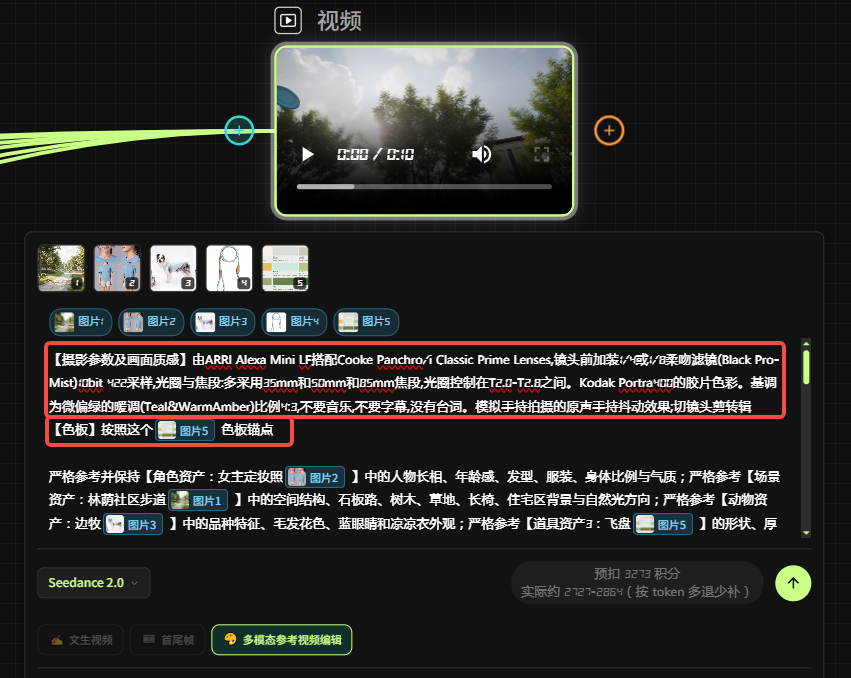
uploads and labels the palette soeance 2.0, and enters the photographic language hint at the front end。
V. Step 4: Final harmonization with later monetization
VIDEO MODELS RECALCULATE LIGHT WHEN THEY GENERATE ACTIONS. WHEN MULTIPLE PIECES OF MATERIAL ARE SPELLED TOGETHER, EVEN WHEN THE HINTS ARE IDENTICAL, PROBLEMS OF RED COLOUR, GREEN SHADOW AND DIFFERENT BRIGHTNESS OUTSIDE THE WINDOW MAY ARISE. THEREFORE, IT IS NOT APPROPRIATE FOR A STRAIGHT-OUT SECTION OF AI TO BE DIRECTLY A FINAL PIECE。
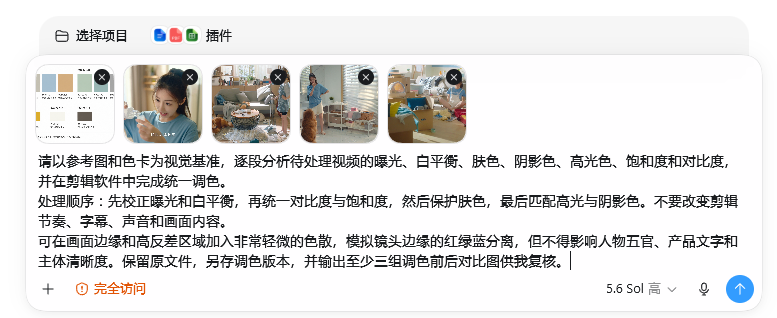
if the codex has access to local video and editing software, the target reference can be provided with the pending video and the following tasks given:
Please analyse the exposure, white balance, colour, shade, light, saturation and contrast of the video to be processed by paragraph, using reference maps and colour cards as visual benchmarks, and complete a uniform colouring in the editing software。
Order of treatment: First correct the exposure and white balance, then harmonize contrast and saturation, then protect the colour, and finally match the light with the shadow. Do not change the rhythm, subtitles, sound and image。
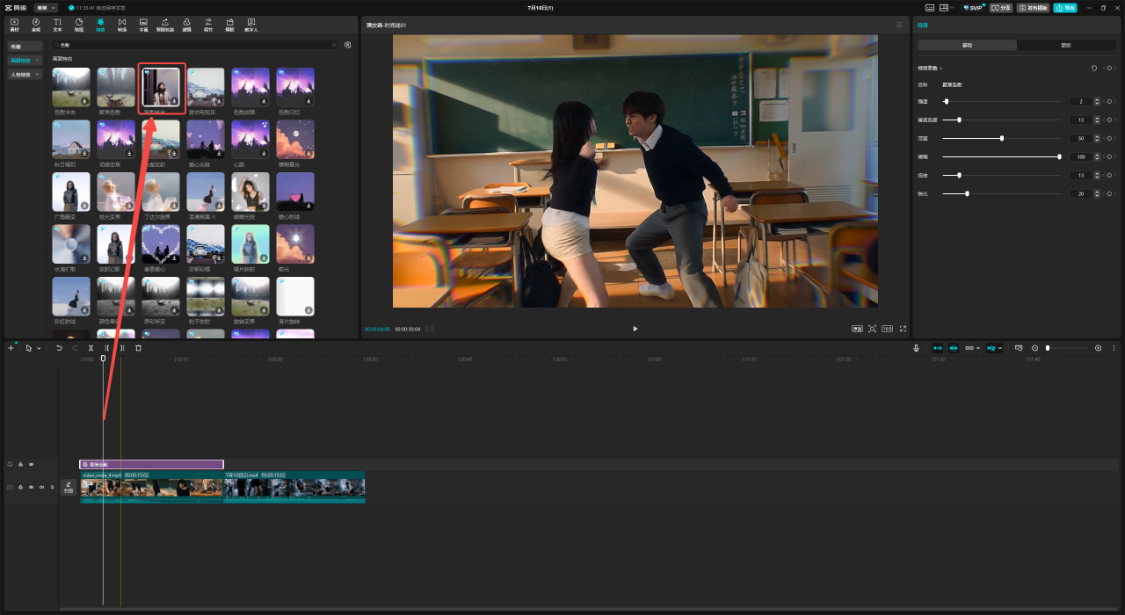
A very slight dissegregation can be added at the edge of the image and in high contrast areas, and the red and green blues at the edge of the simulated lens can be separated, but without affecting the five officials, the text of the product and the material clarity. Retain the original document, save the monetized version and export for my review at least three sets of pre- and post-color contrasts。
A special effect preset for the most effective clipping。
Common error and capability boundaries
Four of the most common errors were: reference maps conflicted with each other ' s style; colour cards were too colourful and undescribed; and, when they were generated, they were directly woven without uniform coloring. Another easily overlooked issue is the use of a large number of equipment names as a guarantee of stability. Models need more explicit visual results than a list of seemingly professional terms。
The methodology would enhance uniformity, but would not ensure full consistency in each generation. Different models do not understand the reference diagrams, colour values, photographic parameters and negative words in the same way; colours can fix colours, but they do not repair wrong actions, person deformations and space-penetrating aids; and the ability of intelligent bodies to directly operate the editing software depends on local privileges and tool environments. When these problems are encountered, they should be regenerated back to the counterpart, rather than being forcibly concealed at a later stage。