



Have you ever had an experience like this?
The script was written with a big brain, but it was filmed as aAI skitsAfterward, viewers but commented, "It's unreadable, the pacing is disorganized, and the story jumps."
There's more to AI sketch writing than just being able to write a few lines of dialog and drop a few cues."Narrative structural thinking" is the underlying ability that really determines whether a work can "tell a good story".
Whether the plot reversal of the suspense short drama, or "cool feeling pull full" reversal of the cool article, the narrative structure is to support the entire short drama "skeleton". If there is no narrative structure support, AI short drama and then cool special effects is just a scattered sand.
Today's article takes you through the process of figuring out -Why is it essential to master narrative structure thinking when it comes to AI sketch writing? How should it be used?
I. What is narrative structural thinking?
Simply put, narrative structure thinking is the "story building logic" in the director's head.
It decides:
- How many seconds does the viewer start to get caught up in the plot?
- At what point does the reversal occur for the impact to be felt?
- What hook is left at the end so that viewers will look forward to your next episode?
The essence of AI short drama creation is to use a set of clear narrative structure, the script is split into a number of AI can perform the "lens task", using AI tools to quickly build into a movie.
Therefore, narrative structure thinking is not only the ability to write a script, but also the ability to "translate" the script into AI instructions.
II. The Underlying Logic of Narrative Structural Thinking
Many people do AI sketches with only "images" and "dialog" in their minds, but the real masters have a set of "highly rhythmic structural framework" in their hearts.
The underlying logic of narrative structure thinking is simply summarized in three sentences:
- Event Driven - The plot must have a clear "conflict and twist".
- Emotional progression - the audience's emotions have to be pushed up one layer at a time.
- Node anchoring - one key node every 10 seconds to ensure that the rhythm is not loose.
AI skits are short (usually 1-3 minutes), so they require a higher degree of "node density" and "emotional intensity" in the narrative structure.
As an example, a one-minute skit should be at least:
- Opening hook (0-5 seconds)
- Conflict triggering (5-15 seconds)
- Inverted climax (20-40 seconds)
- Emotionally resonant or reversed ending (50-60 seconds)
Now that's a passable narrative pace for an AI sketch.
III. Types of Narrative Structures Commonly Used in AI Skits
The appropriate narrative structure varies from subject to subject for short plays, but the core types can't escape these:
|
|
|
|
|---|---|---|
|
|
|
|
|
|
|
|
|
|
|
|
|
|
|
|
Fourth, case practice - how narrative structure thinking is applied toAI Creation?
Case: Her Last Phone Call
Concept: A young female reporter is "silenced" in a shady investigation, and in the last 10 minutes of her pursuit, she makes a "live" phone call to expose the truth and die with the dark forces.
Narrative Structure Type: Countdown Suspense Structure + Emotional Reversal Structure
Style anchors: cinematic, thriller, ultra-realistic, cold tones, neon lighting, shallow depth of field
Characterization Uniformity Keywords:
- Female: female reporter, short messy black hair, blood-stained white shirt, dark pants, wounded, defiant eyes
- Male lead: cold-faced male hitman, black suit, holding silenced pistol
Scene subplot deconstruction and cue word design:
Subtitle I: First Encounter on the Rooftop (establishing shot)
- Vincentian prompt words (for Midjourney): cinematic rooftop at night, neon-lit skyline, cold blue and purple tones, wide shot, gritty urban atmosphere, female reporter with short messy black hair, blood-stained white shirt, dark pants, leaning against metal railing, holding up a smartphone, glowing livestream screen, male hitman in black suit walking toward male hitman in black suit walking toward her, silenced pistol in right hand, tense mood, dramatic lighting, ultra-realistic, thriller style, shallow depth of field -ar 16:9 -style raw -v 6.1 -quality 2

- Toussaint video prompt words (video AI generation tool special): A cinematic rooftop at night with neon city lights glowing, a female reporter with short messy black hair and a blood-stained white shirt leans on a railing, holding her phone toward an approaching hitman. A cinematic rooftop at night with neon city lights glowing, a female reporter with short messy black hair and a blood-stained white shirt leans on a railing, holding her phone toward an approaching hitman. The atmosphere is cold, tense, and thriller-like. Wind moves through their hair. Wide camera angle, cinematic depth, moody lighting.
Subtitle II: Frontal Confrontation (Medium Scene)
- Vince's picture suggests words (Midjourney): urban rooftop at night, medium shot, female reporter with short messy black hair, blood-stained white shirt, holding up smartphone, glowing screen lighting her face, defiant expression, wounded, male hitman in black suit standing in front of her, silenced pistol in hand, neon city lights in the background, cold neon city lights in background, cold blue tones, thriller mood, cinematic lighting, ultra-realistic, high contrast, shallow depth of field -ar 16:9 -style raw -v 6.1 -quality 2
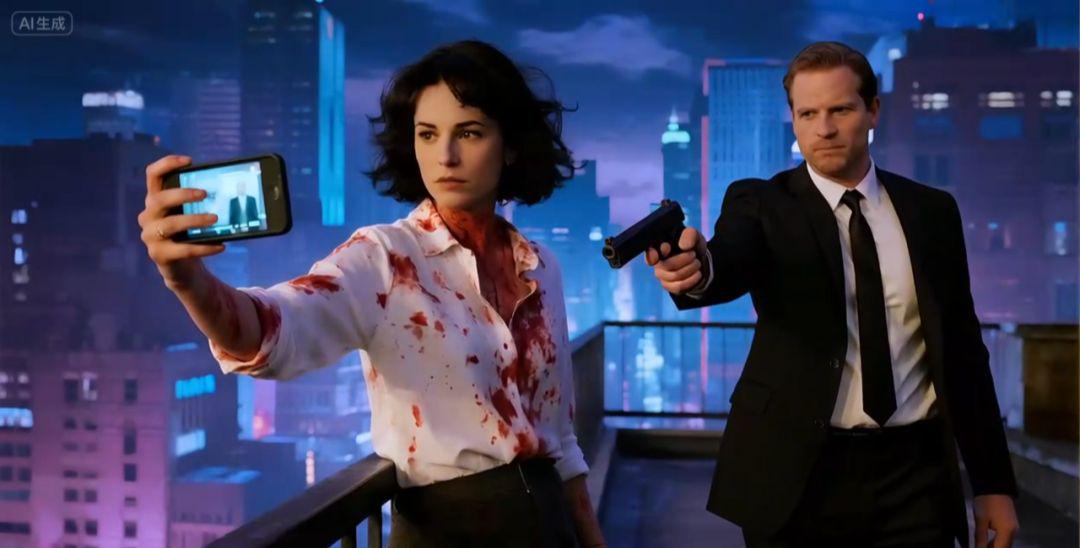
- Tucson Video Cue: A medium shot on a rooftop at night. The injured female reporter raises her phone toward the cold-faced hitman, her expression defiant. The injured female reporter raises her phone toward the cold-faced hitman, her expression defiant. Neon lights flicker behind them. The man stands silently, gun in hand.
Subtitle III: Close-up of the female lead (emotional transmission)
- Vince's picture suggests words (Midjourney): close-up shot, female reporter with short messy black hair, blood-stained white shirt, wind blowing through her hair, blood on her cheek, smartphone held up, glowing screen reflected in her eyes, defiant and emotional expression, cold blue and purple lighting, shallow depth of field, cold blue and purple lighting. cheek, smartphone held up, glowing screen reflected in her eyes, defiant and emotional expression, cold blue and purple lighting, shallow depth of field , cinematic thriller mood, ultra-realistic -ar 16:9 -style raw -v 6.1 -quality 2
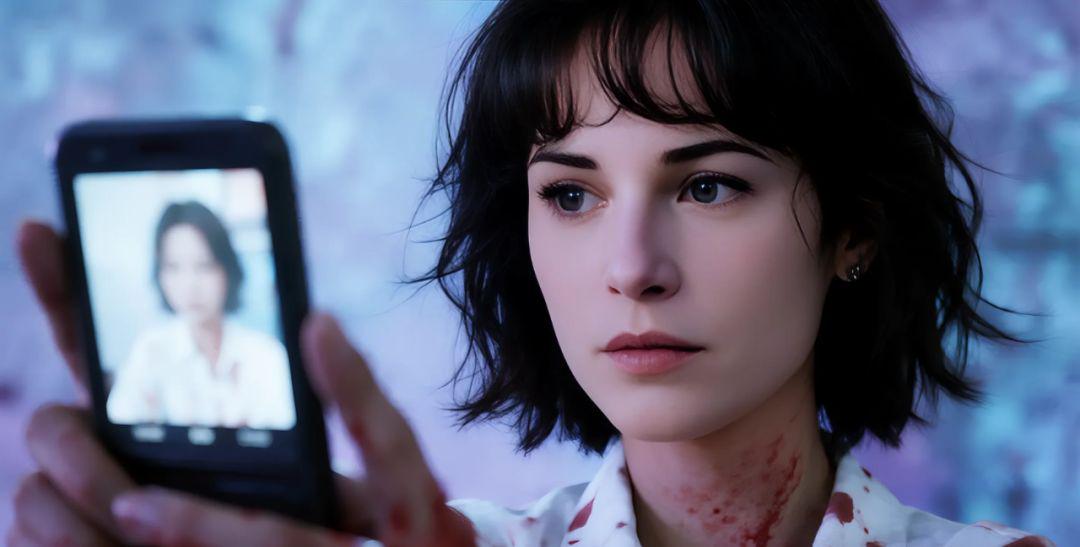
- Tucson Video Cue: Close-up of the female reporter's face. Her messy black hair moves with the wind. She is injured but determined. Her phone screen glows in her eyes. The mood is intense, cinematic, and emotional. High detail and thriller tone.
Subplot 4: Close-up of the male lead (the night before the action)
- Vince's cue words (Midjourney): close-up of male hitman's hand holding a silenced pistol, black gloves, black suit sleeve visible, neon reflections on the metal, his emotionless face slightly visible in background blur, rooftop setting, cold lighting, cinematic thriller mood, ultra-realistic, shallow focus -ar 16:9 -ar 16:9, and a small, dark, dark, dark, dark, dark, dark, dark, dark, dark, dark. shallow focus -ar 16:9 -style raw -v 6.1 -quality 2
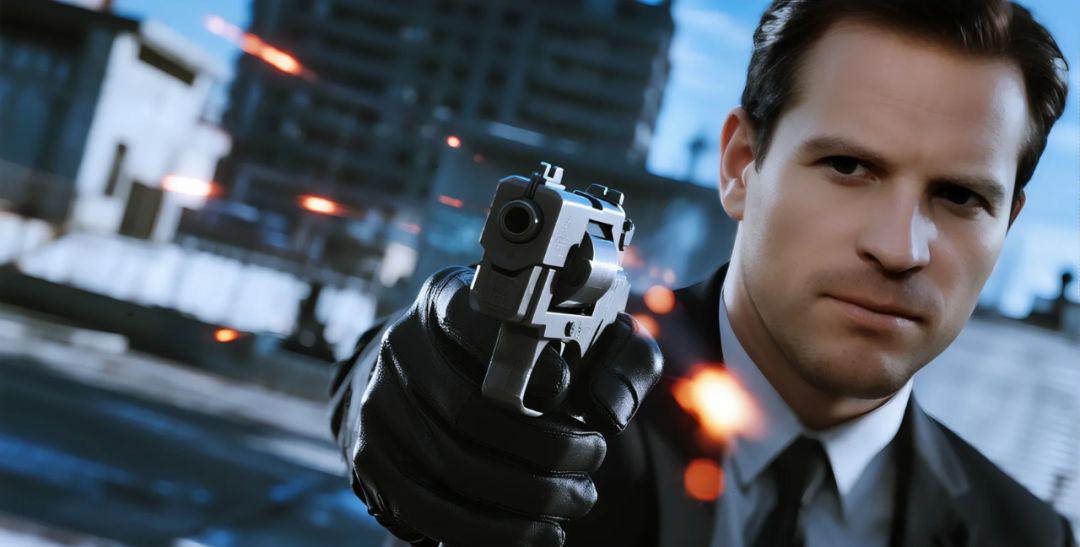
- Tucson Video Cue: Close-up of the hitman's hand holding a silenced pistol. The gun reflects the surrounding neon lights. His emotionless face is blurred in the background. The rooftop is silent, the tension high, the scene cinematic and gritty.
Subtitle V: Ending Emotional Shot (Whiteout Reversal)
- Words prompted by the Vincentian map (Midjourney): wide rooftop scene at night, female reporter alone, sitting near railing, phone on ground, blood trail beside her, neon lights flickering, rain starting to fall, dramatic shadows, empty skyline in background, cinematic atmosphere, cold blue color palette, thriller mood, ultra -realistic -ar 16:9 -style raw -v 6.1 -quality 2
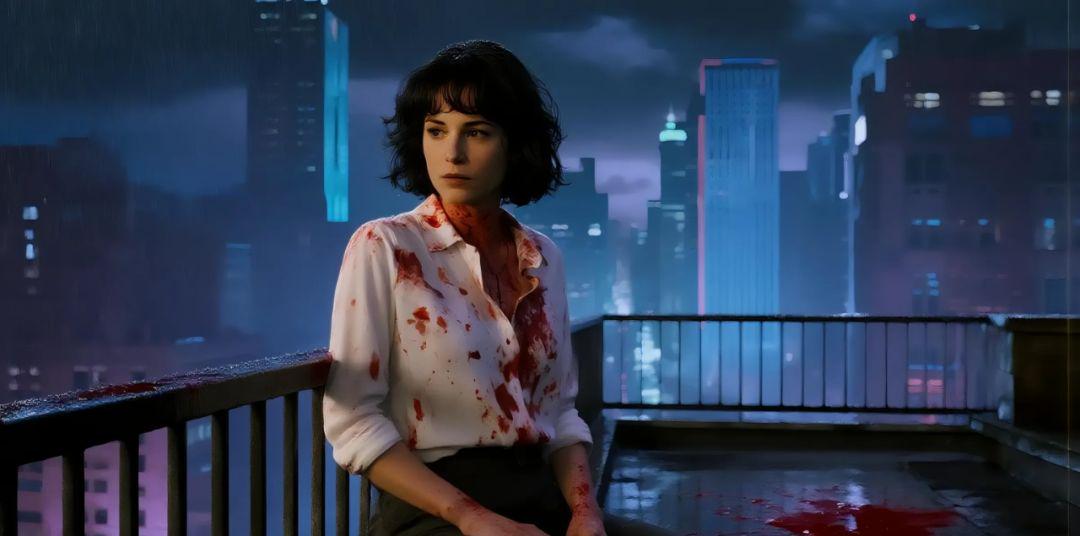
- Tucson Video Cue: Wide rooftop shot at night. The female reporter sits alone near the railing. Her phone lies beside her. A faint blood trail leads to her. Neon lights flicker. The skyline glows faintly in the distance. Emotional silence fills the scene.
Narrative Structure Thinking Highlights:
- Countdown Suspense (Time Pressure): a progression of emotions every 10 seconds so that the audience can't stop.
- Emotional reversal (the underdog kills back): the heroine is vulnerable in the beginning → she fights back in the middle → she takes control of the situation at the end.
- Visual consistency anchors: the same character, the same set of visual language, no style runaway from start to finish.
- Cue words layer by layer: each scene cue words are strengthened "action + emotion + atmosphere", to ensure that the AI generation "character, light and shadow, atmosphere" does not deviate.
This case applies:
- Emotionally impactful skits (explosions + counter-attacks)
- Urban-themed social issue sketches
- AI microfilm that requires "strong narrative structure support".
V. Hands-on skills - how to execute narrative structure with AI tools?
- Scripts are first broken down into "node scenes": instead of writing a page full of scripts, first break down the key nodes (hook, conflict, climax, ending).
- Each node is stylistically locked down with a "Venn diagram": a consistent cue that anchors the character's appearance and the color palette of the scene.
- Re-"graphic video" design for camera and mood: cue words that clearly spell out the language of the camera (push, pull, pan, follow), combined with mood words (anger, anxiety, shock).
- Keep the rhythm of the nodes precise: each shot is controlled within 5-10 seconds to complete a "turn of mood", the rhythm can not be delayed.
- Adding "camera emotional anchors" to the cue words: details like "camera focuses on the subtle twitch in his hand" can make the AI-generated video more emotionally impactful.
Sixth, conclusion: learn narrative structure thinking, AI skit creation with half the effort!
The real involution of AI sketches is not the special effects, not the tools, but who can move the audience emotionally in the shortest amount of time with a stronger narrative structure.
As long as you have mastered the narrative structure thinking, you can play the AI tool as a "story engine", so that every second of the screen let the audience "can not scratch away".
This is what I shared today, did you learn it?